
Designing a Family-Friendly Amusement Park Layout
- Designing a Family-Friendly Amusement Park Layout
- Why thoughtful design matters when you build a amusement park
- Core design principles for a family-friendly park
- Site selection and master planning when you build a amusement park
- Zoning and circulation strategies for family comfort
- Choosing ride mix and attractions for all ages
- Safety, standards, and accessibility when you build a amusement park
- Theming, storytelling and family-friendly guest experience
- Food, retail and guest services tailored to families
- Operations planning and staffing to support family experiences
- Phasing, budget and ROI when you build a amusement park
- Technology, queuing, and crowd management
- Maintenance, safety inspections, and lifecycle planning
- Why partner with an experienced manufacturer and integrator
- SUNHONG: turnkey partner for operators who want to build a amusement park
- Implementation checklist: steps to build a family-friendly amusement park
- Frequently asked questions (FAQ)
- Q: What is the first step if I want to build a amusement park focused on families?
- Q: How many rides do I need to open a small family park?
- Q: How do I ensure safety and certification for rides?
- Q: Can I phase construction to reduce upfront capital?
- Q: Why choose SUNHONG to help me build a amusement park?
- Get started: contact sales or view products
- References and data sources
Designing a Family-Friendly Amusement Park Layout
Why thoughtful design matters when you build a amusement park
Building a successful family-oriented amusement park starts with a layout that supports comfort, safety, accessibility, and memorable guest experiences. When you build a amusement park with families in mind, you reduce friction at every touchpoint: arrival, queuing, ride selection, dining, and departure. Thoughtful planning increases dwell time, repeat visits, guest satisfaction scores, and per-capita spending. This guide lays out proven planning steps and decisions to help operators, investors, and designers create a balanced, operationally efficient family amusement park.
Core design principles for a family-friendly park
When you build a amusement park for families, prioritize clarity, comfort, and flexibility. Key principles:
- Intuitive circulation: Simple paths and loops that reduce congestion and avoid dead-ends.
- Layered experiences: Offer attractions for multiple age groups within the same zone so families can split or stay together.
- Visual wayfinding: Clear signage, sightlines to key landmarks, and thematic cues so guests can self-navigate.
- Short walking distances: Minimize long treks between core amenities, especially restrooms and food outlets.
- Safety and accessibility: ADA-compliant routes, stroller-friendly surfaces, and visible first-aid points.
Site selection and master planning when you build a amusement park
Choosing the right site and creating a strong master plan are foundational. Consider catchment population, drive time, public transit links, topography, utilities, and expansion potential. A master plan should define zones by age group and theme, primary circulation corridors, entry/exit layout, parking and drop-off, and future phases so the park can scale without disrupting operations.
Tips for site layout:
- Place parking and arrivals to create a compelling first impression; avoid long, uninteresting approaches.
- Separate service roads and back-of-house from guest circulation.
- Locate family services (first aid, baby care, rentals) within 3-5 minutes walk from most guest areas.
- Reserve space for seasonal events, festivals, and temporary attractions.
Zoning and circulation strategies for family comfort
When you build a amusement park, zoning should encourage natural movement and grouping. Use a hub-and-spoke model or a series of interconnected neighborhoods. A central hub with a visual icon or tower helps guests orient themselves. From this hub, radial paths can lead to themed areas. For families, smaller loops within each zone reduce walking and make it easy to return to a meeting point.
Design circulation to manage queues without creating bottlenecks. Queuing lanes should be shaded, have seating where appropriate, and offer entertainment or interactive elements for children. Consider single-stroller lines adjacent to main queues and family-specific Fast Pass or boarding strategies.
Choosing ride mix and attractions for all ages
The ride mix is the heart of any park. When you build a amusement park with families as the core audience, aim for a balanced portfolio: junior rides, family coasters, dark rides, gentle water attractions, flat rides, and play zones. Each zone should include rides that accommodate parents and children together as well as age-specific attractions.
Below is a concise comparison of common ride types and typical age suitability and throughput to help plan capacity and guest flow.
| Ride Type | Age Range | Typical Capacity per Hour (per unit) | Design Notes |
|---|---|---|---|
| Junior Ferris Wheel | 3–12 (family-friendly) | 300–600 | Gentle, iconic; good for parents with small kids |
| Family Coaster | 6+ (with adult) | 600–1,200 | High appeal across ages; strong guest draw |
| Dark Ride | 4+ | 400–900 | Story-driven; high repeatability |
| Carousel | All ages | 400–800 | Low intensity, high capacity for families |
| Water Play / Spray Zone | 1–10 | Varies (open play) | Low operational cost, high family engagement |
Sources for typical capacities and age guidance include industry standards and ride manufacturer data (see sources at the end).
Safety, standards, and accessibility when you build a amusement park
Safety and compliance are non-negotiable. Follow local regulatory frameworks and international standards such as ASTM F24 and relevant TÜV/CE/UKCA testing and certification. When you build a amusement park, integrate emergency access routes, visible staff stations, CCTV coverage, and emergency power for critical systems. For family parks, design accessible entrances to rides, transfer stations, and clear policies for child supervision. Include ample shaded waiting areas and stroller parking to reduce hazards.
Theming, storytelling and family-friendly guest experience
Theming transforms facilities into memorable places. Families respond to immersive stories, characters, and interactive elements. When you build a amusement park, design thematic nodes that are visually consistent and provide soft transitions between themes to accommodate young guests who may be startled by abrupt changes. Use sensory layers sparingly: color, soundscapes, tactile installations, and safe photo spots to create shareable moments.
Food, retail and guest services tailored to families
Operational design for family parks must prioritize quick, nutritious, and kid-friendly food options. Offer varied seating: high chairs, family booths, shaded outdoor seating, and picnicking lawns. Retail should include essentials like sunscreen, hats, diapers, as well as themed merchandise. Convenient services such as baby-change rooms, nursing rooms, lost-child procedures, and rental strollers increase satisfaction and dwell time.
Operations planning and staffing to support family experiences
A family-friendly park requires staff trained in guest assistance, child safety, and de-escalation. When you build a amusement park, plan staff deployment based on peak times, not only ride count. Cross-train team members for guest services, ride operations, and first aid to maintain flexible coverage. Staff visibility and consistent uniforms are important to reassure families.
Phasing, budget and ROI when you build a amusement park
Most parks are developed in phases. When you build a amusement park, prioritize core offerings that drive visit decision — signature family ride, engaging central hub, and food/retail amenities — then expand with attractions that increase length of stay and per-guest spend. Use conservative attendance and spend assumptions when modeling ROI: baseline market capture, average visit frequency, and ancillary revenue such as F&B and merchandise.
Technology, queuing, and crowd management
Integrate technology to enhance family convenience: mobile apps for wayfinding, live wait times, virtual queuing, mobile food ordering, and parent-child reunification features. Virtual queue systems reduce physical wait stress for families with small children. Provide clear digital and analog signage so less tech-savvy visitors can also navigate easily.
Maintenance, safety inspections, and lifecycle planning
Design for maintainability. When you build a amusement park, choose ride suppliers and materials with proven lifecycle support and spare parts availability. Scheduled maintenance windows, predictive maintenance using sensors, and a parts inventory plan reduce downtime. For family parks, ride reliability directly affects guest satisfaction and trust.
Why partner with an experienced manufacturer and integrator
Selecting a partner who can provide end-to-end services reduces project risk. An experienced manufacturer helps translate master plans into realistic ride packages, supports certification, offers installation crews, and can provide operational training.
SUNHONG: turnkey partner for operators who want to build a amusement park
SUNHONG is a large-scale comprehensive amusement ride manufacturer dedicated to research and development, design, manufacture and sales of amusement rides. Sunhong specializes in overall planning, R&D design, exclusive customization, manufacturing, comprehensive construction, and operation management, offering reach global services. With more than 10 years of export experience, SUNHONG holds certificates for entering many countries, including CE of the European Union, UKCA of the United Kingdom, SABER of Saudi Arabia, TUV of Germany, and ASTM certification for the United States.
SUNHONG provides a full-service pathway for investors and operators who wish to build a amusement park. Their robust in-house teams cover R&D, production, and construction to deliver projects from initial concept through final completion. SUNHONG has installed amusement rides in more than 56 countries and regions and aims to become the world's leading manufacturer of amusement rides. Products and services include amusement park equipment, amusement park design, amusement park rides, and turnkey project management.
Core competitive strengths of SUNHONG:
- Comprehensive in-house capabilities from concept design to construction and operation management
- Global certification credentials supporting international projects
- Extensive export experience and a global installation footprint
- Capacity for exclusive customization to align ride design with family-oriented themes and guest flow needs
For more information, visit SUNHONG at https://www.isunhong.com/ and request case studies or a project feasibility consultation.
Implementation checklist: steps to build a family-friendly amusement park
- Conduct market and site feasibility analysis.
- Create a master plan with phased development and core family zones.
- Define ride mix and capacities, focusing on family and junior attractions.
- Engage a certified manufacturer/contractor for ride procurement and installation.
- Design accessible circulation, queuing, and family services nodes.
- Secure permits, certifications, and safety sign-offs per local and international standards.
- Develop operations staffing, training, and emergency response plans.
- Launch pilot attractions and monitor guest feedback to guide future phases.
Frequently asked questions (FAQ)
Q: What is the first step if I want to build a amusement park focused on families?
A: Start with market and site feasibility to confirm demand, catchment, and financial viability. Then develop a master plan that defines the park identity, zoning, and phased scope.
Q: How many rides do I need to open a small family park?
A: A small family park can open successfully with a curated set of 8–15 attractions: a signature family coaster or dark ride, several junior rides, a carousel, a water play area, and interactive play zones, plus food and retail. Balance capacity rather than just counting rides.
Q: How do I ensure safety and certification for rides?
A: Work with certified manufacturers and comply with local regulations. Use internationally recognized standards such as ASTM F24 and ensure independent inspection and commissioning by authorized bodies. Keep thorough maintenance logs and staff training records.
Q: Can I phase construction to reduce upfront capital?
A: Yes. Phase 1 should include core attractions, guest services, and a strong central hub that encourages repeat visits. Later phases can add signature rides, themed lands, and additional F&B offerings to grow attendance and revenue.
Q: Why choose SUNHONG to help me build a amusement park?
A: SUNHONG offers end-to-end services from R&D and ride manufacturing to complete construction and operational management. With global certifications and installations in over 56 countries, they provide proven solutions for safely delivering family-friendly parks.
Get started: contact sales or view products
If you are ready to plan or build a amusement park, contact SUNHONG for a feasibility review, customized ride packages, and turnkey project proposals. Visit https://www.isunhong.com/ or reach out to their sales team for product catalogs, certifications, and case studies tailored to family-focused parks.
References and data sources
The following sources informed the guidance and data presented above:
- IAAPA (International Association of Amusement Parks and Attractions) guidelines and industry reports on attraction design and capacity planning.
- ASTM International Committee F24 on amusement rides and devices standards.
- TÜV and CE certification frameworks for mechanical rides and safety.
- SUNHONG internal export and certification records provided by the manufacturer (company data).
Note: Ride capacity ranges and age guidance are typical industry estimates intended for preliminary planning. For precise specifications, consult ride manufacturers and certified engineers.
Safety Measures in Amusement Thrill Rides: What You Need to Know
Best thrill rides manufacturers and supplier brands
Choosing Rides for Your Amusement Park: Buyer's Guide
Top adult amusement park rides Manufacturers and Suppliers
16P Larva Double Decker Carousel for Sale
Can I customize the appearance of my carousel?
Yes. SUNHONG offers customized options for carousels, including themes, colors, seat designs, and decorative styles. Our design engineers can design carousels based on the overall concept of your park and incorporate exclusive IP or brand elements to boost attraction and visitor numbers.
How many seats does the carousel have?
The number of seats for SUNHONG carousels ranges from 8 to 54. Our engineers will design the most appropriate configuration based on the size of your park and the expected number of visitors, helping you achieve greater operational efficiency and economic benefits.
16P Knight Sparta
Can I customize the appearance of the carousel?
Yes, SUNHONG provides you with customized services, such as the theme, color, seat shape, and decoration style of the carousel. SUNHONGD design engineers can create a carousel with exclusive intellectual property rights or a brand according to the overall design of the amusement park, to increase the attraction and flow of people in the amusement park.
Time Jump
Do you offer different Time Jump styles (classic, space, jungle, etc.)?
Yes, we offer multiple design styles for Time Jump, including classic carnival, space adventure, jungle explorer, and more. Each version can be tailored to fit your park's theme and target age group.
What kind of lighting is used? Are they waterproof?
We use high-brightness, waterproof LED lights to give Time Jump an eye-catching appearance, while ensuring long-lasting performance in all weather conditions.
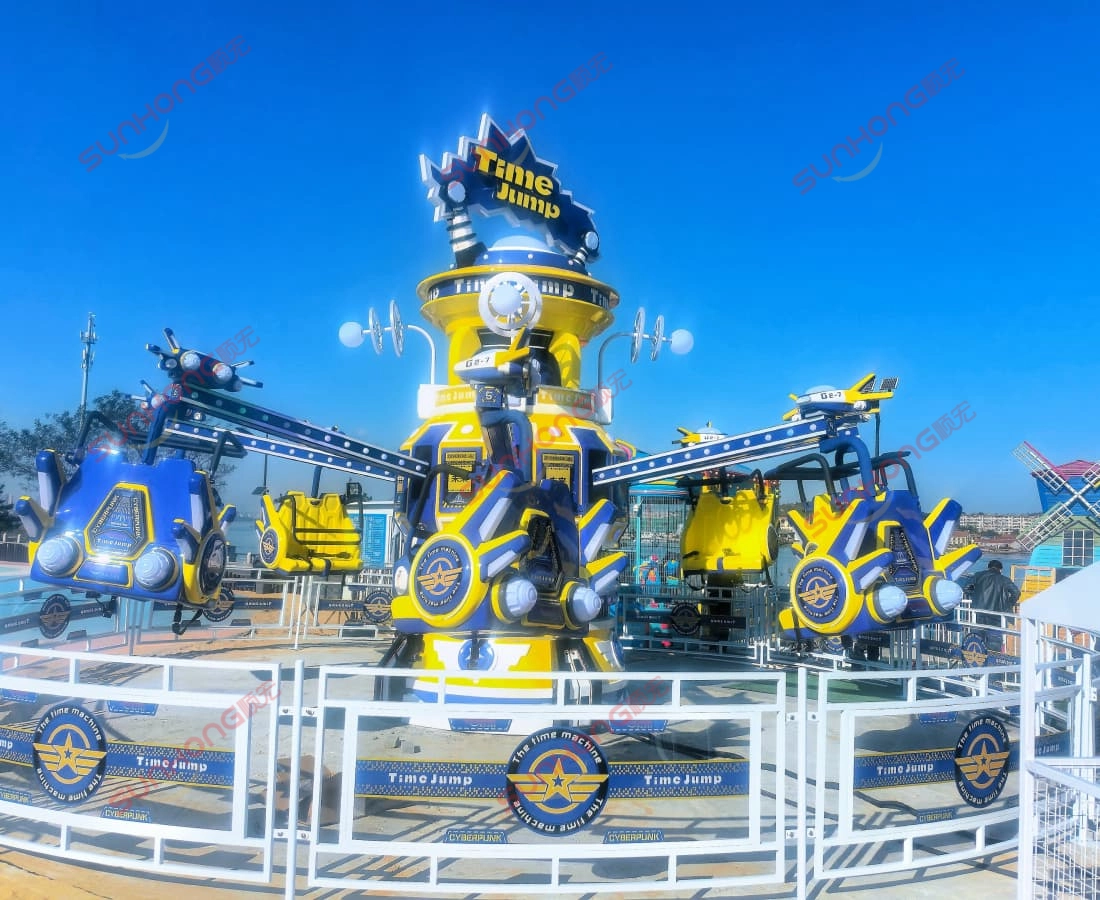
16-Seat Time Jump – Rotating Plane Ride for Amusement Parks
Time Jump is a thrilling and cost-effective amusement ride, 100% originally developed and manufactured by SUNHONG with patented certification. Designed for families and children, it combines motor drive and air-compressor cylinders to achieve dynamic movements—left-right rotation, variable-speed spinning, bouncing seats, and full 360-degree spins.
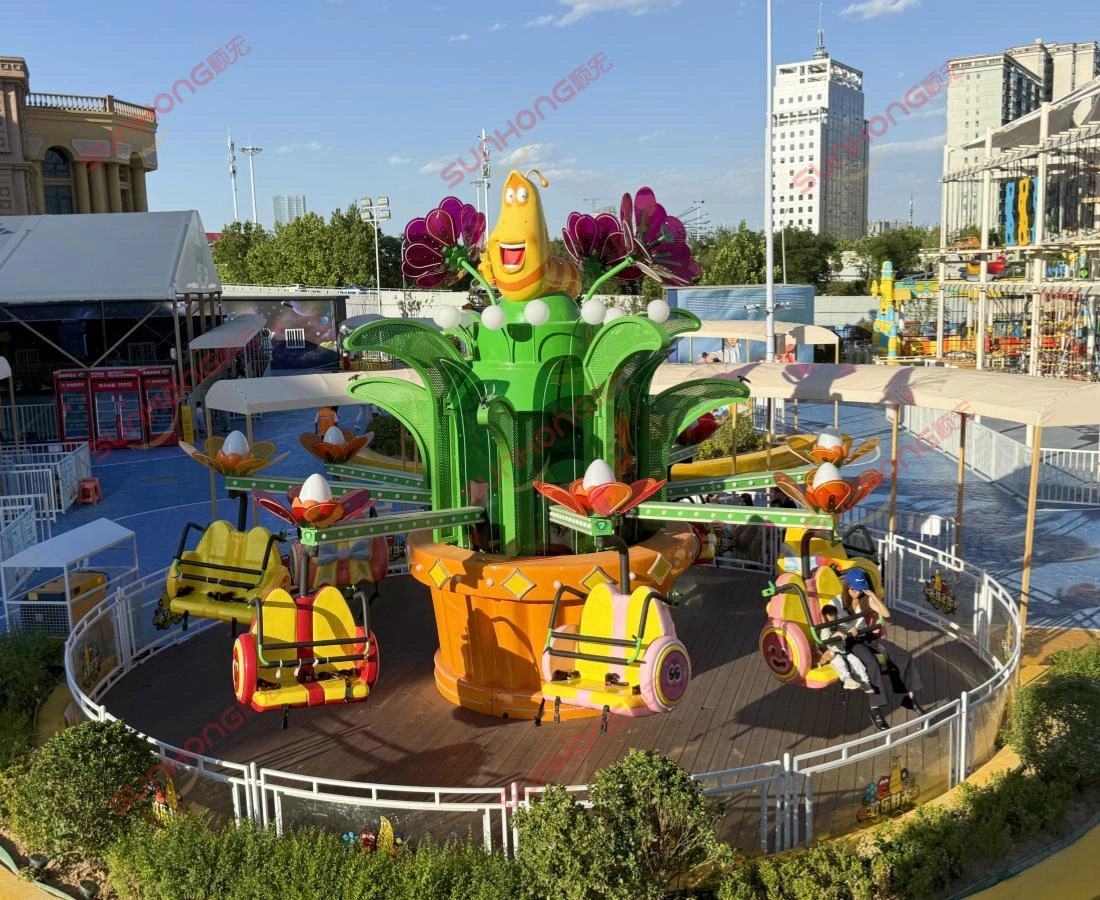
Larva Blooms Bounce Ride – Hot IP Custom Attraction with 360° Spin & Bounce
Larva Blooms is a patented bounce ride inspired by the hit Larva animation series. Featuring full platform rotation, 360° spinning seats, and dynamic bouncing motion, it delivers a thrilling ride experience for families and kids. IP customization available with OEM/ODM service.

360 Degree Rotating Ride Swing Thrill Amusement Rides for Attractions
Air Bus is a stunning addition to our family amusement rides, delivering a one-of-a-kind 360° dual-rotation experience. With its swinging arm and self-spinning cabin, bright yellow flying-bus design, dynamic music effects, and customizable options, this ride is more than just entertainment—it’s a show-stopping centerpiece that helps your park attract crowds.
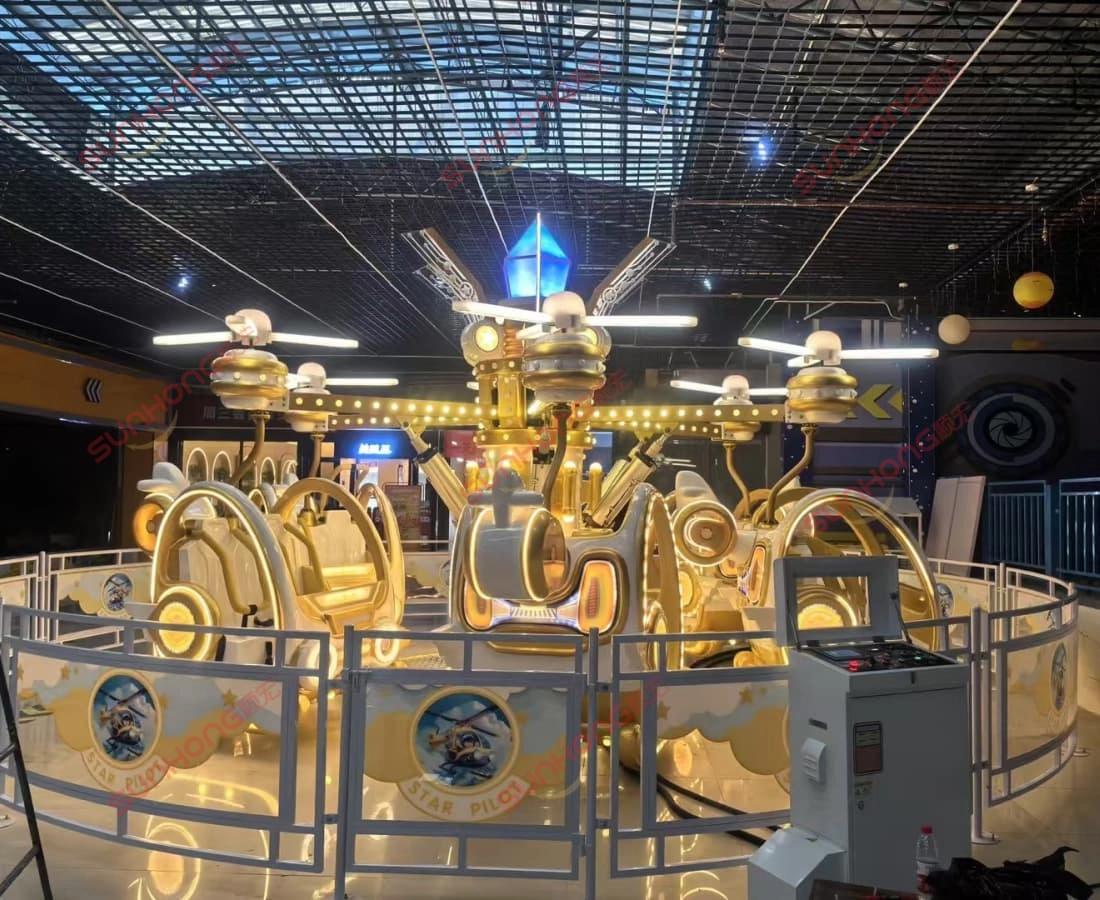
Star Pilot-Rotating Plane Rides for Thrill Rides and Family Rides
Discover SUNHONG’s Star Pilot—High Quality Rotating Plane Rides for sale, expertly designed for thrill rides and family rides. Elevate your amusement park with this safe, reliable, and eye-catching attraction. Make every family adventure unforgettable with innovative Rotating Plane Rides by SUNHONG.
Copyright © 2025 SUNHONG All Reserved.
Guangzhou Shunhong Entertainment Equipment Co.,Ltd.
sunhongrides
SUNHONGAMUSEMENTRIDES
sunhongamusementrides
Scan QR Code