
Choosing Rides for Your Amusement Park: Buyer's Guide
- Choosing Rides for Your Amusement Park: Buyer's Guide
- Define the Park Vision and Target Audience Before You Build a Amusement Park
- Understand Ride Categories and How They Fit Your Plan
- Thrill vs Family vs Children: Balancing the Mix When You Build a Amusement Park
- Prioritize Safety, Certifications and Regulatory Compliance
- Capacity, Throughput and Queue Management: Design for Guest Flow
- Budgeting: Capital Costs, Operating Expense and ROI When You Build a Amusement Park
- Evaluate Suppliers: Technical Capacity, Track Record and After-Sales
- Customization and Theming: Differentiate Without Over-Complicating
- Installation, Commissioning and Staff Training
- Sustainability, Energy Use and Accessibility
- Checklist: Choosing Rides When You Build a Amusement Park
- Why SUNHONG Should Be Considered When You Build a Amusement Park
- Case Example: Phased Park Build Using Mix Strategy
- FAQs — Building and Choosing Rides for Your Amusement Park
- Q: How many headline rides do I need to build a amusement park that attracts regional visitors?
- Q: What is the typical lead time from order to installation for major rides?
- Q: How should I budget for maintenance and spare parts?
- Q: Are there financing options for large rides?
- Q: How can I ensure quick technical support for imported rides?
- Contact SUNHONG / View Products
- References
Choosing Rides for Your Amusement Park: Buyer's Guide
When you set out to build a amusement park, selecting the right mix of rides is one of the single most important decisions that will define guest experience, operating economics, and long-term success. This guide walks through how to match rides to your vision and audience, manage budgets and safety, evaluate suppliers, and plan for installation and ongoing operations. It is written for park owners, investors, project managers, and planners who want clear, actionable advice to make confident purchasing decisions.
Define the Park Vision and Target Audience Before You Build a Amusement Park
Before choosing specific attractions, clearly define your park’s identity. Is it a regional theme park, a local family park, a water park, or a mixed entertainment resort? Your vision drives ride selection: a family-focused park needs high-capacity family rides and children’s attractions; a thrill park requires a headline coaster and complementary high-thrill elements.
Key questions to answer early:
- Primary guest profile: families with young children, teens and young adults, multi-generational guests, or tourists?
- Site constraints: land area, soil conditions, access, utilities?
- Investment horizon: opening phase only, phased growth, or long-term resort?
- Local climate and seasonality: outdoor vs indoor, weatherproof rides?
Embed the primary when planning: if you plan to build a amusement park that attracts repeat visitors, prioritize durable, high-throughput rides and varied experiences that encourage multi-visit behavior.
Understand Ride Categories and How They Fit Your Plan
Rides fall into broad categories—headliners (roller coasters, major water slides), family attractions (carousel, Ferris wheel, dark ride), children’s rides, flat rides (spinning/twirling), and special experiences (immersive dark rides, VR, shows). Each category serves a strategic purpose:
- Headliners create destination appeal and drive attendance.
- Family rides deliver the broadest guest accessibility and repeat value.
- Children’s areas build loyalty with families and increase dwell time.
- Flat rides and rotateable attractions maximize capacity per area and help manage guest flow.
Thrill vs Family vs Children: Balancing the Mix When You Build a Amusement Park
A balanced portfolio often targets 20–30% headliners, 40–50% family and flats, and 20–30% children/low-threshold experiences. Exact ratios depend on market research and park size. Too many thrill rides can exclude families; too many kiddie rides can limit broad appeal. Use your initial attendance and demographic forecasts to tune the mix.
Prioritize Safety, Certifications and Regulatory Compliance
Safety is non-negotiable. Choose rides and suppliers that adhere to internationally recognized standards (CE, ASTM F24, EN13814, TUV, UKCA, etc.). When you build a amusement park for an international audience or with export equipment, ensure the manufacturer provides certification documentation, engineering calculations, load testing records, and operation manuals in your language.
Important safety considerations:
- Manufacturer certifications and factory inspection reports.
- Third-party structural and electrical verification.
- Maintenance program, spare parts availability, and technical training.
- Emergency procedures and operator ergonomics.
Capacity, Throughput and Queue Management: Design for Guest Flow
Throughput (guests per hour) determines queuing and satisfaction. When you build a amusement park, choose rides with throughput aligned to expected peak day attendance. A low-capacity signature ride may create long queues that hurt overall guest experience unless offset by virtual queue systems or multiple similar attractions.
Practical tips:
- Use a mix of high-throughput flats and at least one high-capacity headliner per themed zone.
- Design circulation and queuing areas to absorb peak surges and provide shade, seating, and entertainment.
Budgeting: Capital Costs, Operating Expense and ROI When You Build a Amusement Park
Budget realistically for acquisition, foundations, installation, landscaping, theming, and start-up staffing. Consider the total cost of ownership—installation, energy use, maintenance, spare parts and insurance. A lower initial purchase price can be offset by higher operational costs or downtime.
Comparative table of typical ride characteristics (indicative ranges):
| Ride Type | Typical Capital Cost (USD) | Throughput (pph) | Footprint (sq.m) | Primary Audience |
|---|---|---|---|---|
| Family coaster (small) | 200,000–900,000 | 600–1,200 | 400–1,200 | Families/teens |
| Major coaster (large) | 2,000,000–25,000,000 | 800–1,600 | 1,500–10,000+ | Thrill-seekers |
| Flat rides (spinning/pendulum) | 150,000–1,500,000 | 500–1,200 | 200–800 | Mixed |
| Dark ride / interactive | 500,000–8,000,000 | 400–1,000 | 300–2,000 | Families, repeat visitors |
| Carousel / kiddie | 80,000–300,000 | 500–800 | 75–250 | Children |
Source notes: cost and throughput ranges compiled from publicly available industry reports and supplier catalogs (see references).
Evaluate Suppliers: Technical Capacity, Track Record and After-Sales
A reliable supplier provides more than equipment: engineering, customization, installation management, testing, training and long-term parts support. When you build a amusement park, prioritize manufacturers that can provide full-scope services or work as the primary integrator to coordinate subcontractors.
Key supplier criteria:
- Proven references in parks of similar scale and climate.
- In-house engineering, R&D and quality control systems.
- Certifications and access to third-party testing bodies.
- Clear warranty terms and spare parts lead times.
- Ability to provide local support or rapid remote troubleshooting.
Customization and Theming: Differentiate Without Over-Complicating
Theming elevates average spend and guest satisfaction but increases cost and maintenance. Prioritize themed elements that are high-impact and durable: façades, ride vehicles, queue entertainment, audio-visual elements, and lighting. When you build a amusement park, modular theming approaches let you phase out or refresh elements without major rebuilds.
Installation, Commissioning and Staff Training
Plan installation schedules with realistic contingencies for civil works, foundations, and utility tie-ins. Proper commissioning includes static and dynamic testing, control system verification, and supervised trial operations. Ask suppliers for documented commissioning checklists and operator training programs.
Operational readiness checklist:
- Maintenance manuals and spare parts kit delivered.
- Technician and operator training completed.
- Emergency response and rescue training performed.
- All certificates and permits on file.
Sustainability, Energy Use and Accessibility
Energy consumption and environmental policies are increasingly important. When you build a amusement park, select rides with efficient drives, LED lighting, and water-recycling for water attractions. Design for accessibility: ramps, transfer seats, and clear wayfinding expand your market and meet regulatory expectations.
Checklist: Choosing Rides When You Build a Amusement Park
Use this condensed checklist during procurement and planning:
- Confirm park vision and guest demographics.
- Set ride mix targets (headliner/family/children ratio).
- Estimate peak-day attendance and throughput needs.
- Obtain supplier certifications, references and warranty terms.
- Assess total cost of ownership beyond purchase price.
- Plan for spare parts, maintenance labor and training.
- Incorporate accessibility, sustainability and local compliance.
- Schedule realistic installation and commissioning timelines.
Why SUNHONG Should Be Considered When You Build a Amusement Park
SUNHONG is a large-scale comprehensive amusement ride manufacturer dedicated to R&D, design, manufacture and sales of amusement rides. If you plan to build a amusement park with full-scope services—from concept to operation—SUNHONG offers several advantages:
- End-to-end services: Overall planning, R&D design, exclusive customization, manufacturing, comprehensive construction and operation management.
- Experienced in global delivery: more than 10 years export experience, installations in over 56 countries and multiple international certifications (CE, UKCA, SABER, TUV, ASTM, etc.).
- In-house expertise: multidisciplinary teams in R&D, production and construction to ensure integrated project delivery and tighter quality control.
- Product range and core strengths: amusement park equipment, amusement park design, and amusement park rides with customization and local compliance support.
SUNHONG can be a strategic partner if you want a single point of accountability for ride selection, site engineering, installation and after-sales support. Their global certifications and export experience reduce regulatory friction when sourcing internationally.
Case Example: Phased Park Build Using Mix Strategy
A typical phased approach for a 20–30 hectare park might look like:
- Phase 1 (Opening): One headliner coaster, family coaster, dark ride, children’s zone and several flats; focus on broadly appealing attractions to build attendance.
- Phase 2 (Year 2–3): Additional headline or water attraction, enhanced theming, retail and F&B expansion.
- Phase 3 (Year 4–6): Resort amenities, new signature attraction to drive repeat visitation and new markets.
This approach spreads capital expenditure, allows learnings from early operations to inform later purchases, and enables marketing momentum around new additions.
FAQs — Building and Choosing Rides for Your Amusement Park
Q: How many headline rides do I need to build a amusement park that attracts regional visitors?
A: For regional appeal, 1–2 strong headline attractions (coaster or major water attraction) paired with a robust family offering and themed zones usually work well. Headlines drive initial awareness; family offerings sustain repeat visits.
Q: What is the typical lead time from order to installation for major rides?
A: Lead times vary by complexity: simple flat rides can be 3–6 months; family coasters 6–12 months; major steel coasters 12–30 months including design, fabrication and shipping. Allow extra time for foundations and local approvals.
Q: How should I budget for maintenance and spare parts?
A: Plan annual maintenance at 3–5% of capital cost for well-designed rides, plus an initial spare parts kit equal to 2–5% of purchase price. Complex attractions and high-usage items (motors, control components) may need larger inventories.
Q: Are there financing options for large rides?
A: Many manufacturers and third-party financiers offer leasing, installment or project financing aligned to phased park development. Consider financing for headline attractions to preserve working capital.
Q: How can I ensure quick technical support for imported rides?
A: Choose manufacturers with local representatives or global service networks, detailed remote diagnostics, stocked spare part hubs near your region, and trained local technicians as part of the contract.
Contact SUNHONG / View Products
If you are ready to build a amusement park or want professional consultation, SUNHONG provides integrated services from concept to operation and has experience delivering certified attractions internationally. Visit their product pages or contact their sales and technical teams to request references, technical dossiers, and project proposals. For more information, see SUNHONG's official website: https://www.isunhong.com/
References
- IAAPA industry reports and market outlooks (global attendance and trends summaries).
- ASTM F24 standards committee (park ride safety and testing standards documentation).
- EN 13814 European standard for amusement rides and devices.
- TUV and CE certification practices and supplier catalogs (various manufacturers' published technical specifications).
- Manufacturer published product catalogs and technical brochures used to derive typical cost and throughput ranges.
For procurement, always request original certification documents and third-party test reports from your chosen supplier before finalizing purchases.
Wholesale indoor amusement park rides manufacturer and supplier
Wholesale amusement park equipment manufacturer and supplier
Amusement Ride Manufacturers UK: Your Comprehensive Guide
Best Footwear and Gear for Bungee Trampolines
24P Knight Sparta
What Are The Key Things To Consider Before Investing In A Merry-Go-Round Ride?
Space requirements: Make sure your park has enough space to accommodate the carousel, taking into account factors such as access, visitor flow, etc.
Budget: The purchase, transportation, installation, and maintenance costs of the carousel should be within your budget.
Target Market: Analyze whether the carousel meets the needs of your target customer group, for example, suitable for children, families, or adults.
Safety: Choose a carousel that meets safety standards to ensure the safety of visitors.
Long-term Benefits: Consider how much visitor flow and revenue the carousel will bring to your park.
SUNHONG’s engineering team, consisting of over 50 professionals, offers you a one-stop amusement park design service that integrates design, production, installation, and operation.
12P Ocean Carousel
What certifications does your carousel require?
SUNHONG carousels comply with CE, UL, and ISO9001 standards, ensuring strict safety, durability, and compliance with international standards for medium and large amusement parks.
12P Knight Sparta
Why should I invest in a carousel for my park?
A carousel is an important symbol of a theme park. Many visitors consider a carousel a must-have, as it is gentler than a roller coaster and is therefore especially popular with children and families. Carousels have a significant impact on the attendance of a theme park.
SUNHONG carousels offer seats from 8 to 54. Make the best choice based on the number of passengers and your budget to maximize your return on investment.
8-Seat Dream Carousel Merry-Go-Round for Sale
What certifications are required for the carousel?
The following certifications are held by SUNHONG's carousel: CE, UL, and ISO9001 Quality Management System certification. These certifications ensure that the carousel meets the relevant safety and quality standards, ensuring the safety of the visitors.
Home页
What support do you offer after installation?
We provide free installation services along with comprehensive after-sales guidance, including maintenance training, operational consulting, and on-site support to ensure your park operates smoothly and safely.
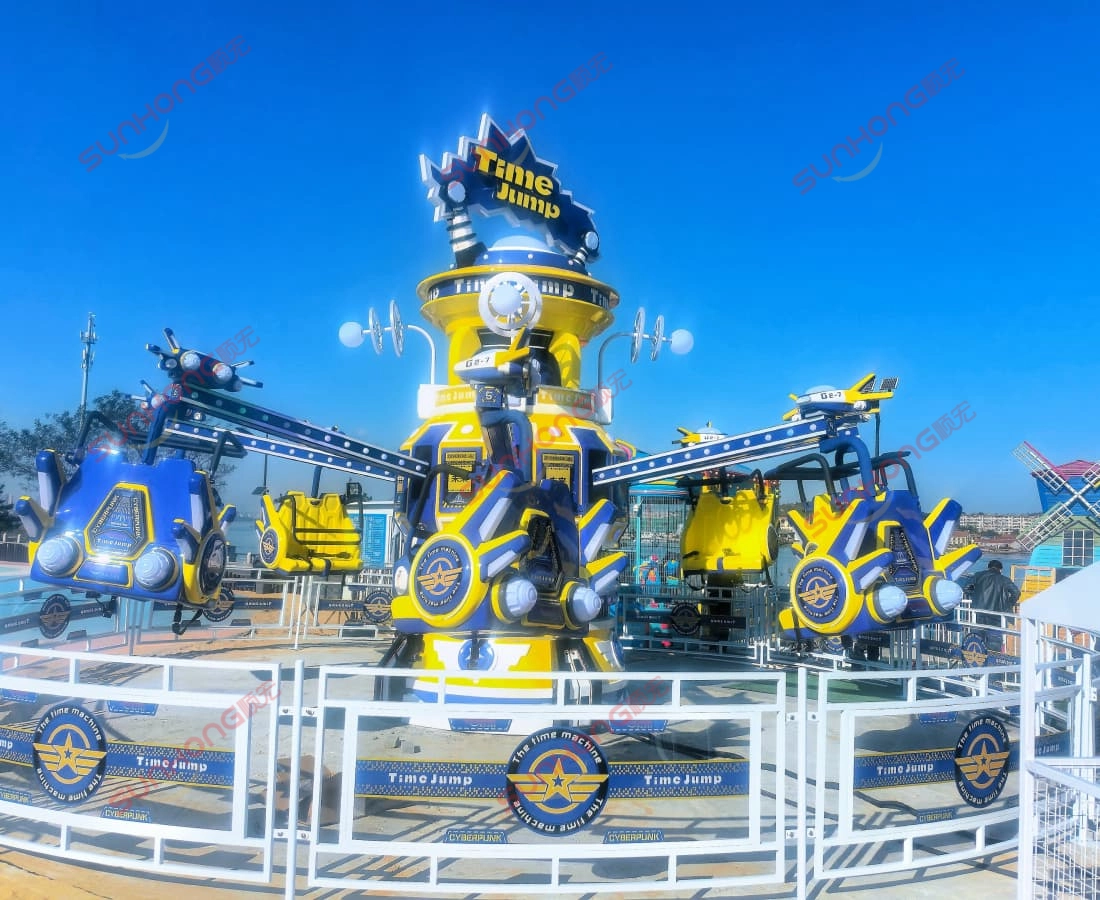
16-Seat Time Jump – Rotating Plane Ride for Amusement Parks
Time Jump is a thrilling and cost-effective amusement ride, 100% originally developed and manufactured by SUNHONG with patented certification. Designed for families and children, it combines motor drive and air-compressor cylinders to achieve dynamic movements—left-right rotation, variable-speed spinning, bouncing seats, and full 360-degree spins.
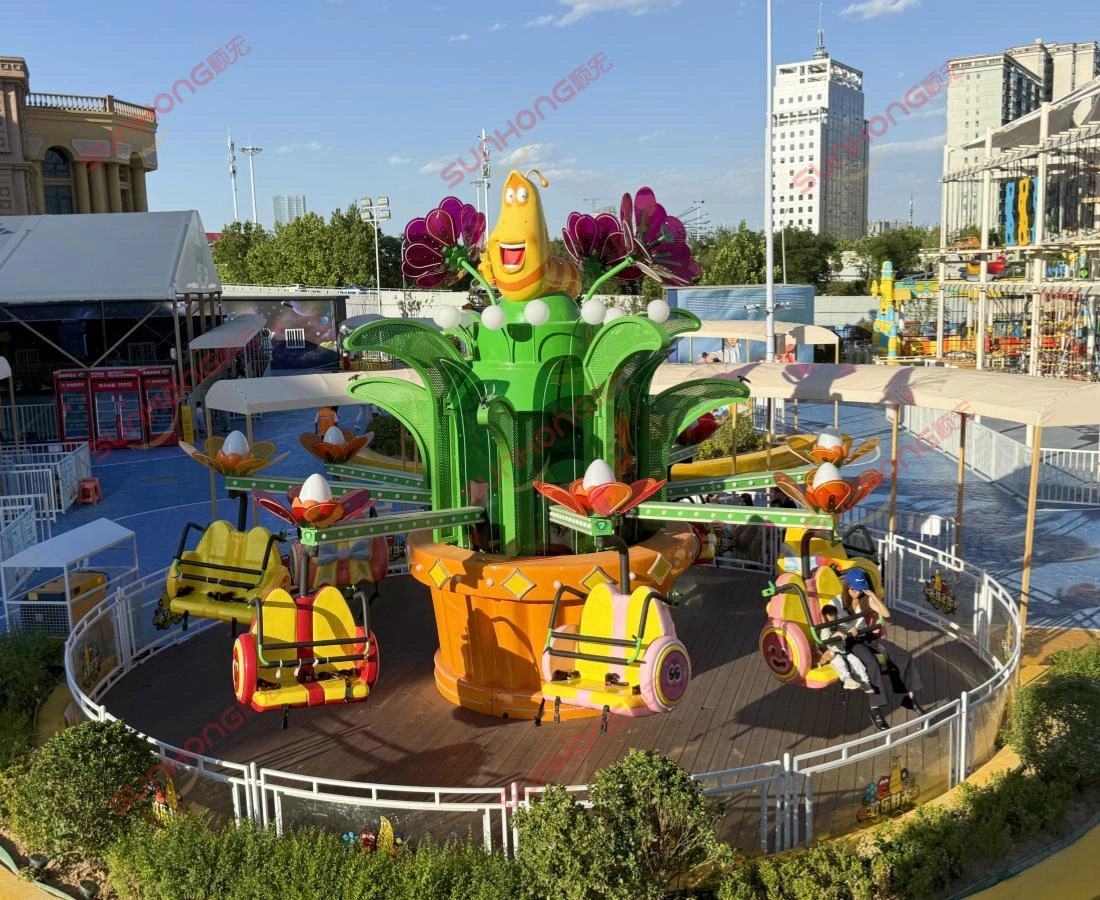
Larva Blooms Bounce Ride – Hot IP Custom Attraction with 360° Spin & Bounce
Larva Blooms is a patented bounce ride inspired by the hit Larva animation series. Featuring full platform rotation, 360° spinning seats, and dynamic bouncing motion, it delivers a thrilling ride experience for families and kids. IP customization available with OEM/ODM service.

360 Degree Rotating Ride Swing Thrill Amusement Rides for Attractions
Air Bus is a stunning addition to our family amusement rides, delivering a one-of-a-kind 360° dual-rotation experience. With its swinging arm and self-spinning cabin, bright yellow flying-bus design, dynamic music effects, and customizable options, this ride is more than just entertainment—it’s a show-stopping centerpiece that helps your park attract crowds.
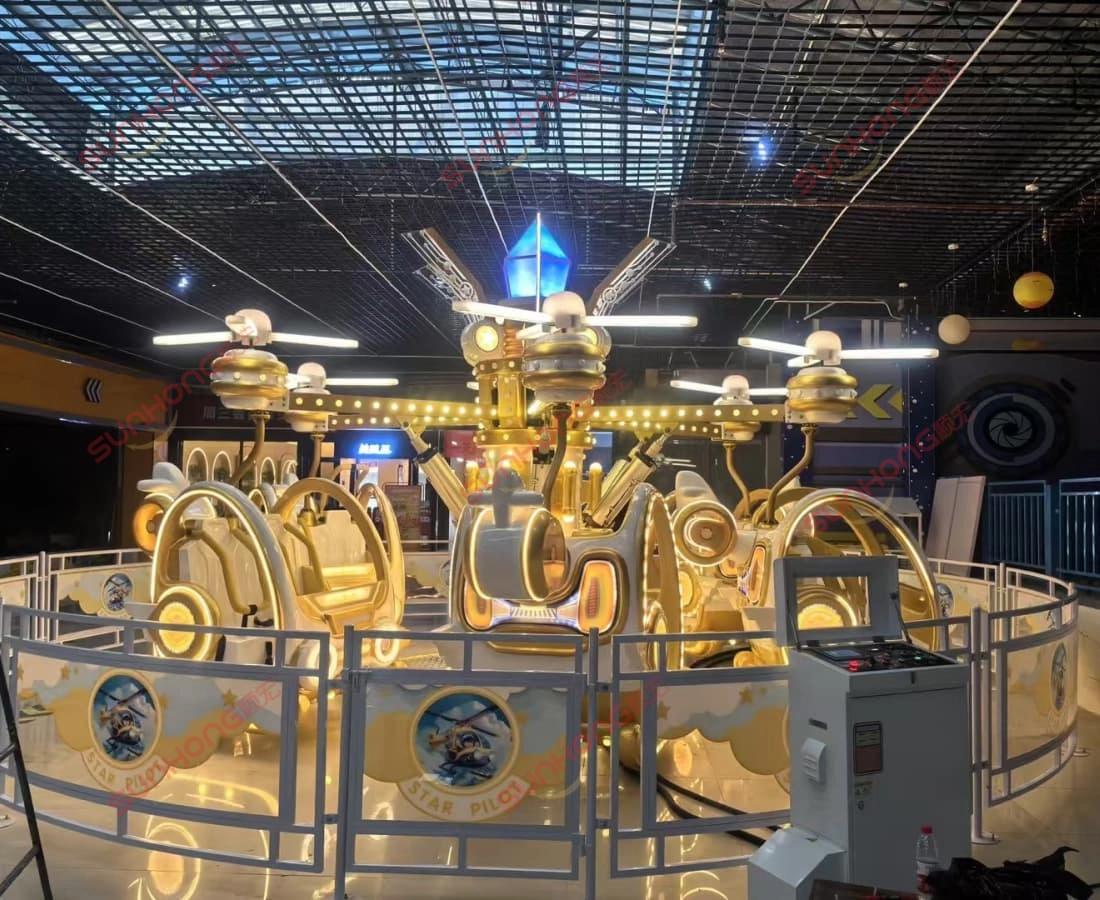
Star Pilot-Rotating Plane Rides for Thrill Rides and Family Rides
Discover SUNHONG’s Star Pilot—High Quality Rotating Plane Rides for sale, expertly designed for thrill rides and family rides. Elevate your amusement park with this safe, reliable, and eye-catching attraction. Make every family adventure unforgettable with innovative Rotating Plane Rides by SUNHONG.
Copyright © 2025 SUNHONG All Reserved.
Guangzhou Shunhong Entertainment Equipment Co.,Ltd.
sunhongrides
SUNHONGAMUSEMENTRIDES
sunhongamusementrides
Scan QR Code