
The B2B Buyer’s Guide to theme park roller coaster
- Introduction: Why a theme park roller coaster is a strategic B2B investment
- Market overview: Demand drivers for theme park roller coaster projects
- Types of theme park roller coaster: choose the model that fits your business
- Steel sit-down and launched coasters
- Inverted and suspended coasters
- Wooden and hybrid coasters
- Family and kiddie coasters
- Key technical specifications to evaluate for a theme park roller coaster
- Footprint and site integration
- Capacity and throughput
- Ride envelope (height, speed, G-forces)
- Power, utilities and foundations
- Safety, standards and compliance for B2B buyers
- Testing, inspection and documentation
- Design, theming and guest experience considerations
- Accessibility and inclusivity
- Manufacturing, procurement and customization: what to expect
- Materials, quality assurance and spare parts
- Installation, construction timelines and project management
- Operation, maintenance and lifecycle costs
- Training and technical support
- Financial considerations and ROI modeling
- Risk mitigation strategies
- How to choose the right manufacturer for your theme park roller coaster
- Case integration: What full-service delivery looks like
- Conclusion: Make buying a theme park roller coaster a strategic, measurable decision
- Frequently Asked Questions
Introduction: Why a theme park roller coaster is a strategic B2B investment
Purchasing a theme park roller coaster is one of the most important capital decisions a park operator can make. A successful theme park roller coaster can boost attendance, increase per-capita spend, and strengthen your park’s brand. This guide walks B2B buyers through the technical, financial and operational considerations you need to evaluate before contracting a supplier.
Market overview: Demand drivers for theme park roller coaster projects
Demand for new and upgraded theme park roller coaster attractions is driven by guest expectations for innovation, social-media-worthy experiences, and the competitive need to refresh park lineups. Parks of all sizes — from regional parks to major destination resorts — invest in roller coasters to drive repeat visitation and seasonal marketing campaigns. When evaluating a theme park roller coaster purchase, align the ride concept with your park’s target demographics and long-term master plan.
Types of theme park roller coaster: choose the model that fits your business
Selecting the right type of theme park roller coaster sets expectations for cost, footprint, throughput and guest experience. Here are common categories:
Steel sit-down and launched coasters
Steel sit-down and launched coasters deliver high speeds and smooth elements. Launched coasters like linear synchronous motor (LSM) or hydraulic launches are popular for high-thrill signature attractions. These are ideal when you need a headline ride to generate publicity for your theme park roller coaster.
Inverted and suspended coasters
Inverted and suspended coasters provide unique ride sensations by placing the train below the track. They’re effective for parks seeking a distinctive ride profile without the maximum height of hypercoasters. Consider them where dynamic inversions and agility are desired.
Wooden and hybrid coasters
Wooden and wooden-steel hybrid coasters offer nostalgia and strong airtime sensations. They appeal to enthusiasts and can be positioned as classic marquee attractions for a theme park roller coaster that blends tradition and modern engineering.
Family and kiddie coasters
Family coasters expand demographic reach by appealing to children and guardians. They usually have lower speed and height profiles but high weekly throughput and repeat rides, making them strong additions to parks focusing on family attendance.
Key technical specifications to evaluate for a theme park roller coaster
Clear technical requirements reduce surprise costs and ensure the ride aligns with operational goals. Important specs include:
Footprint and site integration
Define the available land area and vertical constraints early. Designers will optimize track layout, station placement, and queueing to fit your site. For tight parcels, consider compact or multi-launch coasters that require less footprint for a comparable experience.
Capacity and throughput
Throughput is commonly measured in riders per hour (RPH). Typical ranges: family coasters 400–800 RPH, large modern coasters 800–1,600+ RPH depending on train size and dispatch efficiency. Higher throughput reduces queue times and increases daily revenue potential for a theme park roller coaster.
Ride envelope (height, speed, G-forces)
Decide the experience intensity. Modern coasters can range from low-speed family layouts to extreme rides exceeding 240 km/h (e.g., Formula Rossa). Most commercial coasters operate within safe peak G-forces of roughly 3–5 g for brief peaks. Your target audience and safety limits should guide these choices.
Power, utilities and foundations
Estimate power availability for lifts and launches. Launched coasters need significant instantaneous power or energy storage systems. Foundation depth and soil conditions affect construction cost. Early geotechnical studies are recommended when planning a theme park roller coaster.
Safety, standards and compliance for B2B buyers
Safety is non-negotiable. Request documentation and compliance evidence for every ride component. Key standards and certifications to look for include CE (EU), UKCA (UK), SABER (Saudi), TUV (Germany), and ASTM (USA). SUNHONG holds multiple international certifications and has over 10 years of export experience delivering compliant theme park roller coaster projects to more than 56 nations and regions.
Testing, inspection and documentation
Confirm the manufacturer provides FAT (Factory Acceptance Testing), FAT reports, on-site commissioning tests, and as-built documentation. Ask for maintenance manuals, spare parts lists, and a handover packet that includes safety protocols for daily operations of your theme park roller coaster.
Design, theming and guest experience considerations
Design goes beyond track layout. Theming, queue design, accessibility, and sightlines influence guest satisfaction and dwell time. Discuss immersive elements, such as custom trains, thematic façades, and synchronized audio/lighting packages, with your supplier to ensure the theme park roller coaster matches your park’s brand story.
Accessibility and inclusivity
Design boarding platforms, restraint systems, and station flow to accommodate guests with varying needs. Inclusive design can broaden your audience and improve guest satisfaction metrics for your theme park roller coaster.
Manufacturing, procurement and customization: what to expect
Understand the supplier’s in-house capabilities. A manufacturer with integrated R&D, design, production and construction services reduces coordination risk and improves delivery timelines. SUNHONG offers end-to-end services — from overall planning and exclusive customization to manufacturing and comprehensive construction — enabling turnkey delivery of a theme park roller coaster project.
Materials, quality assurance and spare parts
Ask about steel grades, protective coatings, bolting systems and quality control processes. Long-term access to spare parts and documented replacement schedules is critical for uptime and lifecycle cost planning for your theme park roller coaster.
Installation, construction timelines and project management
Typical lead times vary by project scale. Small family coasters can often be designed, manufactured and installed within 9–12 months. Large custom high-thrill installations may take 12–36 months from contract to opening, factoring in design approval, civil works, permitting and testing. Choose a supplier that provides a dedicated project manager and a clear timeline to coordinate with your park’s construction milestones for a theme park roller coaster.
Operation, maintenance and lifecycle costs
Operational costs include energy, staffing, inspections, spare parts and periodic refurbishments. Plan preventive maintenance regimes to preserve ride availability. Life-cycle cost assessments should consider total cost of ownership over 10–20 years, not only initial CAPEX for your theme park roller coaster.
Training and technical support
Ensure the manufacturer provides operator training, maintenance courses, and remote technical support. On-site commissioning followed by a warranty period and extended maintenance contracts reduces downtime and preserves guest confidence in your theme park roller coaster.
Financial considerations and ROI modeling
Model the project’s ROI using conservative assumptions: expected attendance lift, average spend per guest, and operational cost increases. Consider ancillary revenue from branded merchandise, dedicated photo services and VIP queues tied to your theme park roller coaster. Evaluate financing options, lease structures or phased investments to align cash flow with project goals.
Risk mitigation strategies
Mitigate risks by requesting performance guarantees, milestone-based payments, and clear acceptance criteria. Include clauses for manufacturing defects, delays, and warranty responsiveness in your contract for your theme park roller coaster.
How to choose the right manufacturer for your theme park roller coaster
When selecting a supplier, vet technical capabilities, project history, certifications, and global references. Look for a manufacturer who can offer custom design, strong in-house R&D, proven safety management systems, and turnkey construction capabilities. SUNHONG’s global experience, multiple international certifications (CE, UKCA, SABER, TUV, ASTM) and installations in more than 56 countries make it a qualified partner for operators seeking a full-service provider for a theme park roller coaster project.
Case integration: What full-service delivery looks like
A full-service supplier will guide you through concept planning, feasibility, design approvals, civil works coordination, manufacturing, installation and operational training. This integrated approach shortens timelines and reduces coordination gaps that commonly affect complex theme park roller coaster projects.
Conclusion: Make buying a theme park roller coaster a strategic, measurable decision
Buying a theme park roller coaster is a multi-dimensional decision combining creative design, engineering, safety compliance and financial planning. Define success metrics up front — attendance goals, target demographics, payback period and uptime thresholds — and choose a manufacturer that can deliver verified results. SUNHONG offers turnkey services, global certifications, and a decade-plus of export experience to support operators through every phase of a theme park roller coaster project. Engage early with your supplier to produce a ride that meets guest expectations and delivers measurable business outcomes.
Frequently Asked Questions
Q: What is the typical lead time to deliver a custom theme park roller coaster?A: Lead times vary by scope. Small family coasters can be delivered in 9–12 months, while large custom high-thrill installations typically require 12–36 months for design, manufacturing, civil works and commissioning.
Q: What certifications should I require from a roller coaster manufacturer?A: Require international and local compliance certificates such as CE, UKCA, SABER (if applicable), TUV or ASTM, plus FAT reports, commissioning documentation, and detailed maintenance manuals for the theme park roller coaster.
Q: How do I estimate throughput for a planned coaster?A: Throughput depends on train design, number of trains, dispatch interval and station efficiency. Typical ranges are 400–800 RPH for family coasters and 800–1,600+ RPH for larger modern coasters. Request simulated throughput figures from the manufacturer.
Q: What ongoing costs should I budget for after installation?A: Budget for energy/utility costs, staffing and operations, routine inspections, spare parts, periodic refurbishments and compliance testing. Include contingency for unexpected repairs to ensure the theme park roller coaster remains available.
Q: Why choose a turnkey supplier like SUNHONG for my coaster project?A: Turnkey suppliers consolidate planning, R&D, manufacturing and construction responsibilities, reducing coordination risks and timeline uncertainty. SUNHONG’s in-house teams, global certifications, and international project experience enable efficient delivery of a compliant, customized theme park roller coaster.
Top Amusement Park Rides Manufacturers in 2026
Best professional children amusement rides manufacturers and supplier brands
Amusement Rides Pirate Ship for Sale | SUNHONG
The B2B Buyer’s Guide to rotating carnival ride | SUNHONG Ultimate Insights
12P Knight Sparta
Why should I invest in a carousel for my park?
A carousel is an important symbol of a theme park. Many visitors consider a carousel a must-have, as it is gentler than a roller coaster and is therefore especially popular with children and families. Carousels have a significant impact on the attendance of a theme park.
SUNHONG carousels offer seats from 8 to 54. Make the best choice based on the number of passengers and your budget to maximize your return on investment.
6P Dream Castle Small Carousel Ride for Sale
What certifications are required for a carousel?
SUNHONG’s carousels comply with CE, UL, and ISO9001 Standards, ensuring strict safety, durability, and international compliance for medium and large-scale amusement rides.
Golden Year Carousel
What are the key points to consider before investing in a carousel?
Space requirements: Make sure your park has enough space to accommodate the carousel, and consider factors such as access, visitor traffic, etc.
Budget: The cost of purchasing, transporting, installing, and maintaining the carousel should be within your budget.
Target market: Consider whether the carousel meets the needs of the target customer group, such as whether it is suitable for children, families, or adults.
Safety: Choose a carousel that meets safety standards to ensure the safety of visitors.
Long-term benefits: Consider how much traffic and revenue the carousel can bring to your park.
中小型游乐设备方案推荐
✔ Investment Control:
Low-cost, short construction, and fast results from your investment.
36P Knight Sparta
Can I customize the appearance of the carousel?
Yes, SUNHONG provides you with customized services such as the theme, color, seat shape, and decoration style of the carousel. SUNHONGD's design engineers can create a carousel with exclusive IP or brand according to the overall design of the amusement park to increase the attraction and flow of people in the amusement park.
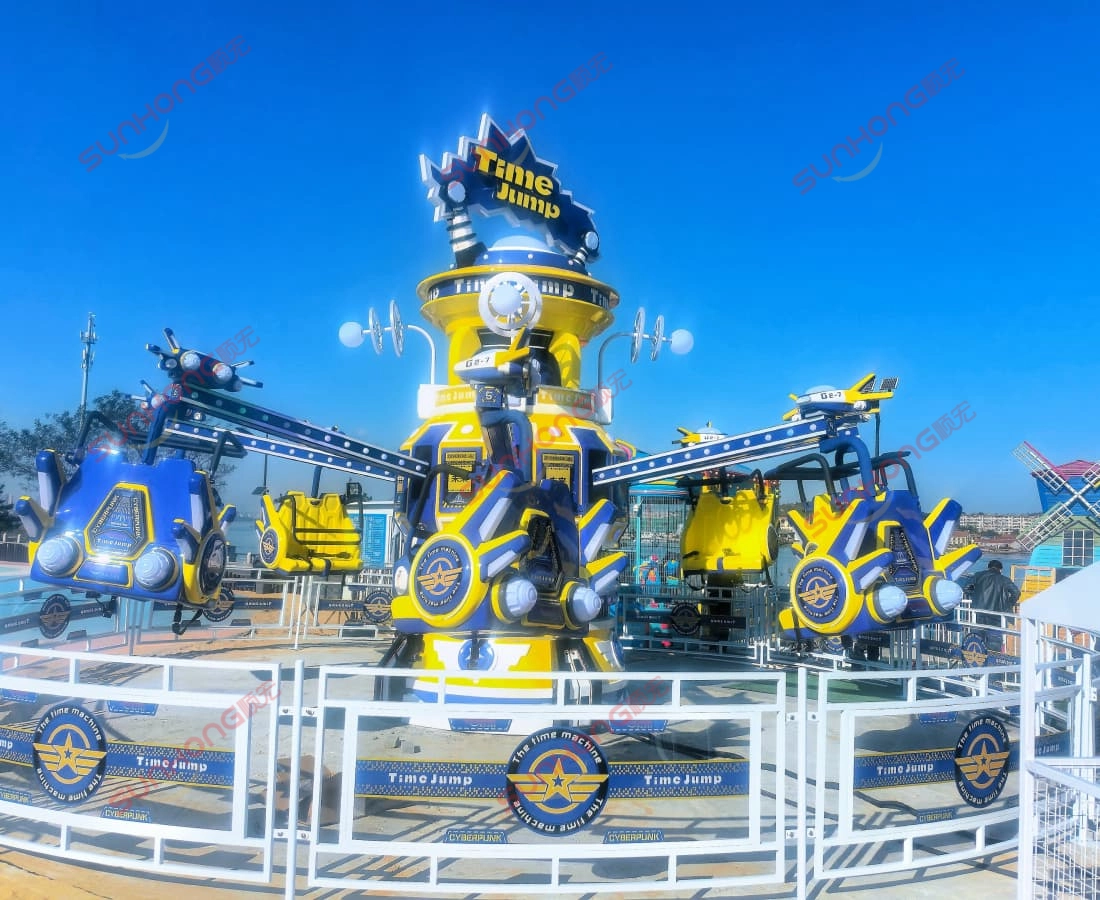
16-Seat Time Jump – Rotating Plane Ride for Amusement Parks
Time Jump is a thrilling and cost-effective amusement ride, 100% originally developed and manufactured by SUNHONG with patented certification. Designed for families and children, it combines motor drive and air-compressor cylinders to achieve dynamic movements—left-right rotation, variable-speed spinning, bouncing seats, and full 360-degree spins.
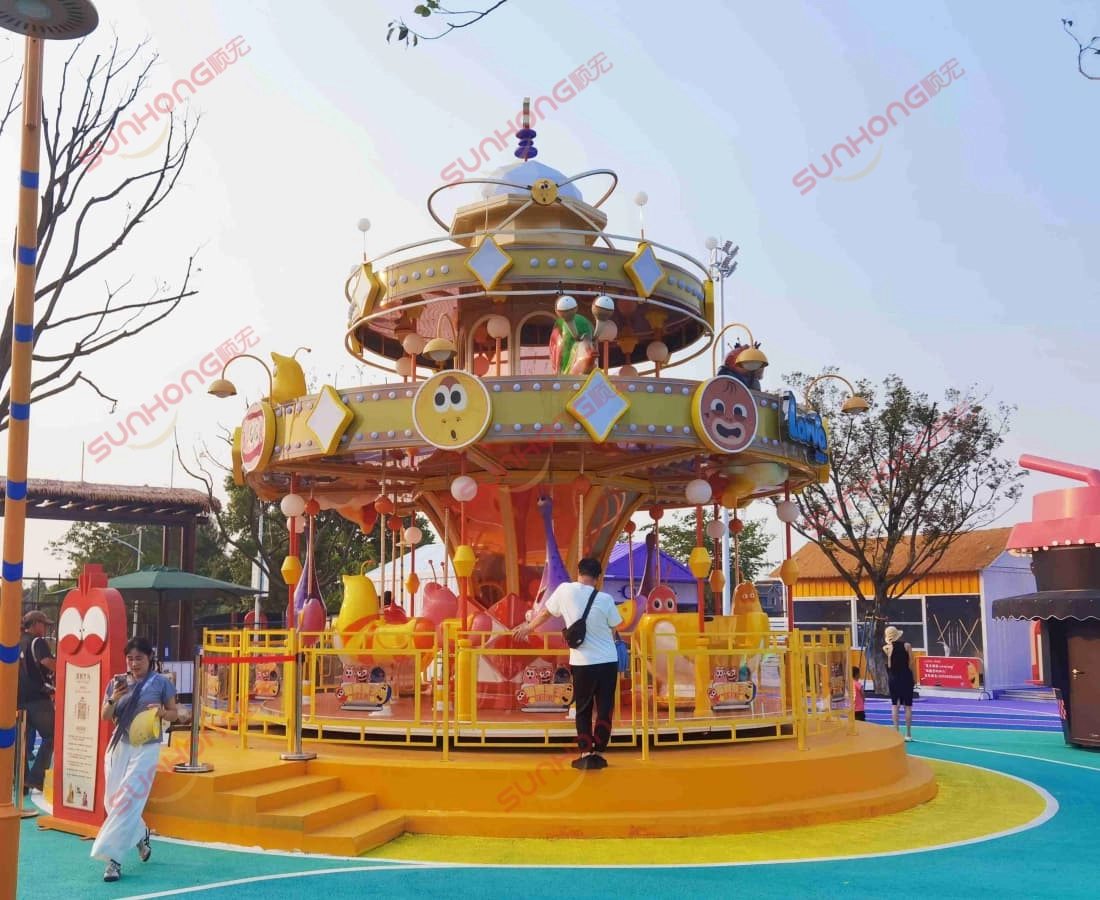
16P Larva Carousel for Sale
The Larva Carousel is a classic two-level ride themed around the beloved Larva animation. It features a variety of well-known characters, including Yellow, Red, Brown, Rainbow, Mantis, Ant, and more. This fun and engaging cartoon has brought endless laughter to children worldwide. With the strong appeal of a popular IP, the Larva Double Decker Carousel offers significant commercial value, making it an ideal carousel for sale for investors.
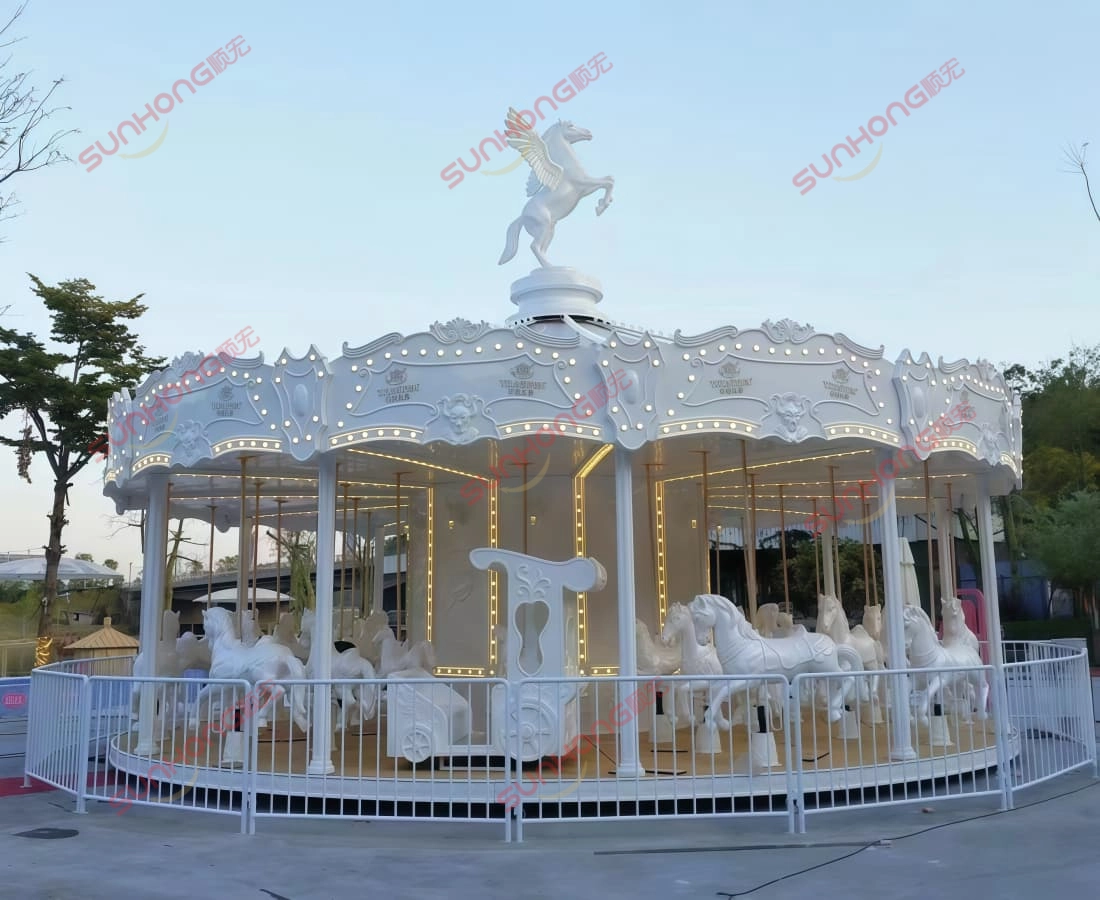
36P Knight Sparta Carousel Ride for Sale
36P Knight Sparta is a carousel ride for sale that supports OEM/ODM customization. Powered by an electric motor, the rotating frame drives seats that move up and down via a crank linkage system, simulating the motion of riding a warhorse. Inspired by the spirit of Spartan warriors—bravery, honor, and responsibility—this ride brings both excitement and meaning to every spin.
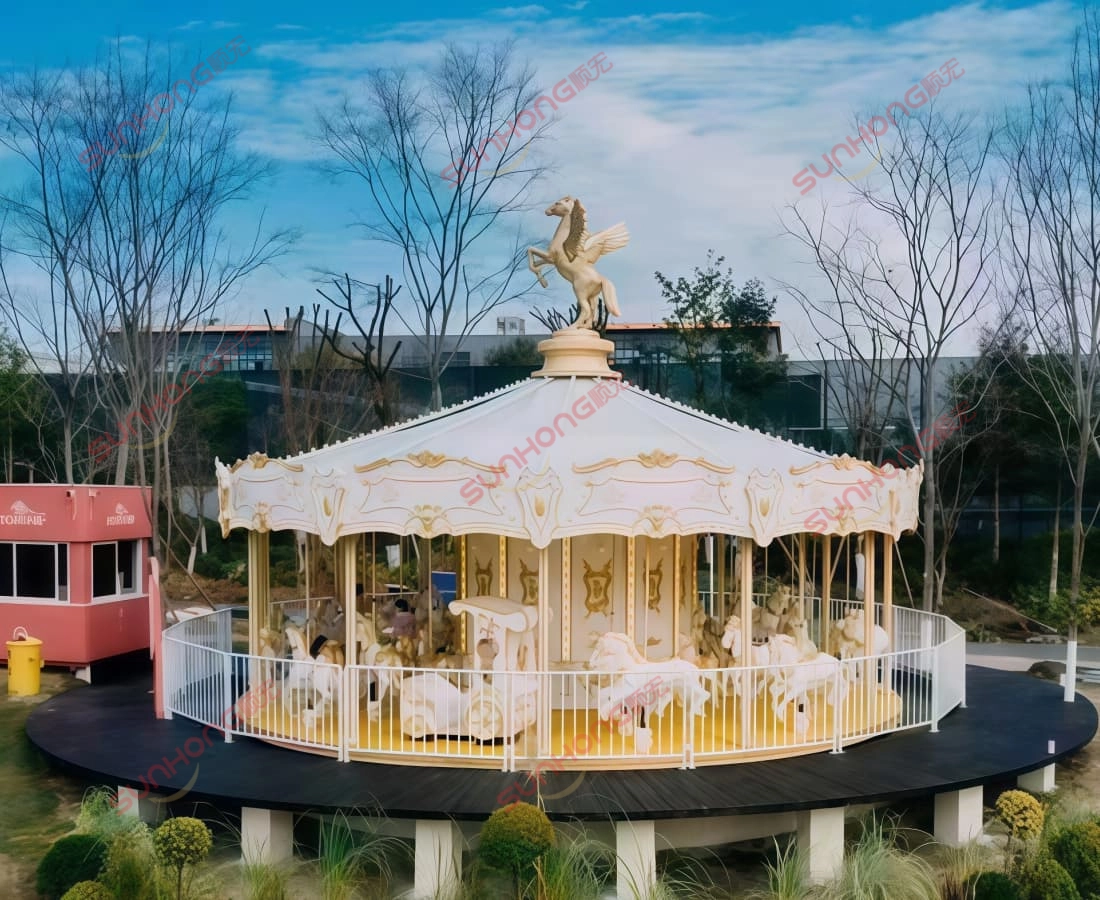
24P Knight Sparta Carousel Horse Ride for Sale
Classic horse-themed carousel horse ride for sale, equipped with double carriage seats, letting passengers feel like they’re galloping through open fields. The advanced motor system keeps the ride smooth, while the seats move up, down, forward, and back for full-on fun. It also comes with a movable base, making it easy to adjust at any site. A joyful experience loved by visitors of all ages!
Copyright © 2025 SUNHONG All Reserved.
Guangzhou Shunhong Entertainment Equipment Co.,Ltd.
sunhongrides
SUNHONGAMUSEMENTRIDES
sunhongamusementrides
Scan QR Code