
Amusement Park Cost Breakdown: Budgeting to Build
- Amusement Park Cost Breakdown: Budgeting to Build a Amusement Park
- Why detailed budgeting matters when you build a amusement park
- Land acquisition and site preparation costs for build a amusement park projects
- Ride and attraction costs: core line items when you build a amusement park
- Infrastructure, utilities, theming and landscaping
- Buildings, concessions and back-of-house considerations
- Soft costs: design, permits, insurance and certifications for building a amusement park
- Operating costs and staffing projections when you build a amusement park
- Financing, contingency and ongoing capital expenditure (CapEx)
- Sample budget scenarios: small, mid-size, and large park examples to build a amusement park
- How to reduce costs without sacrificing guest experience when you build a amusement park
- Why partner with an experienced manufacturer to build a amusement park
- SUNHONG: A turnkey partner to help you build a amusement park
- Project timeline: from concept to opening when you build a amusement park
- Frequently Asked Questions (FAQ)
- Q: How much capital do I need to build a amusement park?
- Q: How long does it take to build an amusement park?
- Q: What ongoing costs should I expect after opening?
- Q: How can I finance a park build?
- Q: Why should I choose a manufacturer with international certifications?
- Contact SUNHONG / View products
- References and data sources
Amusement Park Cost Breakdown: Budgeting to Build a Amusement Park
Why detailed budgeting matters when you build a amusement park
Building an amusement park is capital-intensive and complex. Whether you plan a small family park or a large regional attraction, an accurate budget protects your return on investment, sets realistic expectations for financing, and shapes the guest experience. Many early-stage projects underestimate soft costs — design, permitting, insurance — and overestimate early attendance. By building a realistic, phased budget you reduce risk and improve bankability when negotiating loans or investors.
Land acquisition and site preparation costs for build a amusement park projects
Land is often the single largest upfront expense. Costs depend on location, zoning, accessibility, and environmental constraints. Key items to budget under site acquisition and preparation include:
- Purchase or long-term lease of land
- Zoning changes, environmental studies, and site surveys
- Earthwork, grading, and drainage
- Road access, parking areas, and basic utilities
- Stormwater management and erosion control
Tip: Urban or coastal sites typically cost more but can give higher footfall; rural land is cheaper but usually requires greater infrastructure investment.
Ride and attraction costs: core line items when you build a amusement park
Rides and attractions are the heart of an amusement park and also among the most variable costs. Below is a practical cost-range table to help initial budget planning. These ranges are indicative and will vary by manufacturer, customization, and region.
| Attraction Type | Typical Cost Range (USD) | Notes / Source |
|---|---|---|
| Small flat rides & family rides | $100,000 – $700,000 | Carousel, small Ferris wheels, teacups (manufacturer quotes) |
| Dark rides & interactive attractions | $500,000 – $4,000,000+ | Depends on theming, show systems, and media |
| Water attractions / family water play | $300,000 – $5,000,000 | Pool systems, filtration and safety systems add cost |
| Large roller coasters | $5,000,000 – $30,000,000+ | Steel coasters vary widely on height, length, and tech |
| Specialty signature attractions | $1,000,000 – $20,000,000+ | Unique shows, large animatronics, immersive stages |
Sources: Manufacturer pricing trends and industry reporting. Individual quotes from vendors will determine exact figures. For major attractions, always obtain multiple bids and confirm lifecycle costs (maintenance, spare parts).
Infrastructure, utilities, theming and landscaping
Beyond rides, guest-facing infrastructure defines comfort and the perceived value of your park. Budget items include:
- Roads, sidewalks, and guest circulation
- Sanitation, potable water, fire protection systems
- Electrical distribution, backup power, lighting
- Theming, facades, signage, and landscape architecture
- Waste management and recycling systems
Typically, infrastructure and theming account for 20–40% of project hard costs depending on the level of immersion. Highly themed parks spend more on custom sets, scenic finishes, and high-quality materials.
Buildings, concessions and back-of-house considerations
Concessions, restrooms, first aid, operations control rooms, and maintenance buildings are essential. Include HVAC, refrigeration, food service equipment, and security systems in your budget. Back-of-house (workshops, parts storage) should be planned to optimize ride uptime and maintenance efficiency.
Soft costs: design, permits, insurance and certifications for building a amusement park
Soft costs often surprise new developers. Typical items and approximate ranges:
- Master planning, architectural and engineering fees: 6–12% of hard costs
- Permitting, environmental impact assessments: variable, often 1–5% of project
- Insurance during construction and for operations (liability, property): variable but essential
- Testing, certification and third-party inspections per standards such as ASTM, EN/CE, TÜV, UKCA
Manufacturers and contractors often work directly with third-party certifiers to ensure compliance. If you intend to export attractions or buy internationally, confirm the vendor’s certifications (CE, UKCA, SABER, TÜV, ASTM) early in procurement.
Operating costs and staffing projections when you build a amusement park
Operating costs include wages, utilities, maintenance, marketing, insurance, and consumables. For a realistic operating budget, consider:
- Staffing levels by season (guest services, ride operators, maintenance, security)
- Payroll taxes and benefits
- Maintenance contracts and spare parts inventories
- Marketing and events to attract guests
- Utilities (energy for rides, HVAC, water for attractions)
Example: Labor often represents 25–45% of annual operating expenses in many parks. Use local wage data (e.g., national labor statistics) to finalize staff cost projections.
Financing, contingency and ongoing capital expenditure (CapEx)
Plan a contingency reserve of 10–20% for unforeseen costs during construction and a separate annual CapEx reserve (3–7% of asset value) for refurbishments and replacements. Financing strategies include:
- Equity investors or private partners
- Bank loans or construction financing
- Public-private partnerships (for parks with civic goals)
- Phased build to spread capital expenditure and accelerate return
A clear cashflow forecast for the first 3–5 years helps lenders and investors evaluate risk.
Sample budget scenarios: small, mid-size, and large park examples to build a amusement park
Below are simplified sample budgets to illustrate scale and allocation. These are illustrative only — actual figures will vary by market, land, and design.
| Component | Small Park (est. $5M total) | Mid-size Park (est. $25M total) | Large Park (est. $120M total) |
|---|---|---|---|
| Land & Site Prep | $0.5M (10%) | $3.75M (15%) | $30M (25%) |
| Rides & Attractions | $2.0M (40%) | $8.75M (35%) | $36M (30%) |
| Infrastructure & Theming | $1.0M (20%) | $5.0M (20%) | $30M (25%) |
| Soft Costs & Permits | $0.5M (10%) | $2.5M (10%) | $12M (10%) |
| Contingency & Other | $1.0M (20%) | $5.0M (20%) | $12M (10%) |
Note: Percentages are illustrative to show allocation patterns. Many operators choose phased development to start with a smaller footprint and expand based on performance.
How to reduce costs without sacrificing guest experience when you build a amusement park
Cost control strategies that preserve guest satisfaction:
- Phased development: open core attractions first and add signature rides later
- Mix high-capex signature rides with high-throughput lower-cost family rides
- Standardize ride platforms and components to reduce spare parts inventory
- Use modular theming and prefabricated structures
- Negotiate long-term service contracts with ride manufacturers to stabilize maintenance costs
Why partner with an experienced manufacturer to build a amusement park
Choosing an experienced ride manufacturer and integrator can significantly improve cost predictability, safety compliance, and project speed. A full-service partner can offer combined services — from master planning to installation and after-sales — reducing coordination overhead and accelerating time-to-open.
SUNHONG: A turnkey partner to help you build a amusement park
SUNHONG is a large-scale comprehensive amusement ride manufacturer dedicated to research and development, design, manufacture, and sales of amusement rides. Sunhong specializes in overall planning, R&D design, exclusive customization, manufacturing, comprehensive construction, and operation management, offering reach global services. With a robust team of in-house experts in R&D, production and construction, SUNHONG provides comprehensive services from initial concept to final project completion.
Key SUNHONG strengths relevant to your build a amusement park project:
- Full project support from master planning and design to installation and training
- More than 10 years of export experience and installations in over 56 nations and regions
- International certifications including CE (EU), UKCA (UK), SABER (Saudi Arabia), TÜV (Germany) and ASTM (United States), helping ease regulatory approvals in many markets
- In-house R&D and manufacturing, enabling customization while managing quality and lead times
Core products and capabilities: amusement park equipment, amusement park design, and amusement park rides. SUNHONG’s integrated service model reduces the number of external contractors required, simplifies procurement, and helps control costs across design and construction stages. For more information, visit https://www.isunhong.com/.
Project timeline: from concept to opening when you build a amusement park
Typical timeline (variable by size and approvals):
- Concept & Feasibility: 2–6 months
- Design & Engineering: 6–12 months
- Permitting & Approvals: 3–12 months (concurrent with design where possible)
- Procurement & Manufacturing of Rides: 6–18 months depending on customization
- Site Construction & Installation: 6–18 months
- Testing, Certification & Staff Training: 1–3 months
For large parks, entire predevelopment to opening often spans 24–48 months. Phased openings can reduce time-to-revenue and spread capital requirements.
Frequently Asked Questions (FAQ)
Q: How much capital do I need to build a amusement park?
A: It depends on scale. Small family parks often start around $3–10M, mid-size regional parks typically range $20–50M, and large destination parks commonly exceed $100M. Land, rides, and infrastructure are the key drivers.
Q: How long does it take to build an amusement park?
A: From feasibility to opening, 12–48 months is common. Smaller parks can open in about a year if approvals go smoothly; larger parks require longer design, manufacturing, and construction windows.
Q: What ongoing costs should I expect after opening?
A: Expect payroll (often 25–45% of operating costs), utilities, maintenance, marketing, insurance, and periodic capital renewals (CapEx). Factor in seasonal variability and promotional spend to maintain attendance.
Q: How can I finance a park build?
A: Financing mix often includes equity, bank loans, vendor financing, and sometimes public incentives. A phased build or pre-sales (annual passes, memberships) can reduce required debt.
Q: Why should I choose a manufacturer with international certifications?
A: International certifications like CE, UKCA, TÜV and ASTM demonstrate compliance with recognized safety and manufacturing standards. They simplify regulators’ acceptance and reduce risk during international procurement and operations.
Contact SUNHONG / View products
If you are planning to build a amusement park and want a turnkey partner who can support everything from master planning to ride supply and installation, contact SUNHONG. Their integrated services help control costs, manage certification, and ensure smooth project delivery. Visit: https://www.isunhong.com/ to request a project consultation or view their portfolio of amusement park equipment and rides.
References and data sources
- International Association of Amusement Parks and Attractions (IAAPA) — industry reports and statistics
- U.S. Bureau of Labor Statistics (BLS) — wage data and labor cost guidance
- ASTM International — safety standards for amusement rides
- TÜV and CE certification bodies — manufacturer certification frameworks
- Industry publications and trade outlets such as Blooloop and Amusement Today for ride cost reporting and manufacturer trends
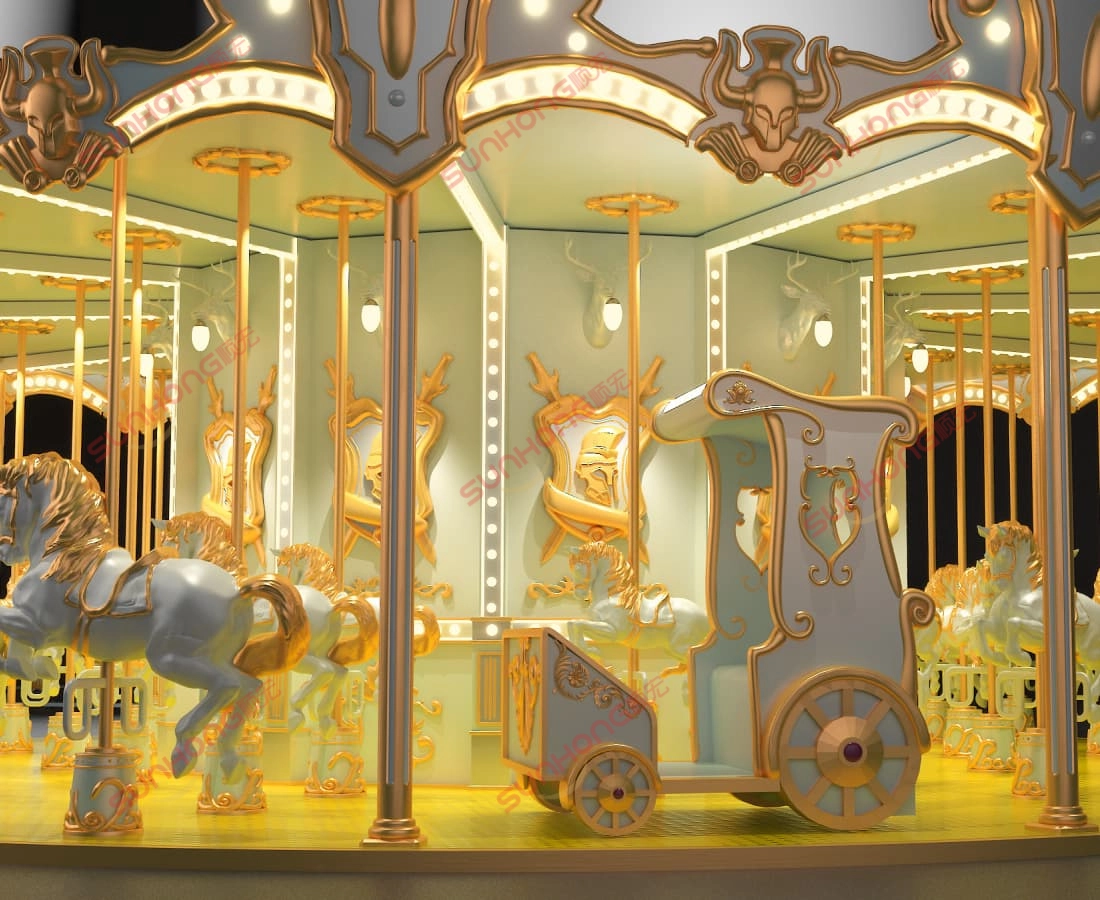
36-Seater Carousel: Perfect for Parks & Family Centers
Top amusement park rides Manufacturers and Suppliers in US
Wholesale pirate ship amusement ride manufacturer and supplier
Bungee Trampoline for Kids: Age and Safety Guidelines
36P Knight Sparta
What certifications are required for the carousel?
The following certifications are held by SUNHONG's carousel: CE, UL, and ISO9001 Quality Management System certification. These certifications ensure that the carousel meets the relevant safety and quality standards, ensuring the safety of the visitors.
What Are The Key Things To Consider Before investing In A Merry-Go-Round Ride?
Space requirements: Make sure your park has enough space to accommodate the carousel, taking into account factors such as access, visitor flow, etc.
Budget: The purchase, transportation, installation, and maintenance costs of the carousel should be within your budget.
Target Market: Analyze whether the carousel meets the needs of your target customer group, for example, suitable for children, families, or adults.
Safety: Choose a carousel that meets safety standards to ensure the safety of visitors.
Long-term Benefits: Consider how much visitor flow and revenue the carousel will bring to your park.
SUNHONG’s engineering team, consisting of over 50 professionals, offers you a one-stop amusement park design service that integrates design, production, installation, and operation.
中小型游乐设备方案痛点
How does SUNHONG improve visitor attraction and engagement?
We enhance park appeal with themed design and interactive experiences, increasing both engagement and revisit rates.
6P Dream Castle Small Carousel Ride for Sale
What are the key factors to consider before purchasing a carousel?
In addition to space and budget, consider the ride cycle, safety performance, and whether the style is suitable for your audience. For large carousels, the stability of the electrical system and the ease of maintenance are also crucial."
Golden Year Carousel
What are the key points to consider before investing in a carousel?
Space requirements: Make sure your park has enough space to accommodate the carousel, and consider factors such as access, visitor traffic, etc.
Budget: The cost of purchasing, transporting, installing, and maintaining the carousel should be within your budget.
Target market: Consider whether the carousel meets the needs of the target customer group, such as whether it is suitable for children, families, or adults.
Safety: Choose a carousel that meets safety standards to ensure the safety of visitors.
Long-term benefits: Consider how much traffic and revenue the carousel can bring to your park.
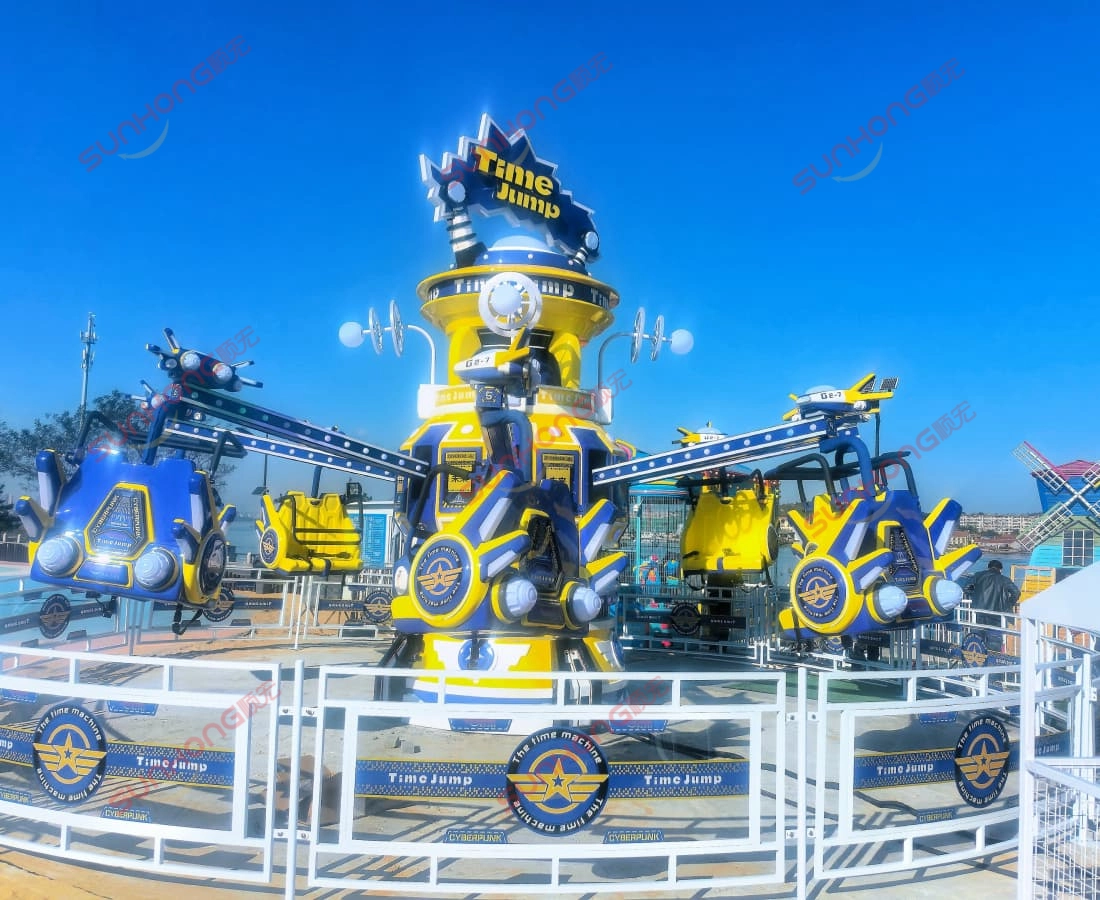
16-Seat Time Jump – Rotating Plane Ride for Amusement Parks
Time Jump is a thrilling and cost-effective amusement ride, 100% originally developed and manufactured by SUNHONG with patented certification. Designed for families and children, it combines motor drive and air-compressor cylinders to achieve dynamic movements—left-right rotation, variable-speed spinning, bouncing seats, and full 360-degree spins.
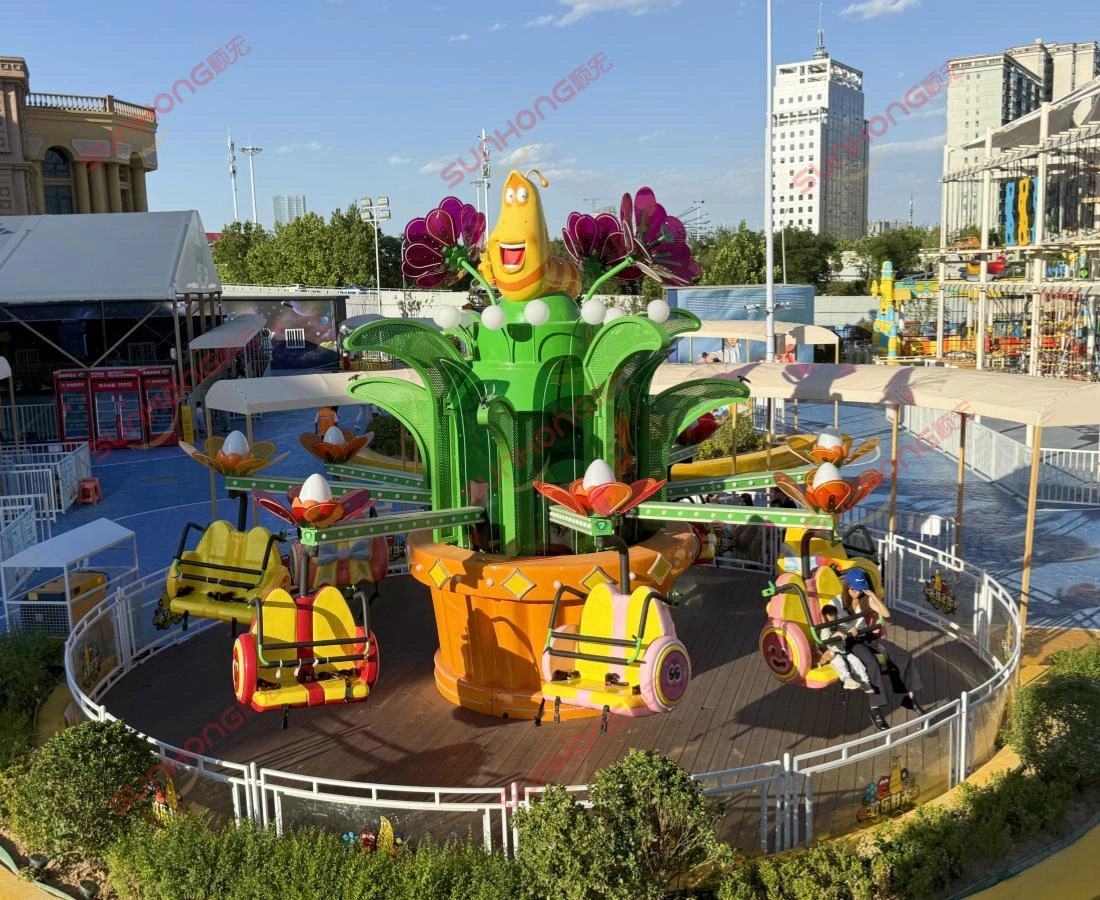
Larva Blooms Bounce Ride – Hot IP Custom Attraction with 360° Spin & Bounce
Larva Blooms is a patented bounce ride inspired by the hit Larva animation series. Featuring full platform rotation, 360° spinning seats, and dynamic bouncing motion, it delivers a thrilling ride experience for families and kids. IP customization available with OEM/ODM service.

360 Degree Rotating Ride Swing Thrill Amusement Rides for Attractions
Air Bus is a stunning addition to our family amusement rides, delivering a one-of-a-kind 360° dual-rotation experience. With its swinging arm and self-spinning cabin, bright yellow flying-bus design, dynamic music effects, and customizable options, this ride is more than just entertainment—it’s a show-stopping centerpiece that helps your park attract crowds.
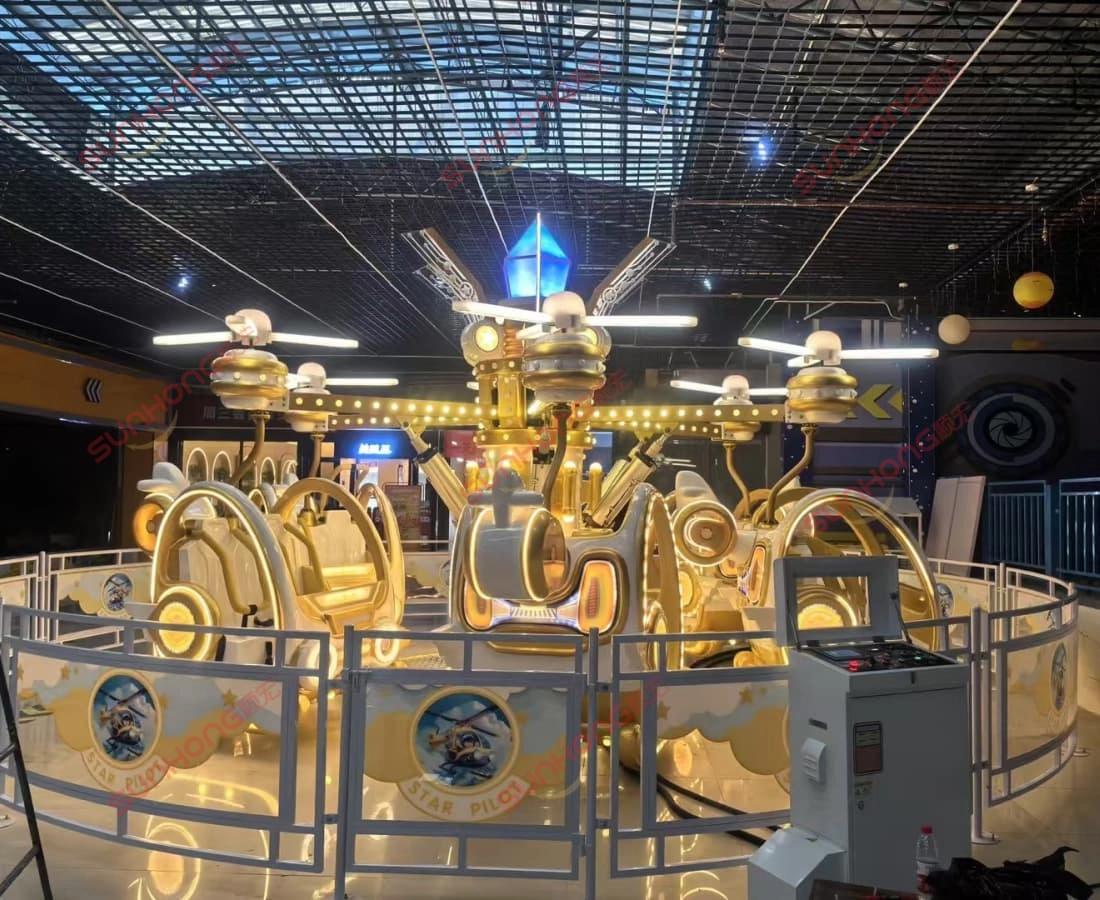
Star Pilot-Rotating Plane Rides for Thrill Rides and Family Rides
Discover SUNHONG’s Star Pilot—High Quality Rotating Plane Rides for sale, expertly designed for thrill rides and family rides. Elevate your amusement park with this safe, reliable, and eye-catching attraction. Make every family adventure unforgettable with innovative Rotating Plane Rides by SUNHONG.
Copyright © 2025 SUNHONG All Reserved.
Guangzhou Shunhong Entertainment Equipment Co.,Ltd.
sunhongrides
SUNHONGAMUSEMENTRIDES
sunhongamusementrides
Scan QR Code