The B2B Buyer’s Guide to swing amusement ride | SUNHONG Ultimate Insights
- The B2B Buyer’s Guide to swing amusement ride | SUNHONG Insights
- Overview for Buyers
- Why Invest in a swing amusement ride?
- Common Types of swing amusement ride
- Key Technical Specifications to Compare
- Safety Standards and Certifications
- Capacity, Throughput and Guest Flow Planning
- Customization and Theming Opportunities
- Site, Foundation and Installation Considerations
- Operation, Maintenance and Lifecycle Planning
- Procurement Process and Lead Times
- Cost Factors and Budgeting
- Return on Investment and Commercial KPIs
- Warranty, Spare Parts and After-Sales Support
- How to Choose the Right Manufacturer
- Real-World Considerations and Case Examples
- Final Recommendations for B2B Buyers
- Conclusion
The B2B Buyer’s Guide to swing amusement ride | SUNHONG Insights
Overview for Buyers
Buying a swing amusement ride is a strategic decision for parks, family entertainment centers, resorts, and FEC operators. This guide helps B2B buyers compare options, assess risks, plan budgets, and choose a manufacturer that delivers safety, reliability, and strong guest experiences. SUNHONG, a large-scale manufacturer with over 10 years of export experience and installations in more than 56 countries, offers end-to-end services from R&D to construction and operation management—making it an ideal partner for turnkey projects.
Why Invest in a swing amusement ride?
Swing amusement rides are crowd-pleasers: they appeal to families, teens, and thrill-seekers when designed with appropriate intensity and theming. They typically have high visibility, repeatability of riders, and scalable throughput—properties that help boost per-visitor revenue through increased ride capacity and guest satisfaction. For operators with limited footprint, a well-chosen swing attraction delivers strong return on space and capital compared with large footprint rides.
Common Types of swing amusement ride
Understanding ride types is crucial to align product selection with target audience and park layout. Swing ride families include chain swings (Wave Swinger/Chair-O-Plane), pendulum swings (high-thrill pendulum that rotates and swings), and novelty swings (themed boats or nets). Each type has different footprint, height, capacity, and maintenance profiles. SUNHONG designs and customizes across these classes to meet project-specific goals.
Key Technical Specifications to Compare
When evaluating suppliers, compare these core specs: maximum height, diameter/footprint, number of seats/chairs, rated capacity (persons per cycle), cycle time, rated throughput (riders per hour), power requirements (kW and voltage), and structural materials/coatings. These parameters directly impact operational planning, foundation design, and utility provisioning.
Safety Standards and Certifications
Safety certifications are non-negotiable. Verify that manufacturers meet internationally recognized standards such as CE (EU), UKCA (UK), ASTM (US), TÜV (Germany), and region-specific approvals like SABER (Saudi Arabia). SUNHONG holds multiple global certificates, ensuring products meet structural integrity, electrical safety, restraint systems, and testing requirements. Always request documented conformity certificates and factory quality control records as part of the RFP.
Capacity, Throughput and Guest Flow Planning
Throughput determines how many riders you can serve during peak periods. Typical swing amusement ride throughput ranges from 300 to 1,200 riders per hour depending on seat count and cycle time. For example, a 40-seat chair swing with a 3-minute cycle can achieve approximately 800 pph. Match ride capacity to expected peak demand and overall park flow to avoid bottlenecks. Consider operator staffing, queuing systems, and accessibility in throughput calculations.
Customization and Theming Opportunities
Theming and customization elevate a swing ride from mechanical equipment to a memorable attraction. Options include custom color schemes, integrated LED lighting, themed canopies, custom seats, audio systems, and branded signage. SUNHONG provides exclusive customization services and in-house design support to ensure thematic consistency with your park’s IP or seasonal events, while still meeting safety and maintenance needs.
Site, Foundation and Installation Considerations
Early coordination between procurement, civil engineers, and the manufacturer prevents costly delays. Swing rides require a stable foundation sized to the ride’s dynamic loads; your structural engineer should use the manufacturer’s load and anchor details. Plan for crane access, clearances for rotating elements, service access, and nearby utilities. SUNHONG offers comprehensive construction services and can provide foundation drawings, on-site supervision, and installation teams to streamline delivery.
Operation, Maintenance and Lifecycle Planning
Operational uptime depends on a proactive maintenance program. Ask manufacturers for recommended maintenance schedules, spare parts lists, and service agreements. Typical maintenance tasks include daily inspections of restraints, weekly lubrication, monthly structural checks, annual non-destructive testing (NDT) for critical welds, and periodic electrical audits. Factor in lifecycle costs—parts, labor, and downtime—when assessing total cost of ownership.
Procurement Process and Lead Times
A clear procurement roadmap saves time. Typical steps: initial RFP and technical proposal, design approval and customization, contract and deposit, manufacturing and quality inspections (including FAT), shipping and customs clearance, site installation, and commissioning. Manufacturing lead times for customized swing rides commonly range from 8 to 20 weeks depending on complexity; international shipping and customs add further time. SUNHONG’s decade-plus export experience helps optimize lead times and documentation for smooth global delivery.
Cost Factors and Budgeting
Cost drivers include ride type and scale, level of customization, certifications, foundation and civil work, shipping distance, and after-sales service. Initial purchase price is only part of the equation—installation, commissioning, training, spare parts, and maintenance contracts must be part of the budget. Discuss financing options and phased rollouts with manufacturers to manage capex. SUNHONG supports clients from concept costing through to operational handover to help forecast realistic CAPEX and OPEX.
Return on Investment and Commercial KPIs
Estimate ROI using metrics such as payback period, incremental revenue per rider, and incremental attendance attributable to the new ride. Consider non-ticket revenue impact—improved guest dwell time often increases F&B and retail spend. Use a conservative estimate of ride utilization and variable pricing (e.g., High Quality access or fast-track) to model returns. SUNHONG can provide historic operational benchmarks to support feasibility studies.
Warranty, Spare Parts and After-Sales Support
Confirm warranty terms, spare parts availability, remote diagnostic capabilities, and local service networks. A manufacturer that stocks critical wear parts and offers fast shipping reduces downtime risk. SUNHONG’s global service model and in-house production capability help ensure parts availability and technical support across regions where its rides are installed.
How to Choose the Right Manufacturer
Evaluate manufacturers on engineering credentials, project references, certification portfolio, financial stability, factory inspections, and post-delivery support. Request reference park visits and case studies. For B2B buyers, the right partner combines product quality with construction and operational know-how—areas where SUNHONG’s integrated services and global certifications offer an advantage.
Real-World Considerations and Case Examples
When possible, review installed rides for maintenance history, guest feedback, and throughput performance. SUNHONG has installations across 56+ countries and provides case documentation to prospective clients, showing performance under different climates and regulatory regimes. Use those references to validate claims and understand real operational implications.
Final Recommendations for B2B Buyers
Start early, define your operational goals (capacity, intensity, target demographic), and build a complete RFP that includes technical, civil, and O&M requirements. Prioritize safety certifications, ask for detailed inspection records, and ensure the manufacturer can support installation and spare parts in your market. Consider full-service partners like SUNHONG that offer R&D, exclusive customization, manufacturing, construction, and operation management to reduce coordination risk and streamline delivery.
Conclusion
A successful investment in a swing amusement ride depends on aligning ride selection with guest demographics, capacity needs, site constraints, safety standards, and long-term operational plans. B2B buyers should seek manufacturers with verifiable certifications, global experience, and full-service capabilities. SUNHONG’s decade of export experience, multi-country certifications, and integrated service model make it a strong partner for operators seeking reliable, customized swing amusement ride solutions delivered end-to-end.
Frequently Asked Questions:
What are the typical throughput numbers for swing amusement rides?Throughput varies by design. Typical ranges are 300–1,200 riders per hour depending on seat count and cycle time. Use seat count multiplied by cycles per hour to estimate practical throughput.
What certifications should I require from suppliers?Require internationally recognized certifications applicable to your market: CE, UKCA, ASTM, TÜV, and any local approvals (for example, SABER in Saudi Arabia). Also request factory quality records and FAT documentation.
How long does manufacturing and delivery take?Custom builds commonly take 8–20 weeks to manufacture depending on complexity, plus shipping and customs time. Final timelines depend on design approvals and customization scope.
What are the main maintenance needs for swing rides?Daily inspections of restraints and safety systems, periodic lubrication, monthly structural checks, annual NDT for critical welds, and scheduled electrical system reviews. A preventive maintenance plan minimizes downtime.
Can the ride be themed or customized?Yes. Manufacturers typically offer color schemes, lighting, canopies, theming, audio, and custom seating. Ensure themed additions comply with safety and evacuation requirements.
Does SUNHONG provide installation and after-sales support?SUNHONG provides comprehensive services from design and manufacturing to construction, installation supervision, commissioning, and operation management. They also offer spare parts support and after-sales service for installed rides.
Theme and Branding Ideas for Amusement Park Launch
The B2B Buyer’s Guide to amusement ride suppliers
Top amusement carousels Manufacturers and Suppliers
The B2B Buyer’s Guide to roller coaster rides
14P Marvelous Circus
What key factors should be considered before purchasing a carousel?
In addition to space and budget, consider the ride cycle, safety performance, and whether the style fits your audience. For large carousels, the stability of the electrical system and ease of maintenance are also important.
12P Earl Carousel Merry Go Round for Sale
What certifications are required for the carousel?
SUNHONG’s carousels comply with CE, UL, and ISO9001 standards, ensuring strict safety, durability, and international compliance for mid-to-large amusement facilities.
products
What is the lead time for manufacturing a ride?
Lead time varies by ride type and customization, typically ranging from 3 to 6 months.
Home页
Can you design rides or parks based on specific IP or cultural themes?
Yes, we specialize in creating theme parks and rides based on IP, such as Larva, or any cultural theme. Our team ensures immersive and unique experiences tailored to your requirements.
Golden Year Carousel
How many seats does the carousel have?
A: The number of seats of SUNHONG carousels ranges from 8 to 54. SUNHONG engineers can design the most suitable carousel according to the scale of the amusement park and the flow of visitors, thereby maximizing economic benefits.
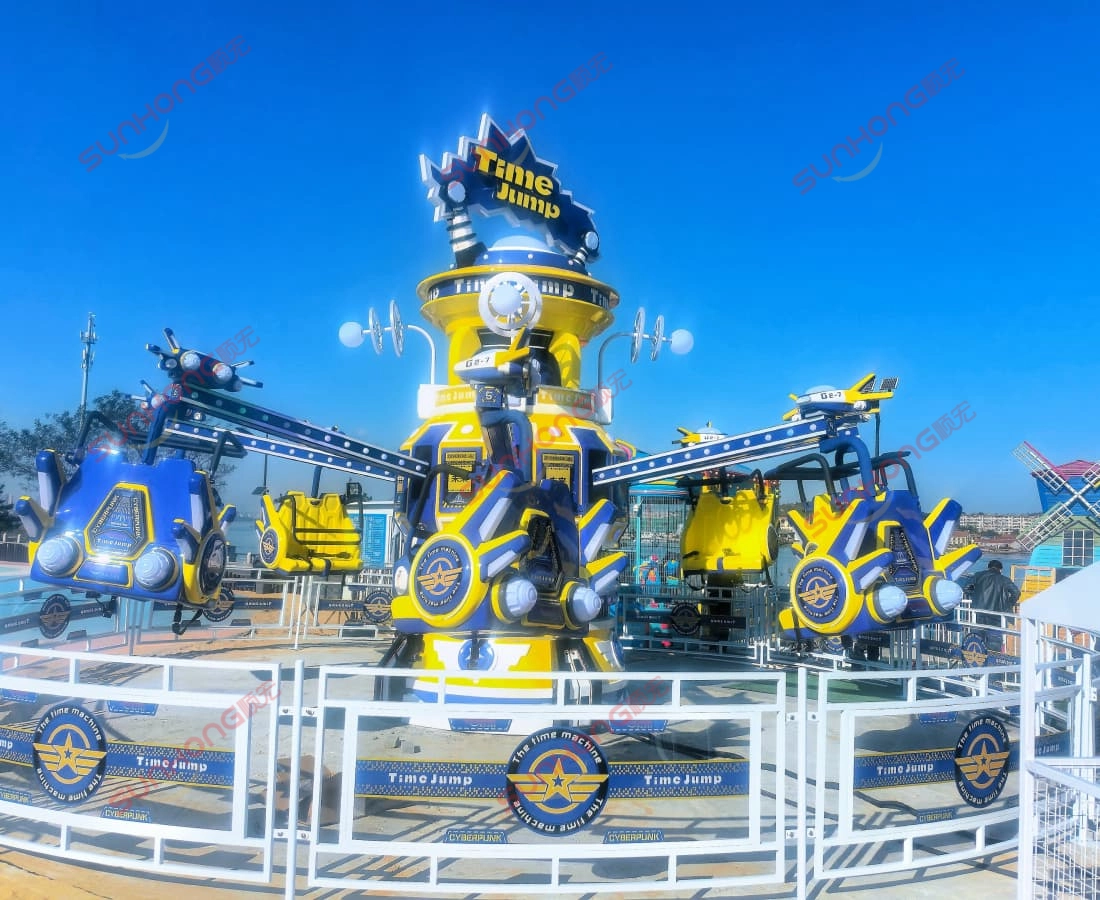
16-Seat Time Jump – Rotating Plane Ride for Amusement Parks
Time Jump is a thrilling and cost-effective amusement ride, 100% originally developed and manufactured by SUNHONG with patented certification. Designed for families and children, it combines motor drive and air-compressor cylinders to achieve dynamic movements—left-right rotation, variable-speed spinning, bouncing seats, and full 360-degree spins.
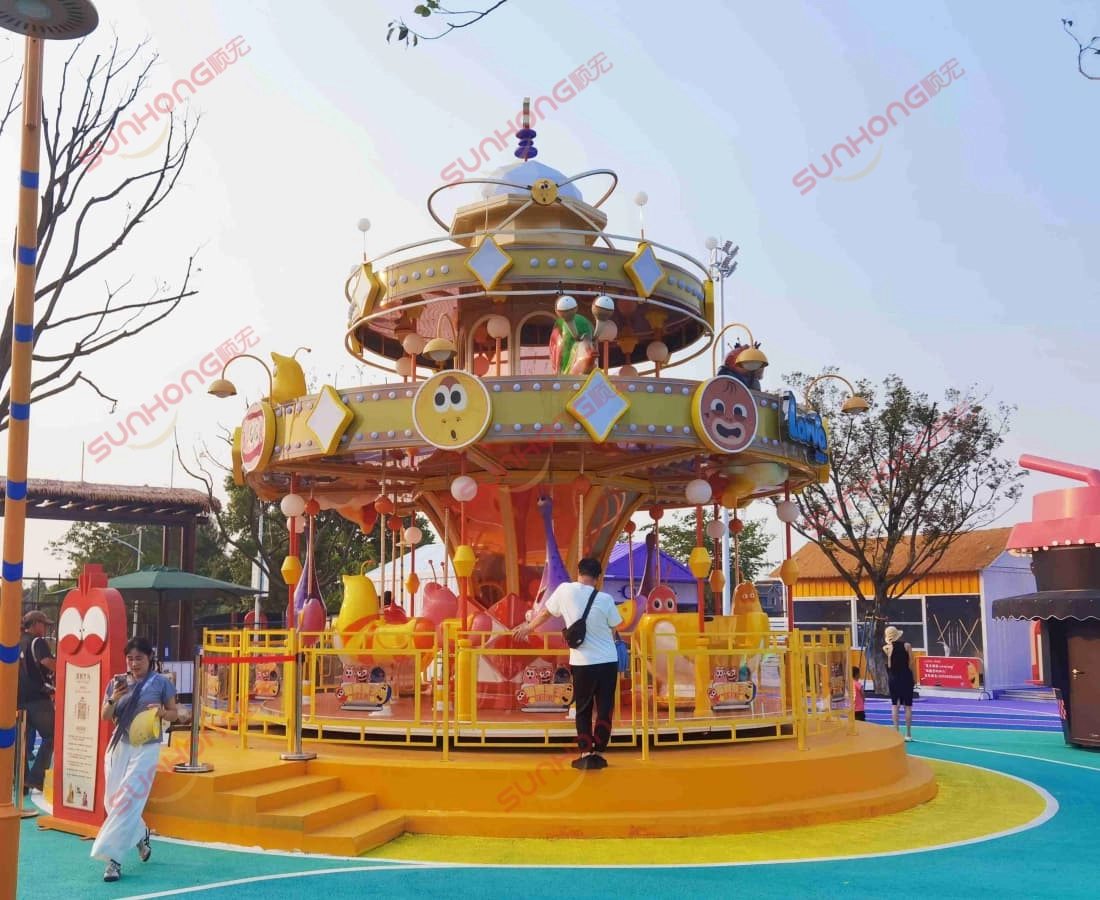
16P Larva Carousel for Sale
The Larva Carousel is a classic two-level ride themed around the beloved Larva animation. It features a variety of well-known characters, including Yellow, Red, Brown, Rainbow, Mantis, Ant, and more. This fun and engaging cartoon has brought endless laughter to children worldwide. With the strong appeal of a popular IP, the Larva Double Decker Carousel offers significant commercial value, making it an ideal carousel for sale for investors.
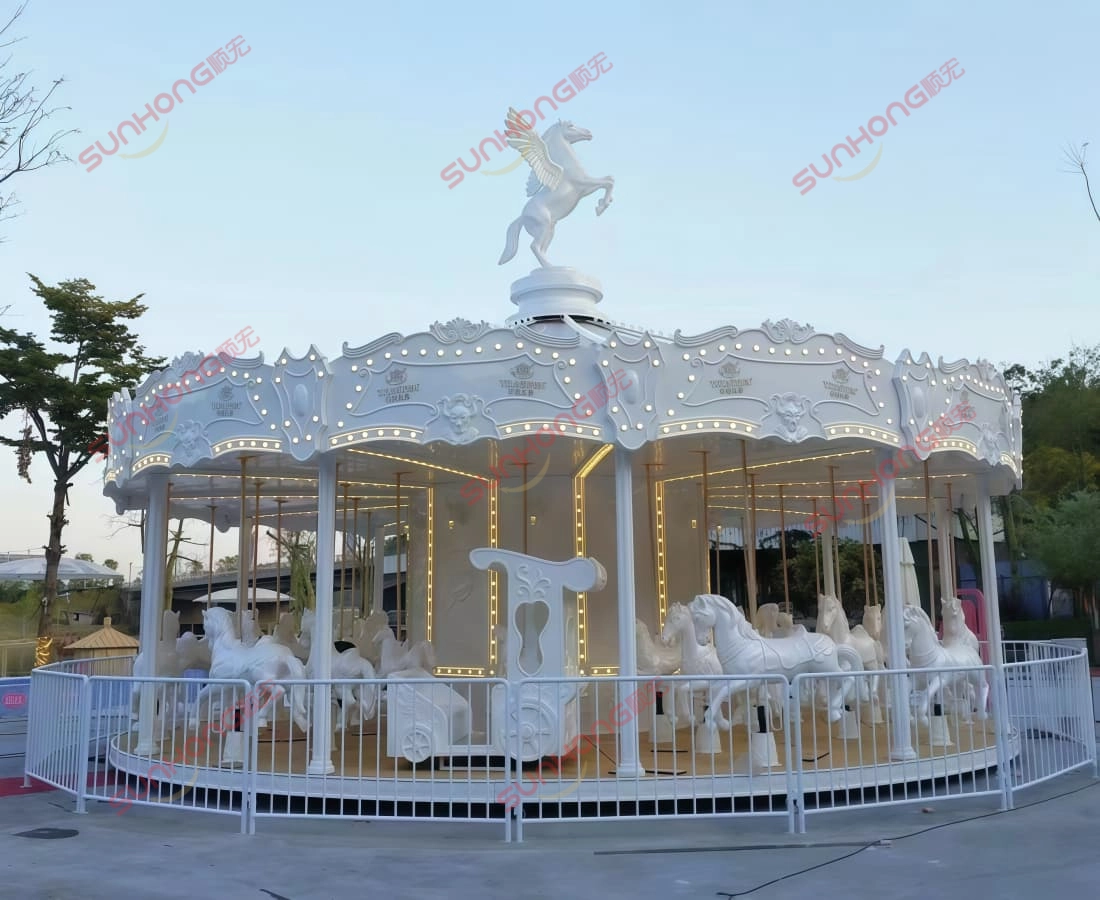
36P Knight Sparta Carousel Ride for Sale
36P Knight Sparta is a carousel ride for sale that supports OEM/ODM customization. Powered by an electric motor, the rotating frame drives seats that move up and down via a crank linkage system, simulating the motion of riding a warhorse. Inspired by the spirit of Spartan warriors—bravery, honor, and responsibility—this ride brings both excitement and meaning to every spin.
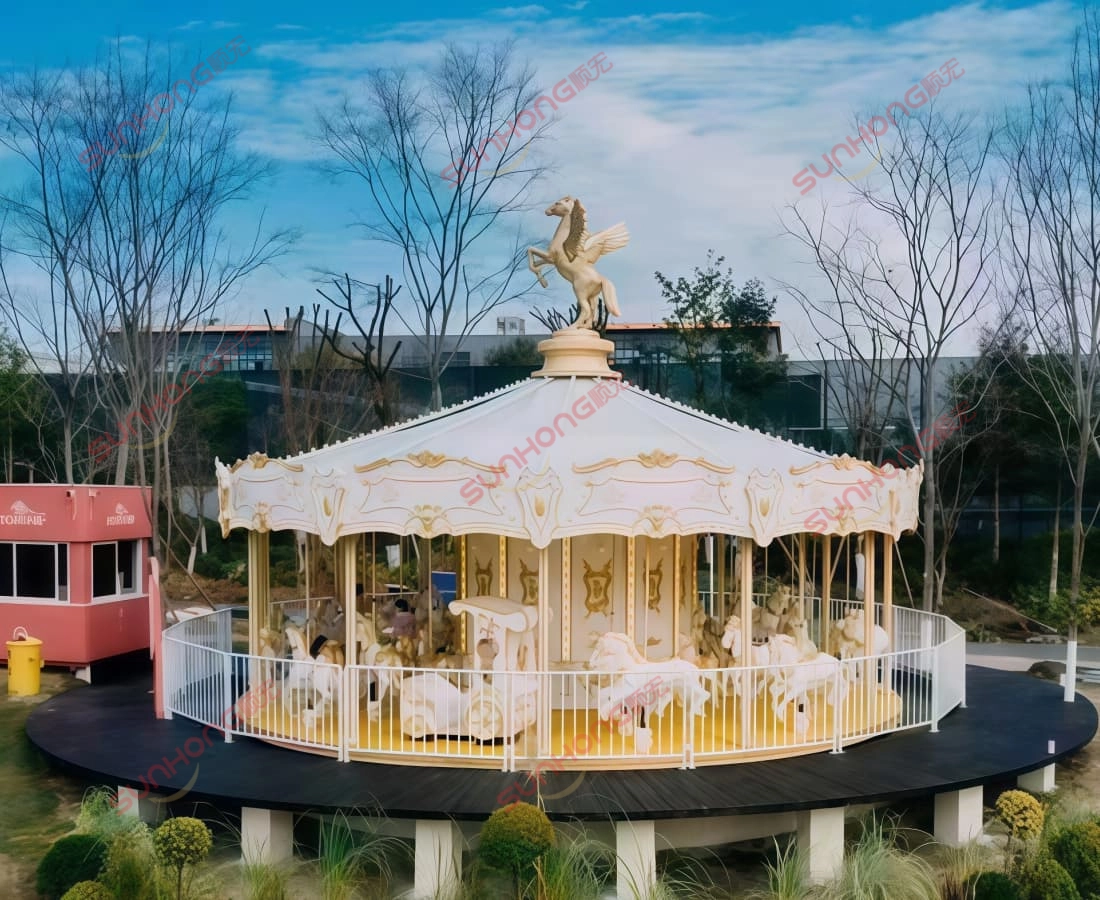
24P Knight Sparta Carousel Horse Ride for Sale
Classic horse-themed carousel horse ride for sale, equipped with double carriage seats, letting passengers feel like they’re galloping through open fields. The advanced motor system keeps the ride smooth, while the seats move up, down, forward, and back for full-on fun. It also comes with a movable base, making it easy to adjust at any site. A joyful experience loved by visitors of all ages!
Copyright © 2025 SUNHONG All Reserved.
Guangzhou Shunhong Entertainment Equipment Co.,Ltd.
sunhongrides
SUNHONGAMUSEMENTRIDES
sunhongamusementrides
Scan QR Code