
The B2B Buyer’s Guide to roller coaster amusement rides
- Introduction: Why a Dedicated B2B Guide for Roller Coaster Amusement Rides Matters
- Types of Roller Coaster Amusement Rides: Aligning Product with Park Strategy
- Steel, wooden, and hybrid roller coasters
- Family, thrill, and children’s coasters
- Key Considerations When Selecting Roller Coaster Amusement Rides
- Capacity and throughput: Maximize ride efficiency
- Footprint and site integration: Plan for accurate siting
- Safety standards and certifications: Prioritize compliance
- Customization and theming: Differentiate your attraction
- Technical and Operational Factors Affecting Purchase Decisions
- Ride system and control technologies
- Maintenance and lifecycle costs: Total cost of ownership
- Energy consumption and sustainability
- Financial Analysis: Budgeting, ROI and Financing Options for Coasters
- Capital cost and operating cost breakdown
- Revenue uplift and attendance impact
- Financing, leasing, and phased investments
- Procurement Process: From RFP to Installation and Operational Readiness
- Preparing an effective RFP for roller coaster amusement rides
- Evaluating manufacturers and bids: What to prioritize
- Project timeline and milestones: Managing expectations
- Legal, Safety, and Compliance Checklist for Roller Coasters
- International and local standards to verify
- Local permitting, inspections, and third-party testing
- Why Choose SUNHONG as Your Roller Coaster Manufacturer and Partner
- Full-service capabilities: From concept to operation
- Global experience, certifications, and after-sales support
- Case Studies and Success Indicators to Use During Evaluation
- Reference projects and measurable outcomes
- Conclusion: Making a Commercially Sound Roller Coaster Investment
- Frequently Asked Questions
Introduction: Why a Dedicated B2B Guide for Roller Coaster Amusement Rides Matters
Purpose and commercial intent: Buying a roller coaster is one of the largest capital investments for an amusement park, resort, or entertainment complex. This guide helps procurement managers, park owners, and project developers understand roller coaster amusement rides from the initial concept to long-term operation, focusing on commercial keywords like buy roller coaster, roller coaster manufacturer, and amusement park rides procurement.
Types of Roller Coaster Amusement Rides: Aligning Product with Park Strategy
Steel, wooden, and hybrid roller coasters
Product selection insight: Steel coasters offer smoother rides, higher elements, and advanced inversions; wooden coasters provide a classic ride experience and distinct marketing appeal; hybrid coasters combine wooden structure aesthetics with steel track capabilities. Choosing the right construction type affects cost, maintenance, and guest demographics, so define target audience and marketing goals before engaging a roller coaster manufacturer.
Family, thrill, and children’s coasters
Audience segmentation: Family coasters prioritize capacity and inclusive thrill levels to drive repeat visitation. Thrill coasters deliver headline-grabbing elements that boost attendance and media exposure. Children’s coasters support overall park throughput and are essential for family-friendly parks. Your procurement objective—whether increasing attendance, maximizing throughput, or diversifying offerings—will determine the ideal coaster category.
Key Considerations When Selecting Roller Coaster Amusement Rides
Capacity and throughput: Maximize ride efficiency
Operational KPI focus: Riders-per-hour and queue management directly impact guest satisfaction and per-capita revenue. Evaluate train size, block sections, and dispatch intervals when you request specifications from a roller coaster manufacturer. Higher throughput often justifies higher initial cost through increased daily revenue.
Footprint and site integration: Plan for accurate siting
Engineering and site planning: Coaster layout, foundation requirements, and Zoning impact determine site feasibility. Consider sightlines, queue areas, access roads for delivery, and proximity to utilities. Early collaboration between your civil engineers and the manufacturer reduces redesign risk and timeline delays.
Safety standards and certifications: Prioritize compliance
Regulatory compliance: Verify that manufacturers meet international and local standards. SUNHONG (Shunhong) holds CE (EU), UKCA (UK), SABER (Saudi), TUV (Germany), and ASTM (USA) certifications as part of its export credentials. Insist on documented compliance for design, manufacture, control systems, and testing to reduce regulatory friction and ensure guest safety.
Customization and theming: Differentiate your attraction
Commercial differentiation: Theming and custom elements increase perceived value and marketing potential. Discuss custom trains, façades, ride sequences, special effects, and branded experiences with your roller coaster manufacturer early—customization affects lead time, cost, and maintenance complexity.
Technical and Operational Factors Affecting Purchase Decisions
Ride system and control technologies
Technical reliability matters: Choose proven control systems, redundant safety interlocks, and accessible diagnostics to minimize downtime. Manufacturers should provide PLC-based control systems, clear documentation, and remote diagnostics where feasible. Ask for failure mode analysis and mean time between failures (MTBF) data to benchmark reliability.
Maintenance and lifecycle costs: Total cost of ownership
Financial planning for operations: Beyond capital expenditure, account for scheduled inspections, spare parts inventory, structural inspections, repainting, and seasonal commissioning. Request historical maintenance profiles and parts lead times from the manufacturer to calculate total cost of ownership and necessary in-house skills or outsourced service agreements.
Energy consumption and sustainability
Operational efficiency and green credentials: Modern roller coasters can be designed for energy recovery, regenerative braking, and efficient motors. Energy-efficient designs reduce operating costs and support sustainability messaging—a growing concern for investors and guests alike.
Financial Analysis: Budgeting, ROI and Financing Options for Coasters
Capital cost and operating cost breakdown
Budget composition: Capital cost typically includes design, track and train manufacture, foundations, civil works, installation, testing, and commissioning. Operating costs include staffing, energy, routine maintenance, insurance, and parts. Ensure quotes from manufacturers delineate each component clearly to compare vendors accurately.
Revenue uplift and attendance impact
Business case and payback: A new headline coaster can increase attendance, extend guest dwell time, and boost F&B and retail revenue. When building ROI models, use conservative attendance uplift scenarios and model seasonality. Include soft benefits like media exposure and sponsorship opportunities in your financial model.
Financing, leasing, and phased investments
Flexible procurement strategies: Consider vendor financing, bank loans, leasing, or staged investments that allow parks to spread capital costs. Manufacturers with global export experience often support financing introductions or offer payment milestones tied to delivery and performance—ask about these options during commercial negotiations.
Procurement Process: From RFP to Installation and Operational Readiness
Preparing an effective RFP for roller coaster amusement rides
Procurement best practices: Your RFP should include site plans, soil reports, utility maps, desired capacity, thematic goals, target budget, delivery schedule, and evaluation criteria. Request lifecycle cost estimates, reference installations, warranty terms, and inspection/test plans. Clear RFPs reduce ambiguity and accelerate vendor responses.
Evaluating manufacturers and bids: What to prioritize
Vendor selection criteria: Prioritize safety record, engineering capabilities, manufacturing capacity, references, after-sales service, certifications, and total cost of ownership. SUNHONG’s in-house R&D, production, construction teams, and over 10 years of export experience—with installations in more than 56 countries—are examples of qualifications to seek in a global roller coaster manufacturer.
Project timeline and milestones: Managing expectations
Delivery planning: Typical project phases include conceptual design, detailed engineering, procurement, civil works, track delivery, assembly, testing, and commissioning. Build contingency into schedules for customs clearance, foundation curing, and FAT/SAT testing. Define acceptance criteria and handover procedures in the contract.
Legal, Safety, and Compliance Checklist for Roller Coasters
International and local standards to verify
Standards assurance: Confirm compliance with applicable standards like EN/CE (EU), ASTM (USA), UKCA (UK), TUV (Germany), and country-specific approvals such as SABER (Saudi Arabia). Manufacturers with multi-country certifications simplify cross-border projects—SUNHONG lists CE, UKCA, SABER, TUV and ASTM among its credentials.
Local permitting, inspections, and third-party testing
Regulatory process: Coordinate with local authorities for building permits, electrical inspections, fire safety reviews, and public liability insurance. Third-party structural and electrical verification often accelerates regulator approval. Include testing and acceptance activities in the contract and allocate time for independent inspections.
Why Choose SUNHONG as Your Roller Coaster Manufacturer and Partner
Full-service capabilities: From concept to operation
Company strengths: SUNHONG is a large-scale comprehensive amusement ride manufacturer offering R&D, exclusive customization, manufacturing, comprehensive construction, and operation management. With an in-house team covering design, production and construction, SUNHONG supports projects from feasibility through handover, which reduces the number of third-party coordinations.
Global experience, certifications, and after-sales support
Trust and reliability: SUNHONG has more than 10 years of export experience, holds certifications for key markets (CE, UKCA, SABER, TUV, ASTM), and has installed rides in over 56 countries. These credentials demonstrate capability for international projects, customs handling, and compliance across diverse regulatory environments. The company also provides spare parts, training, and operation management support to help clients achieve reliable long-term performance.
Case Studies and Success Indicators to Use During Evaluation
Reference projects and measurable outcomes
Evidence-based evaluation: Request case studies showing before-and-after attendance, uptime statistics, incident records, and maintenance timelines. Manufacturers should provide client references you can contact. Sunhong’s global installations can be a source of verifiable references to evaluate ride performance and long-term support.
Conclusion: Making a Commercially Sound Roller Coaster Investment
Decision framework: Buying a roller coaster requires balancing guest experience, safety, capital and operating costs, and long-term support. Use this buyer’s guide to structure your RFP, evaluate manufacturers, and model ROI. Partnering with an experienced, certified manufacturer with full-service capabilities—like SUNHONG—reduces project risk, streamlines delivery, and supports your park’s growth objectives.
Frequently Asked Questions
What is the typical lead time for a custom roller coaster?Lead time depends on complexity, customization, and site readiness. A standard timeline from contract to commissioning can range from 9 to 24 months; highly customized or large steel coasters often sit at the longer end. Early engineering and clear RFPs shorten delivery time.
How should I evaluate lifecycle costs when comparing manufacturers?Request detailed breakdowns including spare parts, expected annual maintenance hours, recommended spare parts inventory, painting and corrosion protection cycles, and historical downtime data. Compare these alongside capital costs to determine total cost of ownership.
What safety certifications should I require from a roller coaster manufacturer?Require compliance documentation for relevant international standards (CE/EN, ASTM, TUV, UKCA) and any country-specific approvals. Also require a quality assurance plan, FAT/SAT procedures, and third-party verification options.
Can manufacturers assist with financing and phased payments?Many large manufacturers offer or facilitate financing options, milestone-based payments, or leasing solutions. Ask manufacturers about financing partners, payment schedules tied to delivery milestones, and warranty terms.
How involved should my team be during installation and testing?Active involvement during installation, FAT (Factory Acceptance Test), SAT (Site Acceptance Test), and commissioning is essential. Ensure your operations and maintenance teams receive training and that acceptance criteria are well documented before project start.
Why is after-sales support important and what should it include?After-sales support ensures long-term ride reliability and guest safety. Expect spare parts supply, technical support, remote diagnostics, periodic inspections, and onsite maintenance training. Contracts should define response times for critical spares and technical issues.
How do I protect my project from regulatory delays?Engage local authorities early, submit complete permit applications, and use manufacturers experienced in the target country’s approval process. Include time buffers for inspections and third-party testing. Manufacturers with multi-country export experience can advise on documentation to speed approvals.
What makes SUNHONG a competitive choice for international projects?SUNHONG combines full-service project capability with certifications (CE, UKCA, SABER, TUV, ASTM), over 10 years of export experience, and installations in more than 56 countries. Their in-house R&D, production and construction teams support projects from concept to operation, simplifying coordination and reducing delivery risk.
The B2B Buyer’s Guide to rotating ride | SUNHONG Ultimate Insights
Wholesale flying chair ride manufacturer and supplier
Best family rides manufacturers and supplier brands
Amusement Rides Pirate Ship for Sale | SUNHONG
Golden Year Carousel
Why should I invest in a carousel for my amusement park?
Carousels are important attractions in amusement parks. Many visitors consider carousels to be a must-have item in an amusement park, as they are gentler than those exciting rides, making them especially popular with children and family visitors. Carousels are a key factor in attracting visitors. SUNHONG carousels are available in configurations ranging from 8 to 54 seats, and you can make the best choice based on visitor traffic and budget to ensure the best return on investment.
Home页
How can I start a project with SUNHONG?
If you are interested in our rides, please contact us and provide the ride name. If you need adjustments to appearance or color, please include the details in your message. Our engineers will contact you and provide a quotation.
If you want us to design your amusement park, please send your country, location, land area, and height restrictions. We will offer a one-stop solution, including park design and planning, ride supply, free installation, and 24-hour operational guidance.
Can you design rides or parks based on specific IP or cultural themes?
Yes, we specialize in creating theme parks and rides based on IP, such as Larva, or any cultural theme. Our team ensures immersive and unique experiences tailored to your requirements.
12P Ocean Carousel
What key factors should be considered before purchasing a carousel?
In addition to space and budget, consider the ride cycle, safety performance, and whether the style fits your audience. For large carousels, the stability of the electrical system and ease of maintenance are also important.
36P Knight Sparta
How many seats does the carousel have?
The number of seats for the SUNHONG carousel ranges from 8 to 54. SUNHONG's engineers can design the optimal carousel based on the size of the amusement park and visitor flow to maximize economic benefits.
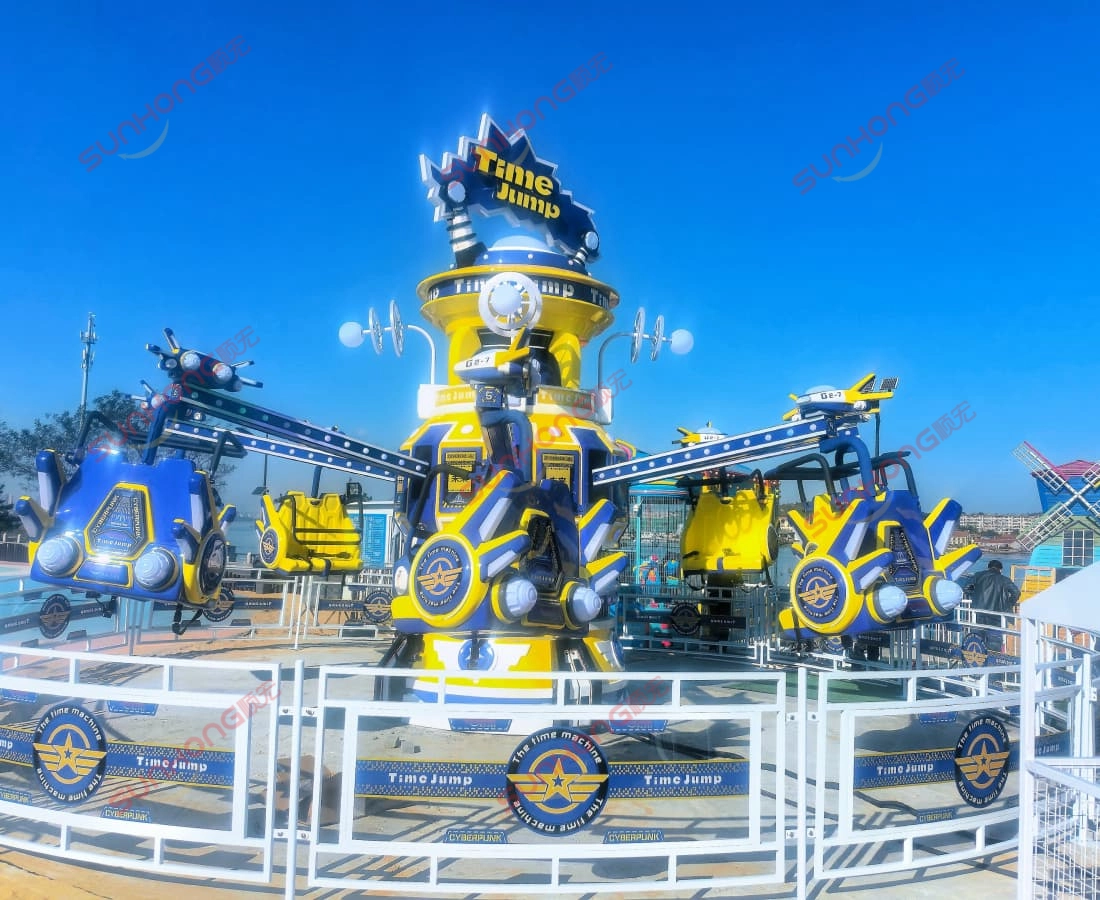
16-Seat Time Jump – Rotating Plane Ride for Amusement Parks
Time Jump is a thrilling and cost-effective amusement ride, 100% originally developed and manufactured by SUNHONG with patented certification. Designed for families and children, it combines motor drive and air-compressor cylinders to achieve dynamic movements—left-right rotation, variable-speed spinning, bouncing seats, and full 360-degree spins.
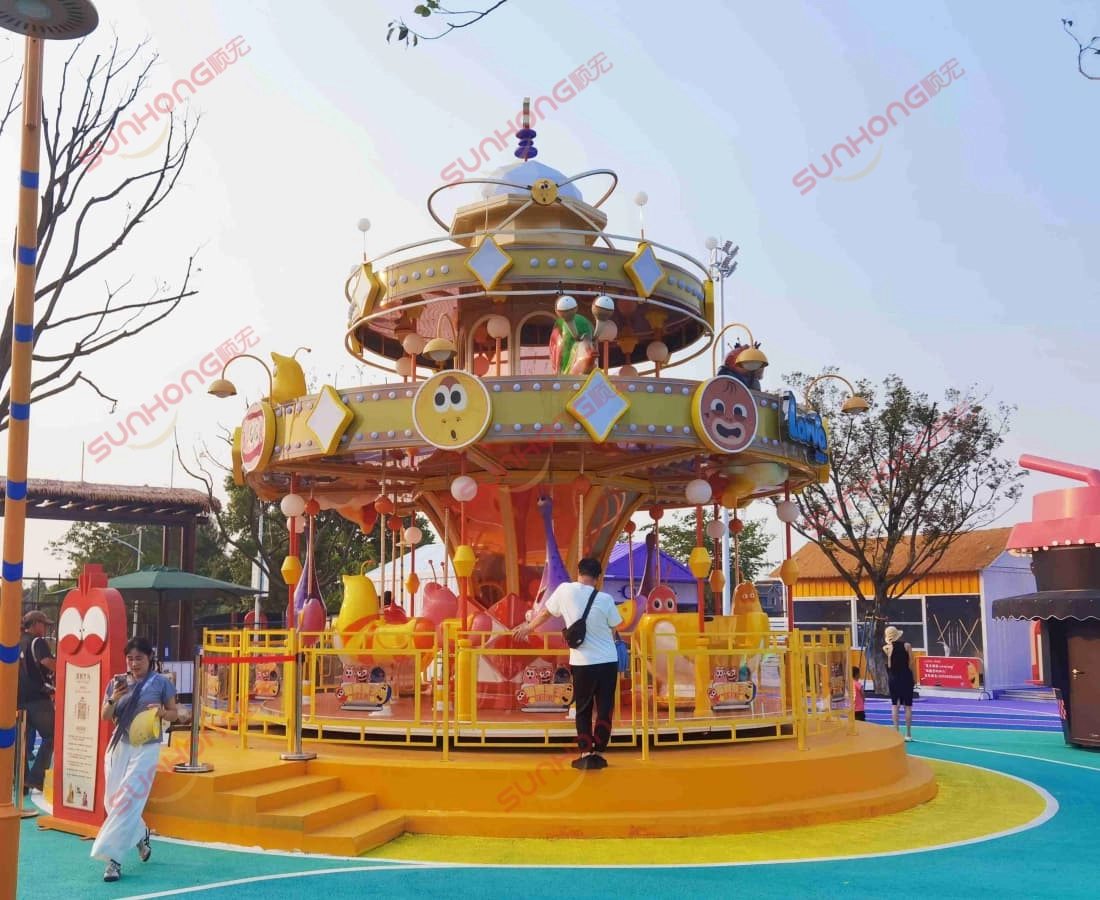
16P Larva Carousel for Sale
The Larva Carousel is a classic two-level ride themed around the beloved Larva animation. It features a variety of well-known characters, including Yellow, Red, Brown, Rainbow, Mantis, Ant, and more. This fun and engaging cartoon has brought endless laughter to children worldwide. With the strong appeal of a popular IP, the Larva Double Decker Carousel offers significant commercial value, making it an ideal carousel for sale for investors.
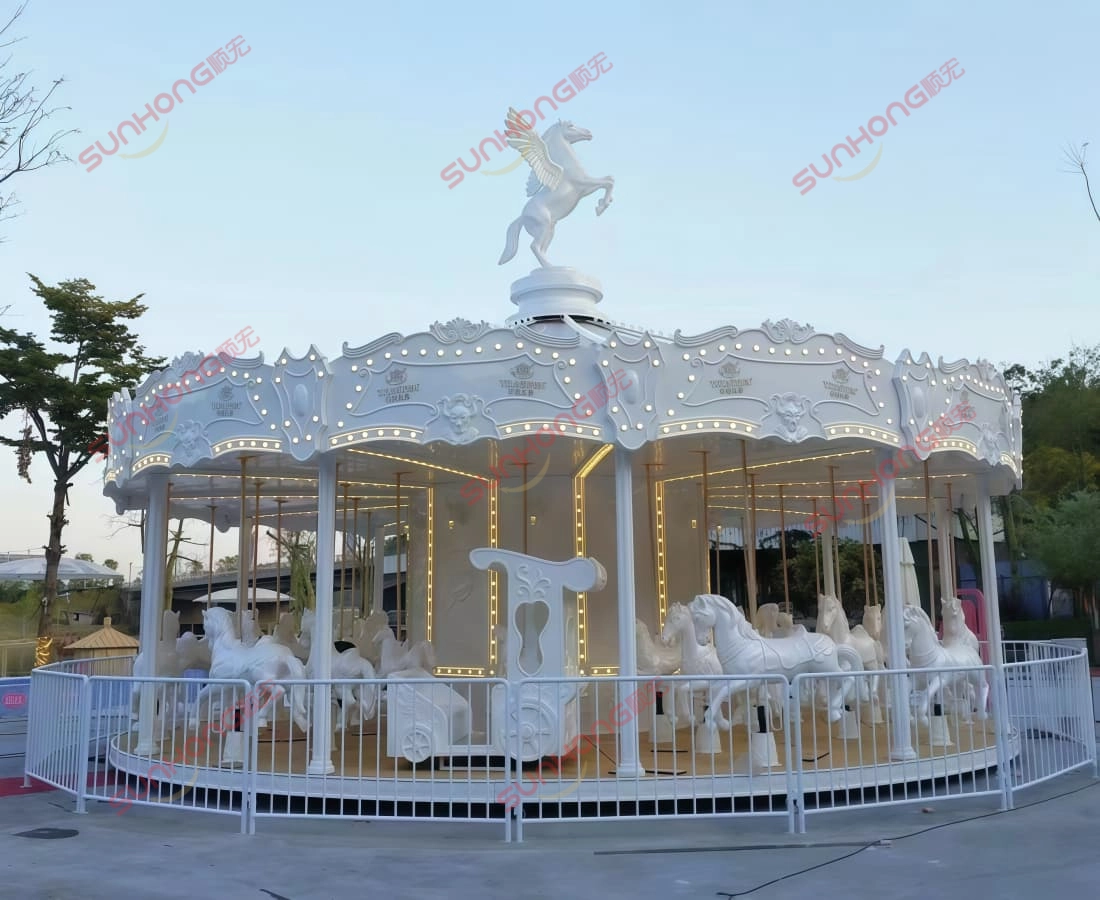
36P Knight Sparta Carousel Ride for Sale
36P Knight Sparta is a carousel ride for sale that supports OEM/ODM customization. Powered by an electric motor, the rotating frame drives seats that move up and down via a crank linkage system, simulating the motion of riding a warhorse. Inspired by the spirit of Spartan warriors—bravery, honor, and responsibility—this ride brings both excitement and meaning to every spin.
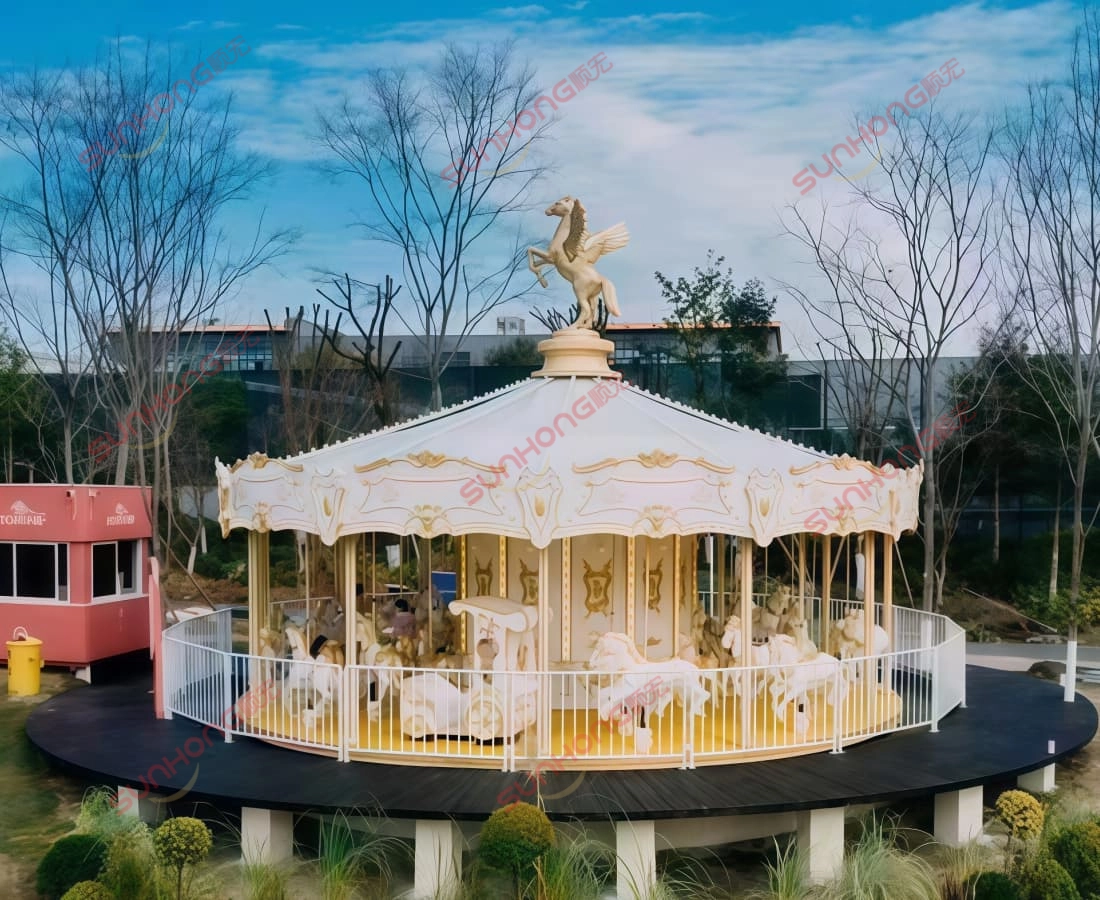
24P Knight Sparta Carousel Horse Ride for Sale
Classic horse-themed carousel horse ride for sale, equipped with double carriage seats, letting passengers feel like they’re galloping through open fields. The advanced motor system keeps the ride smooth, while the seats move up, down, forward, and back for full-on fun. It also comes with a movable base, making it easy to adjust at any site. A joyful experience loved by visitors of all ages!
Copyright © 2025 SUNHONG All Reserved.
Guangzhou Shunhong Entertainment Equipment Co.,Ltd.
sunhongrides
SUNHONGAMUSEMENTRIDES
sunhongamusementrides
Scan QR Code