
Bungee Trampoline vs Bungee Jumping: Key Differences
- Bungee Trampoline vs Bungee Jumping: What Operators and Riders Need to Know
- Introduction — Understanding bungee jumping trampoline terminology and intent
- How each attraction works — mechanics and experience of bungee jumping trampoline vs bungee jumping
- Safety profile and regulations — comparing risks and standards for bungee jumping trampoline and bungee jumping
- Target audience and market appeal — who prefers bungee trampoline vs bungee jumping?
- Installation, footprint and infrastructure — what venues must provide for each
- Operational considerations and throughput — what operators should expect
- Cost to purchase, install and maintain — investment differences (with comparison table)
- Liability and insurance considerations — minimizing legal exposure for operators
- Customer experience and marketing — which one drives visits and revenue?
- Which is right for your park or project? Decision guide for buyers and planners
- Why choose professional manufacturing and turnkey solutions — benefits of working with a reputable supplier
- SUNHONG: How a manufacturer can support your bungee trampoline and bungee jumping projects
- SUNHONG's core strengths related to bungee attractions
- Maintenance and lifecycle planning — keeping attractions safe and profitable long-term
- Final recommendations — matching attraction to business goals
- FAQ — Common questions about bungee trampoline vs bungee jumping
- 1. Is a bungee trampoline safer than bungee jumping?
- 2. What ages can use a bungee trampoline?
- 3. How long does it take to install each attraction?
- 4. Which attraction makes more money?
- 5. What certifications should I ask for from manufacturers?
- 6. Can SUNHONG customize a solution for my park?
- Contact us / View products
- Sources and references
Bungee Trampoline vs Bungee Jumping: What Operators and Riders Need to Know
Introduction — Understanding bungee jumping trampoline terminology and intent
“Bungee jumping trampoline” is a common search term used by both operators and thrill-seekers trying to compare two related but distinct attractions: the bungee trampoline and traditional bungee jumping. Although both use elastic cords and provide airtime, they differ substantially in design, risk profile, target audience, space and infrastructure needs, and commercial potential. This article breaks down those differences in practical detail to help amusement park planners, ride buyers, and guests make informed choices.
How each attraction works — mechanics and experience of bungee jumping trampoline vs bungee jumping
Bungee Trampoline: A bungee trampoline combines a robust trampoline bed with a multi-point bungee harness and winch system. Riders are fastened in a full-body harness attached to elastic cords that are anchored above (usually on a steel frame). An operator controls cord tension to allow repeated high jumps, flips, and extended hang-time in a controlled environment. Because the system actively manages rebound and damping, participants can perform aerial tricks with relatively low risk of ground impact.
Bungee Jumping: Traditional bungee jumping involves a single elasticized tether attached to a jumper fixed at ankles or full-body harness and suspended above a large void (bridge, platform, crane). The jumper steps off into free fall, the cord stretches and decelerates the fall, then rebounds. The experience is a single, high-intensity event with substantial free-fall sensation and risk factors tied to drop height, cord properties, and rigging precision.
Safety profile and regulations — comparing risks and standards for bungee jumping trampoline and bungee jumping
Safety is a primary concern for both attractions. Bungee trampolines are generally considered lower-risk for operators because they operate in a controlled, repeatable environment with redundancy (multiple cords, controlled winches, harness systems). That said, incidents can still occur from harness failure, improper setup, or operator error.
Bungee jumping carries inherently higher risk due to the large drop, single-event nature, and dependency on correct cord length calculation and anchor integrity. Regulatory oversight varies by country; many jurisdictions require specialized inspections, operator certifications, and adherence to recognized standards (for example ASTM standards for amusement devices and local certification like CE/UKCA).
Target audience and market appeal — who prefers bungee trampoline vs bungee jumping?
Bungee Trampoline: Broad appeal across ages — families, teens, children (with appropriate harness sizing) and casual thrill-seekers. The repeatable nature and ability to manage intensity make it ideal for amusement parks, fairs, and seasonal events. Because of its family-friendly versatility, it often yields steady per-hour throughput and regular revenue.
Bungee Jumping: Primarily attracts extreme-sports enthusiasts and adults seeking a one-time, high-adrenaline experience. Its niche appeal can be a marketing advantage — a marquee attraction that draws media attention and reputation — but overall daily throughput is lower compared to trampolines due to prep time and safety checks.
Installation, footprint and infrastructure — what venues must provide for each
Bungee Trampoline: Typically requires a compact, modular frame (often 6–10m footprint depending on configuration) and a flat, stable surface. Many models are mobile or semi-permanent and can be installed on concrete or reinforced flooring. Electrical supply is needed for winches/hoists. Assembly time is moderate and often manageable by trained installers without heavy civil works.
Bungee Jumping: Requires a high anchor point (bridge, tower, crane, or specially constructed platform), extensive fall clearance, and rigorous structural assessments. Permanent installations may need significant engineering, permits, and ongoing structural maintenance. Portable setups (e.g., crane-based) involve heavy equipment and higher logistical cost.
Operational considerations and throughput — what operators should expect
Throughput and revenue logistics differ markedly. Bungee trampolines typically have short cycle times (a few minutes per rider) and can handle high hourly capacity with multiple lanes. Staff requirements include an operator per module plus attendants for harnessing and queue management. Safety checks are fast but systematic.
Bungee jumping cycles are longer — pre-jump briefings, harnessing, safety checks, and the jump itself reduce hourly capacity. Each jump may require multiple trained technicians and a certified rigging engineer on site depending on local regulations. This results in higher staffing costs per participant and lower per-hour throughput, though ticket prices can be significantly higher to match the experience.
Cost to purchase, install and maintain — investment differences (with comparison table)
Cost variances depend on scale and certification level. Below is a practical comparison table showing typical ranges and considerations. These figures are indicative and should be validated with suppliers and local regulators.
| Attribute | Bungee Trampoline | Bungee Jumping |
|---|---|---|
| Initial equipment cost | $8,000–$60,000 (single/multi-lane units) | $50,000–$300,000+ (platforms, anchors, cranes, engineering) |
| Installation complexity | Low–Moderate; modular assembly | High; requires civil/structural work or heavy equipment |
| Typical staffing (per attraction) | 1–3 operators/attendants | 3–6+ certified staff/technicians |
| Throughput (riders/hour) | 200+ (multi-lane setups) | 10–40 (depends on setup and regulations) |
| Maintenance & inspection | Periodic checks, harness/cable replacement | Frequent structural inspections, cord and anchor testing |
| Typical ticket price (market avg.) | $3–$20 per ride | $50–$300+ per jump |
Sources for ranges: industry supplier pricing and public operator reports (see sources at article end).
Liability and insurance considerations — minimizing legal exposure for operators
Both attractions require robust insurance, but the risk classification differs. Bungee jumping is often categorized as a higher-liability activity and may demand specialized underwriting, higher High Qualitys, and stricter operational controls. Insurers typically request documented maintenance logs, operator training records, and proof of adherence to recognized safety standards.
Bungee trampolines can attract more standard amusement-ride insurance policies when manufactured and operated per accepted guidelines. Documented inspection schedules, staff certifications, and spare-part inventories are crucial to maintaining coverage and reducing claim exposure.
Customer experience and marketing — which one drives visits and revenue?
Marketing a bungee trampoline often focuses on family fun, accessibility, and high throughput events — making it ideal for parks seeking reliable per-hour income. Bungee jumping can create a signature attraction that draws destination visitors and press coverage. Many parks successfully combine both: trampolines as high-turnover daily revenue generators and bungee jumping as a High Quality experience to elevate park prestige.
Which is right for your park or project? Decision guide for buyers and planners
Consider the following checklist before deciding:
- Target audience: family-oriented vs extreme-sports enthusiasts
- Available space and structural anchors
- Budget for capital, installation, and insurance
- Desired throughput and revenue model
- Local regulations and certification requirements
- Operational staffing and training capability
If you need a versatile, lower-risk, high-throughput option, a bungee trampoline is often the better fit. If your goal is to create a destination, media-attracting signature attraction and you have the engineering resources and risk appetite, bungee jumping can be appropriate.
Why choose professional manufacturing and turnkey solutions — benefits of working with a reputable supplier
Choosing a reputable supplier ensures that equipment meets safety standards, is certified for international markets, and comes with comprehensive services including R&D, design, manufacturing, installation, and after-sales support. Reliable suppliers also provide documentation required for local permits, testing regimes, and training programs — all essential to comply with regulations and maintain insurance.
SUNHONG: How a manufacturer can support your bungee trampoline and bungee jumping projects
SUNHONG is a large-scale comprehensive amusement ride manufacturer dedicated to research and development, design, manufacture and sales of amusement rides. Sunhong specializes in Overall Planning, R&D Design, Exclusive Customization, Manufacturing, Comprehensive Construction, and Operation Management, providing reach-global services from initial concept to final project completion. With a robust team of in-house experts in R&D, production and construction, SUNHONG offers comprehensive services tailored to the needs of operators considering bungee trampoline installations or full-scale bungee jumping attractions.
SUNHONG's core strengths related to bungee attractions
- End-to-end project capability: site planning, civil requirements, installation and commissioning.
- Customizable solutions: multi-lane bungee trampolines for high throughput and bespoke platforms or crane-based systems for bungee jumping.
- Certifications and export experience: With more than 10 years of export experience, SUNHONG holds certifications used globally (CE, UKCA, SABER, TUV, ASTM) and has installed rides in over 56 countries and regions.
- After-sales support: training, maintenance manuals, spare parts, and inspection scheduling to help parks maintain compliance and uptime.
By working with SUNHONG, parks can reduce project risk, meet international safety standards, and accelerate time-to-open for new attractions. SUNHONG’s product portfolio includes amusement park equipment, amusement park design, and a full range of amusement park rides, backed by demonstrated manufacturing capacity and export certifications.
Maintenance and lifecycle planning — keeping attractions safe and profitable long-term
Planned preventive maintenance is essential. For bungee trampolines this includes daily visual checks, harness and webbing inspection, routine cable/tension testing, and seasonal replacement of wear items. For bungee jumping, add structural inspections, professional cord testing, and load testing of anchors to the regimen. Detailed maintenance logs and operator training are often required by insurers and certifying bodies.
Final recommendations — matching attraction to business goals
Summary recommendations:
- Choose bungee trampolines to maximize daily revenue, attract families, and minimize structural complexity.
- Choose bungee jumping if you want a standout, high-ticket experience and possess the engineering resources to safely install and operate it.
- Consider a mixed approach: install bungee trampolines for steady income and a single bungee jumping or other signature extreme attraction to raise profile and draw destination visitors.
- Work with experienced manufacturers (like SUNHONG) for certification support, turnkey delivery, and long-term maintenance planning.
FAQ — Common questions about bungee trampoline vs bungee jumping
1. Is a bungee trampoline safer than bungee jumping?
Generally yes. Bungee trampolines operate in a controlled environment with active winch management and redundancy, lowering the risk of catastrophic failure compared to high-altitude bungee jumping. However, proper maintenance and operator training are critical for both.
2. What ages can use a bungee trampoline?
Bungee trampolines often accommodate a wide age range, from children (with appropriately sized harnesses) to adults. Specific age/weight limits depend on manufacturer specifications and local regulations.
3. How long does it take to install each attraction?
Bungee trampolines can be assembled and commissioned in days to weeks depending on size and complexity. Bungee jumping installations frequently require months for design, permits, structural work and safety certification.
4. Which attraction makes more money?
Per-ride revenue is higher for bungee jumping, but overall hourly revenue is typically greater for bungee trampolines because of higher throughput and repeatability.
5. What certifications should I ask for from manufacturers?
Request compliance documentation such as CE, UKCA, TUV reports, ASTM-related test results, and any local approvals. Also ask for inspection logs, operator training programs, and warranty details.
6. Can SUNHONG customize a solution for my park?
Yes. SUNHONG offers exclusive customization, R&D design, and turnkey services from concept to construction, including after-sales support and global certification experience.
Contact us / View products
If you're planning a new attraction or upgrading existing facilities, SUNHONG can advise on the best solution — whether a bungee trampoline, bungee jumping setup, or a mixed program to fit your park’s goals and budget. Visit SUNHONG’s site: https://www.isunhong.com/ to view product lines and request a quote, or contact our sales team for a tailored proposal and technical consultation.
Sources and references
- General bungee jumping and trampoline safety overview — Wikipedia entries for Bungee jumping and Trampoline (for technical background and historical context).
- Industry standards and guidance — ASTM standards for amusement rides and devices; operator and safety recommendations from recognized testing bodies.
- Amusement industry association guidance — IAAPA materials on ride safety and operations.
- Market and supplier pricing ranges — aggregated from manufacturer brochures and publicly available supplier quotes.
The B2B Buyer’s Guide to trackless train amusement ride | SUNHONG Ultimate Insights
Top amusement park rides Manufacturers and Suppliers in US
Top 10 Bungee Trampoline Parks Around the World
Wholesale amusement park equipment manufacturer and supplier
16P Knight Sparta
What are the key things To consider before investing in a merry-go-round ride?
Space requirements: Make sure your park has enough space to accommodate the carousel, taking into account factors such as access, visitor flow, etc.
Budget: The purchase, transportation, installation, and maintenance costs of the carousel should be within your budget.
Target Market: Analyze whether the carousel meets the needs of your target customer group, for example, suitable for children, families, or adults.
Safety: Choose a carousel that meets safety standards to ensure the safety of visitors.
Long-term Benefits: Consider how much visitor flow and revenue the carousel will bring to your park.
SUNHONG’s engineering team, consisting of over 50 professionals, offers you a one-stop amusement park design service that integrates design, production, installation, and operation.
36P Knight Sparta
What Are The Key Things To Consider Before investing In A Merry-Go-Round Ride?
Space requirements: Make sure your park has enough space to accommodate the carousel, taking into account factors such as access, visitor flow, etc.
Budget: The purchase, transportation, installation, and maintenance costs of the carousel should be within your budget.
Target Market: Analyze whether the carousel meets the needs of your target customer group, for example, suitable for children, families, or adults.
Safety: Choose a carousel that meets safety standards to ensure the safety of visitors.
Long-term Benefits: Consider how much visitor flow and revenue the carousel will bring to your park.
SUNHONG’s engineering team, consisting of over 50 professionals, offers you a one-stop amusement park design service that integrates design, production, installation, and operation.
Golden Year Carousel
How many seats does the carousel have?
A: The number of seats of SUNHONG carousels ranges from 8 to 54. SUNHONG engineers can design the most suitable carousel according to the scale of the amusement park and the flow of visitors, thereby maximizing economic benefits.
products
Can you provide a detailed project timeline?
Yes, we offer a comprehensive project timeline from design to completion.
Home页
How can I start a project with SUNHONG?
If you are interested in our rides, please contact us and provide the ride name. If you need adjustments to appearance or color, please include the details in your message. Our engineers will contact you and provide a quotation.
If you want us to design your amusement park, please send your country, location, land area, and height restrictions. We will offer a one-stop solution, including park design and planning, ride supply, free installation, and 24-hour operational guidance.
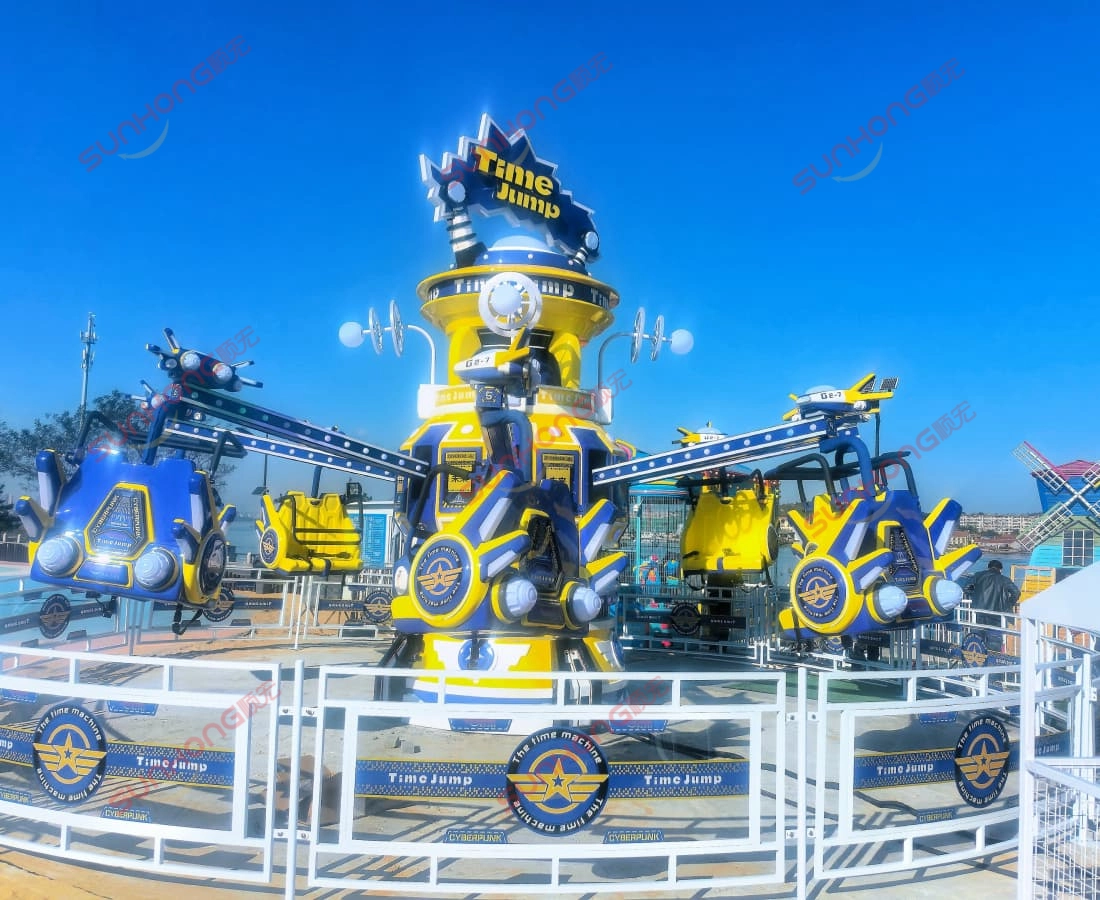
16-Seat Time Jump – Rotating Plane Ride for Amusement Parks
Time Jump is a thrilling and cost-effective amusement ride, 100% originally developed and manufactured by SUNHONG with patented certification. Designed for families and children, it combines motor drive and air-compressor cylinders to achieve dynamic movements—left-right rotation, variable-speed spinning, bouncing seats, and full 360-degree spins.
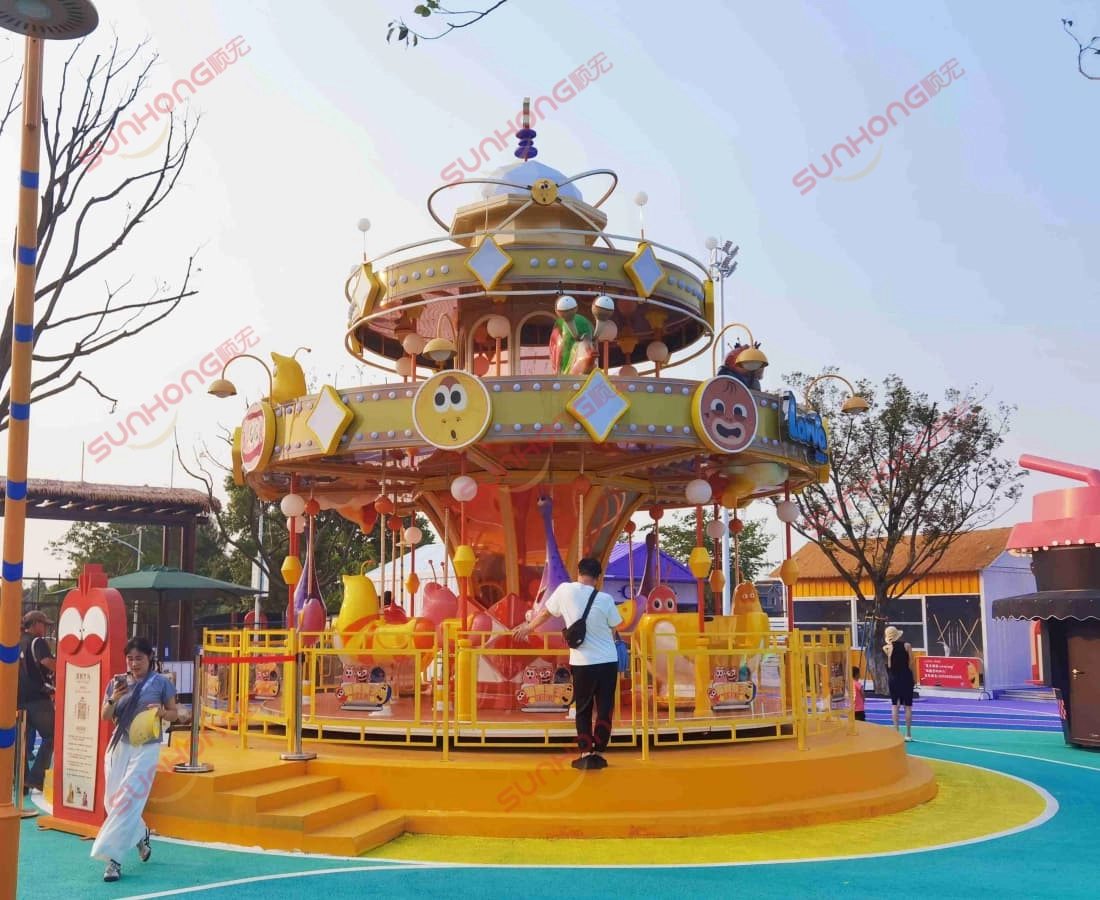
16P Larva Carousel for Sale
The Larva Carousel is a classic two-level ride themed around the beloved Larva animation. It features a variety of well-known characters, including Yellow, Red, Brown, Rainbow, Mantis, Ant, and more. This fun and engaging cartoon has brought endless laughter to children worldwide. With the strong appeal of a popular IP, the Larva Double Decker Carousel offers significant commercial value, making it an ideal carousel for sale for investors.
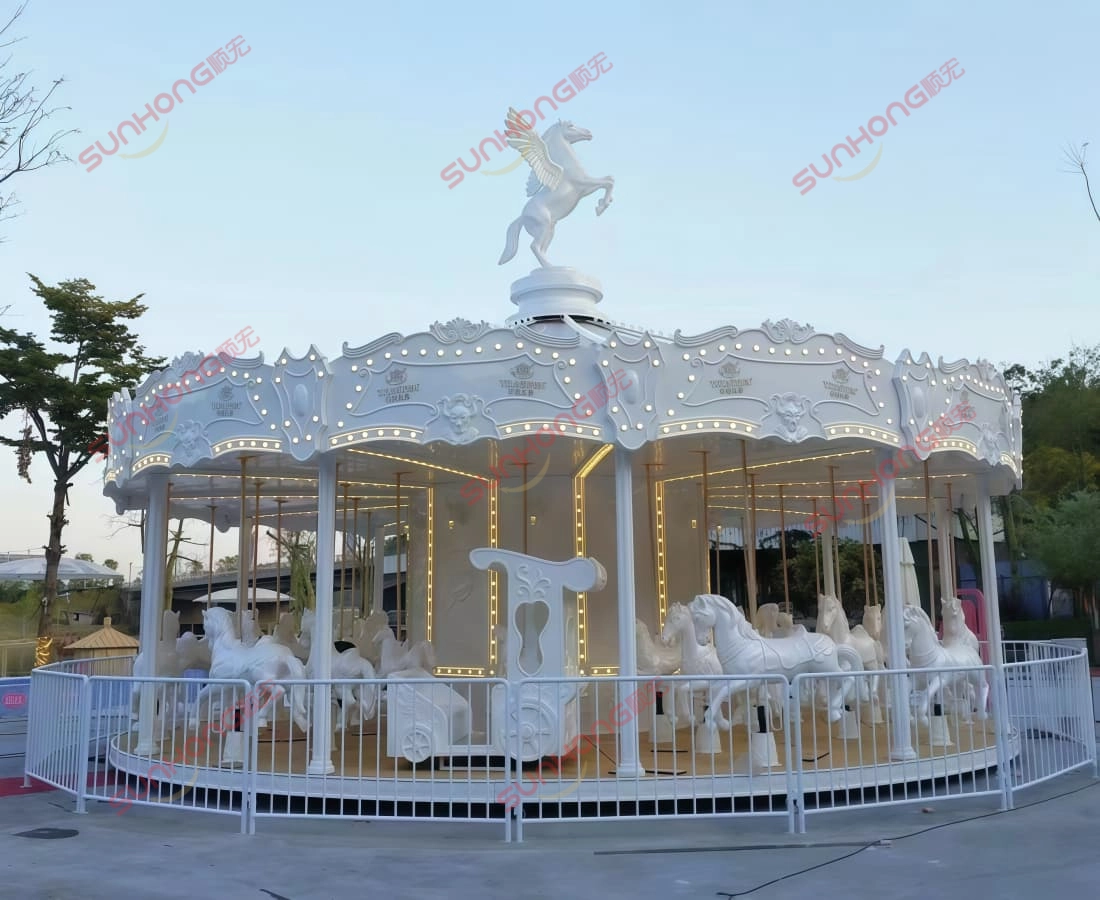
36P Knight Sparta Carousel Ride for Sale
36P Knight Sparta is a carousel ride for sale that supports OEM/ODM customization. Powered by an electric motor, the rotating frame drives seats that move up and down via a crank linkage system, simulating the motion of riding a warhorse. Inspired by the spirit of Spartan warriors—bravery, honor, and responsibility—this ride brings both excitement and meaning to every spin.
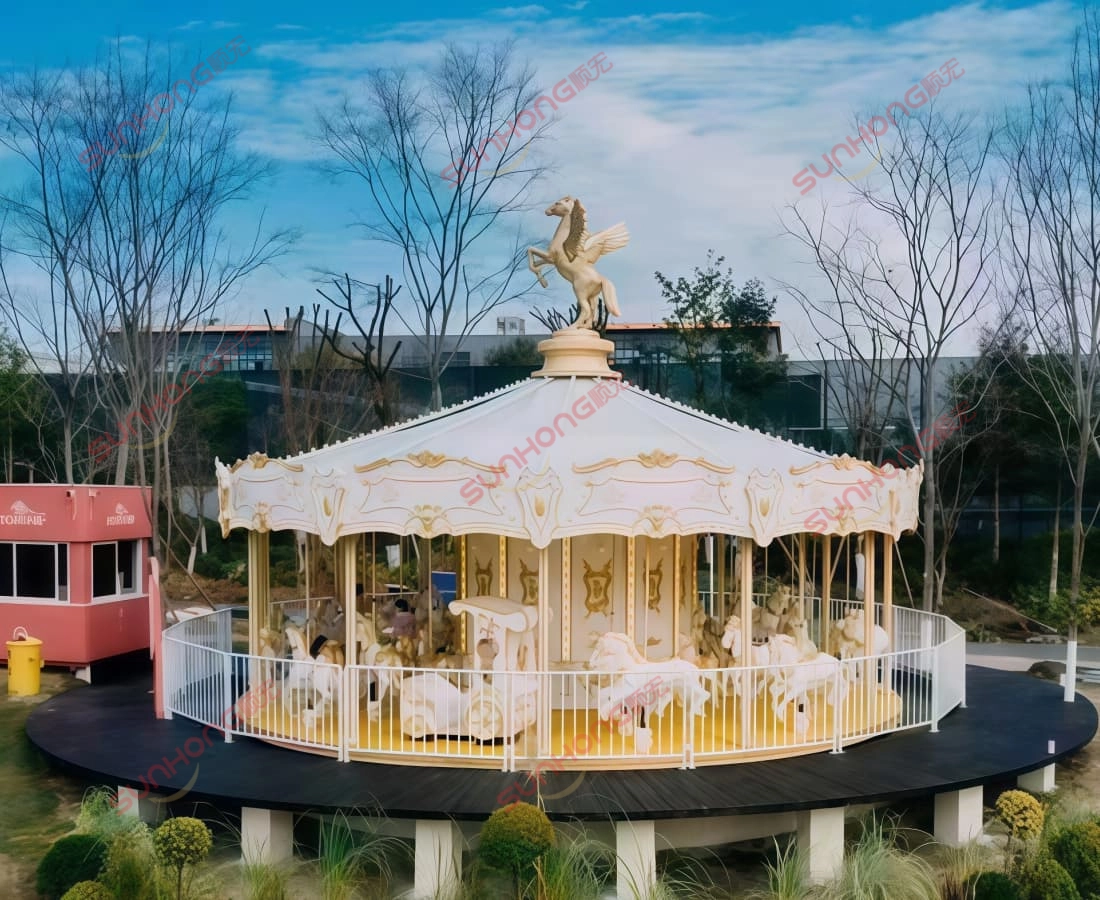
24P Knight Sparta Carousel Horse Ride for Sale
Classic horse-themed carousel horse ride for sale, equipped with double carriage seats, letting passengers feel like they’re galloping through open fields. The advanced motor system keeps the ride smooth, while the seats move up, down, forward, and back for full-on fun. It also comes with a movable base, making it easy to adjust at any site. A joyful experience loved by visitors of all ages!
Copyright © 2025 SUNHONG All Reserved.
Guangzhou Shunhong Entertainment Equipment Co.,Ltd.
sunhongrides
SUNHONGAMUSEMENTRIDES
sunhongamusementrides
Scan QR Code