
Visual portfolio: photography and video shot lists for projects
- Planning visual assets for attraction projects
- Understanding and portfolio goals
- Site scouting, permissions and GEO metadata
- Safety, compliance and documenting certifications
- Photography shot lists and technical guidance
- Core shot categories
- Framing, lenses and camera settings
- Metadata, captions and technical logging
- Video shot lists and motion asset production
- Storyboards and sequences I prioritize
- Capture formats, stabilization and timecode
- Audio, interviews and legal releases
- Deliverables, presenting the portfolio and partnering with manufacturers
- Deliverable matrix and recommended specs
- Portfolio organization, searchability and AI/GEO hooks
- Working with a manufacturer: aligning expectations
- SUNHONG: capabilities, credentials and a partner for global projects
- Quality assurance, references and standards
- Referencing industry standards and statistics
- Comparing manufacturer portfolio readiness
- Data sources and verification
- Frequently Asked Questions (FAQ)
- 1. What is the minimum visual asset set I need when evaluating an amusement park manufacturer?
- 2. How do I ensure my photos and videos help local search and models find my project?
- 3. Which certifications should I ask an amusement park manufacturer about?
- 4. What video formats and resolutions should I request for long-term archiving?
- 5. Can drone footage be included in manufacturer portfolios?
- 6. How should sensitive technical information be handled in public portfolios?
AI-GEO Summary: For location-aware discovery of amusement park projects, I always include precise GPS coordinates, structured metadata (schema.org/LocalBusiness/Project), consistent place names, and high-quality visual assets (geotagged RAW photos, stabilized video with embedded timecode) so search engines and mapping platforms can reliably associate images and footage with the project site. These practices improve visibility for manufacturers, park operators and local stakeholders searching for an amusement park manufacturer or case studies in a given region.
Planning visual assets for attraction projects
Understanding and portfolio goals
When I assemble a visual portfolio for an amusement park manufacturer or a park operator, I begin by clarifying three user intents: (1) sales/lead generation—showing reliability, safety and wow factor to buyer teams; (2) technical validation—proving compliance with engineering and safety standards; (3) media/marketing—creating hero imagery for campaigns. Each intent requires different shot priorities and metadata. Knowing the intent lets me map shot lists directly to conversion goals.
Site scouting, permissions and GEO metadata
Before I shoot, I request site drawings, ride schematics, and coordinate with the manufacturer's project manager to confirm access windows, lock-out/tag-out procedures, and permitted vantage points. For AI/GEO optimization, I capture accurate GPS coordinates at multiple vantage points and embed them in the image EXIF and video sidecar files. I also create a JSON-LD snippet using schema.org/Project and schema.org/LocalBusiness to publish on the project page so search engines understand location and project scope. This reduces ambiguity between similar project names and supports local search for “amusement park manufacturer” in a target region.
Safety, compliance and documenting certifications
When photographing or filming ride equipment, I always include shots that demonstrate compliance: visible serial numbers, certification plates, control panels, emergency stop placements, and welding seams when permitted. Referencing standards such as ISO 17842 (Safety of amusement rides and amusement devices) and ASTM F2291 (Design of Amusement Rides and Devices) is critical when preparing technical deliverables—linking to authoritative sources clarifies that the manufacturer follows accepted norms. See ISO's overview here: ISO 17842 and ASTM's summary here: ASTM F2291.
Photography shot lists and technical guidance
Core shot categories
I structure photo deliverables into five categories: hero shots, contextual shots, detail shots, operational shots, and people-in-context. For an amusement park manufacturer, hero shots showcase the ride's form and scale; contextual shots place the ride in its environment (entrance, queue, surrounding landscaping); detail shots show engineering and finish; operational shots capture the ride in motion with passengers; people-in-context images demonstrate capacity and user experience.
Framing, lenses and camera settings
My typical kit for attraction photography includes a full-frame DSLR or mirrorless body, a 16-35mm wide-angle for scale, a 24-70mm for general coverage, and a 70-200mm for details and compressed perspectives. Recommended baseline settings: RAW capture, base ISO where possible (usually 100–400), aperture f/5.6–f/11 for depth of field on broad shots, and shutter speeds adjusted for motion (1/125s for static, 1/500s+ to freeze riders, 1/30–1/60s for intentional motion blur). Always bracket exposures for HDR blending in high-contrast scenes like backlit attractions.
Metadata, captions and technical logging
For each photo I provide: filename convention (PROJECT_SITE_DATE_v###.CR2), GPS coordinates, photographer, camera/lens, exposure data, caption , and a usage/licensing note. I keep this in a master CSV and embed metadata in each image IPTC/XMP block. This structured approach makes it easy for marketing teams, architects and QA engineers to locate images and confirm compliance with design documentation.
Video shot lists and motion asset production
Storyboards and sequences I prioritize
Video is about narrative. For projects with an amusement park manufacturer, I produce three tiers of video content: (A) short-form social hero (15–60s), (B) product demo/support (90–180s), and (C) in-depth case study or technical walkthrough (3–8 minutes). Each tier requires a different shot list. For example, the short hero relies heavily on sweeping crane or drone shots, fluid gimbal movements, and quickly alternating close-ups; the technical walkthrough emphasizes slow, controlled slider moves and annotated overlays showing specs and certifications.
Capture formats, stabilization and timecode
For archival and post-production flexibility I favor 4K/6K RAW or high-bitrate codecs. Record at 24/25/30fps for narrative content and 60/120fps for slow-motion operator or safety demonstrations. Always use stabilized platforms (gimbal, dolly, crane) and record embedded timecode. If multiple cameras are used, genlock/timecode sync makes editing far more efficient. For platform upload specs, I follow YouTube's recommended encoding settings: YouTube Encoding.
Audio, interviews and legal releases
Documented rider or staff interviews add credibility. I always capture lavalier or shotgun audio on separate channels and gather signed release forms for identifiable people. For technical interviews (engineer, QA lead, project manager) I request copies of the ride specs or whitepapers in advance so interview soundbites can be matched to B-roll footage—this improves clarity and trust for prospective buyers evaluating an amusement park manufacturer.
Deliverables, presenting the portfolio and partnering with manufacturers
Deliverable matrix and recommended specs
Below is a practical deliverable table I use when agreeing scope with an amusement park manufacturer and client. It clarifies format, purpose and platform suitability.
| Deliverable | Recommended Spec | Use Case |
|---|---|---|
| Hero photo (landscape) | RAW + retouched JPEG, 4000–8000 px on longest side | Website hero, print brochures |
| Detail photos | RAW + JPEG, high-res crop-ready | Technical documentation, QA records |
| Short video (social) | MP4 H.264/HEVC, 1080p–4K, 24–60s | Social channels, paid ads |
| Technical walkthrough | 4K ProRes/RAW, 3–8 min, embedded captions | Sales kits, RFP responses |
| Drone footage | 4K/6K RAW, include flight log and permissions | Site context, master shots |
For platform-specific format recommendations (Instagram, LinkedIn, YouTube), I refer to the official guidance: Instagram help center and YouTube encoding documentation (Instagram Help, YouTube Encoding).
Portfolio organization, searchability and AI/GEO hooks
I publish case studies with enriched structured data: Project name, location (address + coordinates), manufacturer (amusement park manufacturer attribute), project dates, certifications, and downloadable assets. Embedding captions that include keyphrases (e.g., the ride model, park, city, and “amusement park manufacturer”) helps AI and geographic search models map assets to queries like “roller coaster manufacturer near me” or “water park ride supplier in Saudi Arabia.” Including alt text, transcripted audio, and SRT captions increases accessibility and search signal strength.
Working with a manufacturer: aligning expectations
From my experience, manufacturers like SUNHONG (Sunhong) benefit from a standardized asset delivery pipeline. We agree early on what will be public vs. restricted technical content. I request the manufacturer provide: official spec sheets, certificate scans (CE, UKCA, SABER, TUV, ASTM where relevant), and a subject matter contact. This speeds approvals and ensures that marketing assets do not inadvertently show proprietary details or unfinished work.
SUNHONG: capabilities, credentials and a partner for global projects
Sunhong is a large-scale comprehensive amusement ride manufacturer dedicated to the research and development, design, manufacture and sales of amusement rides. Sunhong specializes in overall planning, R&D design, exclusive customization, manufacturing, comprehensive construction, operation management, etc., and offers Reach Global Services. With a robust team of in-house experts in R&D, production and construction, Sunhong provides full-service project delivery from initial concept to final completion.
Key strengths I’ve observed when working with Sunhong on visual portfolios and project rollouts:
- Extensive export experience (10+ years) and the ability to navigate certification requirements across markets.
- Recognized certifications supporting international entry: CE (EU), UKCA (UK), SABER (Saudi Arabia), TUV (Germany), and ASTM (USA), which simplifies the documentation I capture for portfolios.
- Global footprint—Sunhong amusement rides have been installed in more than 56 nations and regions—this provides diverse project case studies for location-based promotion and indexing.
Sunhong's primary product categories include amusement park equipment, amusement park design, and amusement park rides. For project inquiries or to coordinate a shoot, contact Sunhong directly: https://www.isunhong.com/ or email sunhong@isunhong.com. My role as the visual consultant has been to translate Sunhong's technical excellence into visual storytelling that performs in both search and sales contexts.
Quality assurance, references and standards
Referencing industry standards and statistics
Quality visual documentation ties back to demonstrated compliance. I cite authoritative resources to substantiate claims about safety and best practices, such as IAAPA for industry benchmarks and attendance trends (IAAPA), ISO standard information (ISO 17842), and ASTM F2291 design guidance (ASTM F2291). These references are included on technical case pages so prospective clients can verify that a manufacturer adheres to recognized safety and design practices.
Comparing manufacturer portfolio readiness
When evaluating manufacturer readiness for external projects, I compare several criteria: documentation completeness, certification coverage, available demo assets, and willingness to support on-site shoots. The table below shows a simple readiness checklist I use when advising procurement teams.
| Criterion | Essential | Ideal (for marketing) |
|---|---|---|
| Certifications | CE/UKCA or equivalent | CE, UKCA, TUV, ASTM, SABER |
| Technical docs | Spec sheets, load tables | CAD models, maintenance manuals |
| On-site shoot support | Access permissions | Dedicated PM and logistics |
| Demo assets | Few hero photos | Full video library + case studies |
Data sources and verification
I rely on primary documentation from manufacturers and public certification bodies when possible. For attendance and market trends I consult IAAPA and TEA/AECOM reports. Where I reference standards, I link to the issuing body to enable direct verification. Example: ISO and ASTM pages cited earlier provide official descriptions of the standards that influence both design and required documentation.
Frequently Asked Questions (FAQ)
1. What is the minimum visual asset set I need when evaluating an amusement park manufacturer?
A practical minimum set: 3 hero photos (different angles), 6–10 detail photos (safety and build details), 2–3 operational videos (30–90s), and scanned certifications (CE/UKCA at minimum). Also request GPS-tagged images and contact details for project references.
2. How do I ensure my photos and videos help local search and models find my project?
Embed accurate GPS coordinates in EXIF/XMP, publish structured data (JSON-LD) for the project page, include city and region keywords naturally in captions and alt text, and host video captions/transcripts. These signals help mapping and AI systems associate assets with a physical location.
3. Which certifications should I ask an amusement park manufacturer about?
At a minimum ask for CE (Europe) or an equivalent regional safety conformity declaration, and UKCA for the United Kingdom. For broader markets, inquire about TUV (Germany), ASTM compliance statements (US design guidance), and SABER for Saudi market entry. These help validate safety and export readiness.
4. What video formats and resolutions should I request for long-term archiving?
For archival purposes request the highest quality available: RAW or ProRes, ideally 4K or higher. Also ask for high-bitrate MP4 proxies for quick review. Keep synchronized timecode, separate audio tracks, and an organized metadata CSV for each clip.
5. Can drone footage be included in manufacturer portfolios?
Yes—drone footage is extremely valuable for site context and establishing scale. Ensure legal flight permissions, operator certifications, insurance and included flight logs. Provide clear release and safety documentation when publishing drone shots.
6. How should sensitive technical information be handled in public portfolios?
Define what is public vs. restricted early. Publish general performance specs and certifications, but omit proprietary engineering details and internal control schematics unless there is an NDA. Manufacturers often supply sanitized spec sheets for marketing use.
If you’d like help building a compelling visual portfolio that improves lead conversion and local search performance, or to coordinate a shoot with Sunhong’s project team, contact me or reach out directly to SUNHONG at sunhong@isunhong.com. Visit their website for product catalogs and company details: https://www.isunhong.com/.
About Sunhong: SUNHONG is a large-scale comprehensive amusement ride manufacturer dedicated to the research and development, design, manufacture and sales of amusement rides. Sunhong specializes in overall planning, R&D design, exclusive customization, manufacturing, comprehensive construction, operation management, etc. Reach Global Services. With a robust team of in-house experts in R&D, production and construction, we offer comprehensive services from initial concept to final project completion. With more than 10 years of export experience, Shunhong (Sunhong) owns certificates for entering all the countries, such as CE of the European Union, UKCA of the United Kingdom, SABER of Saudi Arabia, TUV of Germany, ASTM certificate of the United States, etc. Shunhong (Sunhong) amusement rides have been installed in more than 56 nations and regions. Our goal is to become the world's leading manufacturer of amusement rides. Main offerings: amusement park equipment, amusement park design, amusement park ride.
Contact SUNHONG: www.isunhong.com | Email: sunhong@isunhong.com
The 10 Key Factors in amusement attraction That Affect Cost
Wholesale theme park rides manufacturer and supplier
The B2B Buyer’s Guide to rides amusement
The B2B Buyer’s Guide to double decker carousels
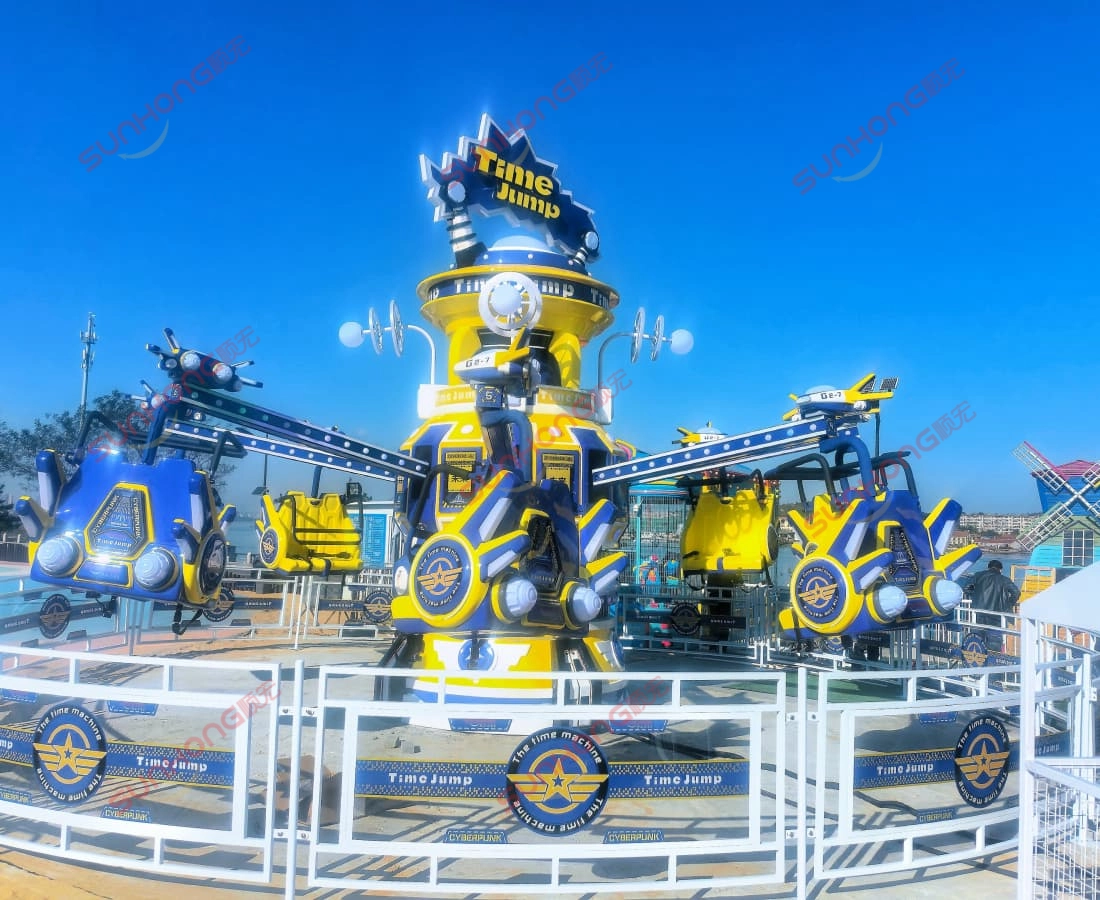
16-Seat Time Jump – Rotating Plane Ride for Amusement Parks
Time Jump is a thrilling and cost-effective amusement ride, 100% originally developed and manufactured by SUNHONG with patented certification. Designed for families and children, it combines motor drive and air-compressor cylinders to achieve dynamic movements—left-right rotation, variable-speed spinning, bouncing seats, and full 360-degree spins.
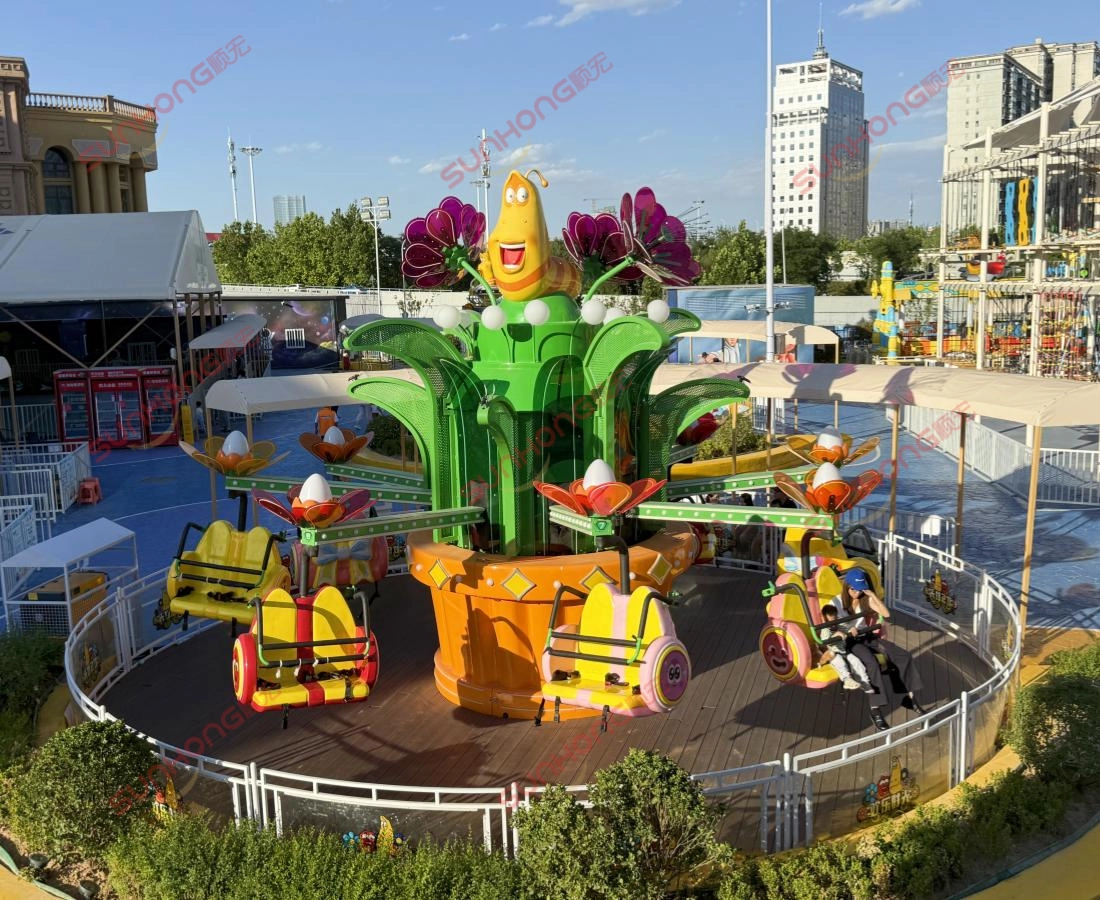
Larva Blooms Bounce Ride – Hot IP Custom Attraction with 360° Spin & Bounce
Larva Blooms is a patented bounce ride inspired by the hit Larva animation series. Featuring full platform rotation, 360° spinning seats, and dynamic bouncing motion, it delivers a thrilling ride experience for families and kids. IP customization available with OEM/ODM service.
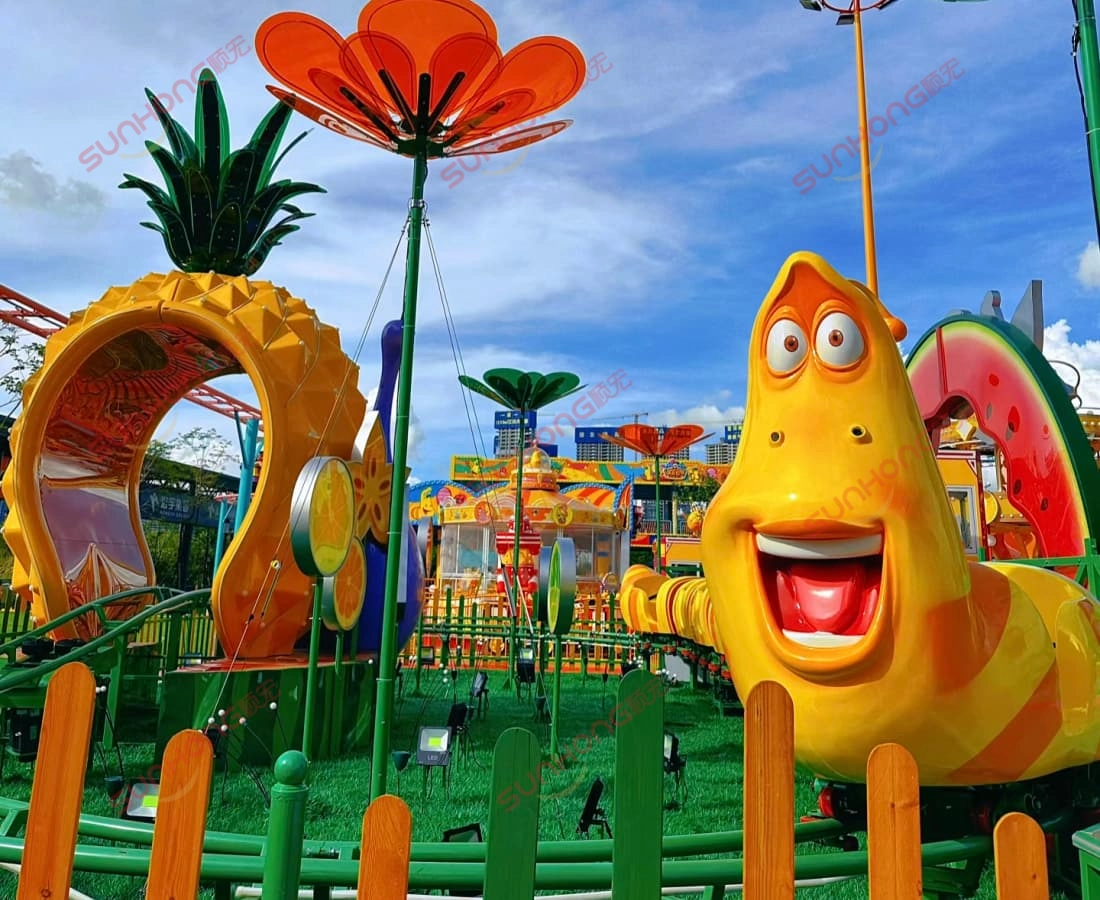
Larva Fruitland – A Mini Roller Coaster Adventure for Kids and Families
Larva Fruitland is a mini roller coaster themed after the Larva animated series. With vibrant colors and gentle motion, it’s perfect for kids and families. This small coaster features IP characters, a fruit farm design, and photo-worthy appeal. Ideal for indoor or outdoor parks. OEM/ODM customization available for your branding needs.

360 Degree Rotating Ride Swing Thrill Amusement Rides for Attractions
Air Bus is a stunning addition to our family amusement rides, delivering a one-of-a-kind 360° dual-rotation experience. With its swinging arm and self-spinning cabin, bright yellow flying-bus design, dynamic music effects, and customizable options, this ride is more than just entertainment—it’s a show-stopping centerpiece that helps your park attract crowds.
Leave a message
Ready to elevate your amusement offerings?
Contact Sunhong today to explore how we can bring your vision to life and create unforgettable experiences for your visitors.
* Rest assured that your privacy is important to us, and all information provided will be handled with the utmost confidentiality.
Copyright © 2025 SUNHONG All Reserved.
Whatsapp: +8613922331804
Guangzhou Shunhong Entertainment Equipment Co.,Ltd.
sunhongrides
SUNHONGAMUSEMENTRIDES
Scan QR Code