
Thrill Ride Procurement for New Parks: Layout to Installation
- Planning a High-Impact Attraction Portfolio
- Start with the park concept and visitor profile
- Translate the site survey into a ride layout
- Use capacity and throughput as procurement metrics
- Engineering, Compliance, and Supplier Due Diligence
- Define technical requirements before comparing quotations
- Audit the manufacturer’s quality system
- Compare total cost instead of purchase price alone
- Managing Manufacturing, Delivery, and Site Installation
- Control design approval and production milestones
- Coordinate international shipping and site readiness
- Make commissioning and handover measurable
- SUNHONG as an Integrated Project Partner
- From concept planning to customized amusement park equipment
- International documentation and project execution
- Value beyond the equipment invoice
- Frequently Asked Questions
- What should be included in a procurement brief for a new park attraction?
- How can a buyer compare the capacity of different amusement rides?
- Which safety standards may apply to amusement rides?
- When should site preparation begin?
- What should be checked during final ride acceptance?
- Why is an integrated manufacturer useful for a new amusement park?
Thrill ride procurement for a new park is a multidisciplinary process covering market positioning, site planning, attraction selection, engineering, manufacturing, logistics, installation, testing, and operational handover. The strongest project outcomes come from treating each amusement park ride as part of an integrated guest-flow and revenue system rather than as an isolated purchase. Buyers should define the target audience, expected attendance, ride capacity, footprint, safety requirements, local approvals, maintenance model, and total cost of ownership before comparing supplier quotations. A structured process helps investors reduce redesign, construction delays, compliance gaps, and commissioning risks while creating a distinctive attraction portfolio that supports repeat visitation.
Planning a High-Impact Attraction Portfolio
Start with the park concept and visitor profile
The first procurement decision is not the model name or visual theme; it is the role each attraction will play in the park. A family-oriented destination may require a balanced mix of moderate-intensity coasters, spinning rides, water attractions, children’s equipment, and shaded interactive zones. A destination marketed around adrenaline needs a stronger concentration of launch coasters, tower experiences, pendulum rides, inverted systems, and other high-intensity products. The portfolio should reflect visitor age, height restrictions, cultural preferences, climate, average dwell time, and the spending behavior of local and international guests.
Investors should also establish commercial objectives before requesting technical proposals. Key questions include whether the ride is intended to become a signature landmark, absorb peak-hour demand, distribute visitors to an underused zone, extend evening operations, or create High Quality upselling opportunities. A visually prominent attraction may produce branding value beyond ticket revenue, while a high-throughput installation may contribute more directly to queue reduction and daily capacity. Procurement specifications should document these objectives so suppliers can recommend suitable configurations instead of quoting a generic catalog unit.
Translate the site survey into a ride layout
Site planning must account for more than the ride footprint. The layout should include queue lines, emergency access, operator positions, maintenance clearance, evacuation routes, fencing, landscaping, drainage, electrical rooms, control cabinets, guest circulation, and sightlines from nearby attractions. Topography, soil conditions, groundwater, wind exposure, seismic activity, flood risk, and local building rules can materially affect foundation design and installation cost.
A professional amusement park design process normally develops a concept master plan, attraction zoning plan, pedestrian-flow study, utility plan, and construction interface schedule. The ride manufacturer should receive accurate survey data, geotechnical information, site coordinates, elevation benchmarks, and anticipated operating conditions. Early coordination prevents a common failure: selecting a technically suitable ride that cannot be integrated efficiently because of insufficient clearance, poor access for cranes, or conflicts with existing infrastructure.
Use capacity and throughput as procurement metrics
Nominal capacity is not the same as practical hourly throughput. Actual performance is influenced by dispatch discipline, loading complexity, restraint checks, guest behavior, accessibility procedures, downtime, weather interruptions, and operator staffing. Buyers should request a transparent capacity model showing train or vehicle size, dispatch interval, cycle duration, seats per hour, expected utilization, and assumptions for operational pauses.
Queue design should be evaluated alongside capacity. A ride that attracts strong demand but has limited shade, poor ventilation, or no efficient access arrangement can reduce guest satisfaction even when the mechanical system performs correctly. Procurement documents should therefore specify queue capacity, estimated maximum wait, shade coverage, electronic or virtual queue compatibility, accessibility provisions, and opportunities for entertainment within the waiting environment.
Engineering, Compliance, and Supplier Due Diligence
Define technical requirements before comparing quotations
Comparable bids require a consistent technical brief. It should state the intended operating hours, ambient temperature range, wind limits, corrosion exposure, daily cycles, passenger restrictions, throughput target, available power, lighting needs, sound requirements, control philosophy, and preferred finish quality. The brief should also identify whether the supplier is responsible for foundations, anchor bolts, electrical cabling, buildings, theming, commissioning, operator training, spare parts, and documentation.
Safety engineering should be considered throughout the lifecycle. ISO 12100 provides principles for machinery risk assessment and risk reduction, while ISO 13814 addresses safety requirements for amusement rides and amusement devices. In the United States, buyers may also review the ASTM F24 committee standards relevant to design, manufacture, operation, inspection, and maintenance. Applicable requirements vary by jurisdiction, so the project owner should confirm which standards and authority approvals govern the site.
Audit the manufacturer’s quality system
Supplier evaluation should cover engineering competence, production capacity, welding and fabrication controls, material traceability, non-destructive testing, coating systems, electrical assembly, software validation, inspection records, and corrective-action procedures. A factory audit can reveal whether the quoted product is manufactured in-house or depends heavily on uncontrolled subcontracting. Buyers should request examples of quality plans, inspection and test plans, component certificates, weld procedures, calibration records, and factory acceptance test protocols.
Documentation is an essential deliverable, not an administrative afterthought. A complete handover package commonly includes general arrangement drawings, foundation loads, structural calculations, electrical schematics, control-system information, operating manuals, maintenance schedules, spare-parts lists, inspection forms, emergency procedures, and training records. The contract should define the document language, revision process, approval dates, and consequences for incomplete submissions.
Compare total cost instead of purchase price alone
The capital quotation should be evaluated together with civil works, shipping, customs, local taxes, installation equipment, specialist technicians, commissioning, spare parts, insurance, utilities, staffing, inspection fees, and planned maintenance. A low initial price can become expensive if the attraction requires unusual foundations, imported consumables, proprietary control components, or frequent replacement of wear parts.
Lifecycle analysis should include energy consumption, lubrication intervals, routine inspection hours, annual non-operating periods, warranty exclusions, software support, replacement lead times, and refurbishment options. Buyers should also clarify the warranty start date. For a new park, the commercially preferable arrangement may begin the warranty after successful commissioning and formal acceptance rather than at shipment.
| Procurement area | Weak evaluation method | Stronger evaluation method | Buyer benefit |
|---|---|---|---|
| Capacity | Use the supplier’s headline hourly figure | Model dispatch interval, loading time, downtime, and operating assumptions | More realistic revenue and queue forecasts |
| Safety | Accept a general compliance statement | Review applicable standards, risk assessment, inspection records, and authority requirements | Lower approval and operational risk |
| Cost | Compare equipment prices only | Calculate delivered, installed, commissioned, and lifecycle cost | Better capital planning and ROI visibility |
| Installation | Leave site interfaces undefined | Assign responsibilities for foundations, utilities, cranes, testing, and handover | Fewer delays and change orders |
| Maintenance | Purchase a standard spare-parts package | Match spares, training, tools, and response times to operating conditions | Higher availability after opening |
Managing Manufacturing, Delivery, and Site Installation
Control design approval and production milestones
After contract award, the project should move through formal design gates. Typical stages include concept approval, layout approval, preliminary engineering, detailed engineering, material procurement, fabrication, surface treatment, assembly, factory inspection, packing, shipment, site installation, testing, and acceptance. Each gate should have defined inputs, responsible parties, approval deadlines, and measurable outputs.
Design changes after fabrication begins can affect structural members, control software, foundations, shipping dimensions, and cost. A change-control procedure should distinguish safety-critical changes, owner-requested aesthetic changes, authority-driven revisions, and supplier corrections. The procedure should record technical impact, schedule impact, commercial impact, and revised approval status.
Coordinate international shipping and site readiness
Large attractions often move through multiple logistics stages and may require oversize transport permits, special packing, corrosion protection, lifting plans, and customs documentation. The project schedule should connect the manufacturing completion date to foundation curing, road access, crane mobilization, storage capacity, electrical readiness, and local labor availability.
Before shipment, the owner should complete a site-readiness review. This review can confirm foundation dimensions, anchor locations, concrete strength, embedded parts, drainage, temporary power, permanent power, access roads, lifting zones, secure storage, weather protection, and construction permits. Photographic evidence, survey verification, and signed checklists help prevent a shipment from arriving before the site can safely receive it.
Make commissioning and handover measurable
Installation is complete only when the system has passed mechanical inspection, electrical verification, control-system checks, unloaded testing, loaded testing, emergency-stop tests, evacuation drills, restraint checks, sensor validation, noise review, and authority inspection where required. Acceptance criteria should be written into the purchase contract and linked to documented test results.
Operator training should cover startup and shutdown, dispatch procedures, restraint verification, weather limits, evacuation, incident response, daily inspection, lockout and tagout, cleaning, guest communication, and escalation procedures. Maintenance personnel need separate instruction on lubrication, wear monitoring, fault diagnosis, component replacement, and inspection intervals. A structured handover protects both safety and availability during the critical opening period.
SUNHONG as an Integrated Project Partner
From concept planning to customized amusement park equipment
SUNHONG is a large-scale comprehensive amusement ride manufacturer dedicated to research and development, design, manufacturing, and sales. Our capabilities extend across overall planning, R&D design, exclusive customization, production, comprehensive construction, and operation management. This integrated model allows project owners to coordinate attraction selection, spatial planning, technical requirements, manufacturing, and site delivery through a more unified workflow.
Our product scope supports different park strategies, including family attractions, children’s rides, thrill machines, sightseeing systems, water-related equipment, themed installations, and supporting amusement park equipment. For a new destination, our engineering and design teams can help connect the attraction portfolio with available land, visitor circulation, visual identity, capacity objectives, and construction interfaces. Customization can address color schemes, theming, vehicle appearance, track geometry, ride intensity, guest demographics, and site-specific constraints.
International documentation and project execution
With more than 10 years of export experience, SUNHONG supports international buyers with documentation and market-oriented compliance coordination. The company states that its products hold certificates for entry into markets including CE for the European Union, UKCA for the United Kingdom, SABER for Saudi Arabia, TÜV-related certification for Germany, and ASTM certification for the United States. Certification requirements remain project- and jurisdiction-specific, so final approval should always be confirmed with the relevant local authority and appointed inspection bodies.
Our in-house R&D, production, and construction teams provide continuity from initial concept through final project completion. That continuity can simplify technical communication, reduce interface gaps, and support more consistent control over drawings, fabrication, installation, commissioning, and training. SUNHONG amusement rides have been installed in more than 56 nations and regions, demonstrating an international delivery footprint relevant to investors, distributors, and developers planning cross-border projects.
Value beyond the equipment invoice
The commercial value of a supplier should be measured by project reliability as well as attraction appearance. SUNHONG’s combined focus on amusement park design, manufacturing, construction, and operational support can help owners address the practical requirements behind a successful opening: coordinated schedules, suitable documentation, customization, installation support, spare-parts planning, and staff readiness.
For buyers evaluating a signature ride or a complete attraction package, the next step should be a structured feasibility exchange. Site dimensions, target market, attendance assumptions, preferred intensity, budget range, local standards, opening date, and desired service scope provide the information needed for a more accurate proposal. SUNHONG’s stated goal is to become a leading global manufacturer of amusement rides, and project owners can review product and service information at the SUNHONG website.
Frequently Asked Questions
What should be included in a procurement brief for a new park attraction?
A procurement brief should include the target visitor profile, attraction purpose, site dimensions, throughput target, operating climate, height and age restrictions, local standards, available utilities, design expectations, delivery date, installation scope, training requirements, warranty terms, spare parts, and documentation requirements.
How can a buyer compare the capacity of different amusement rides?
Capacity should be compared using dispatch interval, cycle duration, seats or vehicles per dispatch, loading and unloading time, staffing assumptions, expected downtime, weather limitations, and accessibility procedures rather than relying only on a supplier’s headline hourly figure.
Which safety standards may apply to amusement rides?
Applicable requirements depend on the installation location and authority having jurisdiction. Buyers commonly review relevant ISO requirements, ASTM F24 standards in applicable markets, local building and electrical codes, inspection rules, and documentation requested by regulators or insurers.
When should site preparation begin?
Site preparation should begin during early design coordination, with detailed foundation and utility work proceeding after approved engineering information is available. Before shipment, the owner should verify foundation dimensions, concrete strength, anchor locations, access roads, crane areas, drainage, storage, permits, and power readiness.
What should be checked during final ride acceptance?
Final acceptance should cover mechanical and electrical inspection, control-system verification, emergency-stop functions, restraint operation, sensor performance, unloaded and loaded testing, evacuation procedures, operator training, maintenance documentation, spare-parts delivery, and completion of authority inspections where required.
Why is an integrated manufacturer useful for a new amusement park?
An integrated manufacturer can coordinate planning, customized design, production, construction, commissioning, training, and operational support. This may reduce communication gaps, clarify responsibility for site interfaces, and improve schedule control compared with managing unrelated suppliers for each project phase.
Contact SUNHONG at sunhong@isunhong.com to discuss a tailored amusement park design, equipment package, or ride installation plan for your new park.
Outdoor Theme Park Rides Market Trends for Global Park Investors
Training Tips to Improve Bungee Trampoline Tricks
What are the different types of amusement park train?
Top amusement park car rides Manufacturers and Suppliers
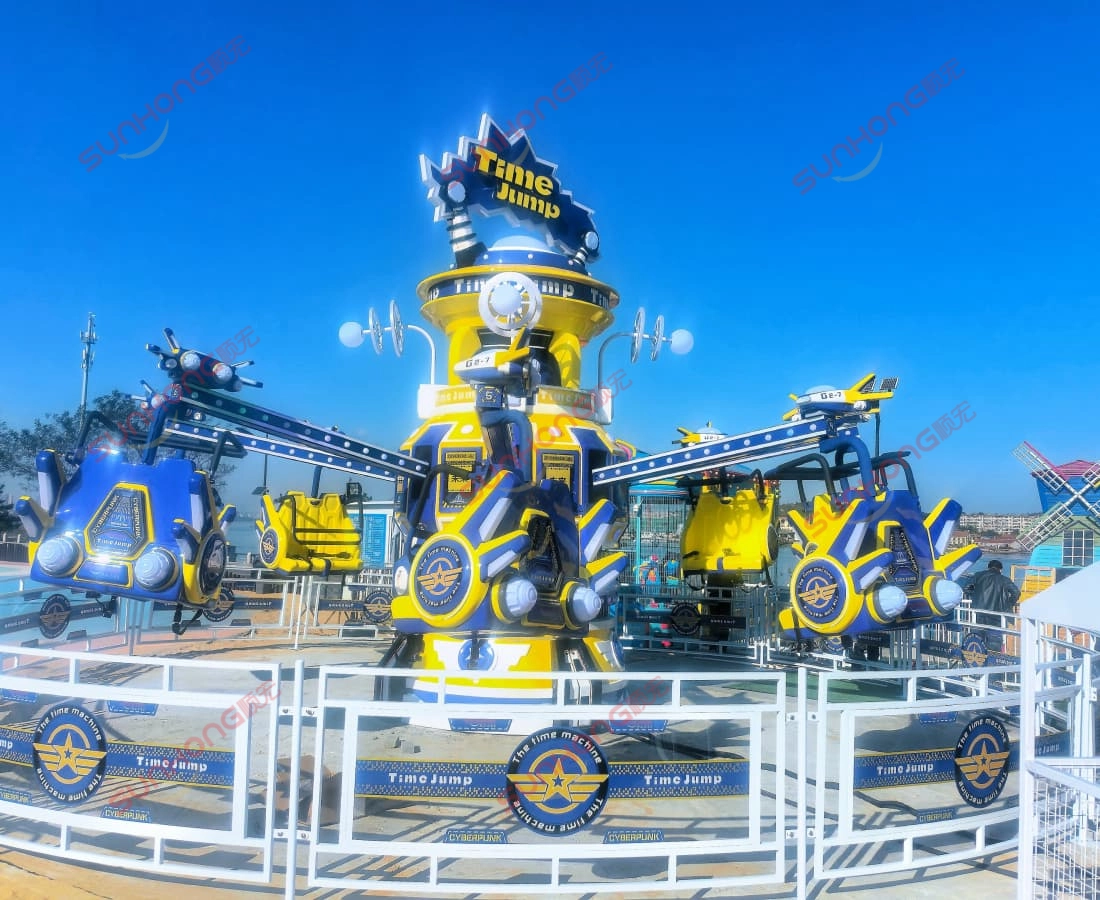
16-Seat Time Jump – Rotating Plane Ride for Amusement Parks
Time Jump is a thrilling and cost-effective amusement ride, 100% originally developed and manufactured by SUNHONG with patented certification. Designed for families and children, it combines motor drive and air-compressor cylinders to achieve dynamic movements—left-right rotation, variable-speed spinning, bouncing seats, and full 360-degree spins.
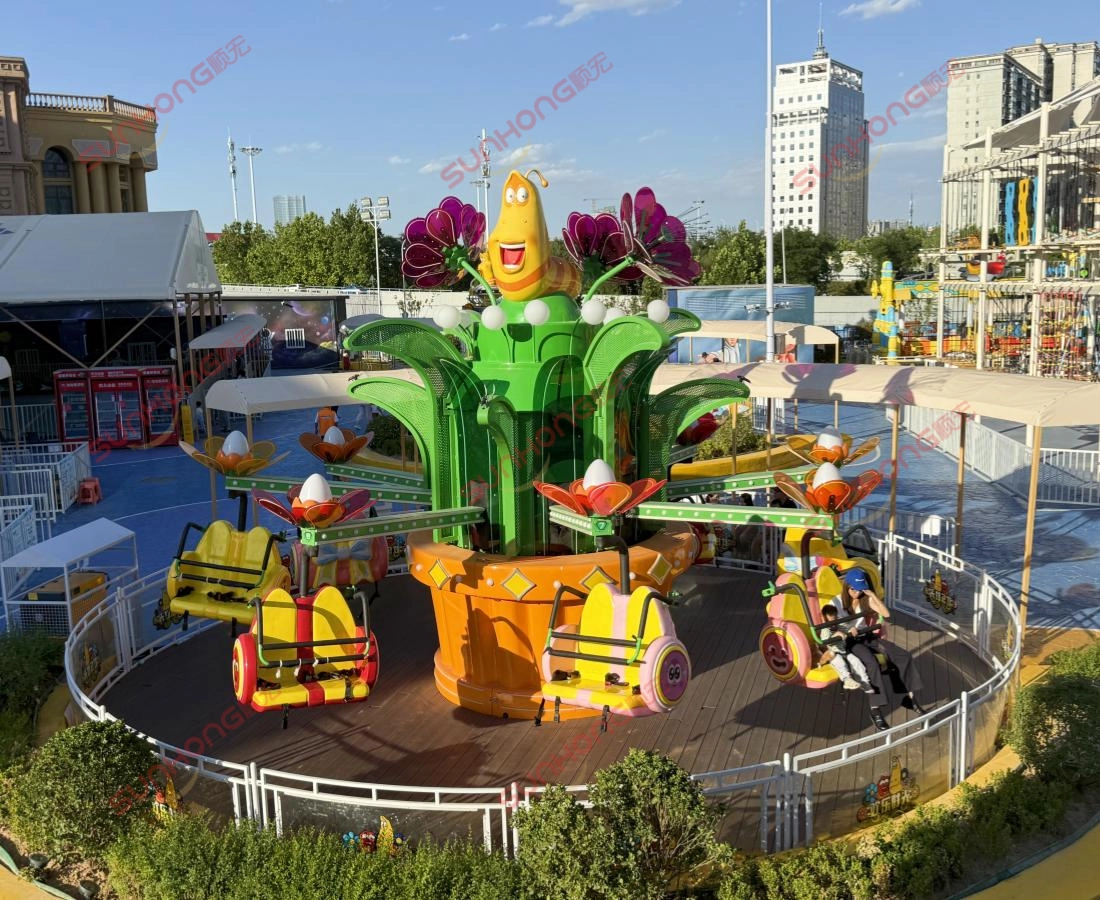
Larva Blooms Bounce Ride – Hot IP Custom Attraction with 360° Spin & Bounce
Larva Blooms is a patented bounce ride inspired by the hit Larva animation series. Featuring full platform rotation, 360° spinning seats, and dynamic bouncing motion, it delivers a thrilling ride experience for families and kids. IP customization available with OEM/ODM service.
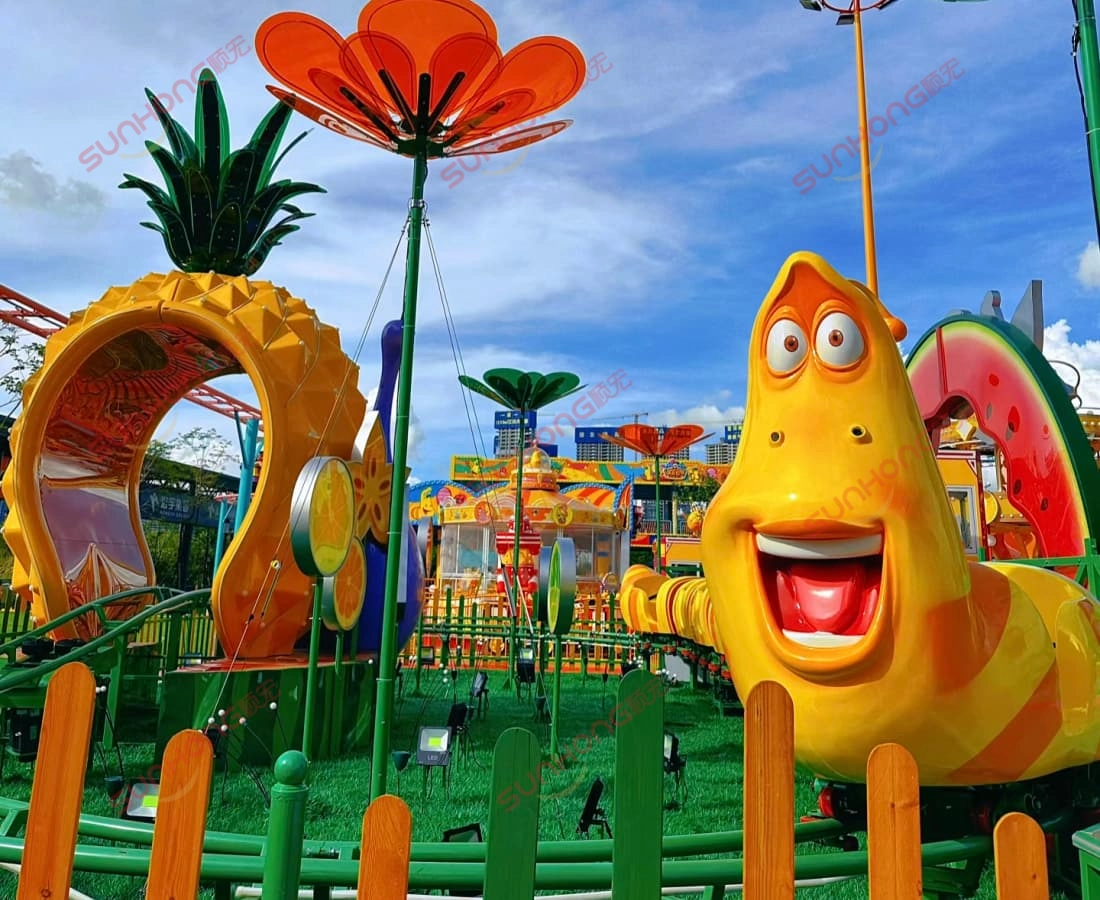
Larva Fruitland – A Mini Roller Coaster Adventure for Kids and Families
Larva Fruitland is a mini roller coaster themed after the Larva animated series. With vibrant colors and gentle motion, it’s perfect for kids and families. This small coaster features IP characters, a fruit farm design, and photo-worthy appeal. Ideal for indoor or outdoor parks. OEM/ODM customization available for your branding needs.

360 Degree Rotating Ride Swing Thrill Amusement Rides for Attractions
Air Bus is a stunning addition to our family amusement rides, delivering a one-of-a-kind 360° dual-rotation experience. With its swinging arm and self-spinning cabin, bright yellow flying-bus design, dynamic music effects, and customizable options, this ride is more than just entertainment—it’s a show-stopping centerpiece that helps your park attract crowds.
Leave a message
Ready to elevate your amusement offerings?
Contact Sunhong today to explore how we can bring your vision to life and create unforgettable experiences for your visitors.
* Rest assured that your privacy is important to us, and all information provided will be handled with the utmost confidentiality.
Copyright © 2025 SUNHONG All Reserved.
Whatsapp: +8613922331804
Guangzhou Shunhong Entertainment Equipment Co.,Ltd.
sunhongrides
SUNHONGAMUSEMENTRIDES
Scan QR Code