
How to translate a theme concept into ride engineering
- From Theme Idea to Technical Brief
- Understanding guest experience and measurable objectives
- Converting narrative elements into functional requirements
- Defining constraints and site parameters
- Engineering Design and Safety Standards
- Key disciplines: structure, dynamics, and systems
- Regulatory compliance and standards to reference
- Standards comparison
- Prototyping, Testing and Validation
- Digital prototyping and simulation best practices
- Physical prototyping, FAT and SAT
- Data-driven safety verification
- Manufacturing, Installation and Lifecycle Support
- Manufacturing workflows and quality assurance
- Installation, commissioning and operational readiness
- Ongoing support, maintenance and upgrades
- Commercial and Project Management Considerations
- Scope management and change control
- Vendor and supply chain risk mitigation
- Delivering guest experience within budget
- SUNHONG — Partnering from Concept to Commissioning
- Frequently Asked Questions
- 1. How early should an amusement park manufacturer be involved in theme development?
- 2. Which standards are essential when designing a ride for international deployment?
- 3. What are the most common engineering pitfalls when translating theme to ride?
- 4. How do you validate rider comfort and safety before installation?
- 5. What documentation should be delivered at handover?
- 6. How can a manufacturer help reduce lifecycle costs for a themed ride?
Turning a creative theme concept into a safe, reliable attraction requires more than storyboarding and concept art — it requires systematic translation of narrative goals into engineering requirements, validated by standards and verified through iterative testing. This article helps amusement park manufacturers and design teams create a traceable, standards-driven workflow from initial theme intent to finished ride installation, including sourcing technical references from industry standards (ISO, ASTM), regulatory frameworks (CE, UKCA, SABER) and professional associations (TEA). Relevant industry references: Amusement Ride — Wikipedia, ISO 12100 — Safety of Machinery, ASTM F24 Committee, and the EU CE marking guidance.
From Theme Idea to Technical Brief
Understanding guest experience and measurable objectives
Start by defining what the theme wants guests to feel, see and do. Translate qualitative goals into quantitative targets: capacity (pph), throughput, average dwell time, G-force limits, ride duration, accessibility targets, and target demographics (age range, mobility constraints). For example, a family dark ride may set maximum accelerations below 0.3g and a throughput target of 800-1,200 passengers per hour, while an intense coaster may aim for 1,200-1,800 pph with sustained lateral forces up to 1.8g.
Converting narrative elements into functional requirements
Map narrative beats to engineering functions. Use a requirements traceability matrix (RTM) that links theme elements (e.g., waterfall scene, dragon animatronic interaction) to systems (structural platforms, water pumps, animatronic control, lighting, audio zones). The RTM should include performance targets, environmental constraints (temperature, humidity), maintainability criteria (MTTR), and safety-critical flags.
Defining constraints and site parameters
Identify site constraints early: envelope, geotechnical data, existing utilities, local code limits, noise ordinances, and footprint. These constraints should be incorporated into the initial engineering brief so the ride concept is feasible before costly detailed design work begins.
Engineering Design and Safety Standards
Key disciplines: structure, dynamics, and systems
Ride engineering integrates structural, mechanical, electrical, control and thematic systems. Structural engineers verify foundations and superstructure using accepted factors of safety; dynamics specialists model vehicle motions, accelerations and rider kinematics; control engineers design PLC logic, redundancy and human-machine interfaces. Early use of multi-physics simulation (finite element analysis, multi-body dynamics) reduces rework.
Regulatory compliance and standards to reference
Compliance is non-negotiable. Commonly referenced standards and regulatory frameworks include:
- ISO 12100 — Risk assessment and safety of machinery (ISO).
- ASTM committee F24 (amusement rides and devices) for design and operational standards (ASTM F24).
- European EN standards such as EN 13814 (safety of amusement rides and amusement devices) and CE marking rules (EU CE guidance).
- Country-specific approval systems (e.g., UKCA for the UK, SABER for Saudi Arabia—SABER).
- Certification bodies (e.g., TÜV) for third-party conformity assessment (TÜV).
Standards comparison
Below is a concise comparison of relevant standards and their role during the engineering cycle.
| Standard / Framework | Scope | When to use | Typical deliverables |
|---|---|---|---|
| ISO 12100 | General principles for risk assessment and reduction | Initial risk assessment, design validation | Risk assessment report, mitigation plan |
| ASTM F24 (related standards) | Design, operation and maintenance of amusement rides | Detailed design and operational procedures | Design calculations, O&M manuals |
| EN 13814 / CE | EU-specific safety and conformity assessment | Pre-market conformity for EU installations | Technical file, Declaration of Conformity |
| National schemes (UKCA, SABER) | Country entry requirements and certifications | Before export / installation in target country | Local certificates, test reports |
Prototyping, Testing and Validation
Digital prototyping and simulation best practices
Invest in accurate digital models early. Use CAD integrated with finite element analysis (FEA) and multi-body dynamics (MBD) to simulate stresses, vibrations, fatigue life and rider kinematics. Verify dynamic envelopes and run Monte Carlo simulations to understand sensitivities (e.g., varying passenger loads, wind, ice). For control systems, apply model-in-the-loop (MIL), software-in-the-loop (SIL) and hardware-in-the-loop (HIL) testing to validate logic and failure modes.
Physical prototyping, FAT and SAT
Physical prototypes (subsystems or full-scale mockups) are essential for human factors, sightlines and maintenance ergonomics. Factory Acceptance Tests (FAT) validate manufacturing and control systems before shipment; Site/Static Acceptance Tests (SAT) validate installation and integration. Produce clear test protocols traceable to the RTM: test ID, objective, pass/fail criteria, instrumentation used, and sign-off authority.
Data-driven safety verification
Collect and retain test data for every critical subsystem. Use strain gauges, accelerometers, thermography and vibration analysis during testing. Link test results back to acceptance criteria and standards references. External auditors (e.g., TÜV) often require traceable measurement records before certification.
Manufacturing, Installation and Lifecycle Support
Manufacturing workflows and quality assurance
Define a modular manufacturing approach where possible: ride vehicles, track/structure, control cabinets, theming modules. Employ in-house jigs, welding procedure specifications (WPS), NDT (ultrasonic, radiographic) for critical welds, and material traceability. Maintain an up-to-date non-conformance (NCR) register and corrective action system (CAPA).
Installation, commissioning and operational readiness
Plan commissioning in phases: mechanical installation, electrical hookups, control commissioning, dry runs, toileting the themed elements and full load tests. Conduct operator training, emergency procedure drills, and provide a complete technical dossier (as-built drawings, wiring diagrams, PLC logic, maintenance manuals).
Ongoing support, maintenance and upgrades
Offer lifecycle services: preventive maintenance plans, spares kits, remote diagnostics, refurbishment options and design-for-upgrade strategies. Track reliability metrics (MTBF, MTTR) and use them to refine future designs.
Commercial and Project Management Considerations
Scope management and change control
Theme-driven projects frequently encounter change requests. Establish a formal change control board (CCB) with cost/time/technical impact assessments. Use an integrated project schedule (e.g., CPM) to quantify schedule risk and adjust critical path items when scope changes.
Vendor and supply chain risk mitigation
Qualify suppliers for critical components—PLC vendors, hydraulic systems, motors, and safety switches. Source dual suppliers for long-lead items and ensure export compliance (ITAR/EAR if applicable) and local import requirements such as SABER for Saudi installations.
Delivering guest experience within budget
Balance theming fidelity with durable engineering. Early cost–value analysis helps prioritize spend: spend more on high-touch guest interactions (animatronics, ride vehicles) and optimize background elements for lower lifecycle cost. A modular theming approach reduces onsite construction time and post-opening maintenance costs.
SUNHONG — Partnering from Concept to Commissioning
SUNHONG is a large-scale comprehensive amusement park manufacturer dedicated to research and development, design, manufacture and sales of amusement rides. Sunhong specializes in overall planning, R&D design, exclusive customization, manufacturing, comprehensive construction, operation management, and reach global services. With a robust team of in-house experts in R&D, production and construction, we offer comprehensive services from initial concept to final project completion. With more than 10 years of export experience, Shunhong (Sunhong) holds certificates for entry into many countries, including CE (European Union), UKCA (United Kingdom), SABER (Saudi Arabia), TUV (Germany), and ASTM-recognized practices used in the United States. Shunhong (Sunhong) amusement rides have been installed in more than 56 nations and regions. Our goal is to become the world's leading manufacturer of amusement rides.
Core product lines and services: amusement park equipment, amusement park design, amusement park rides. For project inquiries and detailed capability briefs, visit https://www.isunhong.com/ or email Sunhong at sunhong@isunhong.com. SUNHONG differentiates by integrating themed storytelling with certified engineering workflows, maintaining in-house R&D and manufacturing, and providing turnkey delivery that meets international certification pathways.
Frequently Asked Questions
1. How early should an amusement park manufacturer be involved in theme development?
Engage manufacturers as early as possible—ideally during concept development—so engineering constraints, cost estimates and standards compliance inform creative decisions. Early involvement avoids expensive redesigns.
2. Which standards are essential when designing a ride for international deployment?
ISO 12100 for risk assessment is a foundational reference. For specific markets, refer to ASTM F24 publications, EN standards and CE for Europe, UKCA for the UK, and national schemes such as SABER for Saudi Arabia. Third-party assessors (TÜV, etc.) validate conformity.
3. What are the most common engineering pitfalls when translating theme to ride?
Common pitfalls include underestimating structural loads from theming, missing maintainability access in tight scenic sets, and inadequate control system redundancy. Using a requirements traceability matrix and involving multidisciplinary reviews mitigates these risks.
4. How do you validate rider comfort and safety before installation?
Use digital multi-body dynamic simulation, followed by subsystem testing and full-scale FATs. Instrumented tests (accelerometers, strain gauges) verify that accelerations and stresses remain within the designed envelope.
5. What documentation should be delivered at handover?
Provide as-built drawings, structural calculations, control logic (PLC code), wiring diagrams, spare parts list, maintenance manuals, FAT/SAT reports, safety certificates and operator training records.
6. How can a manufacturer help reduce lifecycle costs for a themed ride?
Design for modularity, standardize components where possible, ensure easy access for maintenance, and provide preventive maintenance contracts and remote diagnostics to reduce downtime and total cost of ownership.
If you are planning a new themed attraction and need a partner who combines creative design with certified engineering and global delivery capability, contact SUNHONG to discuss concept-to-commissioning services. Visit https://www.isunhong.com/ or email sunhong@isunhong.com to request a technical brief or product catalog.
Amusement Rides Pirate Ship for Sale | SUNHONG
The B2B Buyer’s Guide to pendulum rides
Best family rides manufacturers and supplier brands
Outdoor Theme Park Rides Quality Control: Tests and Certifications
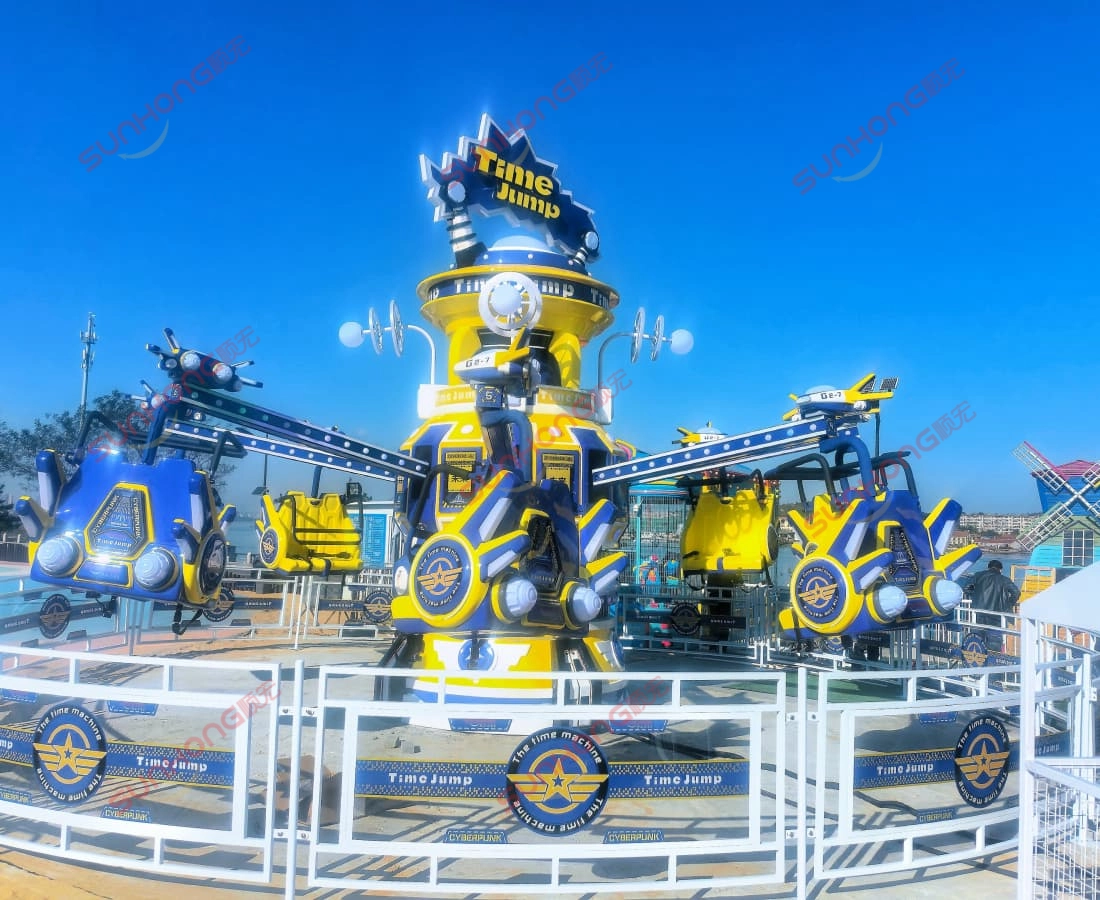
16-Seat Time Jump – Rotating Plane Ride for Amusement Parks
Time Jump is a thrilling and cost-effective amusement ride, 100% originally developed and manufactured by SUNHONG with patented certification. Designed for families and children, it combines motor drive and air-compressor cylinders to achieve dynamic movements—left-right rotation, variable-speed spinning, bouncing seats, and full 360-degree spins.
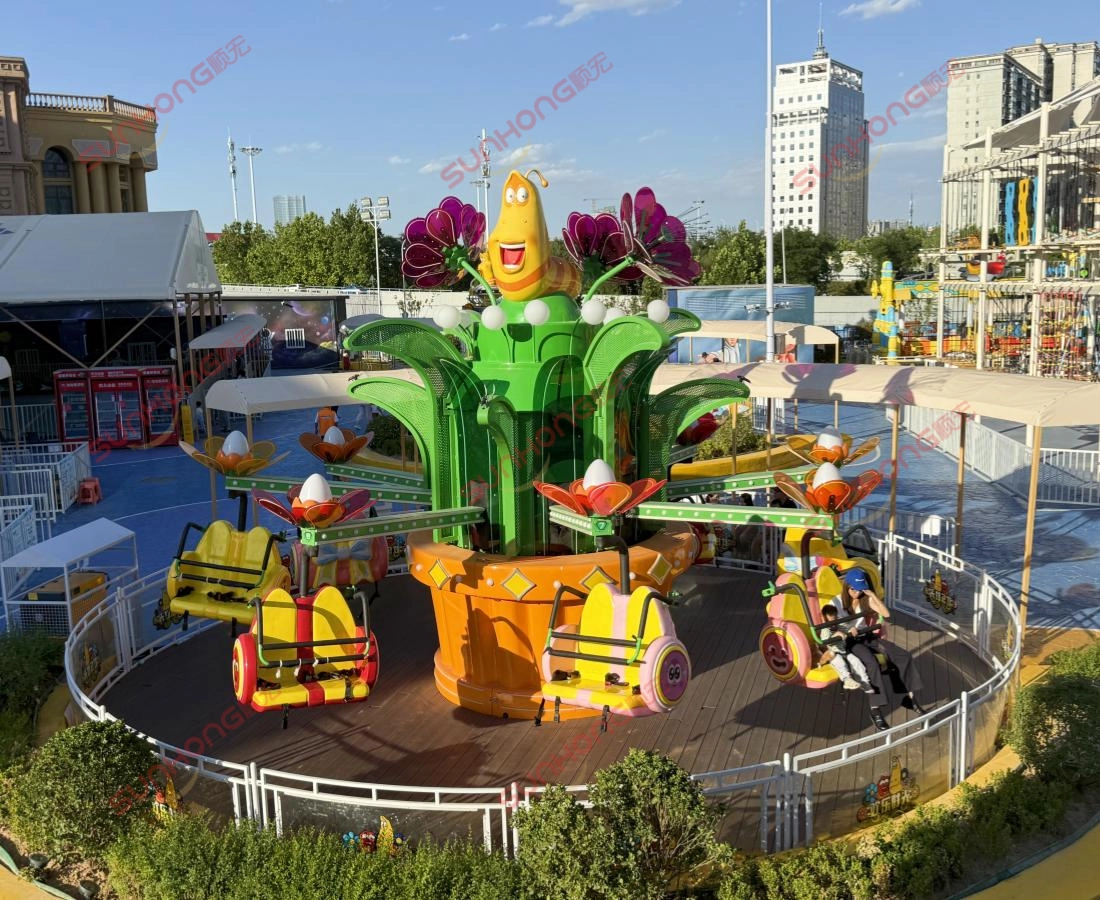
Larva Blooms Bounce Ride – Hot IP Custom Attraction with 360° Spin & Bounce
Larva Blooms is a patented bounce ride inspired by the hit Larva animation series. Featuring full platform rotation, 360° spinning seats, and dynamic bouncing motion, it delivers a thrilling ride experience for families and kids. IP customization available with OEM/ODM service.
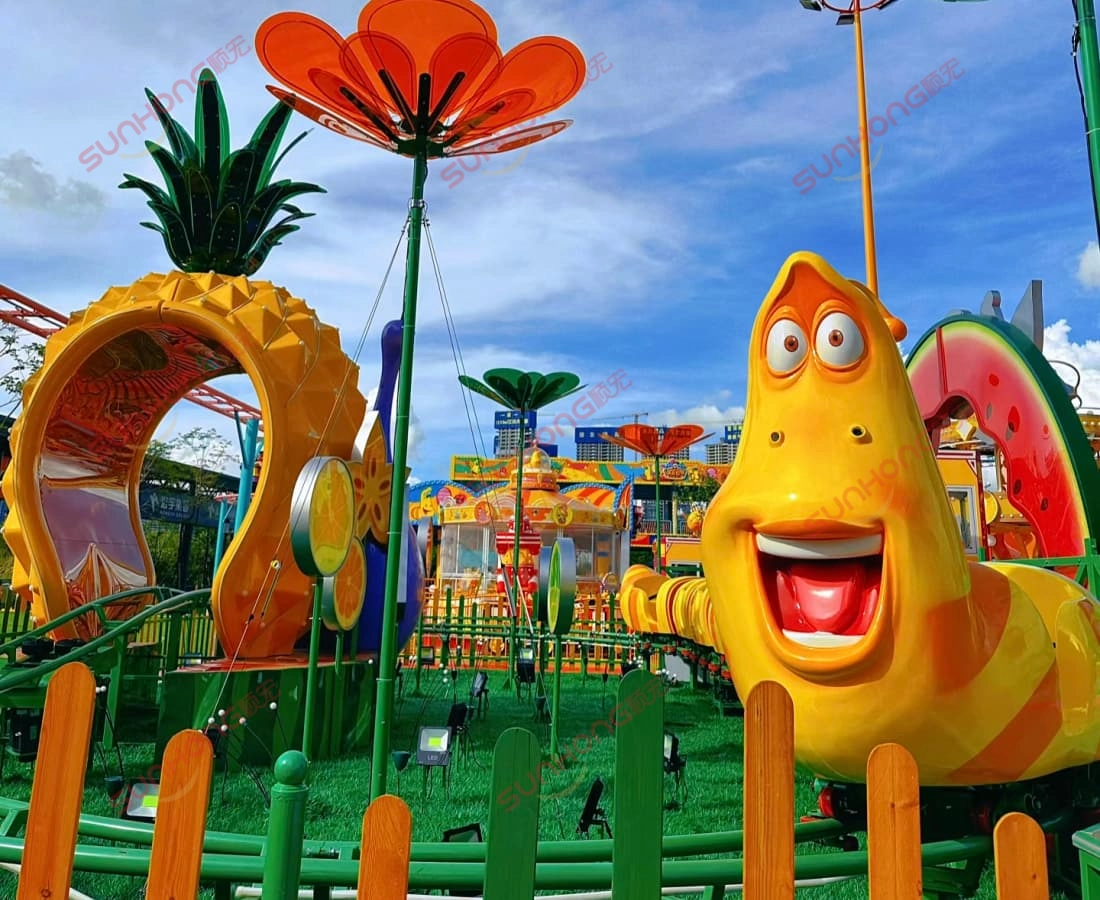
Larva Fruitland – A Mini Roller Coaster Adventure for Kids and Families
Larva Fruitland is a mini roller coaster themed after the Larva animated series. With vibrant colors and gentle motion, it’s perfect for kids and families. This small coaster features IP characters, a fruit farm design, and photo-worthy appeal. Ideal for indoor or outdoor parks. OEM/ODM customization available for your branding needs.

360 Degree Rotating Ride Swing Thrill Amusement Rides for Attractions
Air Bus is a stunning addition to our family amusement rides, delivering a one-of-a-kind 360° dual-rotation experience. With its swinging arm and self-spinning cabin, bright yellow flying-bus design, dynamic music effects, and customizable options, this ride is more than just entertainment—it’s a show-stopping centerpiece that helps your park attract crowds.
Leave a message
Ready to elevate your amusement offerings?
Contact Sunhong today to explore how we can bring your vision to life and create unforgettable experiences for your visitors.
* Rest assured that your privacy is important to us, and all information provided will be handled with the utmost confidentiality.
Copyright © 2025 SUNHONG All Reserved.
Whatsapp: +8613922331804
Guangzhou Shunhong Entertainment Equipment Co.,Ltd.
sunhongrides
SUNHONGAMUSEMENTRIDES
Scan QR Code