
How to Select High-ROI Equipment for a New Family Entertainment Center
- Building a Revenue-Focused Attraction Portfolio
- Start with audience, location, and operating model
- Balance capacity with guest experience
- Use financial metrics beyond the purchase price
- Engineering and Commercial Due Diligence Before Purchase
- Verify safety, standards, and technical documentation
- Assess maintenance and operational risk
- Review layout, circulation, and revenue architecture
- Choosing Equipment That Supports Long-Term Growth
- Prioritize modularity and cross-selling opportunities
- Use technology where it improves operations
- Build a procurement scorecard
- SUNHONG Support for Complete Entertainment Projects
- Integrated design and manufacturing capabilities
- International compliance and project delivery
- Connect product selection with project economics
- Frequently Asked Questions
Selecting high-ROI family entertainment center equipment is a commercial planning decision rather than a simple product purchase. Project owners must connect each attraction to a measurable business objective: increasing admission value, extending average visit duration, encouraging repeat visits, improving food and merchandise sales, or generating additional revenue through games and upgrades. The most effective portfolio usually combines dependable high-capacity attractions with flexible activities for different age groups, allowing parents, children, teenagers, and mixed-age groups to find reasons to stay longer and return more often.
Building a Revenue-Focused Attraction Portfolio
Start with audience, location, and operating model
The right attraction mix depends on catchment demographics, climate, local competition, building height, available floor area, parking capacity, and the intended operating schedule. A center located beside a shopping mall may benefit from compact attractions that convert casual visitors into short, frequent visits. A destination venue may justify a larger signature ride, birthday-party rooms, themed zones, and higher-capacity attractions that support longer dwell time.
Before requesting quotations, buyers should define primary customer segments and expected visit patterns. Preschool families often value soft-play structures, mini rides, role-play areas, and parent visibility. School-age children may prefer climbing challenges, interactive dark rides, bumper cars, sports games, and competitive redemption units. Teenagers and young adults can increase evening traffic through immersive attractions, skill-based games, and visually distinctive amusement park rides. This segmentation prevents the common mistake of purchasing equipment that looks impressive but serves only a narrow age group.
Balance capacity with guest experience
Capacity has a direct effect on revenue, but throughput alone does not determine profitability. A ride with a short cycle and high capacity can process many guests, while an interactive attraction may produce stronger engagement and ancillary spending despite a lower hourly throughput. Buyers should compare theoretical capacity with realistic operating capacity after accounting for loading, unloading, cleaning, attendant intervention, queue management, and scheduled inspections.
A practical equipment schedule should classify attractions as traffic generators, dwell-time enhancers, repeat-visit drivers, or monetization tools. A signature ride can create a destination reason; modular play equipment can fill unused corners; arcade and redemption games can generate repeat transactions; and party-oriented attractions can support pre-booked revenue. This portfolio approach is more resilient than relying on one expensive centerpiece.
Use financial metrics beyond the purchase price
Return on investment should be evaluated using total cost of ownership. The calculation should include equipment price, shipping, customs, civil works, electrical supply, flooring, theming, installation, staff training, insurance, spare parts, preventive maintenance, software updates, and eventual refurbishment. A lower-priced unit may produce a weaker result if it requires frequent downtime or depends on difficult-to-source components.
Useful measures include revenue per square meter, revenue per operating hour, utilization rate, average transaction value, maintenance cost per operating hour, and payback period. A basic payback estimate can divide total installed investment by expected annual contribution margin, but scenario planning is essential. Buyers should model conservative, expected, and high-demand cases, including seasonal fluctuations, school holidays, weather changes, and temporary closures.
| Evaluation factor | Why it affects ROI | Buyer question |
|---|---|---|
| Hourly throughput | Indicates potential guest volume during peak periods | What is the realistic operating capacity after loading and safety checks? |
| Floor-space efficiency | Shows how effectively the attraction uses rentable or revenue-producing area | Can the unit generate strong activity without restricting circulation? |
| Utilization rate | Connects capacity with actual demand rather than theoretical output | Will the attraction perform on weekdays as well as weekends? |
| Lifecycle cost | Captures maintenance, labor, energy, spare parts, and refurbishment | What will ownership cost over five to ten years? |
| Repeat-visit potential | Supports memberships, loyalty programs, and recurring local traffic | Does the experience remain attractive after the first visit? |
| Compliance documentation | Reduces approval, insurance, and operational risk | Are applicable technical files, test reports, manuals, and certificates available? |
Engineering and Commercial Due Diligence Before Purchase
Verify safety, standards, and technical documentation
Safety documentation should be reviewed before a purchase order is issued, not after manufacturing begins. Depending on the destination market and attraction type, the procurement file may need risk assessments, operating manuals, maintenance schedules, electrical documentation, structural calculations, inspection records, and conformity evidence. Buyers should identify the applicable national requirements and confirm responsibilities among the manufacturer, importer, installer, and venue operator.
The ISO 17842 amusement ride safety standard provides an important reference for the design, manufacture, operation, inspection, and maintenance of amusement rides. In the United States, buyers can also consult the ASTM F24 committee on amusement rides and devices for relevant consensus standards. These references do not replace local legal advice or authority approval, but they help establish a disciplined technical review process.
Assess maintenance and operational risk
Reliability is a revenue factor because every unplanned closure removes capacity, disappoints guests, and can increase compensation or reputational costs. A supplier evaluation should cover preventive-maintenance intervals, inspection access, component availability, remote troubleshooting, warranty limits, response times, and technician training. The buyer should request a recommended spare-parts list covering wear components, sensors, control devices, belts, bearings, lighting, and safety-related replacement items.
Energy consumption also deserves attention, particularly for indoor centers operating long hours. Buyers should compare motor power, standby consumption, lighting loads, HVAC interaction, and the operating requirements of air compressors or hydraulic systems. Equipment with efficient controls and accessible service points can improve margins without reducing the guest experience.
Review layout, circulation, and revenue architecture
Strong amusement park design integrates queue lines, emergency egress, sightlines, cashier positions, party rooms, food service, restrooms, storage, staff routes, and accessible paths. Poor circulation can create congestion around popular attractions while leaving other zones underused. Parents should be able to supervise children, and operators should have clear visibility of loading areas and high-risk interaction points.
Equipment should be selected together with the floor plan. A ride that requires a large safety envelope may be unsuitable for a dense urban venue, while a modular attraction may be valuable because it can be relocated or expanded. Designers should also reserve space for future upgrades, replacement components, seasonal theming, and new revenue formats so that the center does not become visually or commercially outdated.
Choosing Equipment That Supports Long-Term Growth
Prioritize modularity and cross-selling opportunities
Modular attractions give operators more control over expansion. Elements such as climbing modules, soft-play components, interactive projection zones, party packages, and redemption counters can often be reconfigured as customer preferences change. Modularity is especially valuable for a new venue with limited operating history because the owner can test demand before committing to a major second-phase investment.
Cross-selling should be considered during planning. A birthday package may include reserved seating, attraction access, food, merchandise, and game credits. A membership can combine unlimited access to selected activities with discounts on parties and refreshments. Equipment that supports multiple commercial packages often produces greater strategic value than an attraction that can be sold only as a single admission.
Use technology where it improves operations
Digital ticketing, wristband systems, cashless game cards, occupancy monitoring, and customer relationship tools can provide useful operating data. These systems help operators identify peak periods, popular zones, average spend, and repeat-visit behavior. However, technology should solve a defined operational problem. A sophisticated platform with high licensing costs may not be appropriate for a small venue unless it improves labor efficiency or provides actionable customer insights.
Interactive attractions should also be evaluated for content refresh options, software support, cybersecurity responsibilities, and hardware compatibility. A supplier should explain who owns digital content, how updates are delivered, and what happens if a controller, display, or network component fails. Clear documentation protects the operator from unexpected technology obsolescence.
Build a procurement scorecard
A structured scorecard reduces emotional purchasing and makes supplier comparisons more transparent. Suggested categories include commercial fit, capacity, safety documentation, customization, installation requirements, lead time, warranty, spare parts, energy use, staff requirements, service support, and total installed cost. Each category can receive a weighted score based on the project’s priorities.
Factory audits, sample inspections, reference checks, and contract reviews should support the scorecard. Buyers should confirm whether the quoted scope includes packaging, export documentation, installation supervision, commissioning, operator training, and corrective work after acceptance testing. Payment milestones should be connected to verifiable deliverables such as approved drawings, production completion, inspection, shipment, installation, and final handover.
SUNHONG Support for Complete Entertainment Projects
Integrated design and manufacturing capabilities
SUNHONG is a large-scale comprehensive amusement ride manufacturer dedicated to the research and development, design, manufacture, and sales of amusement rides. Our capabilities cover overall planning, R&D design, exclusive customization, manufacturing, comprehensive construction, operation management, and project support. This integrated structure helps project owners coordinate the commercial concept, attraction selection, engineering requirements, and site implementation through a more unified workflow.
Our product scope includes amusement park equipment, indoor family attractions, interactive play systems, and customized amusement park rides. Our engineering and production teams can adapt attraction concepts to local demographics, available floor area, branding requirements, capacity targets, and operational conditions. For investors, this approach can reduce the coordination burden created when separate designers, equipment vendors, contractors, and commissioning teams work without a shared technical framework.
International compliance and project delivery
With more than 10 years of export experience, SUNHONG supports international projects with certificates and market-entry documentation for multiple regions, including CE for the European Union, UKCA for the United Kingdom, SABER for Saudi Arabia, TÜV documentation from Germany, and ASTM-related certification for the United States. The exact documents required for a project depend on the destination country, attraction category, and authority having jurisdiction, so buyers should confirm the compliance scope during the technical contract stage.
SUNHONG amusement rides have been installed in more than 56 nations and regions. Our in-house experts in R&D, production, and construction provide services from initial concept to final project completion, including design coordination, manufacturing, delivery, installation support, commissioning, and operational guidance. This reach can be valuable for distributors and project owners managing different site conditions, import procedures, languages, and inspection expectations.
Connect product selection with project economics
A supplier should contribute more than a catalog. SUNHONG works to connect the selected attraction portfolio with the project’s layout, guest profile, budget, construction schedule, and operating model. A customized amusement park design can help organize traffic flow, visual identity, service areas, safety zones, and expansion opportunities before equipment fabrication begins.
The commercial objective is not to place the largest number of attractions in a building. It is to create a dependable experience that earns repeat visits, supports multiple revenue streams, and remains maintainable throughout its operating life. SUNHONG’s goal is to become the world’s leading manufacturer of amusement rides, while helping investors develop practical, attractive, and scalable entertainment destinations.
To review suitable amusement park equipment, discuss a customized amusement park design, or request a project consultation, contact SUNHONG at isunhong.com or email sunhong@isunhong.com.
Frequently Asked Questions
What equipment should a new family entertainment center buy first?
A new venue should begin with a balanced portfolio of dependable high-capacity attractions, age-appropriate play features, interactive activities, and monetization tools such as redemption games. The final mix should reflect local demographics, floor area, operating model, and expected visit patterns rather than relying on one expensive centerpiece.
How is ROI calculated for entertainment center attractions?
ROI should include total installed investment and annual contribution margin. Buyers should account for purchase price, shipping, customs, civil works, electrical supply, theming, installation, staffing, energy, maintenance, spare parts, insurance, and refurbishment, then model conservative, expected, and high-demand scenarios.
Why is attraction capacity important when selecting equipment?
Capacity affects the number of guests an attraction can serve during peak periods, but theoretical capacity is not the same as realistic operating capacity. Loading, unloading, cleaning, inspections, attendant intervention, and queue management must be considered when estimating revenue.
What safety documents should an amusement equipment supplier provide?
Depending on the destination market and attraction type, buyers may need risk assessments, operating manuals, maintenance schedules, electrical documentation, structural calculations, inspection records, and conformity evidence. Applicable national requirements should be confirmed with the manufacturer, importer, installer, and local authority.
How can amusement park design improve profitability?
Professional layout planning connects attractions with queue lines, emergency egress, sightlines, accessible paths, party rooms, food service, restrooms, storage, and staff routes. Effective circulation reduces congestion, improves supervision, supports cross-selling, and allows future upgrades.
What should buyers ask about after-sales support?
Buyers should ask about warranty limits, preventive-maintenance intervals, inspection access, spare-parts availability, remote troubleshooting, technician training, service response times, software support, and commissioning responsibilities. The quotation should clearly state whether installation supervision, operator training, and final handover are included.
Wholesale outdoor amusement rides manufacturer and supplier
Top amusement park design Manufacturers and Suppliers
Amusement Rides Pirate Ship for Sale | SUNHONG
Amusement Park Equipment for Sale: Choosing the Right Rides | SUNHONG
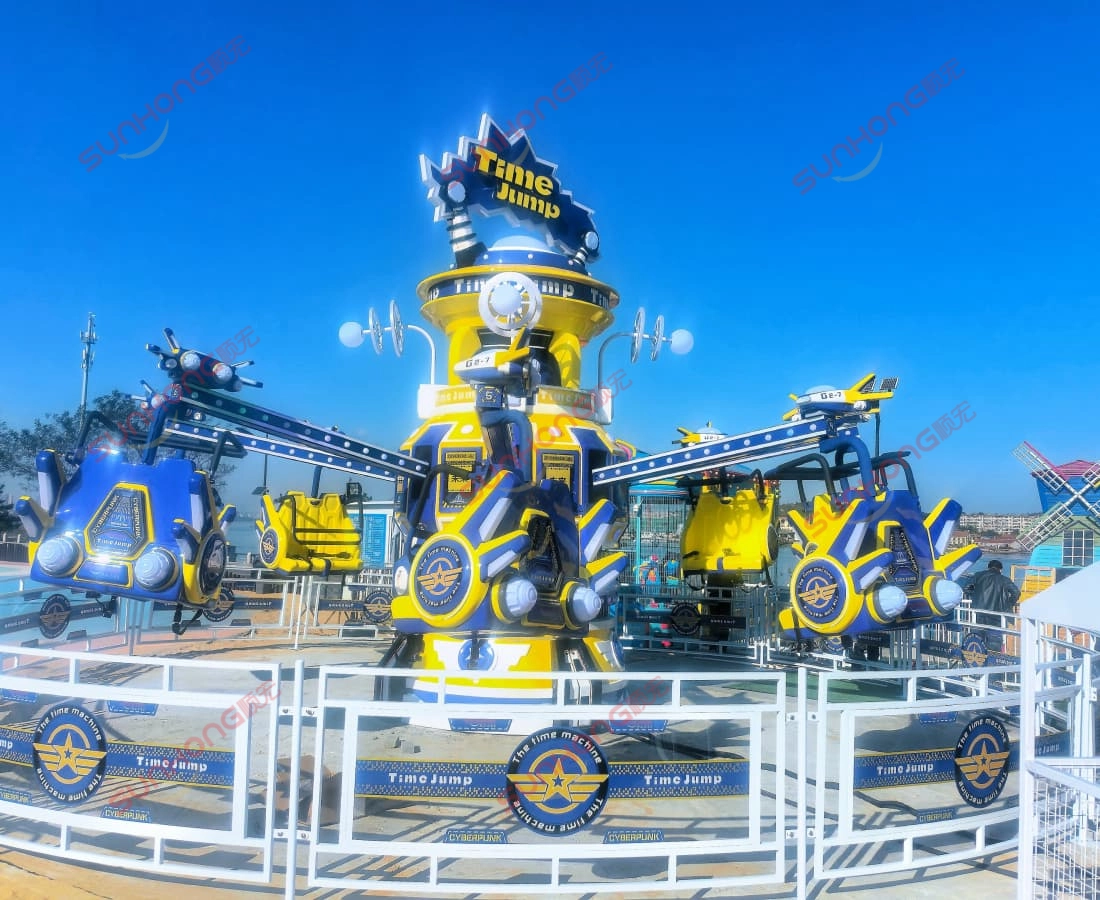
16-Seat Time Jump – Rotating Plane Ride for Amusement Parks
Time Jump is a thrilling and cost-effective amusement ride, 100% originally developed and manufactured by SUNHONG with patented certification. Designed for families and children, it combines motor drive and air-compressor cylinders to achieve dynamic movements—left-right rotation, variable-speed spinning, bouncing seats, and full 360-degree spins.
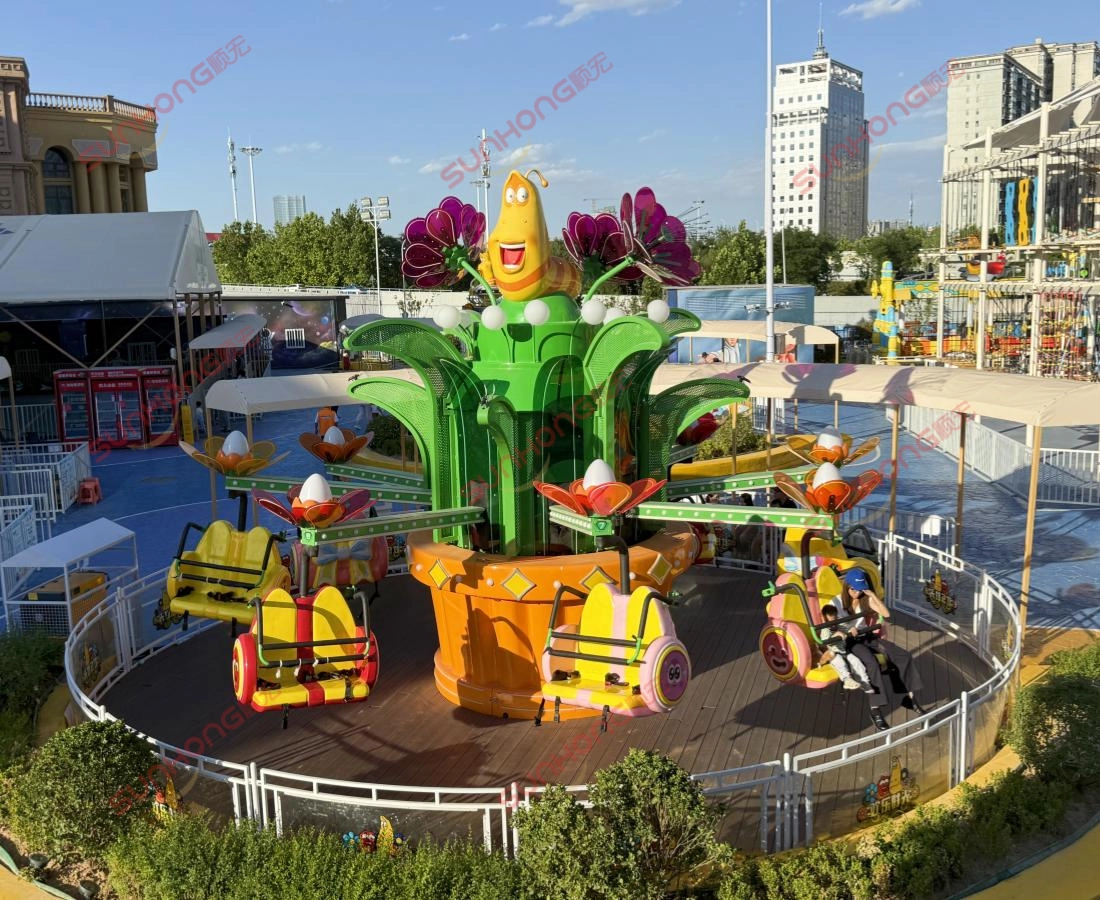
Larva Blooms Bounce Ride – Hot IP Custom Attraction with 360° Spin & Bounce
Larva Blooms is a patented bounce ride inspired by the hit Larva animation series. Featuring full platform rotation, 360° spinning seats, and dynamic bouncing motion, it delivers a thrilling ride experience for families and kids. IP customization available with OEM/ODM service.
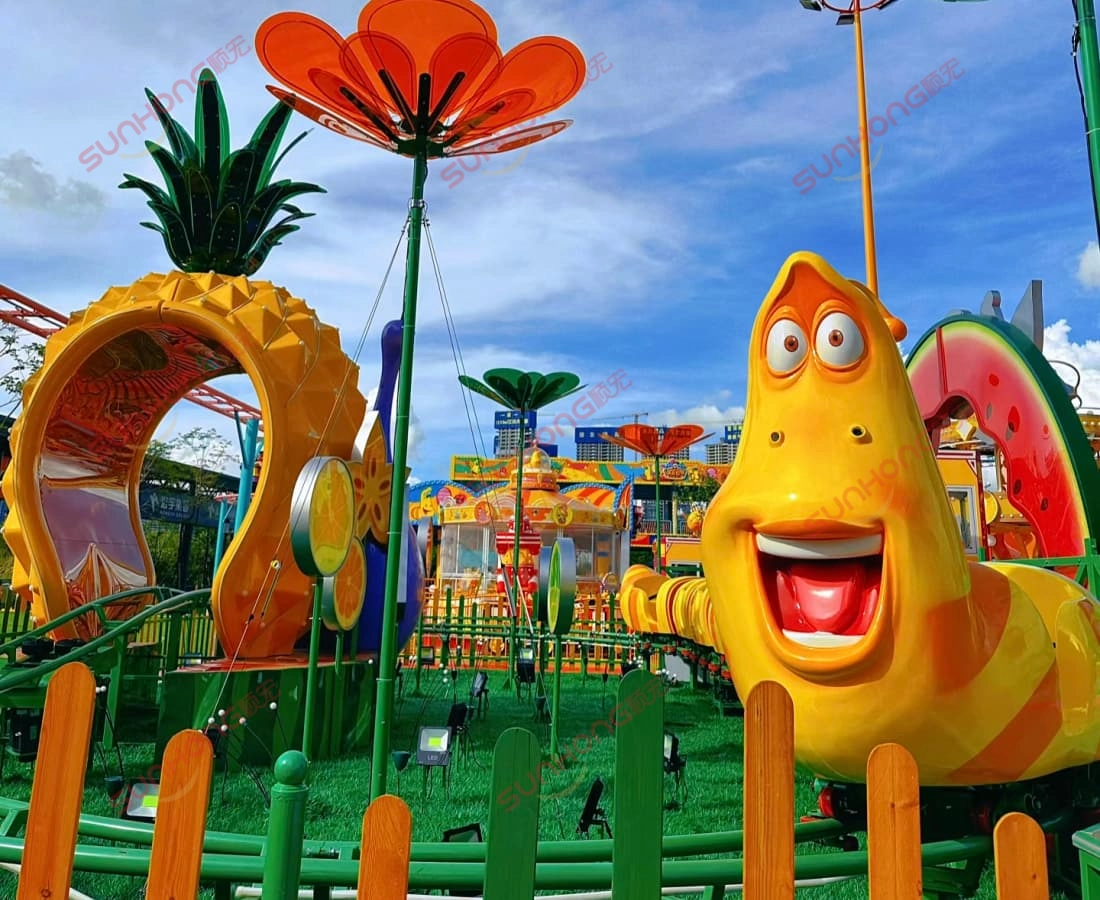
Larva Fruitland – A Mini Roller Coaster Adventure for Kids and Families
Larva Fruitland is a mini roller coaster themed after the Larva animated series. With vibrant colors and gentle motion, it’s perfect for kids and families. This small coaster features IP characters, a fruit farm design, and photo-worthy appeal. Ideal for indoor or outdoor parks. OEM/ODM customization available for your branding needs.

360 Degree Rotating Ride Swing Thrill Amusement Rides for Attractions
Air Bus is a stunning addition to our family amusement rides, delivering a one-of-a-kind 360° dual-rotation experience. With its swinging arm and self-spinning cabin, bright yellow flying-bus design, dynamic music effects, and customizable options, this ride is more than just entertainment—it’s a show-stopping centerpiece that helps your park attract crowds.
Leave a message
Ready to elevate your amusement offerings?
Contact Sunhong today to explore how we can bring your vision to life and create unforgettable experiences for your visitors.
* Rest assured that your privacy is important to us, and all information provided will be handled with the utmost confidentiality.
Copyright © 2025 SUNHONG All Reserved.
Whatsapp: +8613922331804
Guangzhou Shunhong Entertainment Equipment Co.,Ltd.
sunhongrides
SUNHONGAMUSEMENTRIDES
Scan QR Code