
Playground Equipment Solutions for Real Estate Developers and Residential Communities
- Planning Residential Play Environments as Property Assets
- Match the play concept to the development strategy
- Use age zoning and circulation to improve safety
- Integrate the play area with the master plan
- Technical Requirements for Safe and Durable Play Installations
- Specify materials for climate and usage conditions
- Control fall risk, entrapment, and access hazards
- Plan inclusive access from the beginning
- Procurement, Installation, and Lifecycle Management
- Compare quotations on total cost of ownership
- Control quality before shipment and handover
- Measure value after opening
- SUNHONG Solutions for Residential and Mixed-Use Developments
- From concept planning to complete project delivery
- Customized amusement park design and equipment selection
- International documentation and project confidence
- Frequently Asked Questions
For real estate developers and residential community operators, children's playground equipment is more than an amenity: it is a placemaking asset that supports property differentiation, resident satisfaction, family retention, and long-term community value. A successful play environment combines age-appropriate structures, impact-attenuating surfacing, inclusive access, weather-resistant materials, efficient maintenance, and a design that fits the development's identity. Procurement should therefore evaluate the complete solution—including site analysis, concept design, engineering, manufacturing, installation, inspection, and after-sales support—rather than selecting individual play units on price alone. This guide explains how to plan a reliable residential play area and how an experienced amusement ride manufacturer such as SUNHONG can support projects from initial concept through completion.
Planning Residential Play Environments as Property Assets
Match the play concept to the development strategy
A residential play zone should reflect the positioning of the property. A mid-market apartment project may prioritize compact, low-maintenance activity stations, while a High Quality villa community may require a signature destination playground with themed towers, climbing routes, shaded seating, and distinctive architectural forms. Mixed-use developments can use play features to connect residential buildings with retail, landscape, and pedestrian circulation. The design objective is not simply to fill an available plot; it is to create a visible, useful, and memorable community asset.
Project owners should define the intended user groups before requesting quotations. Important variables include the number of homes, expected child population, visitor access, peak occupancy, climate, available footprint, adjacent roads, building sightlines, and future landscaping. A developer should also decide whether the facility is intended for toddlers, school-age children, teenagers, or multiple age groups. These decisions influence equipment height, fall zones, circulation, supervision requirements, surfacing depth, and the overall capital budget.
Use age zoning and circulation to improve safety
Multi-age recreation areas require clear spatial organization. Early-years zones typically need low platforms, short slides, handrails, sensory panels, and controlled movement. Older children benefit from more challenging climbing nets, bridges, balance elements, higher slides, and dynamic play components. Separating these activity levels reduces conflict between users and allows caregivers to supervise children more effectively.
Circulation planning should provide unobstructed access to entrances, exits, seating, shade, drinking water, waste bins, and emergency routes. The layout must account for the recommended use zone around each item, not merely the equipment's footprint. Trees, drainage channels, walls, lighting columns, fences, and decorative objects should not intrude into fall areas. For technical guidance, buyers can consult the U.S. Consumer Product Safety Commission Public Playground Safety Handbook and confirm the standards applicable in the project country.
Integrate the play area with the master plan
The strongest community recreation concepts are coordinated with the wider landscape and architectural language. Natural timber effects, metal accents, colorful rotational-molded panels, nautical themes, transportation motifs, or branded forms can reinforce the development's identity. However, visual design must not compromise inspection access, drainage, visibility, or replacement of wear components.
Developers should also consider the facility's relationship with residents. A play area near community rooms, cafés, or pedestrian paths can increase daily activity and passive surveillance. Seating should be positioned where guardians can see multiple activity zones without standing inside circulation routes. Lighting should support evening visibility without creating glare for nearby homes. Sound, privacy, and operating hours may require consultation with property managers and residents before final approval.
Technical Requirements for Safe and Durable Play Installations
Specify materials for climate and usage conditions
Material selection affects safety, appearance, maintenance, and replacement cost. Powder-coated steel is commonly used for structural posts and frames because it offers strength and a consistent finish when properly prepared and protected. Stainless steel may be suitable for high-contact components or coastal environments, although its higher initial cost should be justified by exposure conditions and lifecycle expectations. High-density polyethylene panels, fiberglass-reinforced components, engineered timber, and rotational-molded plastic each serve different design and performance purposes.
Buyers should ask for information about coating systems, UV resistance, corrosion protection, fastener grades, weld quality, drainage provisions, and replaceable wear parts. Coastal developments need additional attention to salt exposure, while hot climates require assessment of surface temperatures, shade coverage, and material expansion. In cold regions, freeze-thaw cycles can affect foundations, surfacing, drainage, and buried support structures.
Control fall risk, entrapment, and access hazards
Safety engineering should address fall height, impact zones, entrapment openings, protrusions, pinch points, sharp edges, climbability, and unintended access to restricted areas. A supplier should provide layout drawings showing use zones, platform heights, access points, and surfacing requirements. The design review should distinguish between manufacturer calculations and on-site verification, because foundation position, finished grades, drainage, and surfacing installation can alter the final risk profile.
Safety requirements vary by jurisdiction and product category. International buyers may reference ISO 8124-4 for certain toy-related activity articles, while public playground projects commonly require national or regional playground standards. In the United States, buyers may also compare supplier documentation with ASTM F1487. Standards should be treated as part of a broader risk-management process, not as a substitute for competent design review, installation inspection, and routine maintenance.
Plan inclusive access from the beginning
Inclusive recreation should be integrated during concept development rather than added after the main structure is selected. Accessible routes, transfer platforms, ramps, sensory experiences, ground-level activities, wheelchair-friendly tables, and inclusive swings can allow more children to participate together. The exact solution depends on local accessibility rules, the terrain, the surfacing system, and the intended user profile.
Accessibility also includes caregiver experience. Comfortable seating, clear sightlines, shade, stroller circulation, and intuitive entrances make the environment more usable for families. Developers should request an accessibility narrative that explains how users with different mobility, sensory, or developmental needs can enter, move through, and engage with the play setting.
| Procurement factor | Basic specification approach | Lifecycle-oriented approach | Buyer benefit |
|---|---|---|---|
| Site planning | Fit equipment into the available plot | Map use zones, circulation, drainage, shade, and supervision sightlines | Improves safety and reduces redesign risk |
| Materials | Choose by appearance and purchase price | Compare corrosion resistance, UV performance, coatings, warranties, and replacement parts | Controls maintenance and renewal costs |
| Surfacing | Select the lowest installed quotation | Match tested impact attenuation with fall height, climate, drainage, and accessibility needs | Supports safer use and more predictable upkeep |
| Compliance | Request certificates after production | Review standards, drawings, risk controls, inspection records, and installation evidence before approval | Strengthens project governance |
| Supplier support | Purchase products as separate items | Use one coordinated partner for design, engineering, production, installation, and training | Reduces coordination gaps and schedule delays |
Procurement, Installation, and Lifecycle Management
Compare quotations on total cost of ownership
Low unit price can conceal important exclusions. A complete commercial comparison should identify whether the offer includes concept design, engineering drawings, civil works, foundations, freight, customs documentation, installation supervision, surfacing, testing, commissioning, spare parts, and operator training. Developers should also confirm currency, payment milestones, production lead time, packaging method, warranty scope, exclusions, and responsibility for local permits.
Total cost of ownership includes periodic inspections, cleaning, repainting, component replacement, surfacing repairs, drainage maintenance, and eventual refurbishment. A robust supplier can help create a spare-parts schedule for high-wear items such as swing seats, ropes, bearings, slide transitions, clamps, fasteners, and protective caps. Property managers should receive an asset register that records model numbers, installation dates, warranty terms, and inspection intervals.
Control quality before shipment and handover
Quality assurance should include raw-material verification, dimensional checks, weld inspection, coating assessment, assembly trials, hardware review, packaging inspection, and document control. Factory acceptance procedures may include photographs, video records, sample measurements, and review of final drawings. These controls are especially valuable for international projects where correcting an issue after delivery can create significant freight and labor costs.
Installation is a separate risk point. Foundations must be positioned accurately, concrete must achieve the required performance, finished surfaces must maintain appropriate levels, and drainage must prevent standing water. The handover package should include installation instructions, inspection checklists, maintenance recommendations, as-built drawings, certificates, warranty documents, and staff guidance. Operators should establish a routine inspection program based on local requirements and manufacturer recommendations. The CDC and NIOSH guidance on playground safety provides additional context on injury prevention and management practices.
Measure value after opening
Real estate owners can evaluate performance through utilization, resident feedback, maintenance incidents, repair frequency, complaint trends, and the condition of high-contact components. Usage observations can reveal whether the area is too small, poorly shaded, difficult to supervise, or unsuitable for the dominant age group. These findings support future upgrades and help asset managers demonstrate the value of community amenities.
A play environment can also contribute to marketing and retention when it is safe, attractive, and consistently maintained. It may strengthen model-home visits, social-media presentation, resident events, and the perceived completeness of a family-oriented development. The commercial return is rarely generated by admission revenue alone; it is more often reflected in stronger differentiation, improved resident experience, and the long-term reputation of the property.
SUNHONG Solutions for Residential and Mixed-Use Developments
From concept planning to complete project delivery
SUNHONG is a large-scale comprehensive amusement ride manufacturer dedicated to the research and development, design, manufacture, and sales of amusement rides. Our team supports project owners with overall planning, R&D design, exclusive customization, manufacturing, comprehensive construction, operation management, and related implementation services.
For residential communities, our approach can connect a children’s activity zone with broader amusement park equipment, themed recreation, family entertainment areas, and community landscape planning. The engineering process considers site dimensions, user ages, local climate, visual identity, safety requirements, access routes, installation conditions, and future operating needs. This integrated approach helps developers avoid the coordination problems that often occur when design, fabrication, civil works, and installation are assigned to unrelated suppliers.
Customized amusement park design and equipment selection
Our design capability supports projects ranging from compact residential play areas to larger family entertainment destinations. Depending on the brief, SUNHONG can develop themed structures, interactive activity systems, family-oriented amusement park rides, decorative environments, and coordinated recreation layouts. Each concept can be adapted to the available footprint, development brand, target demographic, and investment plan.
Our manufacturing process is organized around in-house expertise in R&D, production, and construction. That structure allows technical feedback to move more efficiently from design review to fabrication and installation. Buyers can request a coordinated package that addresses product configuration, drawings, production milestones, shipping preparation, on-site construction, commissioning, and operational guidance.
International documentation and project confidence
SUNHONG has more than 10 years of export experience, and our amusement rides have been installed in more than 56 nations and regions. We own certificates and market-entry documentation for multiple countries and regions, including CE for the European Union, UKCA for the United Kingdom, SABER for Saudi Arabia, TUV-related documentation in Germany, and ASTM certification for the United States, subject to the applicable product and project requirements.
Certification does not eliminate the need to confirm local regulations, site conditions, or professional installation requirements. It does, however, give buyers a stronger basis for technical review and project documentation. Our goal is to become the world's leading manufacturer of amusement rides while helping developers create safe, distinctive, and commercially practical recreation environments.
For a residential community, the right supplier should provide more than attractive renderings. The project needs documented engineering, transparent scope, durable construction, coordinated logistics, installation competence, and after-sales responsiveness. SUNHONG's integrated capabilities in amusement park design, amusement park equipment, and amusement park ride manufacturing are structured to meet those requirements across international projects.
Developers planning a new residential play environment can contact SUNHONG at sunhong@isunhong.com or visit the SUNHONG official website to discuss site requirements, customization, and project delivery.
Frequently Asked Questions
What should developers consider before selecting play equipment for a residential community?
Developers should evaluate the number of homes, expected child population, available footprint, climate, age groups, supervision sightlines, circulation, drainage, shade, accessibility, local standards, maintenance requirements, and the supplier’s complete scope of work.
How can a residential play area be made safer for different age groups?
Use age zoning with separate areas for toddlers, early-years users, and older children; provide clear circulation and supervision sightlines; protect fall zones; control entrapment and protrusion risks; and verify surfacing, foundations, and installation against applicable standards.
What documents should a playground supplier provide?
A supplier should provide layout drawings, technical specifications, use-zone information, installation instructions, inspection records, applicable certificates, warranty terms, maintenance guidance, spare-parts information, as-built documentation, and handover training materials.
Why is total cost of ownership important when comparing suppliers?
The lowest purchase price may exclude foundations, surfacing, freight, installation, testing, spare parts, or future maintenance. Total cost of ownership compares the complete investment, including inspections, repairs, replacement components, drainage, surfacing, and refurbishment.
Can SUNHONG customize recreation solutions for residential developments?
Yes. SUNHONG provides overall planning, R&D design, exclusive customization, manufacturing, comprehensive construction, operation management, and related project services for residential, mixed-use, and family entertainment developments.
Does SUNHONG support international projects?
SUNHONG has more than 10 years of export experience, and its amusement rides have been installed in more than 56 nations and regions. The company also maintains market-entry certificates and documentation for multiple regions, including CE, UKCA, SABER, TUV-related documentation, and ASTM certification according to applicable requirements.
Amusement Rides for Sale Australia: A Comprehensive Guide | SUNHONG
Top amusement park electric trains Manufacturers and Suppliers
Turnkey Amusement Park Ride Supplier: Design to Installation
Best professional indoor amusement equipment manufacturers and supplier brands
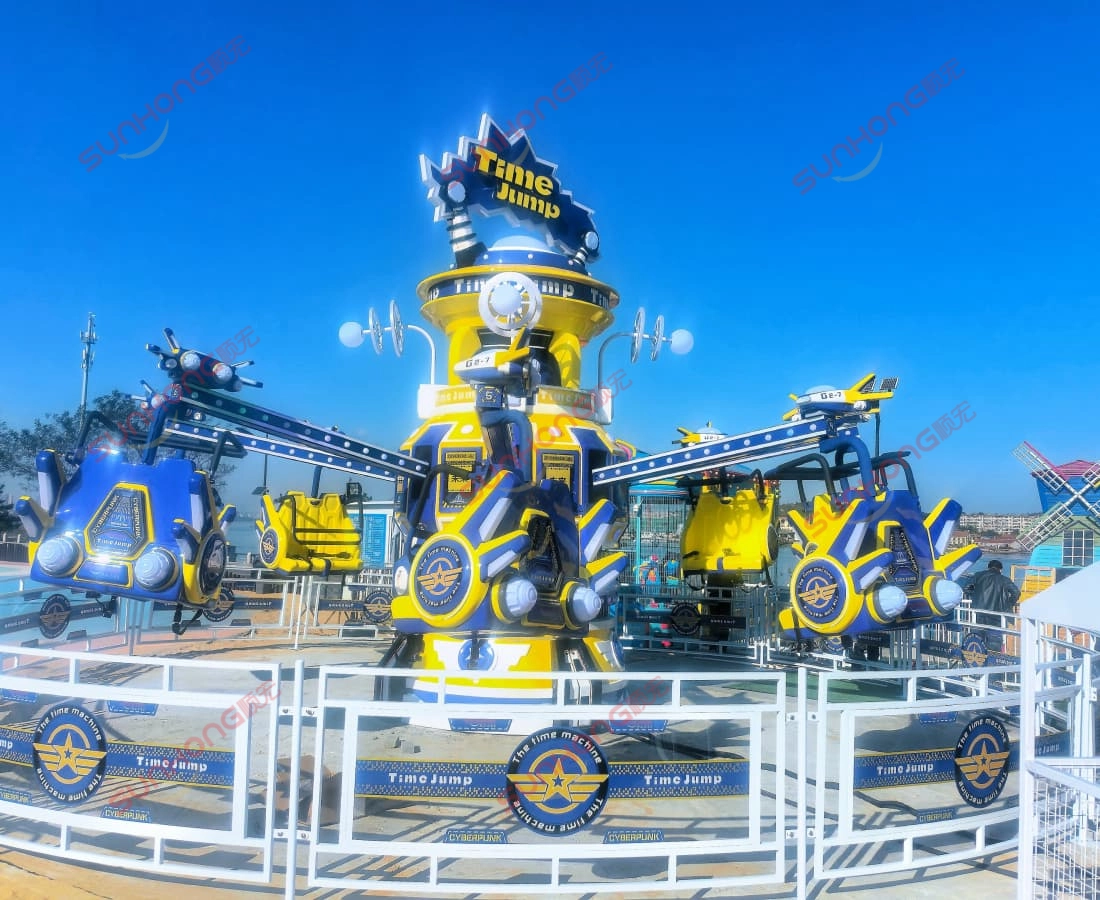
16-Seat Time Jump – Rotating Plane Ride for Amusement Parks
Time Jump is a thrilling and cost-effective amusement ride, 100% originally developed and manufactured by SUNHONG with patented certification. Designed for families and children, it combines motor drive and air-compressor cylinders to achieve dynamic movements—left-right rotation, variable-speed spinning, bouncing seats, and full 360-degree spins.
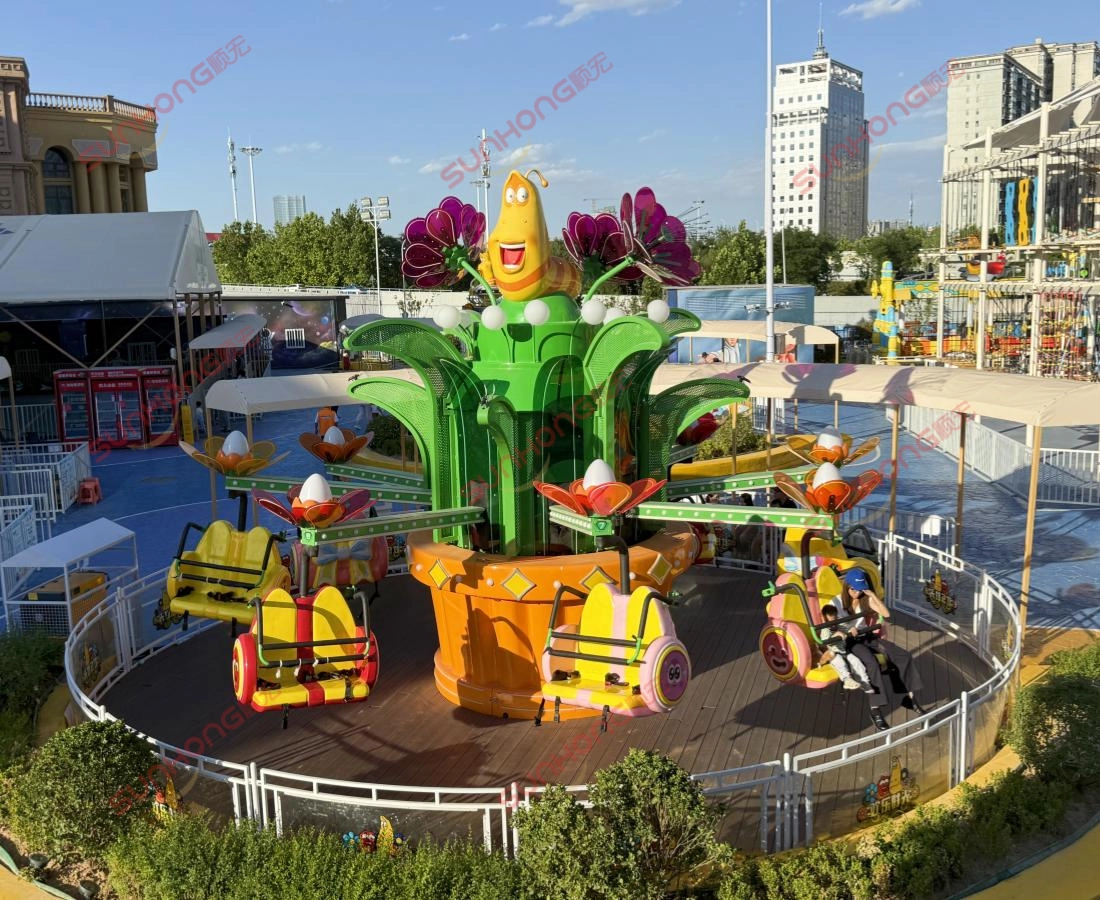
Larva Blooms Bounce Ride – Hot IP Custom Attraction with 360° Spin & Bounce
Larva Blooms is a patented bounce ride inspired by the hit Larva animation series. Featuring full platform rotation, 360° spinning seats, and dynamic bouncing motion, it delivers a thrilling ride experience for families and kids. IP customization available with OEM/ODM service.
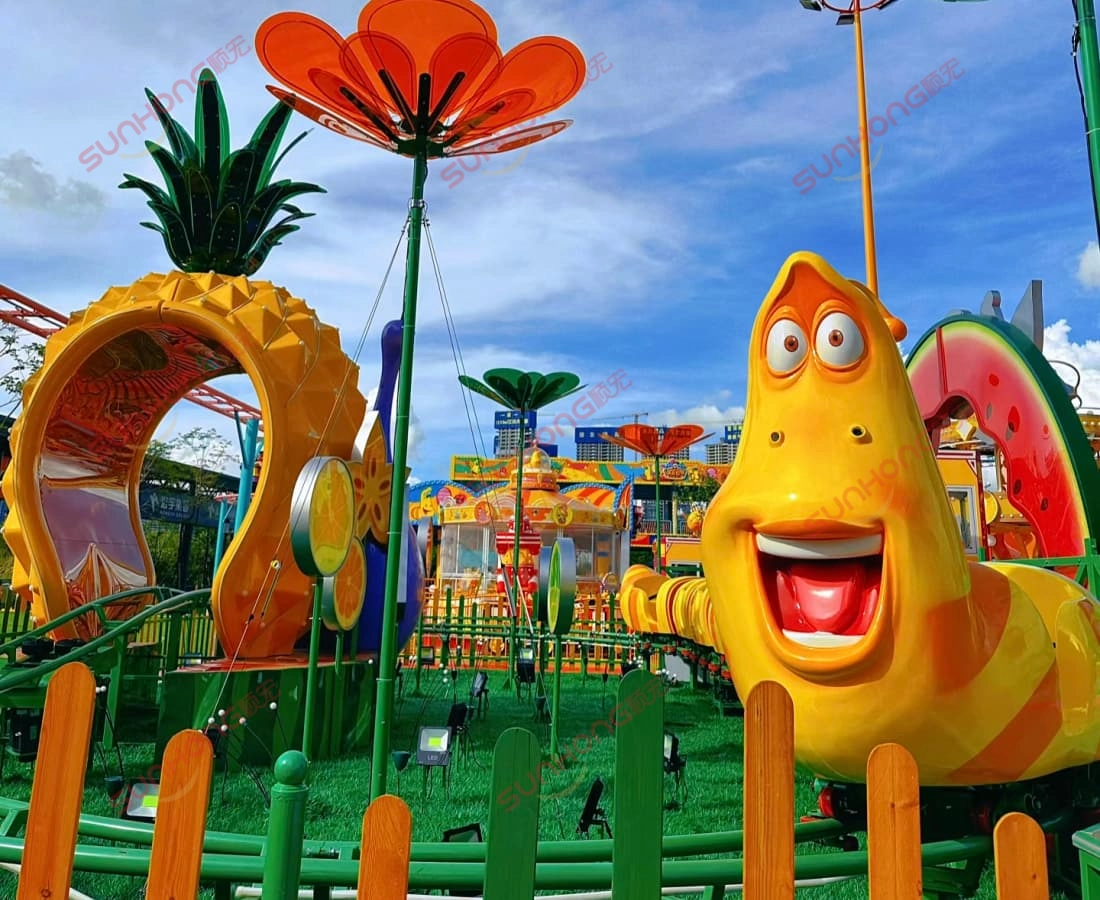
Larva Fruitland – A Mini Roller Coaster Adventure for Kids and Families
Larva Fruitland is a mini roller coaster themed after the Larva animated series. With vibrant colors and gentle motion, it’s perfect for kids and families. This small coaster features IP characters, a fruit farm design, and photo-worthy appeal. Ideal for indoor or outdoor parks. OEM/ODM customization available for your branding needs.

360 Degree Rotating Ride Swing Thrill Amusement Rides for Attractions
Air Bus is a stunning addition to our family amusement rides, delivering a one-of-a-kind 360° dual-rotation experience. With its swinging arm and self-spinning cabin, bright yellow flying-bus design, dynamic music effects, and customizable options, this ride is more than just entertainment—it’s a show-stopping centerpiece that helps your park attract crowds.
Leave a message
Ready to elevate your amusement offerings?
Contact Sunhong today to explore how we can bring your vision to life and create unforgettable experiences for your visitors.
* Rest assured that your privacy is important to us, and all information provided will be handled with the utmost confidentiality.
Copyright © 2025 SUNHONG All Reserved.
Whatsapp: +8613922331804
Guangzhou Shunhong Entertainment Equipment Co.,Ltd.
sunhongrides
SUNHONGAMUSEMENTRIDES
Scan QR Code