
How to Plan a Theme Park Day Around Popular Rides
- Plan Smarter: Maximize Your Theme Park Day
- Understand park layout and prioritize amusement park rides
- Use data-driven prioritization: ride capacity, throughput and wait patterns
- Morning strategies: rope drop and the first two hours
- Midday strategies: use shows, air-conditioned attractions and lower-demand rides
- Afternoon & evening strategies: timing parades and fireworks
- Make the best use of technology for amusement park rides
- Sample one-day schedule for a 10-hour park day
- Planning for families and accessibility around amusement park rides
- Why ride manufacturer and park design matter for your day
- SUNHONG: Manufacturer profile and why it matters for park planners
- How SUNHONG's offerings improve your park day
- Practical checklist before you go
- FAQ
- 1. What is the best time to ride the most popular amusement park rides?
- 2. Are paid express passes worth it?
- 3. How many rides can I realistically do in a 10-hour day?
- 4. How do virtual queues work and how do I secure a spot?
- 5. What should families with small children prioritize?
- 6. How does ride design affect wait times?
- 7. Where can I learn which rides support single-rider lines?
- Contact and product inquiry
- References
Plan Smarter: Maximize Your Theme Park Day
Visiting a theme park is part logistics, part psychology and part patience. If your goal is to experience the most popular amusement park rides while minimizing wait times and stress, you need a plan grounded in park layout, ride capacity, crowd dynamics and the right use of technology. This guide walks you through research, on-site tactics, and scheduling templates backed by industry data and practical experience so you can make the most of a single park day.
Understand park layout and prioritize amusement park rides
Start planning at least 24–72 hours before your visit. Use the park map and mobile app to identify the headline rides—these are the attractions that consistently generate the longest waits. For most parks these are high-thrill roller coasters, signature dark rides, and immersive simulator experiences. Prioritize rides by three factors:
- Desirability: which rides your group absolutely wants to ride
- Capacity: rides with low hourly throughput typically have longer waits
- Location: cluster high-priority rides to avoid lots of cross-park walking
Embedding the primary commercial keyword helps: when researching amusement park rides, look for park-provided hourly schedules and the official mobile app to see real-time wait times and temporary closures.
Use data-driven prioritization: ride capacity, throughput and wait patterns
Understanding typical ride throughput and wait behavior helps set realistic expectations and informs strategy. Below is a simplified, conservative comparison of common ride types and their operational traits. Numbers are industry ranges and will vary by park and ride model.
| Ride Type | Typical Theoretical Throughput (pph) | Typical Peak Wait | Best Time to Ride | Notes |
|---|---|---|---|---|
| Large roller coasters (multi-train) | 900–1,600 | 60–180+ min | Rope drop or late evening | High desirability and capacity, but single-train coasters have lower throughput |
| Dark/Immersive rides (small vehicles) | 300–800 | 45–150 min | Rope drop, midday shows | Low throughput, very long waits for top IP attractions |
| Simulator/Interactive | 400–900 | 30–120 min | Morning or between parades | Often uses timed entry or virtual queues |
| Flat rides/Spinners | 500–1,200 | 5–45 min | Anytime except midday | Good filler attractions during peak hours |
| Shows/Parades | N/A | N/A | Arrive early for seating | Great for beating mid-afternoon crowds |
Sources for throughput and operational behavior include industry association guidance and manufacturer specifications. Use these figures as rules of thumb when deciding what to ride first.
Morning strategies: rope drop and the first two hours
The first 60–120 minutes after park opening are your highest-yield window for marquee rides. Common strategies:
- Arrive early and be at the front gates 30–45 minutes before official opening.
- Plan a rope-drop route that hits the nearest cluster of top-priority amusement park rides in sequence to avoid backtracking.
- If the park offers virtual queues, priority reservations or paid express passes, decide beforehand whether to purchase—these can save hours in waits for a few headline attractions.
- Use single-rider lines if your party can be split; this often reduces wait substantially on high-capacity coasters.
Tip: For multi-park vacations, consider visiting the most popular park first on your first available day when energy and motivation are highest.
Midday strategies: use shows, air-conditioned attractions and lower-demand rides
Midday is often the busiest time, with wait times spiking as the sun peaks. Recommended tactics:
- Book a table-service lunch during the busiest hour to avoid lines and recharge.
- Reserve shows, walkthrough attractions and indoor rides for that time. These attractions typically have lower lines midday and provide a climate-controlled break.
- Monitor the app for short wait windows; some rides fluctuate unexpectedly due to temporary downtime or operational adjustments.
Afternoon & evening strategies: timing parades and fireworks
As crowds shift for parades and evening spectaculars, many headliner rides see troughs in wait times—especially in the 60–120 minutes before fireworks. Use this time to catch any remaining high-priority rides. If your park runs a nighttime spectacular, ride planning should aim to finish top rides before the show or to ride headliners during or immediately after the show when crowds are dispersed.
Make the best use of technology for amusement park rides
Modern theme parks provide tools that directly impact your plan: real-time wait times, virtual queues, mobile dining reservations and paid skip-the-line services. Key points:
- Official park apps are the single most reliable source for live wait times and temporary closures.
- Reserve virtual queue slots as soon as they open if your park uses them. These often sell out within minutes for top attractions.
- Paid systems like Disney Genie+/Lightning Lane or Universal Express are expensive but can be cost-effective for maximizing ride count on a single-park day.
Example: parks that offer timed entry or virtual queue slots typically announce release windows on their websites and apps the morning of the ride. Monitor those channels closely.
Sample one-day schedule for a 10-hour park day
| Time | Action | Why |
|---|---|---|
| 08:30 | Arrive at gates | Be ready for rope drop |
| 09:00-10:00 | Hit 2 headline coasters in same area | High return on early low waits |
| 10:00-11:00 | Second cluster headline + single-rider option | Continue momentum |
| 11:00-12:30 | Indoor attraction or show | Beat midday heat and long lines |
| 12:30-13:30 | Lunch reservation | Rest and plan afternoon |
| 13:30-15:00 | Family rides and filler attractions | Use lower wait windows |
| 15:00-17:00 | Use Express/Skip-the-line for remaining headliners | Efficient use of paid services |
| 17:00-18:00 | Early dinner / shopping | Avoid final rush before fireworks |
| 20:00 | Nighttime spectacular or remaining rides | Many rides reopen with shorter waits after parades |
Planning for families and accessibility around amusement park rides
Families and guests with accessibility needs should incorporate additional time for transfer, stroller parking, rider switch programs and sensory-friendly options. Tips:
- Check each ride's height and safety restrictions in advance and use rider switch for children too short for a ride so adults can ride without losing queue position.
- Contact guest services ahead of arrival for accessibility permits or to understand the park's accommodations for mobility and sensory needs.
- Allocate buffer time for restroom and snack breaks—the best-laid schedules need flexibility when visiting with children or special needs guests.
Why ride manufacturer and park design matter for your day
Operational reliability, capacity, and guest experience depend heavily on ride design, engineering and ongoing maintenance. Choosing a park that partners with experienced manufacturers and integrators reduces downtime and contributes to predictable wait time behavior. If you are a park operator or planner, or if you want to understand the behind-the-scenes factors that influence your day at the park, consider these operational aspects:
- Ride throughput and dispatch efficiency as designed by manufacturers
- Ease of maintenance and parts availability
- Integration of ride-queue technology and safety features
- Experience in turnkey park design that clusters attractions to improve flow
SUNHONG: Manufacturer profile and why it matters for park planners
SUNHONG is a large-scale comprehensive amusement ride manufacturer dedicated to research and development, design, manufacture and sales of amusement rides. The company specializes in overall planning, R&D design, exclusive customization, manufacturing, comprehensive construction and operation management, providing reach-global services. With a robust in-house team covering R&D, production and construction, SUNHONG offers end-to-end services from initial concept to final project completion.
Key advantages and industry credentials:
- More than 10 years of export experience and installations in over 56 nations and regions, demonstrating international operation capability.
- Certified for multiple markets: CE (EU), UKCA (UK), SABER (Saudi Arabia), TUV (Germany), ASTM (US), among others, which supports global compliance and safety standards.
- Product and service portfolio focused on amusement park equipment, amusement park design and a wide range of amusement park rides, from family attractions to large roller coasters.
- Turnkey services that help park operators optimize guest flow and ride uptime—directly impacting daily visitor experiences and wait-time predictability.
For more details on SUNHONG products and projects, visit https://www.isunhong.com/
How SUNHONG's offerings improve your park day
Work with manufacturers and designers who value throughput engineering and maintainability. When a manufacturer like SUNHONG provides customized ride systems and integrated park planning, the result is smoother operations, higher ride availability and better-balanced guest distribution across the park. For guests, that translates to more consistent wait-time expectations and a more enjoyable park day. For operators, it means easier maintenance, reliable spare-part supply chains and compliance with international safety standards.
Practical checklist before you go
- Download and register on the official park app.
- Identify top 3 must-ride attractions and map a rope-drop route.
- Decide on paid queue-skipping services before arrival and book virtual queue windows if applicable.
- Reserve table-service dining during peak lunch hours.
- Check ride height and health restrictions for your group and plan rider switch usage if needed.
FAQ
1. What is the best time to ride the most popular amusement park rides?
The first 60–120 minutes after park opening and the last 60–90 minutes before closing typically offer the shortest waits for the most popular rides. Mid-afternoon shows and parade times often create temporary lulls you can exploit.
2. Are paid express passes worth it?
Paid skip-the-line services are worth it when you have a single day and want to guarantee multiple headliner rides, especially during peak season. Cost-effectiveness depends on ticket price, crowd level and which rides are included in the pass.
3. How many rides can I realistically do in a 10-hour day?
On a well-planned day, adults can commonly achieve 8–15 rides depending on ride type, whether paid queue-skipping is used, and how many headline attractions you target. Family groups with young children will typically achieve fewer rides due to breaks and lower throughput.
4. How do virtual queues work and how do I secure a spot?
Virtual queues require you to request a boarding time via the official mobile app when the window opens. Popular attractions may release slots once or multiple times per day. Be ready at the announced release time and have fast internet access for the best chance.
5. What should families with small children prioritize?
Families should prioritize attractions with height restrictions that match the children's ages, plan rider switch for adults, and schedule shows or indoor rides for midday rest. Keep flexibility in the plan for naps and snack breaks.
6. How does ride design affect wait times?
Ride design determines dispatch intervals and theoretical throughput. High-capacity trains, efficient loading procedures and reliable ride control systems reduce downtime and average wait times. Partnering with experienced manufacturers helps ensure these factors are optimized.
7. Where can I learn which rides support single-rider lines?
The park's official map and app usually indicate single-rider options. Third-party planning sites and fan forums also maintain lists of attractions that commonly offer single-rider queues.
Contact and product inquiry
If you are planning or upgrading a park and want a partner focused on throughput, safety and turnkey delivery, explore SUNHONG's amusement park equipment, amusement park design and amusement park ride offerings. For consultations, project inquiries or to review product catalogs, visit SUNHONG at https://www.isunhong.com/ or contact their sales team through the website. Their global certifications and decade of export experience make them a competitive choice for international projects.
References
- International Association of Amusement Parks and Attractions (IAAPA) resources on ride safety and operations. https://www.iaapa.org/ (accessed 2025-11-15)
- Statista: Global theme park attendance statistics and market trends. https://www.statista.com/ (accessed 2025-10-03)
- TouringPlans: empirical wait-time analyses and touring strategies. https://touringplans.com/ (accessed 2025-09-28)
- Disney Parks official information on virtual queues and Genie+. https://disneyparks.disney.go.com/ (accessed 2025-08-20)
- Universal Orlando official Express Pass information. https://www.universalorlando.com/ (accessed 2025-08-20)
- SUNHONG official site and corporate materials. https://www.isunhong.com/ (accessed 2025-11-20)
The B2B Buyer’s Guide to small roller coasters
The B2B Buyer’s Guide to swing amusement ride | SUNHONG Ultimate Insights
The Science of Fear: Why We Love Amusement Thrill Rides
Top Amusement Park Rides Manufacturers in 2026
中小型游乐设备方案推荐
✔ Investment Control:
Low-cost, short construction, and fast results from your investment.
6P Dream Castle Small Carousel Ride for Sale
What are the key factors to consider before purchasing a carousel?
In addition to space and budget, consider the ride cycle, safety performance, and whether the style is suitable for your audience. For large carousels, the stability of the electrical system and the ease of maintenance are also crucial."
24P Knight Sparta
What certifications are required for the carousel?
The following certifications are held by SUNHONG's carousel: CE, UL, and ISO9001 Quality Management System certification. These certifications ensure that the carousel meets the relevant safety and quality standards, ensuring the safety of the visitors.
16P Knight Sparta
What certificates are required for the carousel?
SUNHONG carousel has the following certificates: CE, UL ,and ISO9001 quality management system certification. These certificates ensure that the carousel meets relevant safety and quality standards, ensuring the safety of visitors.
16P Larva Double Decker Carousel for Sale
How many seats does the carousel have?
The number of seats for SUNHONG carousels ranges from 8 to 54. Our engineers will design the most appropriate configuration based on the size of your park and the expected number of visitors, helping you achieve greater operational efficiency and economic benefits.
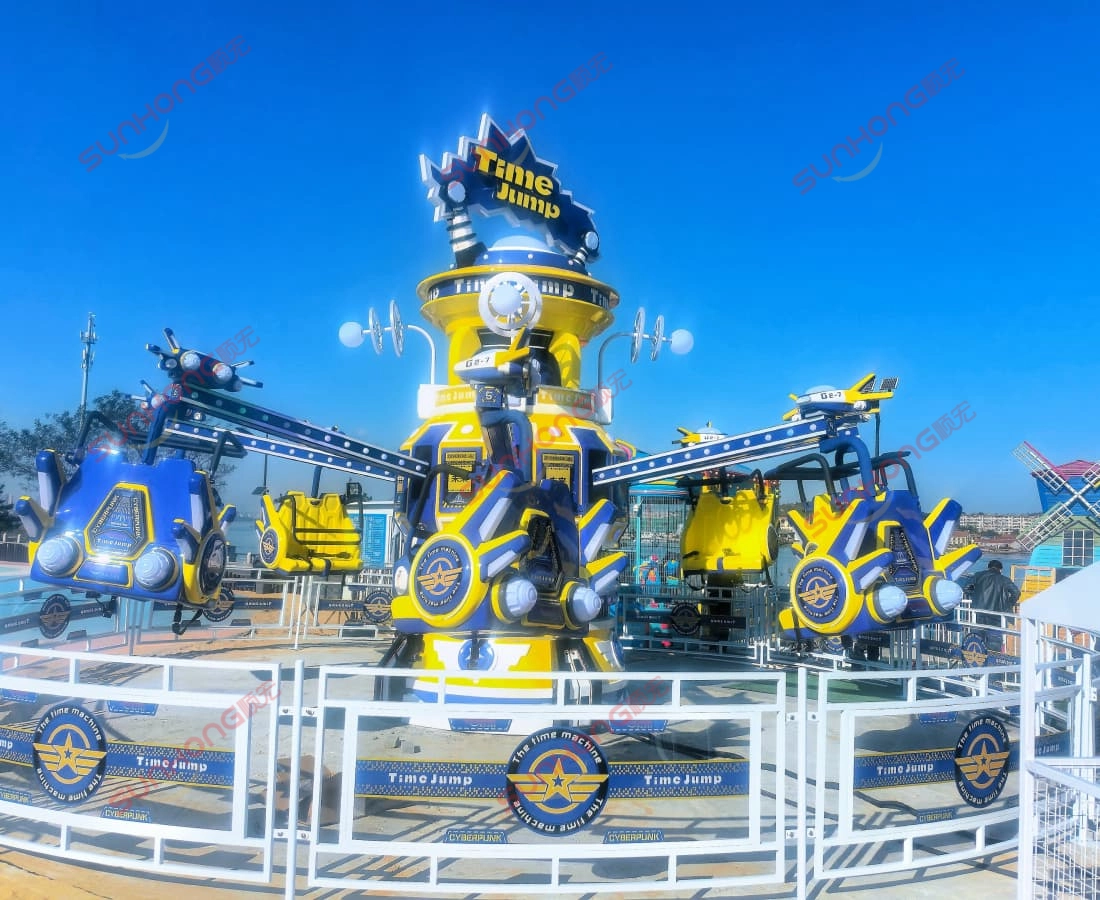
16-Seat Time Jump – Rotating Plane Ride for Amusement Parks
Time Jump is a thrilling and cost-effective amusement ride, 100% originally developed and manufactured by SUNHONG with patented certification. Designed for families and children, it combines motor drive and air-compressor cylinders to achieve dynamic movements—left-right rotation, variable-speed spinning, bouncing seats, and full 360-degree spins.
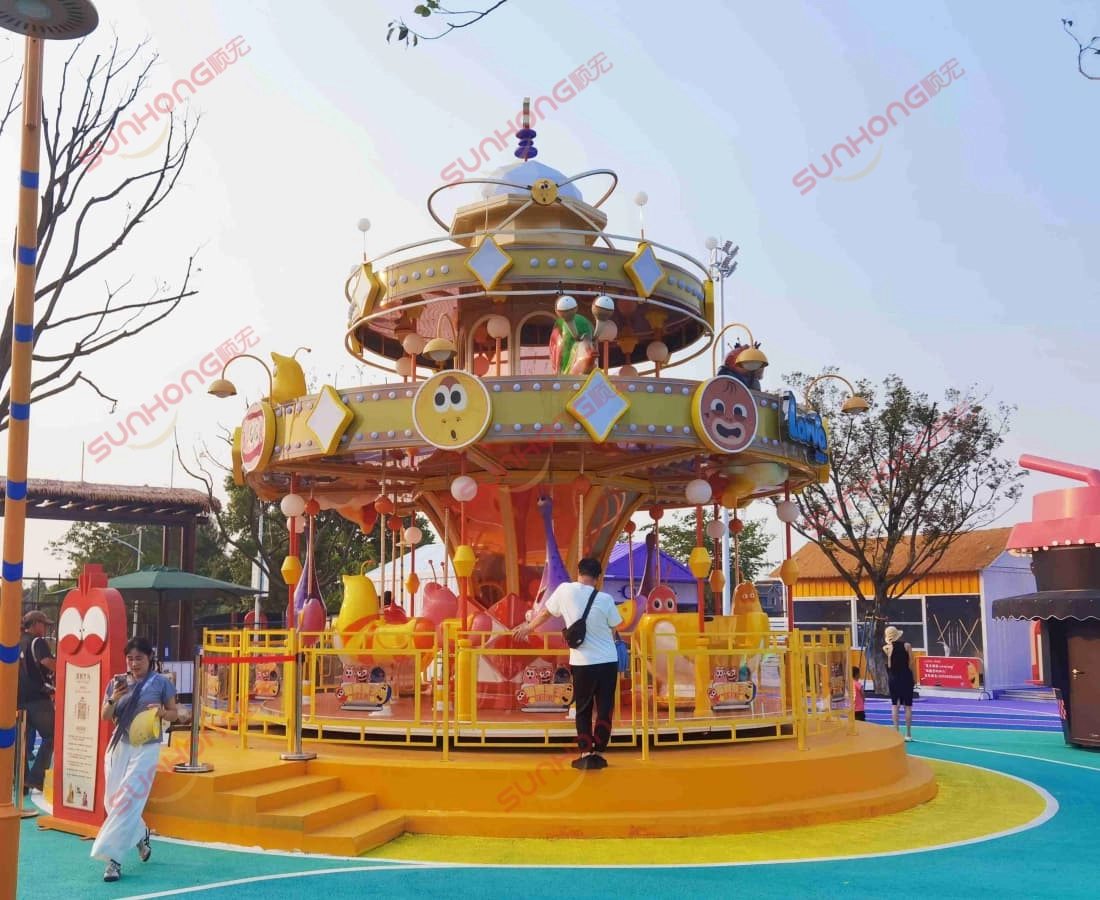
16P Larva Carousel for Sale
The Larva Carousel is a classic two-level ride themed around the beloved Larva animation. It features a variety of well-known characters, including Yellow, Red, Brown, Rainbow, Mantis, Ant, and more. This fun and engaging cartoon has brought endless laughter to children worldwide. With the strong appeal of a popular IP, the Larva Double Decker Carousel offers significant commercial value, making it an ideal carousel for sale for investors.
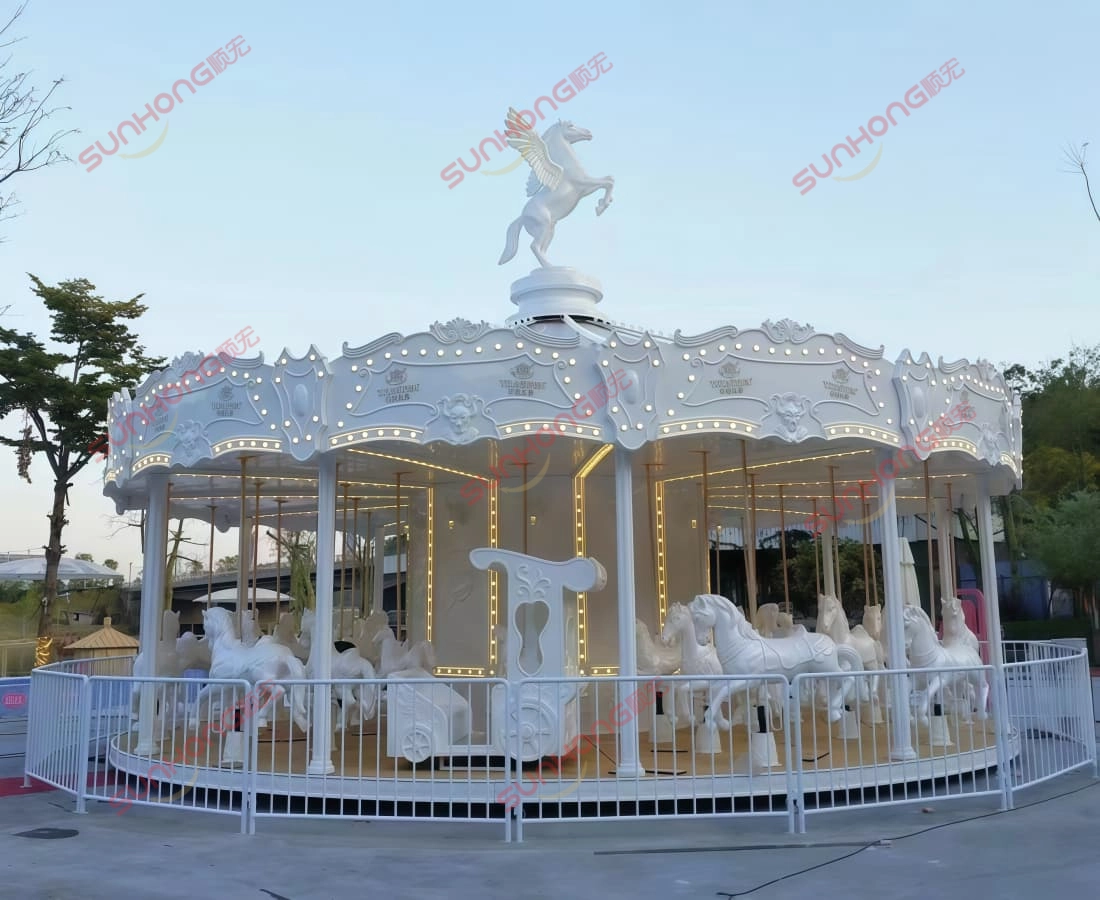
36P Knight Sparta Carousel Ride for Sale
36P Knight Sparta is a carousel ride for sale that supports OEM/ODM customization. Powered by an electric motor, the rotating frame drives seats that move up and down via a crank linkage system, simulating the motion of riding a warhorse. Inspired by the spirit of Spartan warriors—bravery, honor, and responsibility—this ride brings both excitement and meaning to every spin.
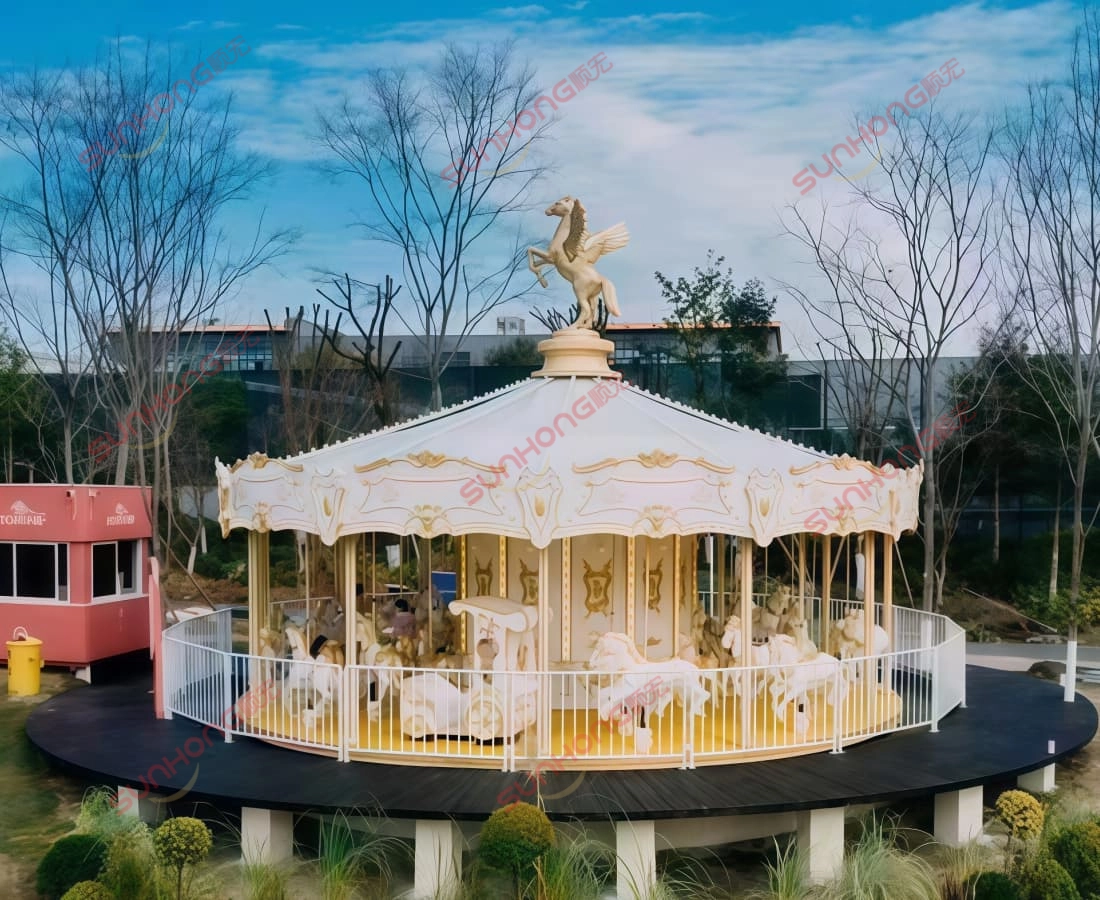
24P Knight Sparta Carousel Horse Ride for Sale
Classic horse-themed carousel horse ride for sale, equipped with double carriage seats, letting passengers feel like they’re galloping through open fields. The advanced motor system keeps the ride smooth, while the seats move up, down, forward, and back for full-on fun. It also comes with a movable base, making it easy to adjust at any site. A joyful experience loved by visitors of all ages!
Copyright © 2025 SUNHONG All Reserved.
Guangzhou Shunhong Entertainment Equipment Co.,Ltd.
sunhongrides
SUNHONGAMUSEMENTRIDES
sunhongamusementrides
Scan QR Code