
Outdoor Theme Park Rides Market Trends for Global Park Investors
- Global Investment Patterns Reshaping Outdoor Amusement Attractions
- From individual rides to complete destination ecosystems
- Immersive storytelling and regional differentiation
- Climate resilience becomes a procurement requirement
- Commercial and Technical Trends Buyers Should Track
- Capacity, throughput, and revenue per operating hour
- Digital operations and data-supported maintenance
- Safety compliance and documentation across jurisdictions
- How to Select a Qualified Ride Development Partner
- Assess engineering depth before comparing quotations
- Use lifecycle economics instead of lowest purchase price
- Verify standards, certifications, and export readiness
- SUNHONG’s Integrated Approach to Global Park Projects
- From concept planning to completed installation
- Product range aligned with different investment models
- International compliance and project experience
- Frequently Asked Questions
Outdoor theme park rides are becoming strategic infrastructure rather than isolated attractions. Global park investors now evaluate each amusement park ride according to its revenue potential, capacity, lifecycle cost, operating environment, regulatory pathway, guest appeal, and ability to support a wider destination brand. The strongest projects combine high-throughput family attractions, signature thrill experiences, immersive theming, water-resistant engineering, digital queue management, and flexible amusement park design. For project owners, the central procurement question is no longer simply which ride looks most impressive; it is which integrated supplier can deliver a compliant, maintainable, climate-appropriate attraction that performs commercially over many seasons.
Global Investment Patterns Reshaping Outdoor Amusement Attractions
From individual rides to complete destination ecosystems
Investors are increasingly planning ride portfolios around visitor dwell time and repeat visitation. A single headline coaster may create awareness, but a balanced destination normally requires attractions for children, teenagers, families, groups, and accessibility-conscious guests. This encourages demand for coordinated amusement park equipment that includes family rides, observation attractions, carousels, track rides, dark-ride systems, water attractions, and selected thrill products. The commercial objective is to distribute guest flow across the site, reduce excessive queues at one attraction, and create reasons for visitors to stay longer.
Master planning therefore needs to connect ride placement with food service, retail, shade, rest areas, emergency access, utilities, drainage, parking, and future expansion zones. A supplier involved early can identify structural loads, foundation requirements, clearance envelopes, power demand, evacuation routes, and maintenance access before these constraints create expensive redesigns. This integrated approach is particularly important for greenfield developments, resort expansions, and mixed-use entertainment districts.
Immersive storytelling and regional differentiation
Generic equipment is easier to compare on price, but themed experiences are harder for competitors to replicate. Investors are commissioning attractions that combine ride motion with scenery, lighting, audio, projection, water effects, interactive targets, and locally relevant narratives. A family dark ride inspired by regional history, a landscape-integrated coaster, or a culturally distinctive children’s zone can strengthen destination identity and support High Quality ticket positioning.
Successful theming is not limited to decorative façades. Scenic elements must accommodate inspection, cleaning, fire protection, drainage, replacement of consumables, and safe access to mechanical systems. Design teams should separate guest-facing finishes from critical maintenance zones and specify materials according to ultraviolet exposure, humidity, salt air, dust, temperature variation, and expected cleaning chemicals.
Climate resilience becomes a procurement requirement
Outdoor attractions operate in environments that can be more demanding than indoor facilities. Coastal sites face salt corrosion and wind exposure; desert destinations experience dust, heat, and thermal expansion; tropical parks contend with rainfall, humidity, mold, and lightning; colder regions require freeze protection and seasonal shutdown procedures. Climate data should influence steel protection, fasteners, electrical enclosures, drainage, concrete design, lubrication schedules, and spare-parts planning.
Project owners should request a site-specific environmental design review rather than accepting a generic product specification. The review should address maximum operating temperature, wind limits, precipitation, lightning policy, groundwater, soil conditions, seismic exposure where relevant, and the effect of local weather on daily capacity. Resilient engineering may increase initial cost, but it can reduce unplanned closures, corrosion-related repairs, guest complaints, and lost peak-season revenue.
Commercial and Technical Trends Buyers Should Track
Capacity, throughput, and revenue per operating hour
Ride selection should be based on the relationship between theoretical capacity and actual operating capacity. Dispatch intervals, loading procedures, restraint checks, operator staffing, guest behavior, weather interruptions, preventive maintenance, and accessibility procedures all affect throughput. A ride advertised with a high theoretical hourly capacity may generate less practical revenue if loading is complex or downtime is frequent.
Financial models should examine hourly throughput, average ticket value, secondary spending, seasonal operating days, utilization by time of day, staffing cost, energy consumption, insurance requirements, inspection expense, and planned refurbishment. A lower-capacity attraction can still be commercially strong if it produces high guest satisfaction, High Quality theming, strong photograph sales, or repeat visits. Conversely, a large ride with high capital expenditure requires careful analysis of queue performance and peak-period demand.
Digital operations and data-supported maintenance
Operators are adopting dispatch dashboards, queue-time monitoring, electronic inspection records, condition-based maintenance, and centralized park management systems. These tools can help supervisors identify recurring stoppages, compare cycle performance, document inspections, and schedule service before a minor fault becomes a major outage. Digital systems should support—not replace—trained operators, mechanical inspections, emergency procedures, and manufacturer-approved maintenance.
When evaluating a connected ride system, buyers should clarify data ownership, cybersecurity controls, offline operating capability, software licensing, remote-support arrangements, and integration with ticketing or queue platforms. A clear interface between the ride control system and the park’s business systems reduces operational ambiguity. Documentation should also specify what happens if network connectivity fails, sensors require replacement, or the original software supplier is unavailable.
Safety compliance and documentation across jurisdictions
International projects often involve several overlapping requirements: national construction rules, electrical regulations, local operating permits, insurance conditions, and recognized amusement-ride standards. ISO 17842 addresses safety requirements for amusement rides and amusement devices, while the ASTM F24 committee develops standards for amusement rides and devices. These references do not automatically replace local law, but they provide an important framework for design review, manufacturing controls, inspection, and operation.
Buyers should request a compliance matrix showing which requirements apply to design, welding, electrical systems, controls, structural calculations, factory testing, installation, commissioning, and operator training. The supplier should identify the responsible party for third-party inspection, local authority approval, site acceptance testing, and final operating certification. This prevents a common project failure in which equipment is delivered on time but cannot open because documentation or local approvals are incomplete.
| Procurement area | What buyers should verify | Why it affects investment performance |
|---|---|---|
| Design basis | Guest profile, site climate, capacity target, footprint, loads, and operating hours | Determines suitability, construction cost, ride availability, and revenue potential |
| Safety framework | Applicable local law, ISO or ASTM references, risk assessment, inspection plan, and technical file | Reduces approval delays, operational uncertainty, and liability exposure |
| Manufacturing quality | Material traceability, welding procedures, dimensional checks, coating system, and factory testing | Supports structural reliability and reduces premature maintenance |
| Installation | Foundation interface, erection method, alignment checks, electrical commissioning, and site acceptance testing | Protects the opening schedule and confirms field performance |
| After-sales support | Spare-parts list, response time, training, manuals, warranty scope, and remote assistance | Improves uptime and controls lifecycle operating costs |
How to Select a Qualified Ride Development Partner
Assess engineering depth before comparing quotations
A credible supplier should provide more than product images and a basic price. The technical package should explain the ride concept, passenger profile, capacity assumptions, footprint, foundation loads, utility requirements, control architecture, evacuation method, maintenance access, weather limits, and recommended staffing. For custom projects, buyers should also review concept drawings, 3D models, structural calculations, risk assessments, finish samples, and a responsibility matrix.
Supplier assessment should include the organization’s engineering resources, production facilities, quality-control checkpoints, installation capability, export history, and references for comparable climates or ride types. Site visits or independent factory inspections can help validate whether the quoted manufacturing process matches the proposed schedule. Buyers should distinguish between a trading company that coordinates outsourced equipment and a manufacturer with direct control over design, fabrication, testing, and service.
Use lifecycle economics instead of lowest purchase price
The initial quotation is only one part of total ownership cost. A robust comparison includes civil works, shipping, customs, installation, commissioning, operator training, inspection, insurance, energy, lubrication, wear components, software support, repainting, replacement parts, and eventual refurbishment. A ride with a slightly higher purchase price may provide better value if it has stronger corrosion protection, easier access for technicians, lower power demand, or a more dependable spare-parts channel.
Contract terms should define delivery milestones, approved drawings, change-order controls, payment triggers, factory acceptance testing, packaging standards, installation responsibilities, warranty exclusions, response times, and documentation deliverables. Performance-related clauses should be realistic and linked to measurable conditions. Clear commercial governance protects both the investor and the manufacturer when site conditions, local approvals, or project scope change.
Verify standards, certifications, and export readiness
Certificates should be reviewed for the exact model, factory, scope, and destination rather than accepted as generic marketing claims. The European Commission’s CE marking guidance explains that CE marking relates to applicable European Union product legislation and conformity responsibilities. It should not be treated as a universal substitute for national amusement-ride approval. Similarly, local authorities may require additional structural review, electrical testing, civil permits, or operating inspections.
For cross-border procurement, the supplier should demonstrate experience with customs documentation, packing lists, translated manuals, import requirements, local service coordination, and destination-specific certification. Export readiness is especially valuable when a project involves multiple contractors and a fixed opening date. A well-organized technical file can shorten communication cycles among the manufacturer, consultant, authority, insurer, and park operations team.
SUNHONG’s Integrated Approach to Global Park Projects
From concept planning to completed installation
SUNHONG is a large-scale comprehensive amusement ride manufacturer dedicated to the research and development, design, manufacture, and sales of amusement rides. Our capabilities cover overall planning, R&D design, exclusive customization, manufacturing, comprehensive construction, and operation management. This end-to-end structure allows project owners to coordinate major work packages through one experienced partner instead of managing disconnected design, fabrication, and installation vendors.
Our in-house R&D, production, and construction teams support projects from the initial concept through final completion. We develop amusement park design concepts around land conditions, target demographics, operating requirements, thematic direction, and investment objectives. The resulting plan can combine amusement park equipment with circulation, guest services, attraction zoning, visual identity, and future expansion logic.
Product range aligned with different investment models
SUNHONG supplies amusement park rides for family entertainment centers, outdoor theme parks, resorts, municipal destinations, commercial complexes, and large-scale leisure developments. Depending on the project, the portfolio can include family attractions, thrill rides, children’s rides, scenic rides, track-based systems, carousel products, and customized themed solutions. The emphasis is on matching the amusement park ride to expected capacity, audience profile, available footprint, climate, and operating model.
Customization is valuable when investors need a recognizable landmark, a particular cultural narrative, a compact site solution, or an attraction that integrates with existing architecture. Our team can coordinate visual design and engineering requirements so that decorative features support, rather than obstruct, inspection, access, drainage, and long-term maintenance.
International compliance and project experience
With more than 10 years of export experience, SUNHONG supports international projects with certification and documentation for different markets. Our stated certifications and market-entry qualifications include CE for the European Union, UKCA for the United Kingdom, SABER for Saudi Arabia, TÜV-related certification for Germany, and ASTM certification for the United States, subject to the applicable product and project requirements. Buyers should always confirm the exact certificate scope and local approval pathway during procurement.
SUNHONG amusement rides have been installed in more than 56 nations and regions. This international reach helps our team understand the practical demands of shipping, installation coordination, local construction interfaces, commissioning, training, and after-sales communication. Our goal is to become the world’s leading manufacturer of amusement rides by combining engineering capability, manufacturing discipline, customization, and dependable global service.
For investors, the value of an integrated supplier is measured through more than the delivery of steel and machinery. It is reflected in coordinated drawings, predictable milestones, practical maintenance access, responsive technical support, complete manuals, and a ride portfolio designed for commercial operation. These factors can improve opening readiness, daily availability, guest confidence, and the long-term performance of the destination.
Contact SUNHONG at sunhong@isunhong.com or visit our official website to discuss amusement park equipment, customized amusement park design, and global ride project delivery.
Frequently Asked Questions
What should investors consider before purchasing outdoor theme park rides?
Investors should evaluate guest demographics, ride capacity, site climate, footprint, foundation and utility requirements, regulatory approvals, staffing, maintenance access, lifecycle cost, spare-parts support, and the attraction’s contribution to attendance and repeat visitation.
How does climate affect the selection of outdoor amusement park equipment?
Coastal sites may require stronger corrosion protection, desert parks need measures for heat and dust, tropical locations require attention to humidity, rainfall, mold, and lightning, and cold regions may need freeze protection and seasonal shutdown procedures.
Which safety standards are relevant to international amusement ride projects?
ISO 17842 provides safety requirements for amusement rides and devices, and ASTM F24 develops standards for amusement rides and devices. Local laws, authority requirements, structural rules, electrical regulations, insurance conditions, and project-specific inspections may also apply.
Why is ride throughput important in a theme park investment model?
Throughput influences queue length, guest satisfaction, daily attendance capacity, and revenue per operating hour. Actual capacity depends on dispatch intervals, loading procedures, restraint checks, staffing, weather interruptions, maintenance, and accessibility operations rather than theoretical cycle speed alone.
What documents should a ride manufacturer provide during procurement?
A supplier should provide applicable certificates, technical specifications, design drawings, structural calculations, risk assessments, foundation loads, utility requirements, inspection procedures, operation and maintenance manuals, spare-parts lists, installation documentation, testing records, and training materials.
What advantages does an integrated amusement ride manufacturer provide?
An integrated manufacturer can coordinate concept planning, engineering, customization, production, installation, commissioning, training, and after-sales support. This can reduce communication gaps, clarify responsibilities, improve schedule control, and support more consistent technical documentation.
How to translate a theme concept into ride engineering
A Thrilling Journey Through Amusement Ride History with SUNHONG
Wholesale indoor playground rides manufacturer and supplier
Detailed installation timeline for a medium-sized coaster
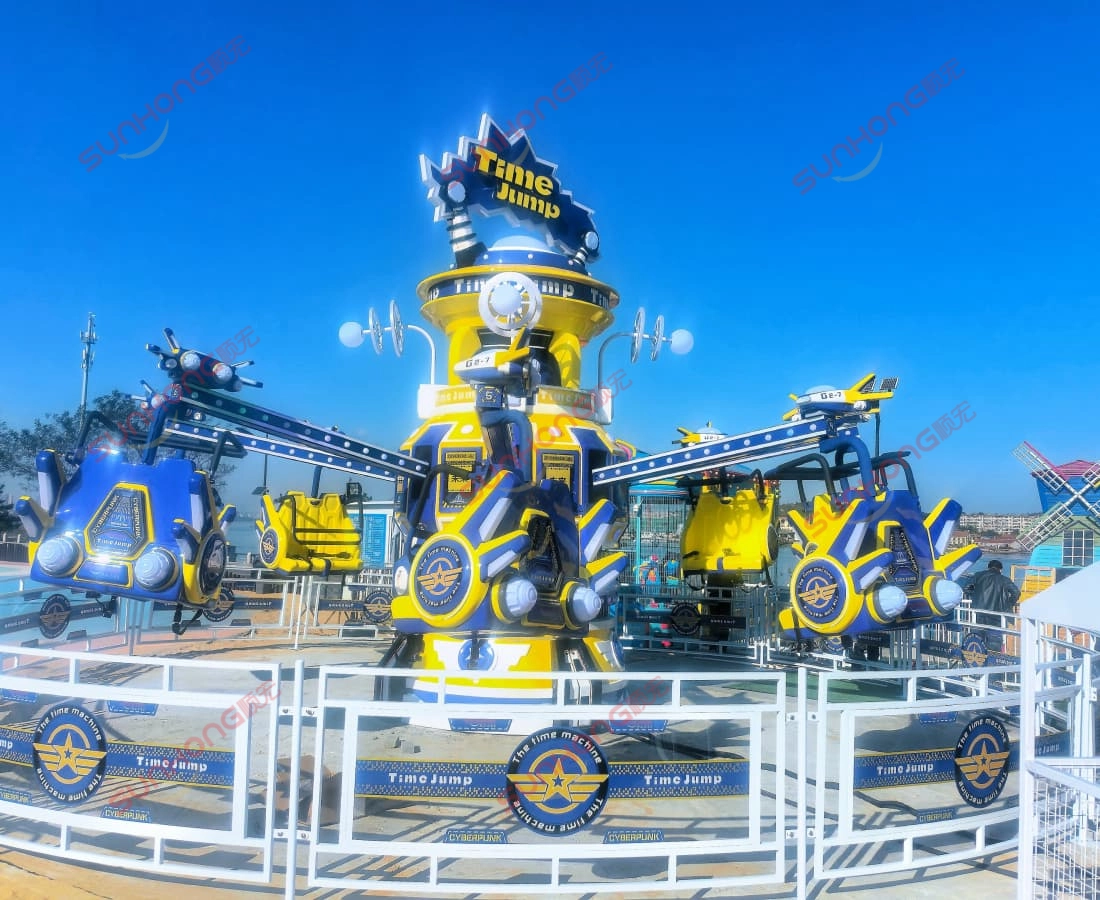
16-Seat Time Jump – Rotating Plane Ride for Amusement Parks
Time Jump is a thrilling and cost-effective amusement ride, 100% originally developed and manufactured by SUNHONG with patented certification. Designed for families and children, it combines motor drive and air-compressor cylinders to achieve dynamic movements—left-right rotation, variable-speed spinning, bouncing seats, and full 360-degree spins.
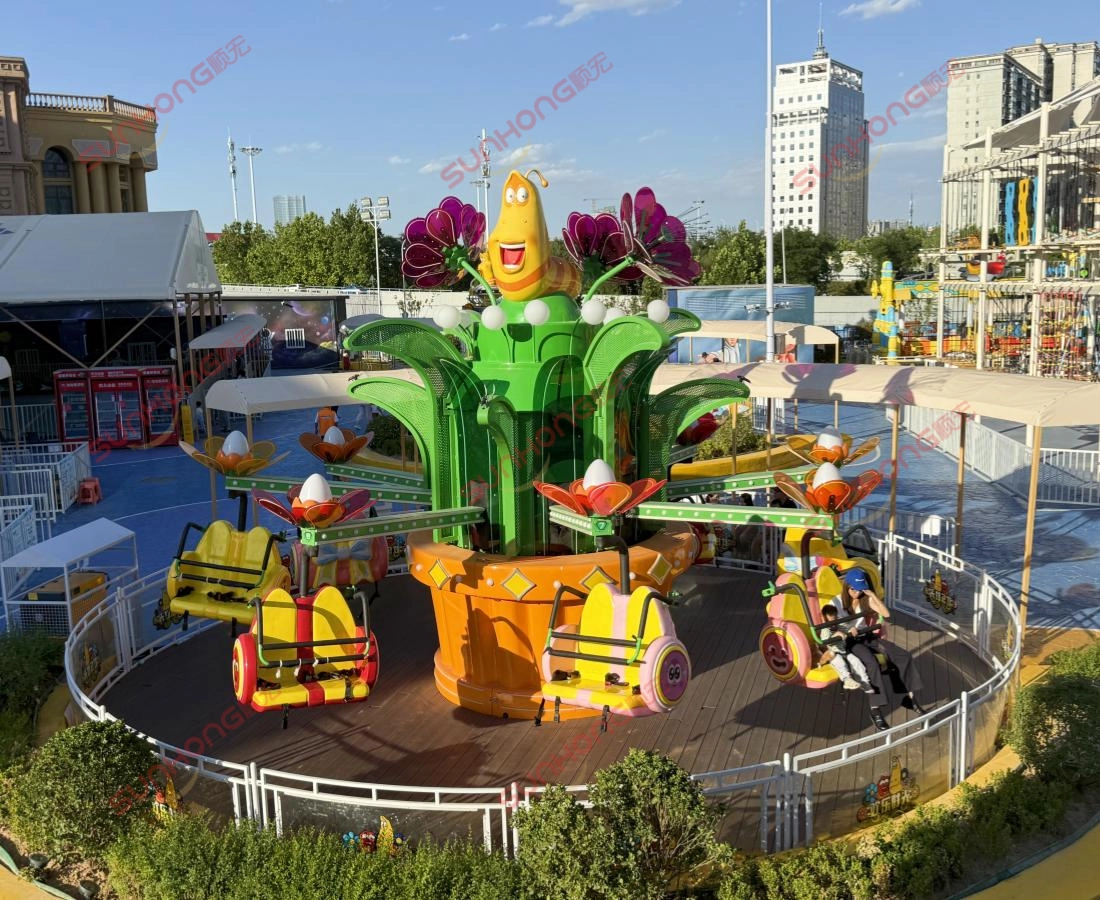
Larva Blooms Bounce Ride – Hot IP Custom Attraction with 360° Spin & Bounce
Larva Blooms is a patented bounce ride inspired by the hit Larva animation series. Featuring full platform rotation, 360° spinning seats, and dynamic bouncing motion, it delivers a thrilling ride experience for families and kids. IP customization available with OEM/ODM service.
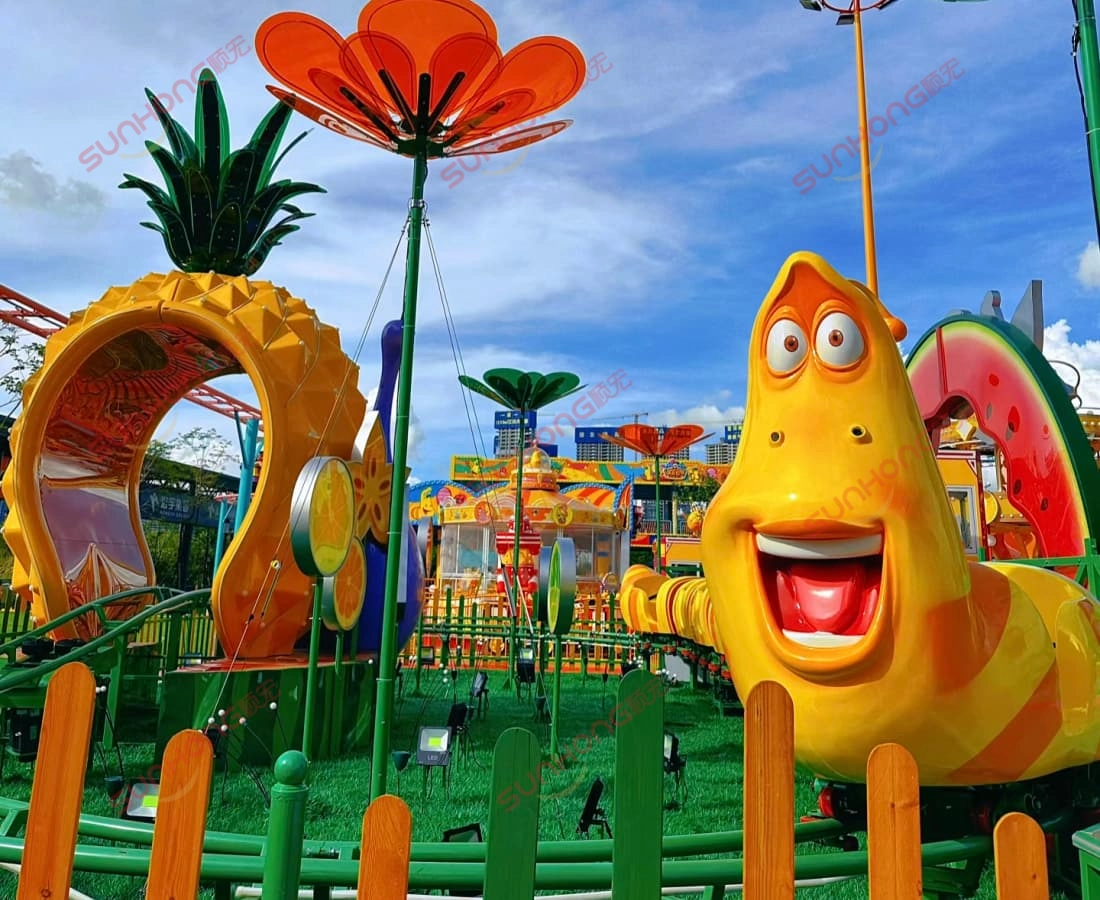
Larva Fruitland – A Mini Roller Coaster Adventure for Kids and Families
Larva Fruitland is a mini roller coaster themed after the Larva animated series. With vibrant colors and gentle motion, it’s perfect for kids and families. This small coaster features IP characters, a fruit farm design, and photo-worthy appeal. Ideal for indoor or outdoor parks. OEM/ODM customization available for your branding needs.

360 Degree Rotating Ride Swing Thrill Amusement Rides for Attractions
Air Bus is a stunning addition to our family amusement rides, delivering a one-of-a-kind 360° dual-rotation experience. With its swinging arm and self-spinning cabin, bright yellow flying-bus design, dynamic music effects, and customizable options, this ride is more than just entertainment—it’s a show-stopping centerpiece that helps your park attract crowds.
Leave a message
Ready to elevate your amusement offerings?
Contact Sunhong today to explore how we can bring your vision to life and create unforgettable experiences for your visitors.
* Rest assured that your privacy is important to us, and all information provided will be handled with the utmost confidentiality.
Copyright © 2025 SUNHONG All Reserved.
Whatsapp: +8613922331804
Guangzhou Shunhong Entertainment Equipment Co.,Ltd.
sunhongrides
SUNHONGAMUSEMENTRIDES
Scan QR Code