
Outdoor Theme Park Ride Supplier Red Flags That Cause Delays
- Warning Signs in Outdoor Amusement Ride Procurement
- Unclear technical scope and incomplete design documentation
- Promises that ignore climate, site conditions, and operating environment
- Low bids with unexplained exclusions
- Supplier Capability Gaps That Turn Into Schedule Overruns
- No verifiable manufacturing capacity
- Certificates that do not match the actual ride
- Weak change-control and communication systems
- How to Validate a Ride Manufacturer Before Contract Award
- Audit the complete project pathway
- Test the supplier’s answers with a procurement checklist
- Use recognized safety and quality principles
- Why SUNHONG Can Reduce Outdoor Ride Project Risk
- Integrated design, manufacturing, and construction capabilities
- International documentation and project experience
- Product range aligned with commercial park objectives
- Questions to ask before releasing the purchase order
- Frequently Asked Questions
Outdoor theme park ride projects are frequently delayed by incomplete engineering data, unclear compliance responsibilities, weak factory quality control, unrealistic delivery promises, poor site coordination, and inadequate after-sales support. Buyers can reduce schedule risk by auditing a supplier’s technical documentation, manufacturing capacity, certification scope, installation plan, spare-parts strategy, and project references before signing a contract. A dependable amusement ride manufacturer should connect concept design, structural engineering, fabrication, testing, logistics, installation, commissioning, and operator training into one controlled delivery process. This article identifies the supplier red flags that create schedule overruns and explains how project owners can evaluate a capable outdoor theme park rides builder without relying on sales promises alone.
Warning Signs in Outdoor Amusement Ride Procurement
Unclear technical scope and incomplete design documentation
The first delay signal is a quotation that describes a ride only by its name, capacity, color, or headline dimensions. Outdoor installations require far more information. A serious proposal should define passenger restrictions, throughput assumptions, footprint, queue arrangement, electrical load, foundation reactions, drainage requirements, wind exposure, operating temperature, water management, access for maintenance, and the interface between the ride and the site. Without these details, the civil engineer cannot finalize foundations and the owner cannot accurately compare competing bids.
Buyers should request a documented design-basis package before approving production. It should include general arrangement drawings, loading data, utility schedules, equipment lists, control-system descriptions, safety-device schedules, maintenance access zones, and a responsibility matrix. If the supplier repeatedly says that these items will be provided after the deposit, the project may already contain an avoidable coordination risk. Late engineering changes can affect concrete, steel, electrical conduits, fencing, landscaping, ticketing, and guest circulation at the same time.
Promises that ignore climate, site conditions, and operating environment
A ride designed for an indoor venue cannot automatically be transferred to a coastal, tropical, desert, high-altitude, or cold-weather park. Outdoor amusement park equipment must account for ultraviolet exposure, rainwater, corrosion, wind, lightning, dust, temperature cycles, soil conditions, and seasonal operating patterns. A supplier that does not ask for geotechnical information, local weather data, site coordinates, or authority requirements may be quoting a generic configuration rather than a project-ready solution.
Corrosion protection deserves specific attention. Buyers should ask whether carbon-steel components receive a defined surface-treatment system, which fasteners are specified, how welds are inspected, and how exposed electrical cabinets are protected. Stainless steel, coatings, seals, drainage paths, and enclosure ratings should be selected according to the environment rather than used as vague marketing language. The UK Health and Safety Executive guidance for fairgrounds demonstrates why safe operation, inspection, maintenance, and management responsibilities must be considered throughout the equipment life cycle.
Low bids with unexplained exclusions
An unusually low price is not automatically an advantage. It may exclude foundations, installation supervision, local taxes, customs documentation, commissioning, operator training, spare parts, control-system upgrades, testing, or weather-resistant finishing. An incomplete commercial scope often creates a larger cost later, when the buyer has limited negotiating leverage and the opening date is approaching.
Procurement teams should normalize every quotation into the same cost structure. Compare the ride package, engineering, certification, packing, shipping, insurance, unloading, installation, local labor, inspection, training, warranty, spare parts, and annual maintenance requirements. The objective is not to select the cheapest line item but to identify the lowest credible total cost of ownership and the clearest path to operational readiness.
Supplier Capability Gaps That Turn Into Schedule Overruns
No verifiable manufacturing capacity
Some traders present themselves as manufacturers while outsourcing structural fabrication, painting, controls, and assembly to unrelated workshops. Outsourcing is not inherently unacceptable, but the buyer must know who controls design changes, incoming materials, welding quality, software configuration, and final inspection. A supplier unable to provide a factory profile, production schedule, quality plan, or responsible project manager creates uncertainty at every milestone.
Factory evaluation should cover engineering staffing, cutting and forming equipment, welding procedures, dimensional inspection, surface treatment, electrical assembly, trial assembly, storage space, and shipment preparation. Buyers should also ask how simultaneous projects are prioritized. A supplier may have a strong portfolio but insufficient capacity during peak construction seasons. A realistic manufacturing plan identifies design freeze, material procurement, fabrication, trial assembly, factory acceptance testing, packing, and dispatch dates rather than offering one optimistic delivery date.
Certificates that do not match the actual ride
Certification language is another common source of confusion. A company certificate, general quality certificate, or certificate for a different product does not necessarily demonstrate that the quoted ride satisfies the buyer’s applicable requirements. The document should identify the correct model, manufacturer, technical file or test basis, issuing organization, scope, and validity. It should also be consistent with the destination market and the authority having jurisdiction.
For European projects, buyers can review the European Commission’s official CE marking information to understand that conformity marking relates to applicable product legislation and manufacturer responsibility. For North American projects, the relevant authority may require evidence aligned with local codes, inspection practices, and ASTM standards. The ASTM F24 committee develops standards related to amusement rides and devices, but buyers still need to confirm which edition, jurisdictional rule, inspection process, and documentation package apply to the specific installation.
Weak change-control and communication systems
Ride projects involve many interfaces: owner, architect, civil contractor, electrical contractor, local inspector, shipping agent, operator, and manufacturer. If design changes are handled through informal messages without revision numbers, approval records, and impact assessments, small modifications can cause major rework. Examples include changing vehicle capacity, moving a control cabinet, revising a platform height, adding a canopy, altering queue barriers, or replacing a motor with a locally available model.
A reliable supplier should maintain a document register, revision history, technical query log, approval schedule, and escalation path. Every change should show its effect on cost, delivery, structural loads, utilities, safety analysis, and testing. Buyers should identify one authorized decision-maker on each side and schedule regular coordination meetings from contract award through handover.
| Supplier evaluation area | High-risk signal | Evidence a buyer should request | Schedule protection |
|---|---|---|---|
| Engineering | Generic brochure with no site-specific drawings | Design basis, layout, loads, utilities, interface matrix | Freeze interfaces before civil construction |
| Compliance | Undated or unrelated certificates | Model-specific conformity documents, test records, standards scope | Confirm authority requirements before fabrication |
| Manufacturing | No production plan or factory inspection access | Material records, welding controls, inspection plan, milestone schedule | Detect defects before packing |
| Installation | “Installation included” without defined responsibilities | Method statement, crew plan, lifting plan, commissioning checklist | Coordinate site readiness and labor resources |
| After-sales | No spare-parts list or response process | Warranty terms, manuals, recommended spares, remote-support procedure | Reduce post-opening downtime |
How to Validate a Ride Manufacturer Before Contract Award
Audit the complete project pathway
Supplier evaluation should follow the same sequence as project delivery. Begin with concept feasibility and site planning, then review engineering, procurement, fabrication, factory testing, shipping, installation, commissioning, training, and maintenance. This process reveals whether the supplier can manage the entire chain or only sell a machine. A capable partner should explain the handoffs between departments and identify the documents required at each gate.
Reference checks should go beyond asking whether a previous customer was satisfied. Request comparable project information: ride type, outdoor climate, capacity, destination country, installation date, commissioning status, maintenance experience, and response to defects. Where confidentiality permits, a site visit or video call with an operating client can clarify practical matters such as noise, cleaning, spare-part availability, daily inspection, and operator usability.
Test the supplier’s answers with a procurement checklist
A structured request for proposal helps distinguish engineering capability from persuasive sales language. Ask each bidder to answer the same questions about design assumptions, standards, structural calculations, electrical requirements, delivery terms, packaging, warranty exclusions, software access, cybersecurity of remote systems, training, and end-of-life parts availability. Require a responsibility assignment table that states which party supplies foundations, anchor bolts, power, drainage, cranes, labor, permits, inspections, and guest-area barriers.
Commercial terms should connect payments to verifiable milestones. Suitable milestones may include approved drawings, material readiness, completed fabrication, factory acceptance testing, shipment documents, installation completion, and successful commissioning. Retaining a reasonable portion until documentation and performance obligations are complete gives both parties an incentive to close unresolved items rather than move them into the opening period.
Use recognized safety and quality principles
Safety should be embedded in design reviews, manufacturing controls, installation procedures, operator training, and periodic inspection. The ISO 9001 quality management framework is useful as a reference for controlled processes, documented responsibilities, corrective action, and continual improvement, although certification alone does not prove that a particular ride is suitable for a project. Buyers should combine management-system evidence with product-specific engineering, testing, inspection, and operational documentation.
Acceptance testing should be defined before production begins. It may include no-load and loaded tests, emergency-stop verification, restraint checks, sensor validation, braking performance, abnormal-condition simulations, noise checks, water ingress review, control-panel inspection, and recovery procedures. The final handover should include as-built drawings, parts lists, electrical schematics, software backups where applicable, maintenance intervals, inspection forms, risk information, and training records.
Why SUNHONG Can Reduce Outdoor Ride Project Risk
Integrated design, manufacturing, and construction capabilities
SUNHONG is a large-scale comprehensive amusement ride manufacturer dedicated to the research and development, design, manufacture, and sales of amusement rides. Our team supports overall planning, R&D design, exclusive customization, manufacturing, comprehensive construction, and operation management. This integrated model reduces the number of disconnected interfaces that commonly cause design gaps between a ride supplier, a third-party designer, and a local contractor.
Our project approach can begin with the commercial concept and continue through layout planning, equipment selection, technical coordination, production, delivery, installation, commissioning, and operational preparation. For investors developing a family entertainment center, destination resort, water park, or large outdoor attraction zone, this continuity helps align amusement park design with guest flow, capacity targets, service access, theming, safety zones, and future maintenance.
International documentation and project experience
SUNHONG has more than 10 years of export experience, and SUNHONG amusement rides have been installed in more than 56 nations and regions. Our stated certification coverage includes CE for the European Union, UKCA for the United Kingdom, SABER for Saudi Arabia, TUV documentation associated with Germany, and ASTM certification for the United States. Because requirements vary by product and jurisdiction, each project should still confirm the exact applicable standards, inspection route, and authority expectations before manufacture.
International delivery also requires more than a certificate. It requires accurate packing lists, shipping dimensions, lifting points, installation drawings, electrical information, customs documentation, translated manuals where necessary, and a clear process for resolving site questions. Our in-house R&D, production, and construction experts are organized to support the project from initial concept to final completion, helping buyers control technical communication across borders and time zones.
Product range aligned with commercial park objectives
Our portfolio covers amusement park equipment and customized amusement park rides for different visitor profiles, footprints, and operating models. Product planning can consider children’s areas, family rides, thrill attractions, sightseeing systems, themed installations, and supporting guest infrastructure. The right selection should balance visual impact with hourly capacity, staffing, maintenance access, energy consumption, queue duration, weather resilience, and return on investment.
For developers seeking a coordinated destination rather than isolated machines, SUNHONG can connect ride selection with amusement park design and broader site planning. Our goal is to become a leading manufacturer of amusement rides worldwide by combining product development, manufacturing discipline, construction support, and long-term customer service. Buyers can review available solutions at SUNHONG’s official website or contact sunhong@isunhong.com for project-specific technical discussions.
Questions to ask before releasing the purchase order
Before contract award, project owners should ask whether the supplier has completed comparable outdoor installations, whether engineering data is included in the price, who owns compliance documentation, how design changes are approved, and what happens when site conditions differ from assumptions. The supplier should also explain factory inspection access, packaging protection, installation supervision, commissioning criteria, operator training, warranty response, critical spare parts, and software or control-system support.
These questions are not intended to make procurement unnecessarily complicated. They create a shared definition of completion. A supplier that welcomes technical scrutiny is more likely to have repeatable processes, while a supplier that avoids documentation may transfer uncertainty to the buyer’s construction team. The most reliable purchasing decision is therefore based on evidence, not only on catalog appearance, low price, or a promised opening date.
Frequently Asked Questions
What is the biggest warning sign when selecting an outdoor amusement ride supplier?
The biggest warning sign is an incomplete technical scope that provides only a brochure and price without site-specific drawings, foundation loads, utility requirements, safety documentation, delivery milestones, and clearly assigned responsibilities.
Why can a low amusement ride quotation cause project delays?
A low quotation may exclude foundations, installation supervision, customs documentation, commissioning, training, spare parts, testing, or weather-resistant finishing. These omissions often create unexpected work and cost after the buyer has limited negotiating leverage.
How can buyers verify amusement ride certificates?
Buyers should confirm that certificates identify the correct ride model, manufacturer, issuing organization, technical scope, standards, and validity. They should also verify that the documentation matches the destination country and the requirements of the authority having jurisdiction.
What documents should an outdoor ride manufacturer provide before production?
A manufacturer should provide a design basis, general arrangement drawings, structural and foundation loads, utility schedules, equipment lists, control-system information, safety-device schedules, maintenance access requirements, and a responsibility matrix.
What should be included in a ride acceptance test?
Acceptance testing should be defined in advance and may include no-load and loaded tests, emergency-stop verification, restraint checks, sensor validation, braking performance, abnormal-condition simulations, control-panel inspection, and recovery procedures.
How does SUNHONG help reduce outdoor amusement park project risk?
SUNHONG integrates R&D, design, customization, manufacturing, construction, and operation-management support. With in-house experts, more than 10 years of export experience, and installations in more than 56 nations and regions, SUNHONG supports projects from initial concept through completion while providing international documentation and technical coordination.
Cost Breakdown to Build an Amusement Park: Budget Planner
Maintenance, Spare Parts and Ops to Keep Your Amusement Park Running
Wholesale amusement park equipment manufacturer and supplier
Flat rides: categories, capacities, and footprint planning
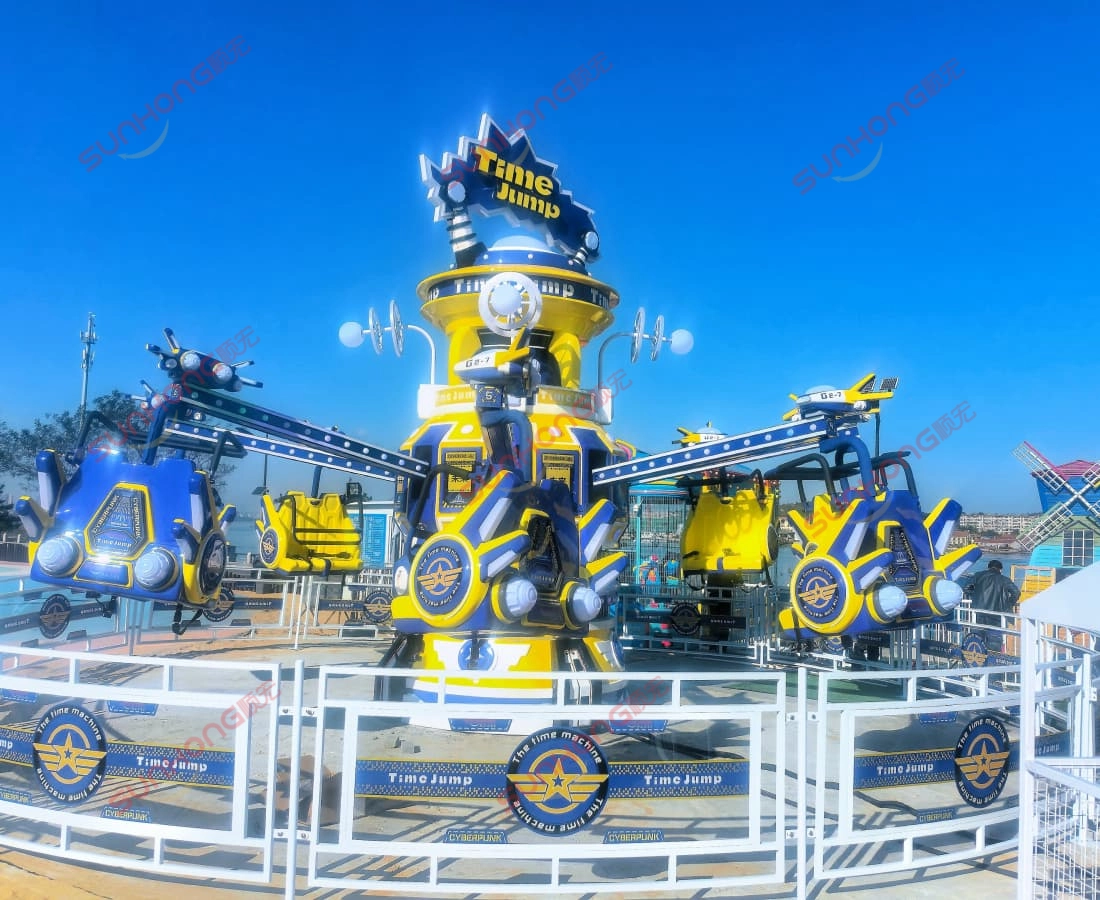
16-Seat Time Jump – Rotating Plane Ride for Amusement Parks
Time Jump is a thrilling and cost-effective amusement ride, 100% originally developed and manufactured by SUNHONG with patented certification. Designed for families and children, it combines motor drive and air-compressor cylinders to achieve dynamic movements—left-right rotation, variable-speed spinning, bouncing seats, and full 360-degree spins.
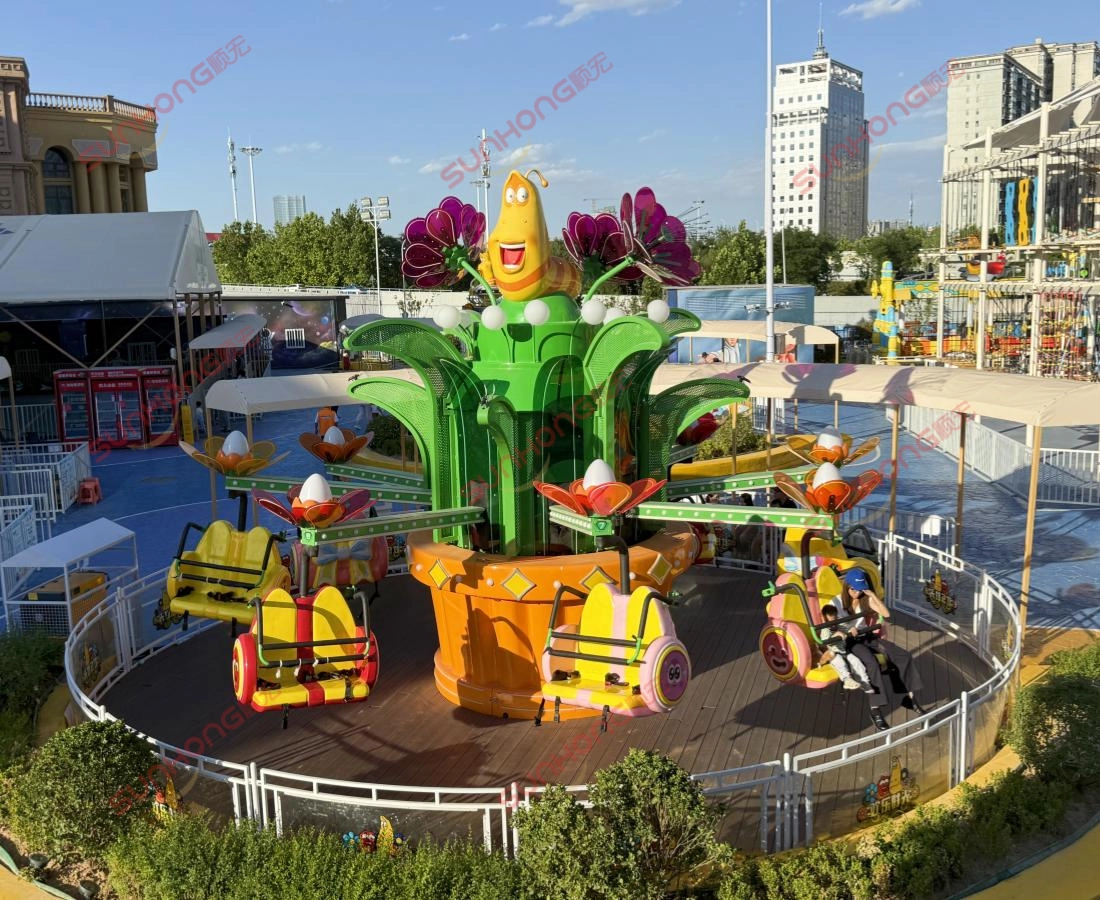
Larva Blooms Bounce Ride – Hot IP Custom Attraction with 360° Spin & Bounce
Larva Blooms is a patented bounce ride inspired by the hit Larva animation series. Featuring full platform rotation, 360° spinning seats, and dynamic bouncing motion, it delivers a thrilling ride experience for families and kids. IP customization available with OEM/ODM service.
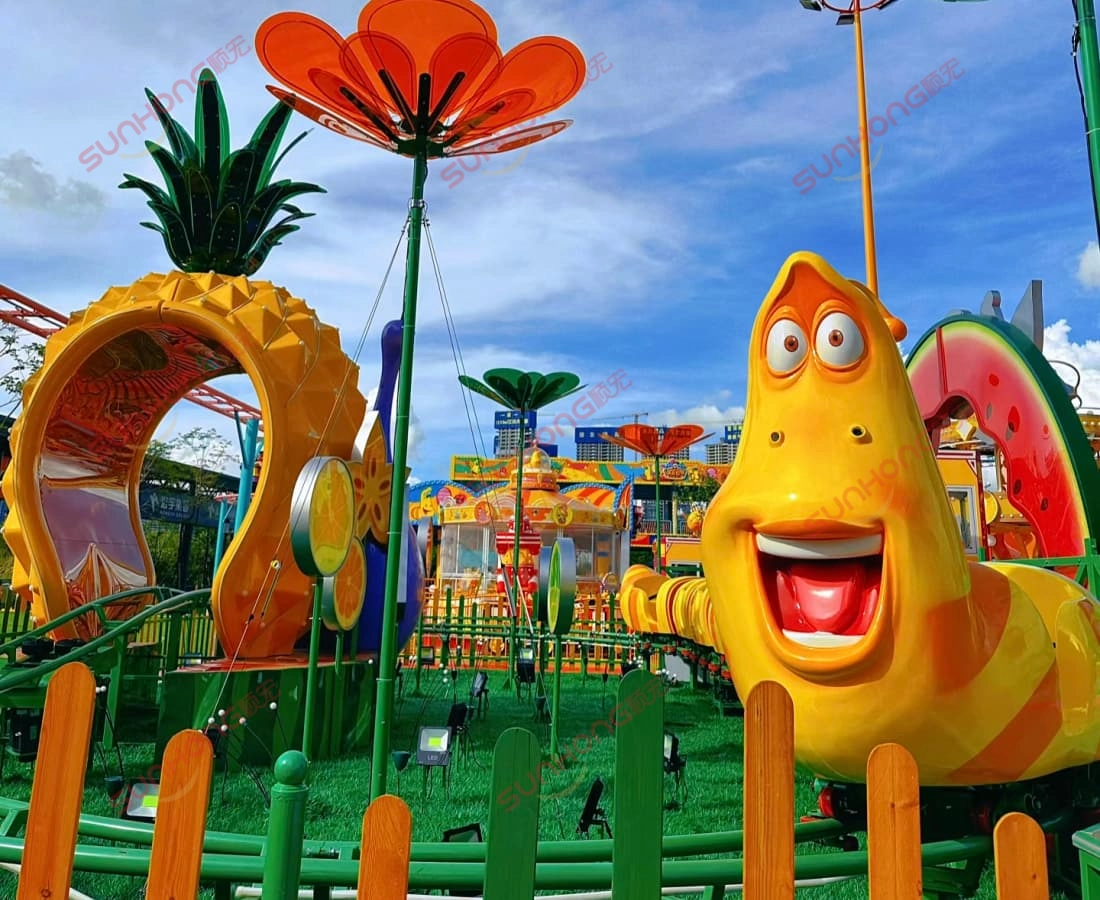
Larva Fruitland – A Mini Roller Coaster Adventure for Kids and Families
Larva Fruitland is a mini roller coaster themed after the Larva animated series. With vibrant colors and gentle motion, it’s perfect for kids and families. This small coaster features IP characters, a fruit farm design, and photo-worthy appeal. Ideal for indoor or outdoor parks. OEM/ODM customization available for your branding needs.

360 Degree Rotating Ride Swing Thrill Amusement Rides for Attractions
Air Bus is a stunning addition to our family amusement rides, delivering a one-of-a-kind 360° dual-rotation experience. With its swinging arm and self-spinning cabin, bright yellow flying-bus design, dynamic music effects, and customizable options, this ride is more than just entertainment—it’s a show-stopping centerpiece that helps your park attract crowds.
Leave a message
Ready to elevate your amusement offerings?
Contact Sunhong today to explore how we can bring your vision to life and create unforgettable experiences for your visitors.
* Rest assured that your privacy is important to us, and all information provided will be handled with the utmost confidentiality.
Copyright © 2025 SUNHONG All Reserved.
Whatsapp: +8613922331804
Guangzhou Shunhong Entertainment Equipment Co.,Ltd.
sunhongrides
SUNHONGAMUSEMENTRIDES
Scan QR Code