
Outdoor Theme Park Ride Pricing: MOQ, Lead Time, and Shipping
- How Outdoor Attraction Costs Are Built
- Base equipment price versus total delivered investment
- Product category, capacity, and customization
- MOQ and procurement strategy
- Lead Time Planning for Amusement Ride Projects
- What starts the production clock
- Approval gates that protect the schedule
- Factory testing and site commissioning
- Shipping, Incoterms, and Delivered Cost Control
- How ride dimensions affect freight
- Incoterms and responsibility allocation
- Documentation and customs readiness
- Why SUNHONG Can Support a Complete Ride Project
- Integrated design and manufacturing capability
- Export experience and compliance documentation
- From concept to completion
- Frequently Asked Questions
Outdoor theme park ride pricing is a project-planning issue rather than a simple product-price comparison. The final investment may include ride fabrication, structural engineering, controls, safety systems, theming, spare parts, packaging, export documentation, transportation, installation, testing, training, and post-sale support. Buyers who compare only the factory price can underestimate the delivered cost and create delays during construction or opening.
For investors, operators, distributors, and resort developers, three commercial variables require particular attention: minimum order quantity (MOQ), manufacturing lead time, and shipping. These variables influence cash flow, launch schedules, warehouse requirements, customs exposure, and the ability to maintain spare parts. The right procurement process begins with a clearly defined attraction concept and ends with a documented handover package.
Safety and compliance should be assessed alongside price. Buyers can review the principles of quality management in ISO 9001 quality management systems, consult applicable amusement-device standards such as ASTM F2291 where relevant, and verify destination-market requirements before placing an order. Certification is not a substitute for site-specific engineering, authority approval, or competent installation.
How Outdoor Attraction Costs Are Built
Base equipment price versus total delivered investment
A ride quotation normally starts with the core attraction: steel structure, vehicles or gondolas, drive system, control cabinet, restraints, sensors, operator console, and standard finishes. However, an outdoor project may also require foundations, drainage, electrical distribution, fencing, queue systems, shade structures, landscaping, themed façades, lighting, sound, ticketing integration, and weather protection. Some components are supplied by the manufacturer, while others are purchased locally under the project owner’s construction contract.
A useful request for quotation should separate each cost category. The commercial schedule can distinguish factory equipment, optional theming, engineering documents, spare parts, packing, inland haulage, export fees, ocean freight, insurance, installation, commissioning, training, and taxes. This structure helps buyers compare proposals on an equivalent scope and prevents a low initial quote from becoming an expensive variation order.
Product category, capacity, and customization
Pricing is affected by attraction type and operating capacity. A family carousel, mini train, bumper car system, observation wheel, roller coaster, water attraction, or large spinning ride has different requirements for steelwork, foundations, motors, controls, evacuation procedures, and maintenance. Higher hourly capacity can improve revenue potential, but it may increase the number of vehicles, loading infrastructure, power demand, and staffing requirements.
Customization also changes both price and schedule. Bespoke ride vehicles, branded façades, animated figures, special color systems, soundtrack integration, climate adaptations, and unusual site geometry require additional design coordination. A standard model can often move through engineering faster, whereas a fully themed attraction may require several drawing cycles and approval gates.
MOQ and procurement strategy
MOQ is not always a fixed number of identical rides. For a manufacturer, it may refer to one complete attraction, a batch of spare parts, a containerized product group, or a minimum production value for custom development. Large rides are frequently sold as individual project units, while smaller amusement park equipment may be ordered in mixed batches for a new family entertainment center or distributor inventory.
Buyers should ask whether the quoted MOQ applies to production, customization, packaging, or shipping. A supplier may accept a single unit but require a minimum quantity for custom molds, special fiberglass elements, branded components, or nonstandard control hardware. Distributors should also clarify whether territorial exclusivity requires annual volume, marketing investment, or service capability.
For a first project, ordering only the equipment required for the approved site can reduce inventory risk. A sensible package may still include recommended wear parts, critical sensors, relays, restraints, lubricants, tools, and maintenance consumables. This is often more efficient than purchasing a large quantity of complete rides before demand has been validated.
Lead Time Planning for Amusement Ride Projects
What starts the production clock
Manufacturing lead time should not be counted from the first inquiry. The production clock usually begins after commercial terms are accepted, the contract is signed, the required deposit is received, technical specifications are frozen, and drawings are approved. If the project involves civil works or authority review, those activities should be tracked separately from factory production.
A typical project sequence includes concept confirmation, site and capacity review, engineering, drawing approval, material purchasing, fabrication, welding and surface treatment, assembly, electrical integration, factory testing, packing, and dispatch. The duration varies by ride type, customization level, factory workload, component availability, destination requirements, and inspection plan. Any supplier promising a universal lead time without reviewing these variables should be evaluated carefully.
Approval gates that protect the schedule
Drawing approval is one of the most important schedule controls. Buyers should review overall dimensions, loading and unloading arrangements, foundation reactions, electrical requirements, evacuation access, operator sightlines, control logic, vehicle capacity, and maintenance clearances. A late change to the track layout, ride height, vehicle appearance, or control system can affect steel fabrication and restart engineering work.
Project owners can establish a document register with responsible parties and approval dates. The register may cover general arrangement drawings, foundation plans, utility schedules, risk assessments, operation manuals, spare-parts lists, inspection records, packing lists, and certificates. Weekly progress reports should identify completed work, open decisions, procurement risks, and the recovery plan for any delay.
Factory testing and site commissioning
Factory acceptance testing should be defined in the contract rather than treated as an informal inspection. Depending on the attraction, the test may cover no-load operation, loaded cycles, emergency stops, restraint monitoring, sensor response, speed control, abnormal-condition behavior, operator controls, and alarm records. The final test protocol should reflect the agreed technical specification and destination-market requirements.
Site commissioning is a separate stage. It may include unloading, assembly, alignment, electrical connection, calibration, trial operation, staff training, authority inspection, and handover. Foundation readiness, crane access, local power quality, weather conditions, and the availability of trained operators can determine whether installation finishes on schedule.
Shipping, Incoterms, and Delivered Cost Control
How ride dimensions affect freight
Amusement rides are often oversized, heavy, or divided into many irregular packages. Shipping cost depends on gross weight, package dimensions, center of gravity, lifting points, stackability, container utilization, port restrictions, and whether special equipment is required. A ride may be shipped in standard containers, open-top containers, flat racks, breakbulk consignments, or a combination of methods.
Buyers should request a packing list before approving the logistics budget. The list should show package number, description, dimensions, gross and net weight, volume, lifting instructions, and container assignment. This information supports freight comparison and allows the receiving site to plan cranes, forklifts, storage space, road access, and weather protection.
Incoterms and responsibility allocation
The selected Incoterm determines which party arranges transport, insurance, export formalities, import clearance, and delivery responsibilities. The ICC Incoterms 2020 rules provide the recognized framework, but the named place must be precise. “FOB China port” and “DAP project site” create very different obligations and cost exposures.
A buyer should confirm the exact port, delivery point, insurance responsibility, demurrage treatment, customs broker, and documentation package. Freight quotations should be date-stamped because ocean rates, fuel surcharges, port fees, and equipment availability change. Import duty and value-added tax should be modeled separately from the supplier’s factory invoice.
Documentation and customs readiness
Export documentation may include a commercial invoice, packing list, bill of lading, certificate of origin, insurance certificate, product certificates, manuals, and technical files. Destination countries may require additional conformity documents, labeling, importer registration, or pre-shipment procedures. For example, Saudi-bound products may need to be checked against the requirements of the SABER platform, while European projects should assess applicable EU legislation and conformity obligations through official CE marking guidance.
Customs classification should be confirmed with a qualified broker because the correct tariff code depends on the product and jurisdiction. Incorrect descriptions can cause inspection, storage fees, or clearance delays. The shipping plan should also address wood packaging treatment where applicable, using the international requirements described under IPPC ISPM standards.
| Cost or schedule element | What normally influences it | Buyer control action |
|---|---|---|
| MOQ | Product type, customization, molds, spare-parts batch, and distributor terms | Request unit, mixed-batch, and project-package options |
| Engineering lead time | Site data, design complexity, approval cycles, and compliance scope | Freeze specifications and use a formal drawing register |
| Manufacturing lead time | Steelwork, vehicles, controls, surface treatment, testing, and factory workload | Require milestone dates and progress evidence |
| Ocean freight | Volume, weight, package shape, route, port, and equipment availability | Review a detailed packing list and compare freight modes |
| Import and delivery | Tariff classification, taxes, customs, inland haulage, and site access | Assign a broker and define the delivery point in the contract |
| Installation | Ride complexity, foundation readiness, cranes, labor, and authority inspection | Coordinate civil, electrical, and commissioning schedules early |
Why SUNHONG Can Support a Complete Ride Project
Integrated design and manufacturing capability
SUNHONG is a large-scale comprehensive amusement ride manufacturer dedicated to the research and development, design, manufacture, and sales of amusement rides. Our capabilities cover overall planning, R&D design, exclusive customization, manufacturing, comprehensive construction, operation management, and related project services. This integrated structure helps reduce communication gaps between concept development, engineering, fabrication, installation, and handover.
Our product scope includes amusement park equipment, family entertainment attractions, themed ride systems, and customized amusement park rides. For developers planning a new destination, our team can connect amusement park design with equipment selection, guest flow, capacity planning, site conditions, theming, operational requirements, and maintenance access. The objective is to develop an attraction package that is commercially practical as well as visually distinctive.
Export experience and compliance documentation
With more than 10 years of export experience, SUNHONG supports international buyers with documentation and market-entry requirements. Our stated certifications and market credentials include CE for the European Union, UKCA for the United Kingdom, SABER for Saudi Arabia, TÜV-related documentation for Germany, and ASTM certification for the United States, subject to the product and project scope. Buyers should always confirm which certificates apply to the selected model and destination installation.
SUNHONG amusement rides have been installed in more than 56 nations and regions. This international project exposure supports practical coordination across shipping documents, local contractors, site installation, operator training, and commissioning. It does not eliminate the need for local approval, but it can make the project interface more organized and transparent.
From concept to completion
Our in-house experts in R&D, production, and construction offer support from the initial concept to final project completion. A buyer can request a structured proposal covering attraction selection, layout concepts, customized appearance, technical parameters, production milestones, packing, shipping assumptions, installation scope, spare parts, and after-sales support. This approach enables investors to evaluate the total project requirement rather than a disconnected equipment number.
Quality control should remain visible throughout the process. Buyers can request approved drawings, material and component specifications, weld and surface-treatment procedures where applicable, electrical inspection records, factory test results, operating manuals, maintenance schedules, and a final spare-parts list. Clear records improve operator training, future maintenance, authority communication, and asset value.
SUNHONG’s goal is to become the world’s leading manufacturer of amusement rides. For project owners seeking a long-term manufacturing partner, the most useful next step is to provide the site location, available area, target capacity, attraction type, budget range, opening date, preferred Incoterm, and local compliance requirements. These inputs allow a more accurate assessment of MOQ, production timing, shipping method, and total delivered cost.
Contact SUNHONG at sunhong@isunhong.com or visit the SUNHONG website to review amusement park equipment and discuss amusement park design, manufacturing, shipping, and project completion support.
Frequently Asked Questions
What does MOQ mean when ordering amusement park rides?
MOQ means minimum order quantity. For amusement equipment, it may refer to one complete attraction, a batch of spare parts, a containerized product group, or a minimum production value for custom development. Buyers should confirm whether the MOQ applies to production, customization, packaging, or shipping.
When does the manufacturing lead time for an outdoor ride begin?
The production clock usually begins after commercial terms are accepted, the contract is signed, the required deposit is received, technical specifications are frozen, and drawings are approved. Engineering, civil works, authority review, and installation should be tracked as separate schedule activities.
What information is needed to calculate shipping costs for a theme park ride?
Shipping estimates require package dimensions, gross and net weight, volume, lifting instructions, container assignment, destination port, delivery point, route, and the selected transport method. Buyers should request a detailed packing list before approving the logistics budget.
How do Incoterms affect the delivered price of an amusement ride?
Incoterms determine which party arranges transport, insurance, export formalities, import clearance, and delivery responsibilities. The named place is essential because terms such as FOB at a specified port and DAP at a project site create different cost and risk allocations.
Which documents may be required for importing amusement park equipment?
Common documents include a commercial invoice, packing list, bill of lading, certificate of origin, insurance certificate, product certificates, manuals, and technical files. Destination markets may also require conformity documents, labeling, importer registration, or pre-shipment procedures.
Does a low factory price mean the ride has the lowest total cost?
Not necessarily. Total cost may include engineering, theming, spare parts, packing, inland transport, ocean freight, insurance, duties, taxes, customs clearance, installation, commissioning, training, and civil or electrical works. A scope-separated quotation provides a more reliable comparison.
Modular Playground Systems vs. Custom-Built Playground Equipment
The B2B Buyer’s Guide to carousel rides
Wholesale indoor amusement park rides manufacturer and supplier
Top amusement carousels Manufacturers and Suppliers
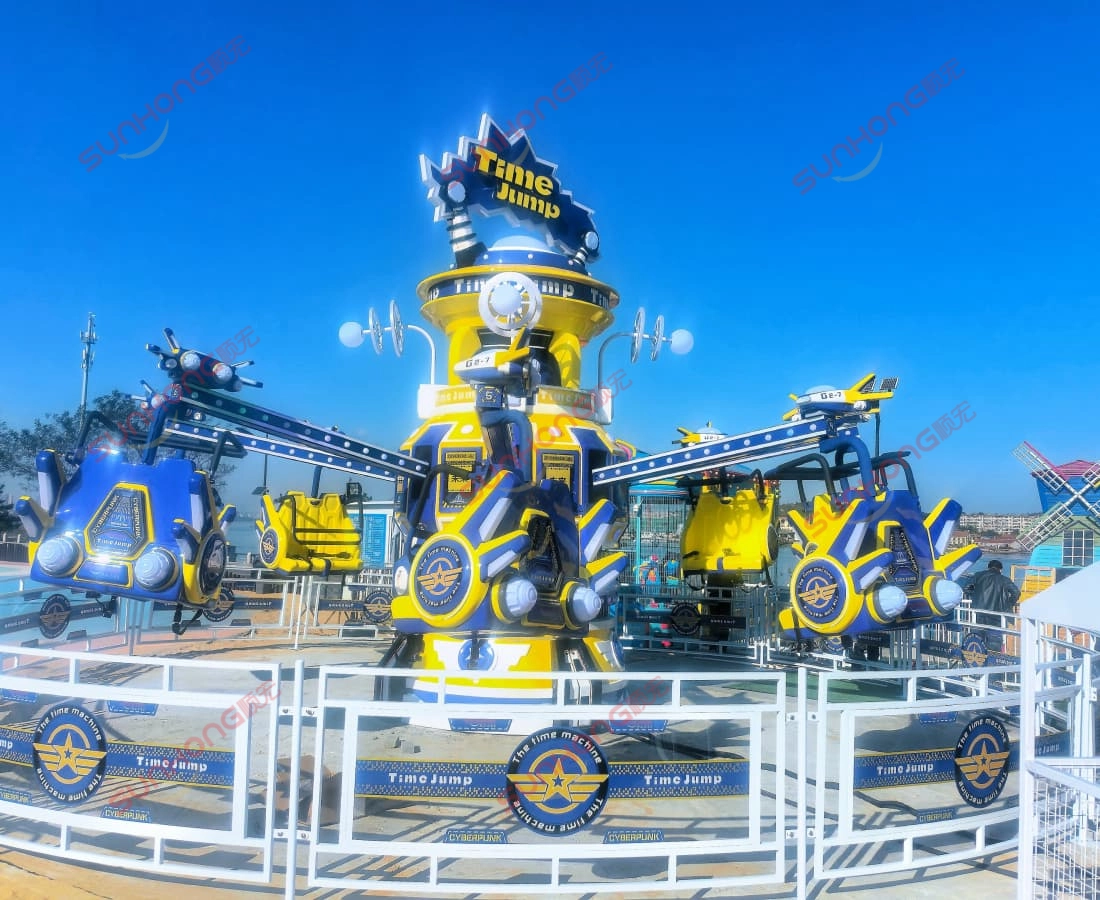
16-Seat Time Jump – Rotating Plane Ride for Amusement Parks
Time Jump is a thrilling and cost-effective amusement ride, 100% originally developed and manufactured by SUNHONG with patented certification. Designed for families and children, it combines motor drive and air-compressor cylinders to achieve dynamic movements—left-right rotation, variable-speed spinning, bouncing seats, and full 360-degree spins.
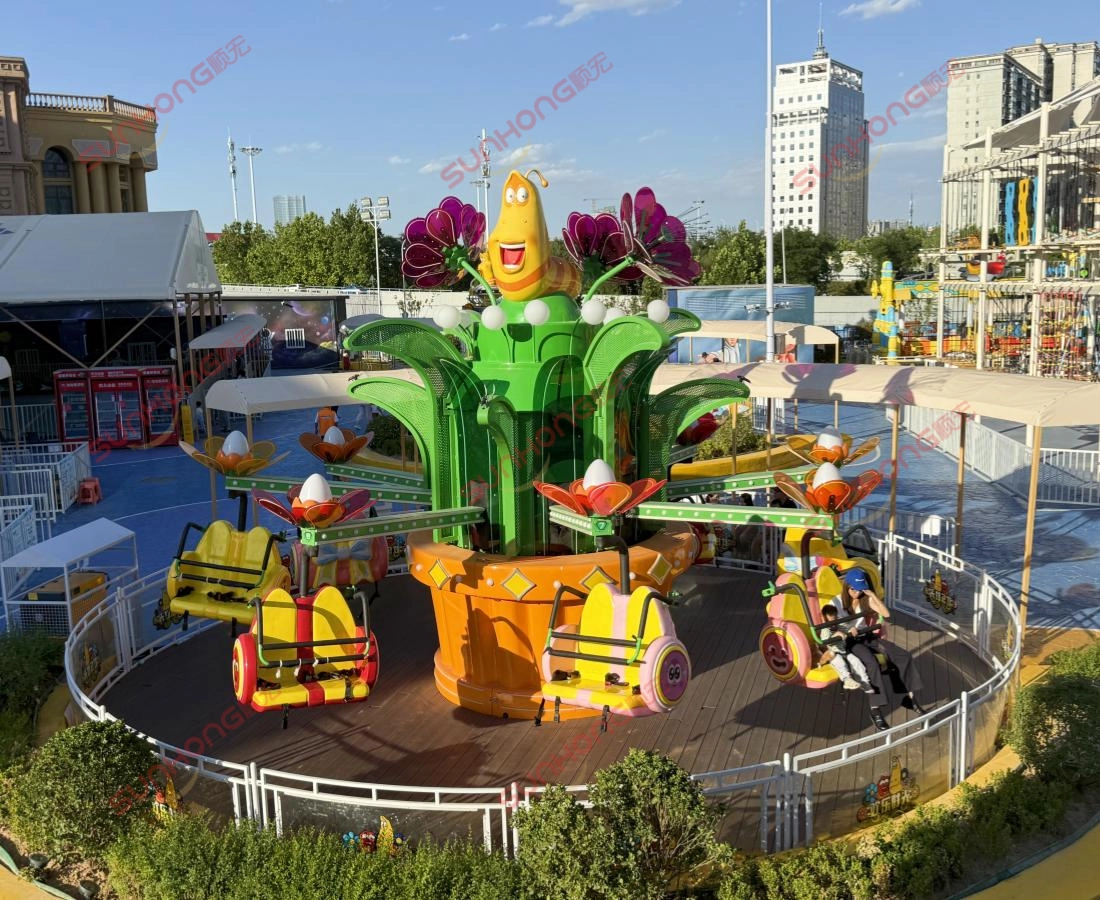
Larva Blooms Bounce Ride – Hot IP Custom Attraction with 360° Spin & Bounce
Larva Blooms is a patented bounce ride inspired by the hit Larva animation series. Featuring full platform rotation, 360° spinning seats, and dynamic bouncing motion, it delivers a thrilling ride experience for families and kids. IP customization available with OEM/ODM service.
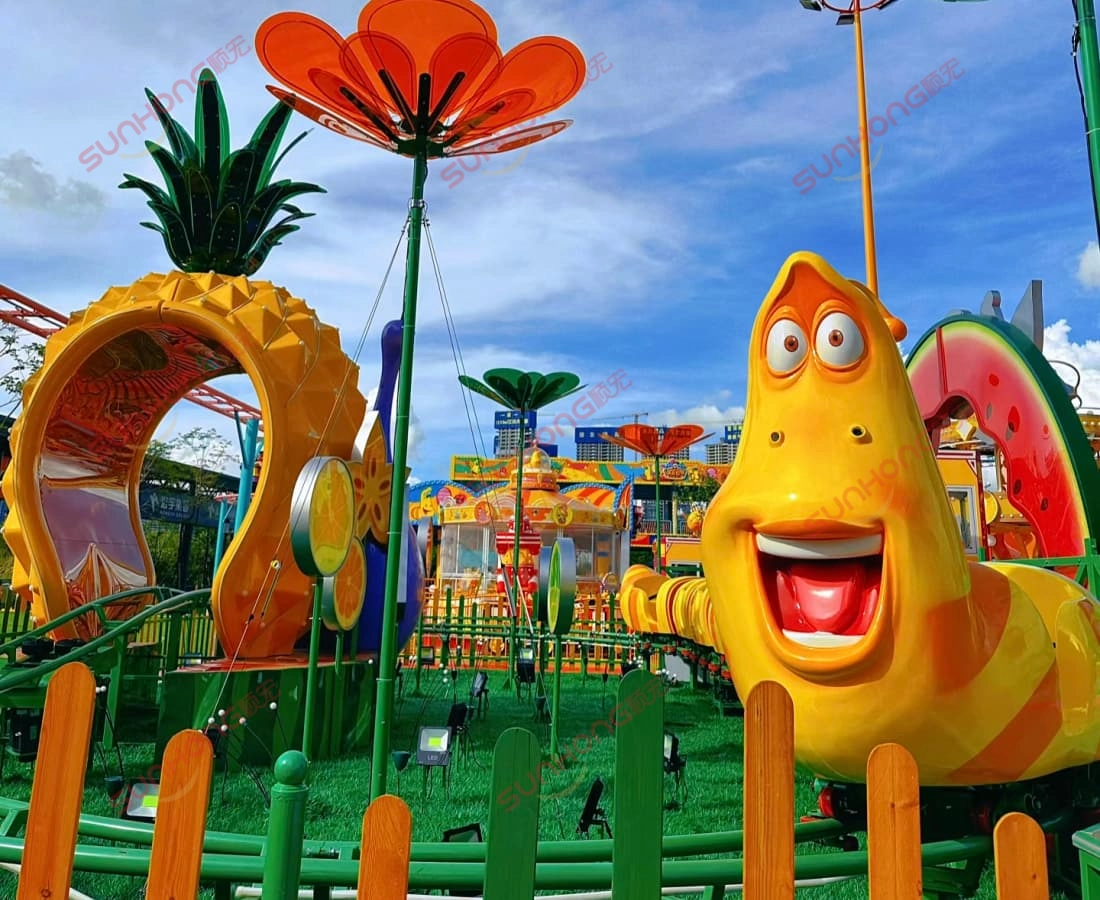
Larva Fruitland – A Mini Roller Coaster Adventure for Kids and Families
Larva Fruitland is a mini roller coaster themed after the Larva animated series. With vibrant colors and gentle motion, it’s perfect for kids and families. This small coaster features IP characters, a fruit farm design, and photo-worthy appeal. Ideal for indoor or outdoor parks. OEM/ODM customization available for your branding needs.

360 Degree Rotating Ride Swing Thrill Amusement Rides for Attractions
Air Bus is a stunning addition to our family amusement rides, delivering a one-of-a-kind 360° dual-rotation experience. With its swinging arm and self-spinning cabin, bright yellow flying-bus design, dynamic music effects, and customizable options, this ride is more than just entertainment—it’s a show-stopping centerpiece that helps your park attract crowds.
Leave a message
Ready to elevate your amusement offerings?
Contact Sunhong today to explore how we can bring your vision to life and create unforgettable experiences for your visitors.
* Rest assured that your privacy is important to us, and all information provided will be handled with the utmost confidentiality.
Copyright © 2025 SUNHONG All Reserved.
Whatsapp: +8613922331804
Guangzhou Shunhong Entertainment Equipment Co.,Ltd.
sunhongrides
SUNHONGAMUSEMENTRIDES
Scan QR Code