
OEM vs ODM Outdoor Theme Park Rides for Branded Attractions
- Choosing the Right Delivery Model for Branded Amusement Attractions
- How OEM manufacturing works
- How ODM development works
- Which model supports a stronger brand experience?
- Technical and Commercial Criteria for Comparing OEM and ODM
- Brand differentiation and intellectual property
- Safety, standards, and documentation
- Capacity, throughput, and site integration
- Procurement Process for Outdoor Ride Projects
- Prepare a performance-based project brief
- Audit the manufacturer before placing an order
- Control changes, installation, and handover
- SUNHONG’s Integrated Approach to Branded Theme Park Projects
- From concept development to completed attraction
- Manufacturing, construction, and global compliance resources
- Amusement park equipment designed for commercial performance
- Frequently Asked Questions
OEM and ODM outdoor theme park rides serve different procurement strategies for branded attractions. OEM, or Original Equipment Manufacturing, generally means a supplier manufactures equipment according to the buyer’s approved drawings, specifications, and brand requirements. ODM, or Original Design Manufacturing, typically means the supplier contributes an existing product platform or develops a customized attraction using its own design, engineering, and production capabilities. For investors, developers, hotel groups, family entertainment centers, and destination resorts, the decision affects exclusivity, development speed, capital expenditure, regulatory documentation, maintenance, and revenue potential. A capable outdoor theme park rides builder should therefore be assessed not only by catalog size, but also by design ownership, structural engineering, manufacturing controls, installation resources, and after-sales support.
Choosing the Right Delivery Model for Branded Amusement Attractions
How OEM manufacturing works
In an OEM arrangement, the buyer normally controls the product brief. The project owner may provide a concept drawing, ride dimensions, loading capacity, color palette, intellectual property guidelines, control requirements, or a complete technical package. The manufacturer then produces the attraction within agreed tolerances and quality requirements. This model is valuable for established brands that already operate a ride portfolio or have a proprietary themed attraction concept.
OEM procurement provides stronger control over visual identity and technical documentation, but it places more responsibility on the buyer. Incomplete drawings, unclear interface requirements, or unrealistic performance assumptions can lead to variation orders, fabrication delays, and costly site modifications. Before signing, the buyer should confirm who owns the engineering calculations, who validates the ride envelope, and who is responsible for compliance with local amusement ride regulations.
How ODM development works
ODM delivery begins with the manufacturer’s existing ride architecture, design library, or engineering platform. The supplier may adapt the vehicle, track, tower, water system, control logic, theming, capacity, or passenger experience to suit the attraction brand. This approach can shorten the concept-to-production cycle because the manufacturer may already understand the structural behavior, drive system, evacuation method, and maintenance requirements of a comparable ride.
ODM does not mean generic equipment. A properly managed ODM program can include exclusive colors, custom façades, branded vehicles, original scenery, media integration, queue-line storytelling, and project-specific operating modes. However, the contract must define exclusivity by territory, duration, product category, and intellectual property. Buyers should also identify which components are standard, which are customized, and which replacement parts may be shared with other installations.
Which model supports a stronger brand experience?
OEM is often preferable when the attraction must match an existing global brand system exactly or when the owner has proprietary engineering assets. ODM is often more efficient when the investor needs a differentiated attraction but does not have an internal ride design department. A hybrid approach is also common: the supplier provides the mechanical platform through ODM while the brand owner supplies the narrative, character system, architectural language, and guest experience requirements.
The most effective decision is based on total project value rather than the lowest equipment quotation. A ride that appears inexpensive but requires extensive site redesign, imported spare parts, or repeated commissioning can produce a higher lifecycle cost than a more comprehensive proposal. Procurement teams should evaluate development, fabrication, transport, installation, training, inspections, warranty, energy consumption, downtime, and future refurbishment together.
Technical and Commercial Criteria for Comparing OEM and ODM
Brand differentiation and intellectual property
Branded attractions require more than a logo applied to a standard ride. The guest journey should connect the ride vehicle, loading platform, queue environment, show elements, soundscape, lighting, safety messaging, and merchandise opportunities. An ODM supplier can contribute valuable experience in integrating these elements, while an OEM supplier may provide tighter control when the brand already has detailed creative standards.
Ownership provisions should cover 3D models, engineering drawings, software logic, artwork, molds, tooling, themed components, and operational data. A contract should state whether the manufacturer can resell the same design, whether the buyer receives editable files, and whether a future expansion can be produced by another supplier. Clear intellectual property terms reduce disputes and protect the commercial value of the attraction.
Safety, standards, and documentation
Safety documentation is a central differentiator between a professional ride supplier and a trading intermediary. The technical file should normally include structural calculations, material specifications, welding procedures, electrical diagrams, control-system descriptions, risk assessments, inspection records, operation manuals, maintenance schedules, and emergency procedures. Requirements vary by jurisdiction, so a certificate from one market does not automatically replace local approval.
Relevant frameworks may include ISO 17842 for safety of amusement rides and amusement devices, the European EN 13814 framework, and regional requirements such as ASTM F24 practices in the United States. The ASTM Committee F24 information explains the industry standards activity covering amusement rides and devices. Buyers should ask whether compliance engineering is included in the quotation or treated as an additional service.
Capacity, throughput, and site integration
Ride capacity should be assessed through hourly theoretical capacity and realistic operational capacity. The calculation must account for loading time, restraint checks, dispatch intervals, unloading, accessibility procedures, weather interruptions, cleaning, and operator rotation. A supplier that quotes only a theoretical cycle time may overstate revenue potential.
Site integration also affects the choice between OEM and ODM. Outdoor installations must account for wind loads, drainage, corrosion, lightning protection, ultraviolet exposure, soil conditions, foundation reactions, utility routing, fire access, and local transport restrictions. The project team should approve a general arrangement drawing, foundation plan, maintenance access route, evacuation path, and interface matrix before manufacturing begins.
| Decision Factor | OEM Manufacturing | ODM Development | Buyer Implication |
|---|---|---|---|
| Design control | Primarily buyer-led | Shared with manufacturer | OEM offers stronger control when specifications are mature |
| Development speed | Depends on buyer drawings and approvals | Can be faster when based on a proven platform | ODM may reduce early engineering workload |
| Customization | High, subject to technical feasibility | High within the supplier’s platform and resources | Both can support branded theming with clear scope |
| Intellectual property | Usually buyer-defined | Must be contractually divided | Specify ownership, exclusivity, and reuse rights |
| Technical risk | More risk if buyer specifications are incomplete | Lower platform risk but possible customization limits | Review validation, testing, and change-control procedures |
| Lifecycle support | Depends on negotiated service scope | Often linked to the supplier’s standard platform | Confirm spare parts, training, software, and warranty terms |
Procurement Process for Outdoor Ride Projects
Prepare a performance-based project brief
A reliable tender package should describe the target audience, attraction narrative, available footprint, climate, expected daily attendance, operating season, accessibility goals, desired capacity, budget range, launch date, and local approval pathway. Instead of prescribing every component too early, the brief should define measurable outcomes such as minimum hourly throughput, maximum noise level, acceptable energy consumption, ride duration, availability target, and guest age or height range.
For a resort or branded destination, the brief should also include architectural interfaces and commercial objectives. A family ride may need high repeatability and broad age access, while a thrill attraction may prioritize intensity, visual impact, and social-media visibility. The chosen amusement park equipment must support the destination’s positioning rather than operate as an isolated mechanical product.
Audit the manufacturer before placing an order
Supplier due diligence should cover legal identity, factory ownership, engineering staff, production capacity, quality-control procedures, export history, installed references, testing facilities, and financial stability. Buyers should request photographs or videos of comparable projects, but should also verify whether the supplier performed design, manufacturing, installation, or only resale activities.
Factory acceptance testing should be defined in advance. It may include dimensional checks, no-load and loaded operation, emergency-stop verification, restraint inspections, sensor testing, control-system fault simulation, noise measurement, lighting checks, and documentation review. Independent inspection can provide additional confidence for major capital projects, particularly when the installation will be subject to government or insurer review.
Control changes, installation, and handover
Design changes should pass through a formal approval process that records cost, schedule, safety, and interface impacts. Uncontrolled changes are a common source of budget escalation. The contract should establish milestone payments linked to approved drawings, material completion, factory testing, shipment, installation, commissioning, and final acceptance.
Installation quality is as important as fabrication quality. The scope should identify foundation responsibility, lifting equipment, local labor, electrical connection, civil works, weather protection, commissioning tests, operator training, spare parts, and warranty commencement. Handover should include as-built drawings, maintenance manuals, recommended lubricants, inspection intervals, software backups, fault codes, and emergency response procedures.
SUNHONG’s Integrated Approach to Branded Theme Park Projects
From concept development to completed attraction
SUNHONG is a large-scale comprehensive amusement ride manufacturer dedicated to the research and development, design, manufacture, and sales of amusement rides. Our team supports overall planning, R&D design, exclusive customization, manufacturing, comprehensive construction, and operation management. This integrated model helps project owners coordinate creative development, mechanical engineering, production, site execution, and commissioning through a more unified technical process.
Our capabilities are relevant to investors comparing OEM and ODM because the project can be structured around the buyer’s preferred level of control. A brand owner may provide a complete design package for OEM production, request an exclusive customized attraction based on an established platform, or combine SUNHONG’s engineering resources with the owner’s creative direction. The objective is to align the attraction’s appearance and performance with the commercial strategy of the destination.
Manufacturing, construction, and global compliance resources
Our in-house experts in R&D, production, and construction provide services from the initial concept to final project completion. The manufacturing process is supported by design review, component fabrication, assembly, testing, and site commissioning. For international projects, our team coordinates technical documents and export requirements according to the destination market.
With more than 10 years of export experience, Shunhong, also known as SUNHONG, holds certificates and market-entry documentation for destinations including CE for the European Union, UKCA for the United Kingdom, SABER for Saudi Arabia, TUV-related certification requirements in Germany, and ASTM certification requirements in the United States. Certification scope must always be matched to the specific ride, jurisdiction, and approval authority, but this international experience can simplify communication during procurement and compliance review.
Amusement park equipment designed for commercial performance
SUNHONG supplies amusement park equipment and supports amusement park design for different project scales, including outdoor parks, resort attractions, family entertainment centers, and branded destinations. Product planning can consider guest capacity, footprint, climate exposure, visual identity, maintenance access, operational staffing, and future expansion. This commercial perspective is important because a ride’s value is determined by safe availability, guest appeal, throughput, and maintainability over many operating seasons.
SUNHONG amusement rides have been installed in more than 56 nations and regions. Our goal is to become the world’s leading manufacturer of amusement rides by combining product development, manufacturing discipline, project delivery, and long-term customer support. Buyers evaluating an ODM partner should discuss not only the initial attraction but also spare-parts continuity, operator training, inspection support, refurbishment options, and response procedures after opening.
For a new branded attraction, the strongest supplier relationship is built on transparent specifications, documented responsibilities, realistic schedules, and measurable acceptance criteria. Whether the final arrangement is OEM, ODM, or a hybrid, project owners should select a partner capable of translating brand strategy into safe, durable, and commercially viable amusement park rides.
Contact SUNHONG at sunhong@isunhong.com or visit our official website to discuss customized amusement park equipment, amusement park design, and branded ride projects.
Frequently Asked Questions
What is the main difference between OEM and ODM theme park rides?
OEM manufacturing follows the buyer’s approved drawings, specifications, and brand requirements, while ODM development uses the supplier’s existing ride platform or design capabilities and adapts them for the project.
Is ODM suitable for a fully branded outdoor attraction?
Yes. A properly managed ODM program can include exclusive colors, branded vehicles, custom façades, original scenery, media integration, queue-line storytelling, and project-specific operating modes.
Which model is usually faster, OEM or ODM?
ODM can be faster when it is based on a proven ride platform because the manufacturer may already understand the structural, control, evacuation, and maintenance requirements.
What documents should buyers request from an amusement ride supplier?
Buyers should request structural calculations, material specifications, welding procedures, electrical diagrams, control-system descriptions, risk assessments, inspection records, operation manuals, maintenance schedules, and emergency procedures.
How should buyers protect intellectual property in an ODM contract?
The contract should define ownership and permitted use of 3D models, engineering drawings, software logic, artwork, molds, tooling, themed components, and operational data, along with exclusivity by territory, duration, and product category.
What should be included in factory acceptance testing?
Factory acceptance testing may include dimensional checks, no-load and loaded operation, emergency-stop verification, restraint inspections, sensor testing, control-system fault simulation, noise measurement, lighting checks, and documentation review.
Does SUNHONG provide complete project services?
SUNHONG provides overall planning, R&D design, exclusive customization, manufacturing, comprehensive construction, operation management, and support from the initial concept through final project completion.
Family Entertainment Center Equipment Selection Guide for Small, Medium, and Large Venues
Attracting Visitors with Themed Chair Swing Carnival Rides
Wholesale carnival rides manufacturer and supplier
International export success story: crossing regulatory boundaries
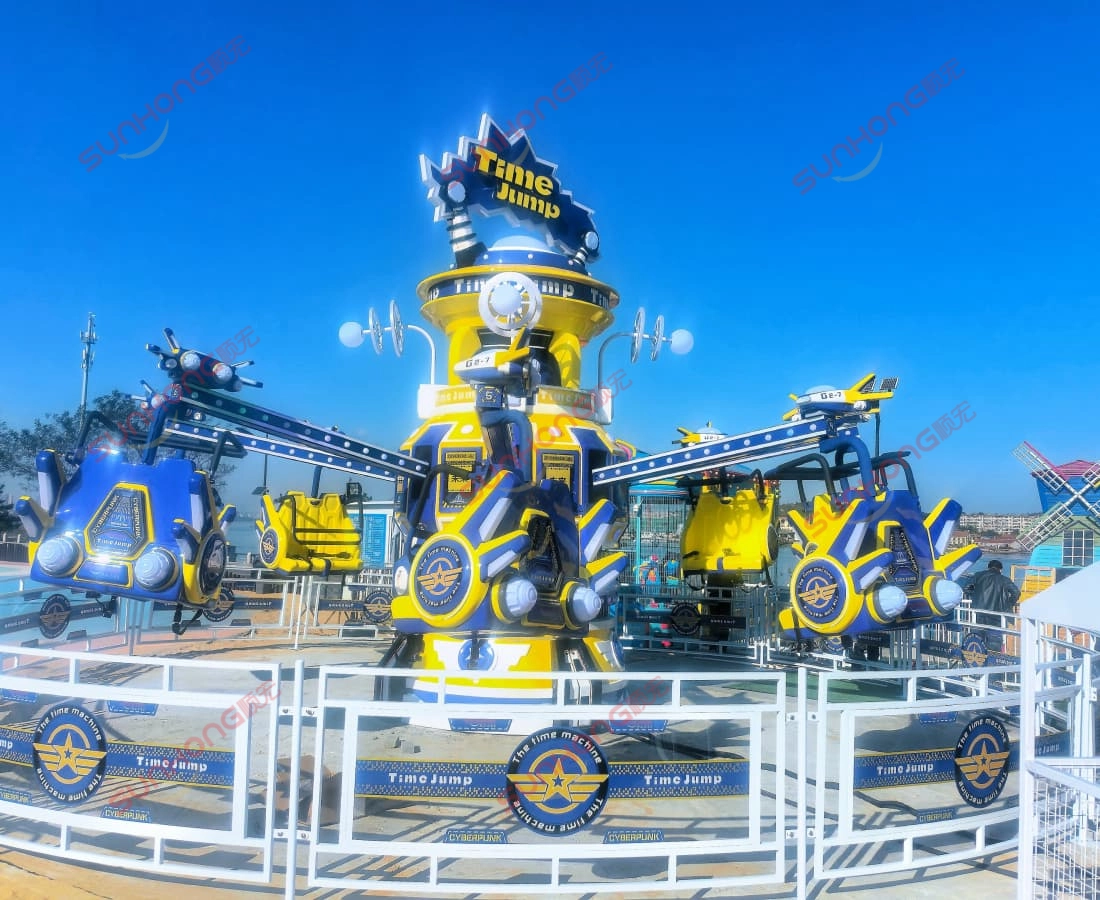
16-Seat Time Jump – Rotating Plane Ride for Amusement Parks
Time Jump is a thrilling and cost-effective amusement ride, 100% originally developed and manufactured by SUNHONG with patented certification. Designed for families and children, it combines motor drive and air-compressor cylinders to achieve dynamic movements—left-right rotation, variable-speed spinning, bouncing seats, and full 360-degree spins.
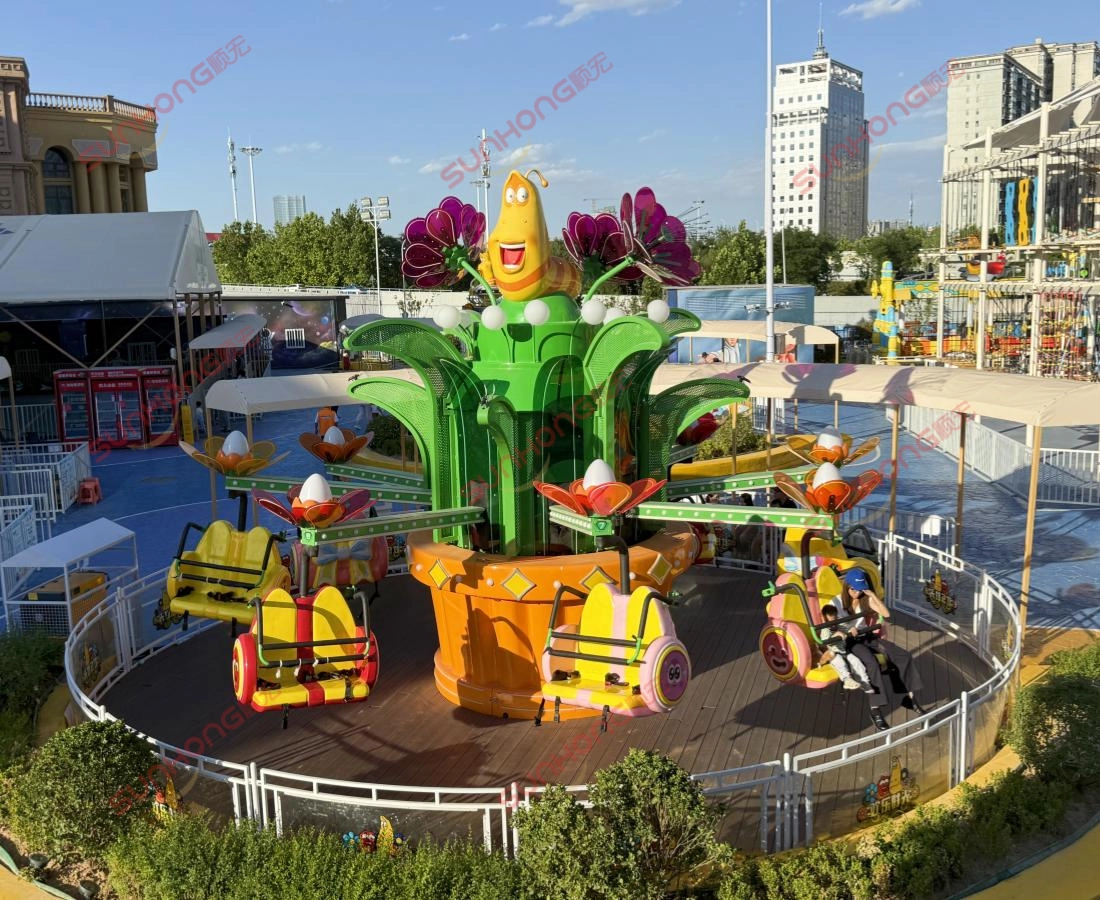
Larva Blooms Bounce Ride – Hot IP Custom Attraction with 360° Spin & Bounce
Larva Blooms is a patented bounce ride inspired by the hit Larva animation series. Featuring full platform rotation, 360° spinning seats, and dynamic bouncing motion, it delivers a thrilling ride experience for families and kids. IP customization available with OEM/ODM service.
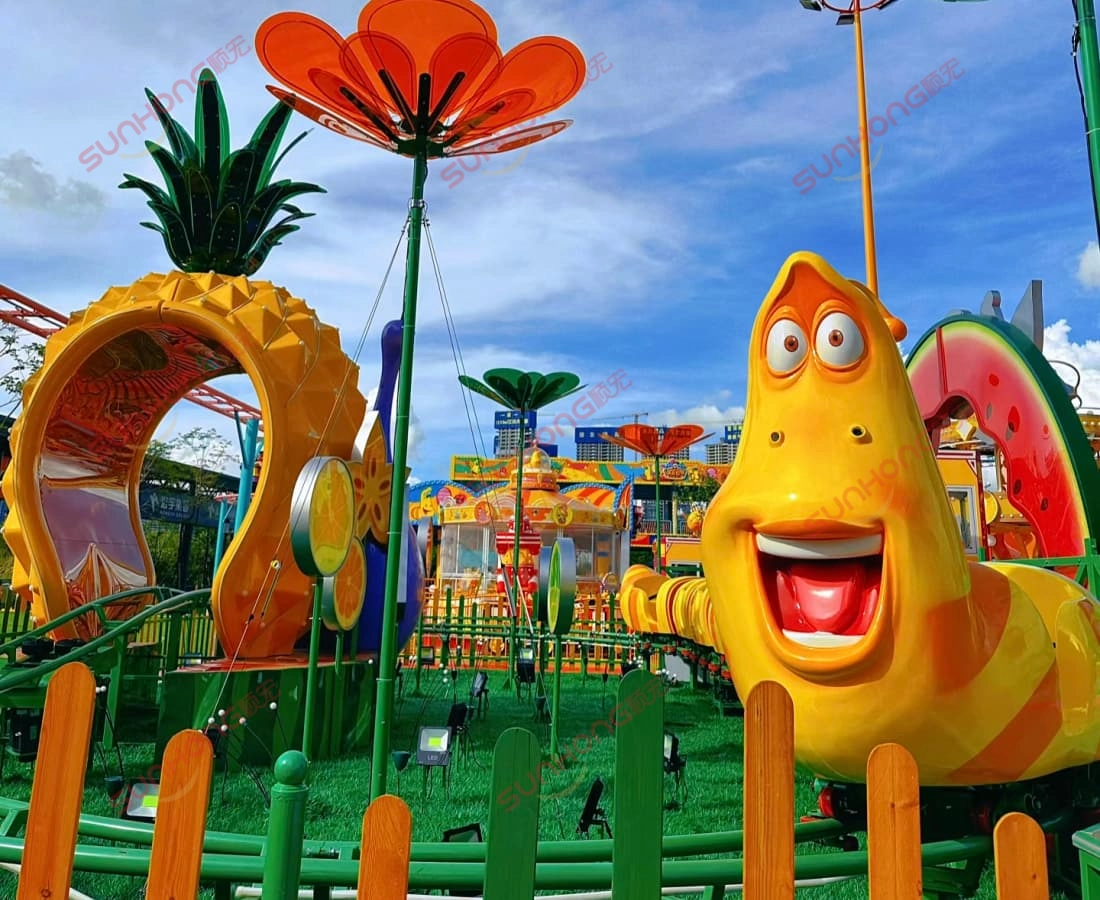
Larva Fruitland – A Mini Roller Coaster Adventure for Kids and Families
Larva Fruitland is a mini roller coaster themed after the Larva animated series. With vibrant colors and gentle motion, it’s perfect for kids and families. This small coaster features IP characters, a fruit farm design, and photo-worthy appeal. Ideal for indoor or outdoor parks. OEM/ODM customization available for your branding needs.

360 Degree Rotating Ride Swing Thrill Amusement Rides for Attractions
Air Bus is a stunning addition to our family amusement rides, delivering a one-of-a-kind 360° dual-rotation experience. With its swinging arm and self-spinning cabin, bright yellow flying-bus design, dynamic music effects, and customizable options, this ride is more than just entertainment—it’s a show-stopping centerpiece that helps your park attract crowds.
Leave a message
Ready to elevate your amusement offerings?
Contact Sunhong today to explore how we can bring your vision to life and create unforgettable experiences for your visitors.
* Rest assured that your privacy is important to us, and all information provided will be handled with the utmost confidentiality.
Copyright © 2025 SUNHONG All Reserved.
Whatsapp: +8613922331804
Guangzhou Shunhong Entertainment Equipment Co.,Ltd.
sunhongrides
SUNHONGAMUSEMENTRIDES
Scan QR Code