
OEM Thrill Rides: Custom Themes, Branding, and Private Label Options
- How Branded High-Thrill Attractions Are Engineered
- Theme development must support the ride system
- Brand identity requires a controlled design language
- Safety and compliance belong in the first specification
- OEM, Private Label, and Customization Models Compared
- Choose the commercial model before negotiating artwork
- Control total cost, not only the purchase price
- Define acceptance tests and handover evidence
- SUNHONG’s Approach to Custom Amusement Ride Projects
- From concept and amusement park design to production
- Custom amusement park equipment for differentiated brands
- International delivery and project confidence
- A procurement checklist for the final supplier review
- Frequently Asked Questions
OEM thrill rides give amusement park developers, resort operators, family entertainment centers, and distributors the ability to transform a standard attraction into a distinctive branded experience. Custom themes can influence the ride vehicle, station architecture, lighting, music, interactive media, queue environment, staff uniforms, signage, packaging, and digital marketing assets. Private label programs go further by placing the buyer’s brand identity on selected documentation, product materials, and commercial touchpoints. However, successful customization is not simply a graphic design exercise. It requires coordinated decisions covering guest throughput, structural loading, evacuation procedures, control systems, corrosion protection, inspection access, spare parts, local regulations, and long-term operating costs. A reliable OEM partner should therefore combine creative development with engineering control, documented quality processes, and international project execution.
How Branded High-Thrill Attractions Are Engineered
Theme development must support the ride system
The strongest themed attraction begins with the ride’s operating profile rather than a visual mood board. A launch coaster, pendulum ride, spinning tower, observation wheel, drop tower, or family-oriented dark ride each creates different opportunities and constraints. Vehicle dimensions, acceleration, speed, rotation, braking zones, passenger restraint systems, and required clearances determine what can be attached to the moving equipment. Oversized scenic elements may increase wind load or maintenance difficulty, while poorly positioned lighting or media hardware can obstruct inspections and emergency access.
During concept development, project owners should request a design brief that separates fixed infrastructure from moving components. The brief should identify the story, target age range, expected capacity, ride duration, guest flow, visual landmarks, sound requirements, climate conditions, and planned operating schedule. This approach allows the supplier’s design and engineering teams to protect safety-critical interfaces while still creating a recognizable branded experience. It also reduces late-stage changes that can affect steelwork, electrical routing, foundations, and delivery dates.
Brand identity requires a controlled design language
Branding for amusement park rides should be translated into a repeatable design system. Useful components include approved color codes, logo clear space, typography, iconography, character proportions, material finishes, illumination levels, and rules for multilingual signage. A controlled system prevents the station, queue line, vehicle, operator booth, and promotional materials from appearing visually disconnected. It also helps the manufacturer produce replacement panels, decals, molded parts, and maintenance labels consistently over the attraction’s service life.
Buyers should distinguish between cosmetic customization and functional customization. Cosmetic work may include paint, fiberglass shells, themed cladding, LED displays, audio packages, scenic props, and branded graphics. Functional work may involve a new restraint configuration, revised passenger loading, interactive targets, projection mapping, onboard audio, special effects, or a modified control sequence. Functional changes normally require additional engineering review, testing, documentation, and approval. Treating both categories as equivalent during budgeting is a common source of cost overruns.
Safety and compliance belong in the first specification
International buyers should define the applicable regulatory framework before signing off on the final design. Relevant references may include ISO 17842 for safety of amusement rides and amusement devices, the ASTM F2291 standard for design of amusement rides and devices, and regional requirements such as the European conformity framework. ISO 17842 addresses design, manufacture, operation, inspection, and maintenance principles for amusement devices, while ASTM F2291 provides design criteria used by the industry in applicable markets. The selected standard does not replace local authority requirements, site permits, or third-party inspection obligations.
Compliance planning should cover risk assessment, structural calculations, fatigue considerations, electrical protection, emergency stop circuits, restraint verification, evacuation routes, operator visibility, accessible circulation, fire performance of materials, and technical files. Scenic finishes must not compromise access to welds, sensors, brakes, limit switches, or rescue points. A private-label project still requires the underlying technical responsibility and traceability expected from a professional ride manufacturer.
OEM, Private Label, and Customization Models Compared
Choose the commercial model before negotiating artwork
OEM procurement can mean different things across the amusement equipment industry. A buyer may purchase a proven attraction with a new visual package, commission a semi-custom ride based on an existing platform, or request a substantially re-engineered product for exclusive deployment. Private label usually focuses on commercial presentation and documentation, while full OEM development may include exclusive specifications, proprietary finishes, branded control-panel interfaces, and market-specific packaging.
| Procurement model | Typical customization | Relative development risk | Best fit |
|---|---|---|---|
| Standard product with branding | Color scheme, logo, signage, decals, selected lighting | Lower | Operators seeking faster delivery and predictable performance |
| Platform-based semi-custom ride | Vehicle shell, station theme, audio, scenic elements, user interface | Moderate | Projects requiring differentiation without redesigning the complete ride system |
| Exclusive OEM configuration | Dedicated aesthetics, operating features, documentation, and market adaptations | Higher | Major parks, destination resorts, and strategic distributors |
| Private-label distribution package | Branding on sales materials, manuals, labels, and selected product surfaces | Moderate | Distributors building a consistent regional product portfolio |
The table represents general procurement characteristics rather than universal pricing or delivery guarantees. Buyers should ask suppliers to define exactly which drawings, molds, software settings, manuals, inspection records, and replacement components are included. Exclusive rights may apply only to a territory, a product family, a theme, or a specified period. These commercial boundaries should be written into the contract along with intellectual property ownership, confidentiality, warranty obligations, and change-control procedures.
Control total cost, not only the purchase price
A custom attraction should be evaluated through total cost of ownership. The initial quotation is only one part of the investment. Other cost drivers include civil foundations, shipping, customs, installation, electrical infrastructure, climate adaptation, spare parts, operator training, inspection, insurance, software support, replacement graphics, repainting, and downtime. High-quality corrosion protection and accessible maintenance zones may increase the initial price while reducing refurbishment frequency and labor expense.
Capacity is another financial variable. A visually impressive ride with slow loading may produce lower hourly attendance than a simpler attraction with efficient dispatch. Buyers should compare theoretical capacity with realistic operational capacity after accounting for guest loading, restraint checks, cleaning, weather interruptions, staff breaks, and routine inspections. A supplier should explain how the proposed station layout and dispatch logic support the project’s attendance forecast.
Define acceptance tests and handover evidence
Factory acceptance testing should be agreed before manufacturing begins. Typical evidence may include dimensional checks, weld and material records where applicable, electrical tests, restraint inspections, no-load and loaded operating tests, emergency-stop verification, sensor checks, noise review, and documentation audits. Site acceptance should confirm foundation interfaces, alignment, control integration, evacuation procedures, ride cycles, operator training, and punch-list closure.
Documentation is especially important for a private-label product because branded manuals must remain technically accurate. The handover package should identify the equipment, serial numbers, electrical diagrams, foundation requirements, lubrication points, recommended inspection intervals, fault codes, spare-parts references, and emergency procedures. Buyers should also confirm which documents are supplied in the local language and which records are retained by the manufacturer.
SUNHONG’s Approach to Custom Amusement Ride Projects
From concept and amusement park design to production
SUNHONG is a large-scale comprehensive amusement ride manufacturer dedicated to research and development, design, manufacturing, and sales. Our team supports project owners through overall planning, R&D design, exclusive customization, manufacturing, comprehensive construction, and operation management. This integrated structure is valuable for branded attractions because theme decisions, mechanical interfaces, electrical systems, site planning, and installation requirements can be reviewed within one coordinated project process.
Our amusement park design services can help investors organize guest circulation, attraction placement, queue environments, service buildings, landscaping interfaces, and operational relationships before equipment production is finalized. For buyers developing a new destination, this reduces the risk of ordering an isolated ride without considering access roads, utilities, evacuation paths, viewing areas, ticketing logic, and future expansion. For established facilities, the same planning approach can support the integration of a new anchor attraction into an existing park identity.
Custom amusement park equipment for differentiated brands
Our manufacturing scope can be adapted to projects that require branded vehicles, custom colors, themed façades, scenic elements, lighting systems, audio, signage, and private-label presentation. The practical objective is to create an amusement park ride that is recognizable in photographs, coherent with the owner’s brand, and manageable for the operations team. Customization is reviewed alongside material selection, service access, weather exposure, cleaning requirements, replacement strategy, and inspection needs.
For distributors, a coordinated product portfolio can create stronger market recognition than unrelated off-the-shelf models. SUNHONG can support discussions around product configuration, market positioning, documentation, and project delivery. Buyers should still provide a clear brand guide, target market, site conditions, passenger profile, preferred capacity, and regulatory destination so that the engineering and commercial teams can convert the concept into a realistic specification.
International delivery and project confidence
Our robust in-house team covers R&D, production, and construction, providing support from the initial concept through final project completion. SUNHONG has more than 10 years of export experience, and our company reports certificates and market access documentation including CE for the European Union, UKCA for the United Kingdom, SABER for Saudi Arabia, TUV-related certification support for Germany, and ASTM certification for the United States, subject to the requirements of the specific product and destination. Buyers should always verify the exact certificate scope, issuing body, validity, and applicability to the selected ride before shipment.
SUNHONG amusement rides have been installed in more than 56 nations and regions. This international project exposure supports practical coordination across shipping, site conditions, local contractors, installation, commissioning, operator training, and after-sales communication. Our goal is to become the world’s leading manufacturer of amusement rides, supported by disciplined engineering, responsive project management, and a focus on long-term customer value.
A procurement checklist for the final supplier review
Before awarding an OEM thrill attraction project, buyers should ask for a detailed general arrangement drawing, technical specification, capacity calculation, foundation information, finish schedule, electrical load list, installation scope, commissioning plan, spare-parts recommendation, warranty terms, and inspection schedule. The commercial proposal should also state exclusions such as civil works, local permits, cranes, accommodation, taxes, utility connections, and third-party testing.
Supplier evaluation should include manufacturing capacity, quality-control checkpoints, welding and coating procedures, software and control-system support, export packaging, field-service resources, and references for comparable installations. A video call or factory audit can help confirm whether the proposed engineering, production, assembly, and testing capabilities exist in practice. The most dependable partner is not necessarily the supplier with the lowest initial quotation; it is the supplier able to control design changes, document quality, meet the agreed delivery plan, and support safe operation after opening.
For current projects, SUNHONG provides a direct route to discuss amusement park equipment, amusement park design, custom attraction concepts, and complete amusement park ride solutions. Project owners can review product options and request a tailored proposal through SUNHONG’s official website or contact our team at sunhong@isunhong.com.
Frequently Asked Questions
What can be customized on an OEM thrill ride?
Customization can include ride vehicles, station architecture, color systems, lighting, audio, scenic elements, signage, interactive media, operator interfaces, decals, and selected private-label documentation. Functional changes such as revised restraints, passenger loading, or control sequences require additional engineering review and testing.
What is the difference between OEM and private-label amusement rides?
Private label generally focuses on placing the buyer’s brand identity on commercial materials, manuals, labels, and selected product surfaces. OEM development may include exclusive specifications, dedicated aesthetics, market adaptations, branded control interfaces, and more extensive engineering or manufacturing changes.
Which safety standards should buyers check for custom amusement rides?
Buyers should identify the applicable local requirements and review relevant references such as ISO 17842 and ASTM F2291. The final compliance package may also require risk assessments, structural calculations, electrical tests, restraint verification, technical files, site permits, and third-party inspection depending on the destination and ride type.
How can a buyer estimate the total cost of a customized attraction?
The estimate should include the ride, customization, civil foundations, shipping, customs, installation, utilities, climate adaptation, spare parts, operator training, inspection, insurance, software support, replacement graphics, and expected maintenance. Capacity and realistic dispatch performance should also be included in the investment analysis.
What documents should be included at handover?
A complete handover package should identify equipment and serial numbers and include electrical diagrams, foundation requirements, lubrication points, inspection intervals, fault codes, spare-parts references, emergency procedures, operating manuals, maintenance instructions, and relevant testing or conformity records.
Can SUNHONG support a project from design through installation?
SUNHONG provides overall planning, R&D design, exclusive customization, manufacturing, comprehensive construction, and operation management support. Our in-house R&D, production, and construction teams serve international projects, and SUNHONG amusement rides have been installed in more than 56 nations and regions.
Vibration, noise and ride comfort testing procedures
Best carousel ride manufacturers and supplier brands
Amusement Attraction Cost Breakdown: Equipment, Site & Labor
Best family rides manufacturers and supplier brands
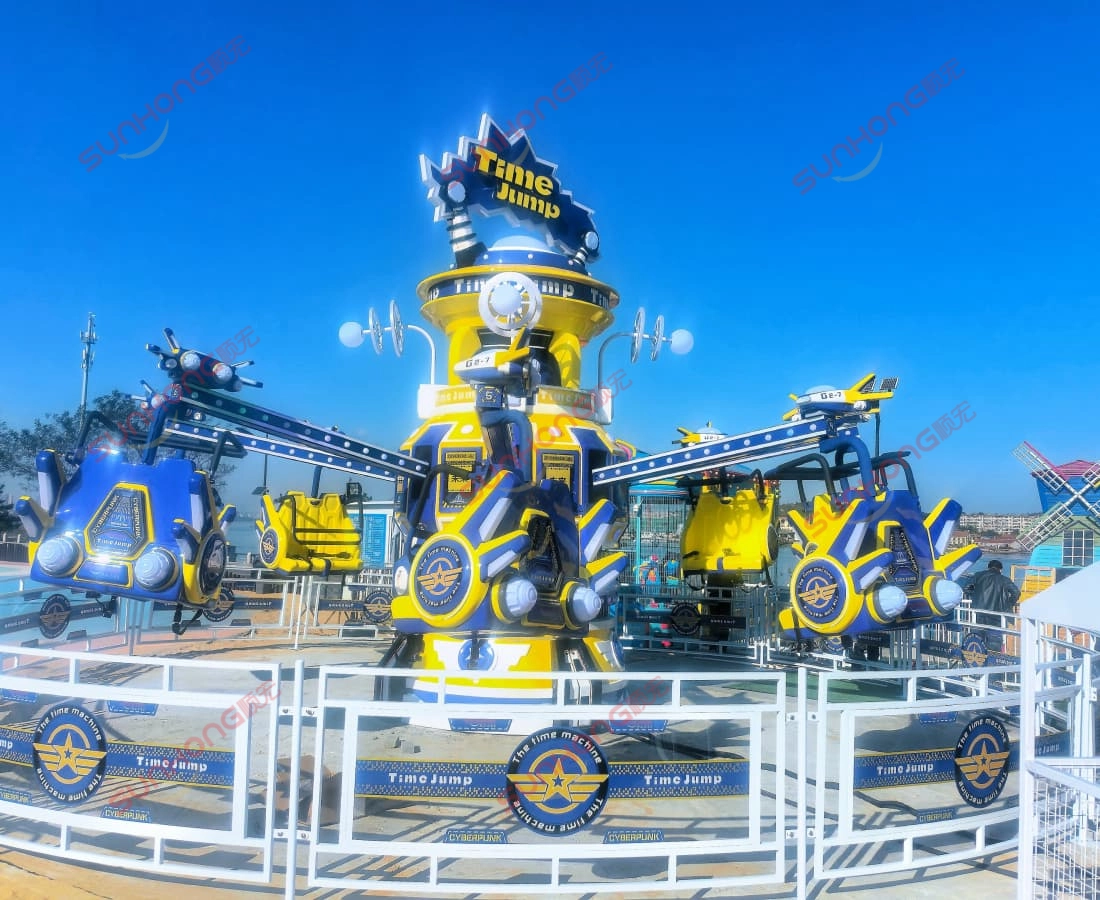
16-Seat Time Jump – Rotating Plane Ride for Amusement Parks
Time Jump is a thrilling and cost-effective amusement ride, 100% originally developed and manufactured by SUNHONG with patented certification. Designed for families and children, it combines motor drive and air-compressor cylinders to achieve dynamic movements—left-right rotation, variable-speed spinning, bouncing seats, and full 360-degree spins.
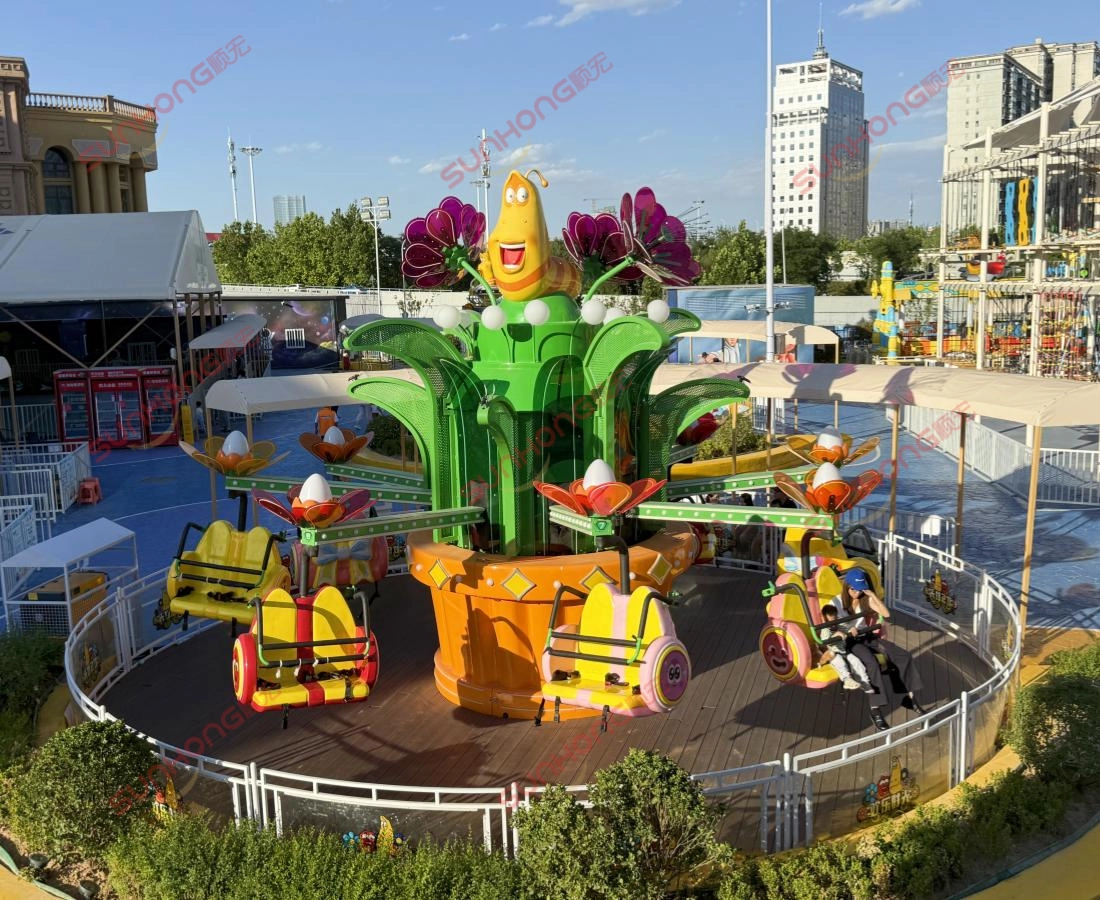
Larva Blooms Bounce Ride – Hot IP Custom Attraction with 360° Spin & Bounce
Larva Blooms is a patented bounce ride inspired by the hit Larva animation series. Featuring full platform rotation, 360° spinning seats, and dynamic bouncing motion, it delivers a thrilling ride experience for families and kids. IP customization available with OEM/ODM service.
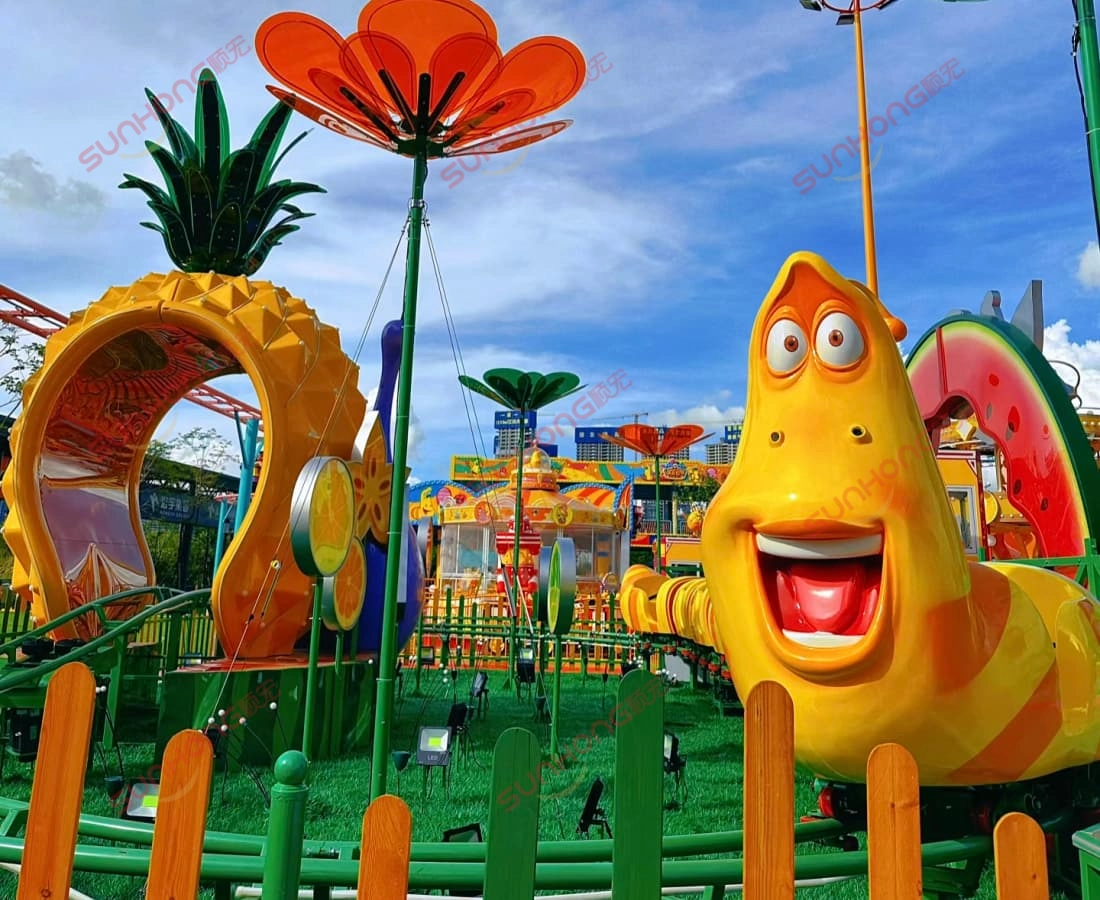
Larva Fruitland – A Mini Roller Coaster Adventure for Kids and Families
Larva Fruitland is a mini roller coaster themed after the Larva animated series. With vibrant colors and gentle motion, it’s perfect for kids and families. This small coaster features IP characters, a fruit farm design, and photo-worthy appeal. Ideal for indoor or outdoor parks. OEM/ODM customization available for your branding needs.

360 Degree Rotating Ride Swing Thrill Amusement Rides for Attractions
Air Bus is a stunning addition to our family amusement rides, delivering a one-of-a-kind 360° dual-rotation experience. With its swinging arm and self-spinning cabin, bright yellow flying-bus design, dynamic music effects, and customizable options, this ride is more than just entertainment—it’s a show-stopping centerpiece that helps your park attract crowds.
Leave a message
Ready to elevate your amusement offerings?
Contact Sunhong today to explore how we can bring your vision to life and create unforgettable experiences for your visitors.
* Rest assured that your privacy is important to us, and all information provided will be handled with the utmost confidentiality.
Copyright © 2025 SUNHONG All Reserved.
Whatsapp: +8613922331804
Guangzhou Shunhong Entertainment Equipment Co.,Ltd.
sunhongrides
SUNHONGAMUSEMENTRIDES
Scan QR Code