
Modular Playground Systems vs. Custom-Built Playground Equipment
- Choosing Between Configurable Play Structures and Bespoke Play Environments
- What defines a modular playground system?
- What defines custom-built play equipment?
- Safety and compliance must shape the concept
- Commercial, Technical, and Operational Comparison
- Budget, schedule, and procurement risk
- Capacity, inclusivity, and visitor flow
- Maintenance, replacement, and lifecycle value
- How to Build a Defensible Procurement Specification
- Define the project before requesting quotations
- Evaluate the supplier’s manufacturing and project controls
- Use lifecycle KPIs rather than visual appeal alone
- SUNHONG’s Integrated Approach to Play and Amusement Projects
- From concept development to completed installation
- Global documentation and manufacturing support
- Product scope for destination development
- Frequently Asked Questions
Modular playground systems and custom-built play environments solve different commercial and operational problems. A modular solution uses standardized platforms, decks, slides, climbers, bridges, panels, roofs, and connection points that can be configured for a particular site. A bespoke play structure is engineered around a specific theme, footprint, narrative, user journey, or architectural concept. For investors, developers, municipalities, resorts, family entertainment centers, and amusement parks, the decision should be based on lifecycle value rather than appearance alone. The key variables include capital budget, procurement timeline, available land, expected attendance, age segmentation, local regulations, inspection access, replacement logistics, and the role of the play zone within the wider amusement park equipment portfolio.
Choosing Between Configurable Play Structures and Bespoke Play Environments
What defines a modular playground system?
A modular system is built from repeatable components designed to connect in multiple layouts. Manufacturers typically develop compatible structural posts, decks, stairs, transfer platforms, crawl tunnels, slides, climbing elements, shade features, and activity panels. This approach enables a supplier to prepare a site-specific configuration without designing every component from the ground up. It is particularly suitable for schools, public parks, residential developments, hotels, retail destinations, and operators that need several similar installations.
The commercial advantage is predictability. Standard components can be priced, tested, documented, manufactured, packed, and replaced through an established process. Buyers can often approve a 2D plan, 3D rendering, bill of materials, and safety package more quickly than a fully original design. A modular layout can also be expanded when visitor demand increases, provided the original foundations, circulation zones, fall areas, and structural calculations allow future additions.
What defines custom-built play equipment?
A custom-built environment is developed around a project-specific brief. The design may represent a local landmark, a marine adventure, a jungle expedition, a science theme, a cultural story, or a brand mascot. Engineering begins with the proposed play sequence, user capacity, access requirements, visual language, materials, height profile, and relationship with surrounding attractions. Customization can include sculpted façades, integrated theming, unusual geometries, interactive media, water-play features, inclusive access routes, and connections to an existing amusement park design.
Bespoke development is valuable when the play zone must function as a destination attraction rather than a generic amenity. A distinctive structure can strengthen photography, social sharing, dwell time, brand recognition, and cross-selling with food, retail, admissions, or nearby amusement park rides. However, originality increases the number of design decisions requiring review. Custom surfaces, nonstandard joints, special finishes, one-off replacement parts, and complex installation sequences can influence cost and maintenance planning.
Safety and compliance must shape the concept
Safety cannot be added at the end of the design process. Buyers should require documented risk assessment, age-appropriate zoning, impact attenuation planning, entrapment review, access control, guardrail analysis, drainage consideration, material specifications, and inspection procedures. In the United States, the U.S. Consumer Product Safety Commission Public Playground Safety Handbook provides widely used guidance for public play areas, while ASTM F1487 addresses public playground equipment performance and safety requirements. International projects should also identify the applicable national regulations and standards before design approval.
For a broader engineering framework, the ISO 12100 machinery safety standard explains principles for hazard identification and risk reduction. Although playground projects may be governed by dedicated local standards, the same discipline is useful: identify foreseeable misuse, reduce hazards through design, protect users with appropriate safeguards, and provide clear operating and maintenance information. A modular product is not automatically safer than a custom product; safety depends on engineering quality, installation accuracy, inspection, and responsible operation.
Commercial, Technical, and Operational Comparison
Budget, schedule, and procurement risk
Modular solutions normally provide stronger budget visibility because the principal components already exist within a supplier’s product family. Engineering hours are concentrated on layout adaptation, foundations, color selection, and site coordination. This can support accelerated tendering and phased procurement. The buyer should still confirm freight volume, customs duties, civil works, surfacing, drainage, installation equipment, local labor, and commissioning costs rather than comparing equipment prices alone.
Custom projects require more front-end coordination. Concept design, structural calculations, prototype review, sample approval, themed fabrication, special tooling, and engineering revisions may extend the schedule. Early design investment can nevertheless produce higher commercial differentiation. For a flagship resort or destination attraction, the additional development cost may be justified when the feature is expected to generate strong visitor demand and become a defining part of the property.
Capacity, inclusivity, and visitor flow
Capacity is not measured only by the number of slides or climbing elements. It also depends on circulation width, entry and exit points, activity duration, bottlenecks, sightlines, age separation, supervision positions, and the balance between high-energy and quiet activities. Modular components make it easier to add repeated play stations and create separate zones for toddlers, early learners, and older children. Custom design allows more precise control over the visitor journey, including themed gateways, narrative transitions, sensory areas, and integrated seating for caregivers.
Inclusive design should be addressed in both models. Buyers should request accessible routes, transfer opportunities, ground-level activities, varied sensory experiences, suitable surfacing, and caregiver access where applicable. Local accessibility requirements differ, so the project brief should identify the intended users and governing regulations before layout approval. Inclusion is also an operational issue: staff need clear supervision procedures, and the attraction should remain usable during partial closure or maintenance.
Maintenance, replacement, and lifecycle value
Modular equipment generally simplifies maintenance because components are standardized and replacement parts are easier to identify. A damaged slide, panel, roof, or climbing element may be replaced without redesigning the complete structure. Standardization can also help operators train maintenance teams across multiple sites. The buyer should ask for spare-part availability, warranty exclusions, coating specifications, corrosion protection, cleaning instructions, inspection intervals, and a recommended inventory of wear components.
Custom environments require a more detailed asset register. Unique fiberglass elements, sculpted panels, specialty hardware, and custom graphics may need dedicated fabrication records. This does not make them impractical, but the owner should secure as-built drawings, material codes, finish samples, supplier contacts, and repair methods at handover. Lifecycle value should include repainting, resurfacing, component replacement, downtime, labor, attraction refreshes, and the cost of modifying the environment when audience expectations change.
| Decision factor | Modular system | Custom-built environment | Buyer implication |
|---|---|---|---|
| Design lead time | Usually shorter because components and engineering logic are established | Usually longer because the concept and components are developed for one project | Choose modular for urgent openings; choose bespoke when differentiation justifies development time |
| Initial budget visibility | Generally higher predictability | More sensitive to revisions, theming, prototypes, and special fabrication | Compare total installed cost, not equipment-only quotations |
| Brand identity | Achieved mainly through layout, colors, graphics, and selected features | Can be embedded into architecture, storytelling, sculpture, and guest flow | Use custom design for flagship or destination-led attractions |
| Future expansion | Often easier when connection points and foundations are planned in advance | Possible, but may require new engineering and visual integration | Include a five-year expansion strategy in the original brief |
| Replacement logistics | Standard parts can simplify identification and stocking | Unique parts may require project-specific records and fabrication | Secure spare-part documentation before final payment |
| Operational flexibility | Efficient for repeatable layouts and multiple locations | Strong for unique visitor journeys and site-specific storytelling | Match the model to the operating portfolio and revenue strategy |
How to Build a Defensible Procurement Specification
Define the project before requesting quotations
A useful request for proposal should describe the site dimensions, survey information, climate, soil conditions, intended age ranges, anticipated daily attendance, operating hours, supervision model, accessibility objectives, preferred theme, available utilities, surfacing requirements, and opening date. It should also state whether the supplier is responsible for foundations, electrical work, drainage, shade, fencing, signage, installation, staff training, and commissioning.
Buyers should request comparable deliverables from every bidder: concept drawings, rendered views, general arrangement plans, structural information, material schedules, safety documentation, installation methodology, packing lists, warranty terms, maintenance manuals, and a payment-linked production schedule. A low quotation may exclude civil works, testing, site adaptation, or after-sales service. A transparent scope allows investors to compare risk as well as price.
Evaluate the supplier’s manufacturing and project controls
Supplier due diligence should cover factory capability, quality inspection points, welding and fabrication procedures, surface treatment, component traceability, packaging standards, export experience, installation resources, and technical communication. For international projects, buyers should verify which conformity documents apply to the destination market and whether certificates relate to the actual product category, materials, and configuration being purchased.
Reference projects should be assessed for relevance rather than quantity alone. A supplier that has produced small neighborhood play areas may not have the resources for a large integrated attraction containing themed structures, water features, interactive systems, or adjacent amusement park rides. Ask for evidence of similar climate conditions, comparable visitor capacity, installation complexity, and post-opening support.
Use lifecycle KPIs rather than visual appeal alone
Project owners can measure success through installation variance, opening-date performance, maintenance response time, component downtime, repeat visitation, average dwell time, guest satisfaction, and revenue generated by connected facilities. For a commercial destination, the play zone should be evaluated as part of the complete guest journey. Shade, rest areas, food service, retail, toilets, stroller circulation, photography points, and access to other attractions can influence the financial outcome as much as the structure itself.
SUNHONG’s Integrated Approach to Play and Amusement Projects
From concept development to completed installation
SUNHONG is a large-scale comprehensive amusement ride manufacturer dedicated to research and development, design, manufacturing, and sales. Our capabilities extend beyond individual products. We support overall planning, R&D design, exclusive customization, manufacturing, comprehensive construction, and operation management, allowing project owners to coordinate multiple workstreams through one experienced partner.
For buyers comparing modular play zones with custom-built attractions, our in-house R&D, production, and construction teams can evaluate the site, develop a practical concept, coordinate engineering, organize fabrication, and support final project completion. This integrated model helps reduce communication gaps between designers, manufacturers, installers, and operators. It also enables a play environment to be planned alongside themed amusement park equipment, circulation routes, family attractions, and larger amusement park rides.
Global documentation and manufacturing support
With more than 10 years of export experience, SUNHONG serves international buyers and manages the documentation required for cross-border projects. Shunhong, also known as Sunhong, owns certificates for entering markets and regions including CE for the European Union, UKCA for the United Kingdom, SABER for Saudi Arabia, TUV certification in Germany, and ASTM certification in the United States. Certification requirements remain project- and product-specific, so buyers should confirm the applicable documentation during technical negotiation rather than relying on a generic certificate statement.
SUNHONG amusement rides have been installed in more than 56 nations and regions. This international project background supports practical coordination involving export packing, shipping interfaces, local installation, site constraints, and handover documentation. Whether the requirement is a configurable family play area, a themed custom attraction, or a complete amusement park design, the procurement process should be aligned with local approvals, operating conditions, and the owner’s commercial objectives.
Product scope for destination development
Our product and service scope is suited to investors developing amusement parks, resorts, family entertainment centers, commercial complexes, and tourism destinations. Alongside play environments, SUNHONG provides amusement park equipment, amusement park design services, and amusement park ride solutions. The objective is to help clients create a coherent attraction mix in which children’s activity zones, themed areas, circulation, guest amenities, and headline rides reinforce one another.
Our long-term goal is to become the world’s leading manufacturer of amusement rides. For a project owner, that ambition is most meaningful when reflected in measurable delivery practices: clear technical communication, controlled manufacturing, responsible installation, suitable documentation, and responsive after-sales coordination. Buyers can contact SUNHONG at isunhong.com or email sunhong@isunhong.com to discuss site requirements, configuration options, custom themes, and integrated amusement development.
Contact SUNHONG to compare modular and custom solutions or explore integrated amusement park equipment, design, and ride products for your next project.
Frequently Asked Questions
Are modular playground systems cheaper than custom-built equipment?
Modular solutions generally provide greater budget predictability because standardized components and established engineering processes reduce design and fabrication uncertainty. Custom projects may cost more initially because of bespoke theming, prototypes, special tooling, and additional engineering, but they can deliver stronger brand differentiation and destination value.
Which option can be installed faster?
A modular system is usually faster because its components and engineering logic are already established. A custom environment normally requires more time for concept development, structural calculations, sample approval, special fabrication, and installation coordination.
Is custom-built playground equipment safer than modular equipment?
Neither option is automatically safer. Safety depends on risk assessment, age-appropriate zoning, impact attenuation, structural engineering, installation accuracy, inspection, maintenance, and compliance with applicable local standards. Buyers should request complete technical and safety documentation for the actual configuration.
Can a modular play system be expanded later?
It can often be expanded when the original foundations, connection points, circulation zones, fall areas, and structural calculations are planned for future additions. Expansion should be confirmed with the manufacturer before the initial purchase.
What documents should a buyer request from a playground supplier?
A buyer should request concept drawings, general arrangement plans, structural information, material schedules, safety documentation, installation methodology, packing lists, warranty terms, maintenance manuals, and a production schedule. International projects should also confirm the conformity documents applicable to the destination market.
Does SUNHONG provide more than playground products?
Yes. SUNHONG supports overall planning, R&D design, exclusive customization, manufacturing, comprehensive construction, and operation management. Its scope includes amusement park equipment, amusement park design, amusement park rides, and integrated project support from initial concept to completion.
Carnival Rides for Distributors: Fast-Moving Models and Margin Factors
Best thrill rides manufacturers and supplier brands
Top 5 Family Rides Company List and Products Compared in US
The B2B Buyer’s Guide to double decker carousels
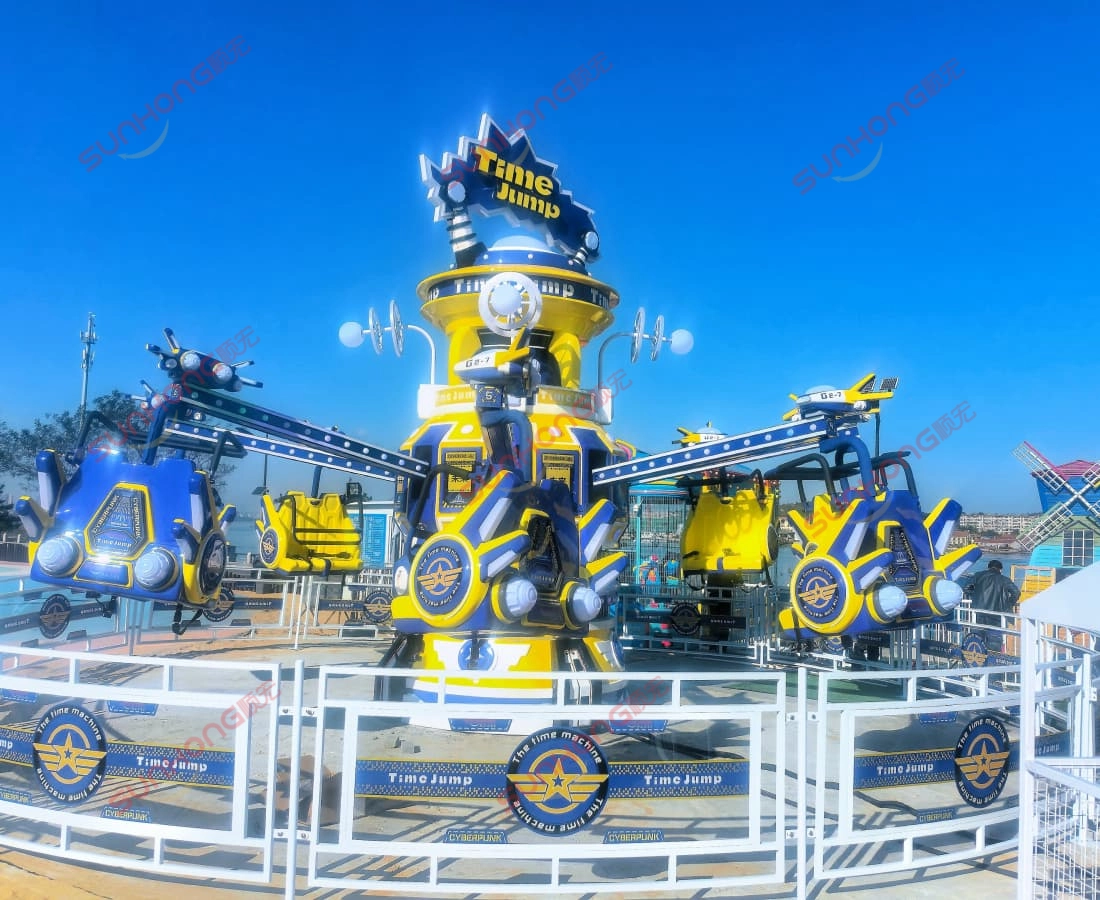
16-Seat Time Jump – Rotating Plane Ride for Amusement Parks
Time Jump is a thrilling and cost-effective amusement ride, 100% originally developed and manufactured by SUNHONG with patented certification. Designed for families and children, it combines motor drive and air-compressor cylinders to achieve dynamic movements—left-right rotation, variable-speed spinning, bouncing seats, and full 360-degree spins.
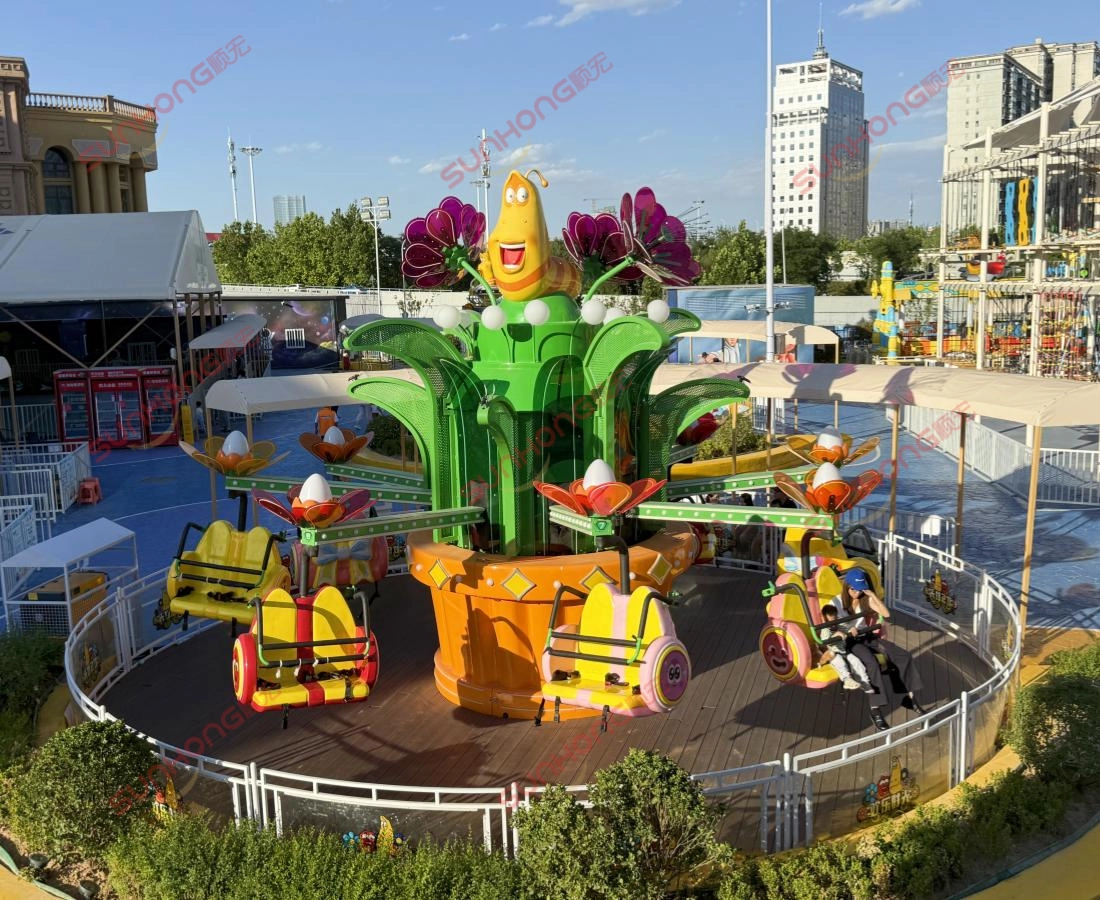
Larva Blooms Bounce Ride – Hot IP Custom Attraction with 360° Spin & Bounce
Larva Blooms is a patented bounce ride inspired by the hit Larva animation series. Featuring full platform rotation, 360° spinning seats, and dynamic bouncing motion, it delivers a thrilling ride experience for families and kids. IP customization available with OEM/ODM service.
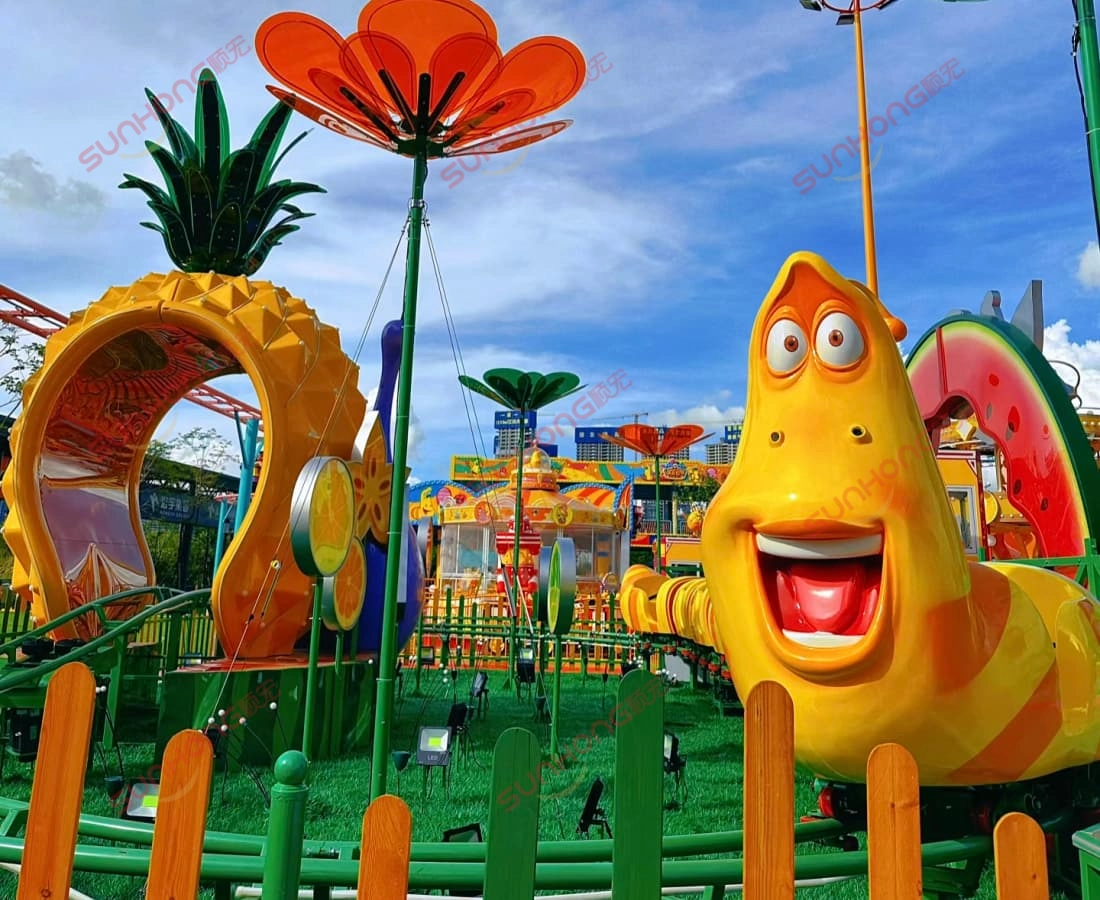
Larva Fruitland – A Mini Roller Coaster Adventure for Kids and Families
Larva Fruitland is a mini roller coaster themed after the Larva animated series. With vibrant colors and gentle motion, it’s perfect for kids and families. This small coaster features IP characters, a fruit farm design, and photo-worthy appeal. Ideal for indoor or outdoor parks. OEM/ODM customization available for your branding needs.

360 Degree Rotating Ride Swing Thrill Amusement Rides for Attractions
Air Bus is a stunning addition to our family amusement rides, delivering a one-of-a-kind 360° dual-rotation experience. With its swinging arm and self-spinning cabin, bright yellow flying-bus design, dynamic music effects, and customizable options, this ride is more than just entertainment—it’s a show-stopping centerpiece that helps your park attract crowds.
Leave a message
Ready to elevate your amusement offerings?
Contact Sunhong today to explore how we can bring your vision to life and create unforgettable experiences for your visitors.
* Rest assured that your privacy is important to us, and all information provided will be handled with the utmost confidentiality.
Copyright © 2025 SUNHONG All Reserved.
Whatsapp: +8613922331804
Guangzhou Shunhong Entertainment Equipment Co.,Ltd.
sunhongrides
SUNHONGAMUSEMENTRIDES
Scan QR Code