
Maintenance and Inspection: Keeping Amusement Rides Safe
- Why Rigorous Maintenance Is Non-Negotiable for Amusement Park Rides
- Understanding Scope: What Maintenance and Inspection Cover for Amusement Park Rides
- Standards, Certifications and Regulatory Expectations for Amusement Park Rides
- Certification & Regional Applicability — Quick Comparison
- Inspections: Daily to Annual — A Practical Checklist for Amusement Park Rides
- Non-Destructive Testing (NDT) and Advanced Diagnostics for Ride Safety
- Predictive Maintenance and IoT: Moving from Reactive to Proactive
- Staff Training, Competency and Human Factors
- Spare Parts, Lifecycle Management and Procurement Strategy for Amusement Park Equipment
- Tools for Managing Safety Records and Compliance
- Common Failure Modes, Root-Cause Practices and Post-Incident Response
- Cost-Benefit: Preventive vs Reactive Maintenance
- How Manufacturers and Suppliers Support Safe Operation — SUNHONG Capabilities
- Implementing a Practical Maintenance Program: Step-by-Step
- Contact, Consultation and Product Inquiry
- Frequently Asked Questions (FAQ)
- Contact CTA
- References
Why Rigorous Maintenance Is Non-Negotiable for Amusement Park Rides
Visitors expect fun — operators must guarantee safety. For amusement park rides, maintenance and inspection are the primary defenses against mechanical failures, operator error and regulatory non-compliance. A robust program minimizes downtime, reduces lifecycle cost, and protects reputation. This article details practical, standards-aligned approaches to keep amusement park rides safe and reliable.
Understanding Scope: What Maintenance and Inspection Cover for Amusement Park Rides
Maintenance and inspection are complementary activities. Inspections identify wear, damage or deviations from safe operation. Maintenance corrects problems and prevents future failures. Together they cover:
- Structural integrity: foundations, welds, bolts, frames.
- Mechanical systems: gears, chains, bearings, drive motors.
- Control and safety systems: PLCs, sensors, brakes, restraints.
- Hydraulic and pneumatic systems: hoses, cylinders, reservoirs.
- Electrical systems: wiring, grounding, emergency stops.
- Guest-facing components: seats, restraints, signage, accessibility.
Every program should be tailored to ride type (roller coaster, flat ride, water ride, dark ride), operating hours, environmental conditions and manufacturer recommendations.
Standards, Certifications and Regulatory Expectations for Amusement Park Rides
Compliance with recognized standards reduces risk and is often required for insurance and international installations. Common references include:
- EN 13814 (Europe) — safety of fairground and amusement park machinery.
- ASTM F24 standards (United States) — design and operational safety guidance for amusement rides.
- CE marking (European Economic Area) — indicates conformity with EU safety directives.
- UKCA marking (United Kingdom) — UK conformity assessment post-Brexit.
- TÜV (Germany) — independent testing and certification bodies used worldwide.
- SABER (Saudi Arabia) — import conformity and approval platform for regulated goods.
Operators must understand which standards apply in their jurisdiction and ensure both equipment and inspection regimes meet those standards.
Certification & Regional Applicability — Quick Comparison
| Certification/Standard | Scope | Typical Use | Reference |
|---|---|---|---|
| CE | Conformity with EU directives for safety and health | Required for market entry in EEA | EU CE guidance |
| UKCA | UK conformity assessment | Required for UK market | UKCA marking |
| ASTM F24 | Design, manufacture, operation and maintenance guidance | Widely referenced in North America | ASTM standards |
| TÜV | Independent testing and certification | International acceptance for safety testing | TÜV |
| SABER | Saudi conformity and customs clearance | Required for import into Saudi Arabia | SABER |
Inspections: Daily to Annual — A Practical Checklist for Amusement Park Rides
Inspection frequency should be layered: pre-opening daily checks, weekly operational checks, monthly technical checks, and annual comprehensive inspections by certified personnel. Below is a practical checklist that operators can adapt to their park and ride types.
| Frequency | Primary Tasks | Responsible |
|---|---|---|
| Daily (pre-opening) | Visual safety restraints check, safety interlocks, operational test run, signage & evacuation path check | Ride operator / Duty supervisor |
| Weekly | Lubrication points, wear on moving parts, sensor function tests, brake effectiveness | Maintenance technician |
| Monthly | Structural bolts torque check, electrical insulation check, hydraulic fluid analysis | Qualified maintenance team |
| Annual | Full structural NDT (ultrasound/magnetic particle where applicable), control system audit, load testing | Third-party inspector / manufacturer support |
Documentation is essential: maintain logs for each inspection and repair, keep parts replacement history, and store manufacturer bulletins and modification approvals.
Non-Destructive Testing (NDT) and Advanced Diagnostics for Ride Safety
NDT techniques such as ultrasonic testing, magnetic particle inspection and dye-penetrant testing detect subsurface cracks and fatigue before catastrophic failure. For welded elements and high-load components, annual NDT is widely recommended. Combine NDT with vibration analysis and infrared thermography to monitor bearings and electrical connections for early signs of failure.
Predictive Maintenance and IoT: Moving from Reactive to Proactive
Modern parks are adopting predictive maintenance that uses sensor data, trending and machine learning to predict failures days or weeks before they occur. Common implementations include:
- Vibration sensors on motors and gearboxes to detect imbalance or bearing wear.
- Temperature sensors on electrical panels and hydraulic pumps.
- Cycle counters and runtime logs tied to component replacement schedules.
Predictive solutions reduce unplanned downtime and optimize spare parts inventory, but require initial investment in instrumentation, data infrastructure and skilled analysts.
Staff Training, Competency and Human Factors
People are a key element of safety. Training should include ride operation, emergency procedures, basic troubleshooting, and correct documentation practices. Certification programs and regular refresher training reduce operator error. Also implement fatigue management and clear procedures for handover between shifts to minimize human-factor incidents.
Spare Parts, Lifecycle Management and Procurement Strategy for Amusement Park Equipment
Effective spare parts strategy balances cost and risk. For critical safety components (restraints, brakes, control modules), maintain at least one immediate-use spare on site. For long-lead items, establish vendor agreements that prioritize lead times for replacement parts. Lifecycle management includes planning for mid-life refurbishment and end-of-life replacement to sustain ride availability and safety.
Tools for Managing Safety Records and Compliance
Use a computerized maintenance management system (CMMS) to log inspections, assign work orders, record parts and link manufacturer service bulletins. CMMS platforms simplify audits, show trends and document compliance with standards and insurance requirements.
Common Failure Modes, Root-Cause Practices and Post-Incident Response
Common failure modes include fatigue cracking, bearing seizures, control sensor failures and hydraulic leaks. When a failure occurs, perform a disciplined root-cause analysis (RCA): secure the area, preserve evidence, sequence events, inspect failed parts (NDT as needed), and document corrective actions. Share lessons across operations to prevent recurrence.
Cost-Benefit: Preventive vs Reactive Maintenance
Preventive maintenance typically reduces total cost of ownership by avoiding catastrophic failures, which are expensive both in repair cost and lost revenue. While precise ROI varies by ride and usage, parks that adopt scheduled inspections and predictive tools commonly report fewer unscheduled outages and longer component life. A CMMS plus targeted predictive sensors often amortize within 12–36 months for high-utilization rides.
How Manufacturers and Suppliers Support Safe Operation — SUNHONG Capabilities
SUNHONG is a large-scale comprehensive amusement ride manufacturer dedicated to the R&D, design, manufacture and sales of amusement rides. With in-house teams for overall planning, R&D design, exclusive customization, manufacturing, comprehensive construction and operation management, SUNHONG provides end-to-end project services from concept to completion. The company has more than 10 years of export experience and holds certifications and approvals required for international markets, including CE (EU), UKCA (UK), SABER (Saudi Arabia), TÜV (Germany) and ASTM recognition for the U.S. market.
SUNHONG's worldwide installations exceed 56 nations and regions, demonstrating global reach and operational credibility. Main product and service strengths include:
- Amusement park equipment: modular components, standardized safety systems and spare parts logistics.
- Amusement park design: master planning, ride layout optimization and guest flow safety.
- Amusement park ride manufacturing: certified processes, quality control and factory acceptance testing.
Key competitive advantages: in-house R&D and production teams for faster customization, robust export experience, and global certifications that smooth entry into regulated markets. Learn more at https://www.isunhong.com/.
Implementing a Practical Maintenance Program: Step-by-Step
- Inventory & categorization — classify rides by criticality and guest exposure.
- Baseline inspection — conduct a full documented audit with NDT where needed.
- Define inspection intervals — daily to annual, with responsibilities assigned.
- Procure tooling & spares — prioritize safety-critical spares on-site.
- Deploy CMMS and sensors — begin with high-value rides for predictive maintenance.
- Train staff & certify competencies — operator and technician programs with periodic drills.
- Third-party audits — schedule independent inspections for compliance and continuous improvement.
Document everything and treat records as legal documents for insurance and regulatory review.
Contact, Consultation and Product Inquiry
If you need help implementing a modern maintenance and inspection program, or require certified amusement park equipment and design services, contact SUNHONG for consultation and project proposals. Visit: https://www.isunhong.com/ — SUNHONG can provide customized solutions, certified equipment and global project delivery support.
Frequently Asked Questions (FAQ)
1. How often should amusement park rides be inspected?
Inspections should be layered: daily pre-opening checks by operators, weekly technical checks, monthly maintenance inspections and annual comprehensive inspections that include NDT and third-party audits. Frequency must reflect ride type, usage and manufacturer recommendations.
2. What certifications should I look for when buying new amusement park rides?
Look for conformity with regional standards — CE for the EU, UKCA for the UK, applicable ASTM standards for the U.S., and other local approvals like SABER for Saudi Arabia. Independent testing (e.g., TÜV) adds confidence.
3. Can predictive maintenance really reduce downtime?
Yes. Predictive maintenance that uses vibration analysis, temperature monitoring and cycle tracking identifies issues early and schedules repairs before failures, reducing unplanned downtime and optimizing spare part use.
4. Who is responsible for ride safety — manufacturer or operator?
Responsibility is shared. Manufacturers must supply safe equipment, documentation, and maintenance guidance. Operators are responsible for correct installation, daily inspections, maintenance and staff training. Insurance and legal liability often depend on documented compliance.
5. What records should I keep for inspections and maintenance?
Keep detailed logs: daily inspection checklists, maintenance work orders, replacement parts history, NDT reports, software/PLC updates and third-party inspection certificates. These records are crucial for compliance, insurance claims and RCA after incidents.
6. How do I choose spare parts and manage inventory?
Prioritize critical-safety spares (brakes, restraints, control modules). Maintain at least one immediate-use spare on site for critical components and vendor agreements for long-lead items. Track parts in a CMMS with reorder points tied to usage.
7. What steps should be taken immediately after an incident?
Secure the scene, ensure guest safety and medical aid, preserve evidence, suspend similar operations, notify manufacturer and insurer, conduct root-cause analysis with documented findings, and implement corrective measures before returning rides to service.
Contact CTA
For tailored maintenance programs, certified equipment, or park design and construction services, contact SUNHONG at https://www.isunhong.com/ to schedule a consultation or request product details. Expert technical support and global delivery options are available.
References
- European Commission — CE Marking: https://ec.europa.eu/growth/single-market/ce-marking/ (accessed 2025-11-30)
- UK Government — UKCA Marking Guidance: https://www.gov.uk/guidance/ukca-marking (accessed 2025-11-30)
- ASTM International — Committee F24 & Standards (e.g., F2291): https://www.astm.org/Standards/F2291.htm (accessed 2025-11-30)
- TÜV International: https://www.tuv.com/ (accessed 2025-11-30)
- SABER (Saudi Conformity): https://saber.sa/en (accessed 2025-11-30)
- IAAPA — Industry resources and safety guidance: https://www.iaapa.org/ (accessed 2025-11-30)
- U.S. Consumer Product Safety Commission (CPSC) — safety resources and incident reporting: https://www.cpsc.gov/ (accessed 2025-11-30)
The 10 Key Factors in amusement park equipment That Affect Cost
Behind the Scenes: How Amusement Thrill Rides Are Designed and Built
Wholesale spinning amusement rides manufacturer and supplier
Maintenance Checklist for Commercial Bungee Trampolines
8-Seat Dream Carousel Merry-Go-Round for Sale
Can I customize the appearance of the carousel?
Yes, SUNHONG provides you with customized services such as the theme, color, seat shape, and decoration style of the carousel. SUNHONGD's design engineers can create a carousel with exclusive IP or brand according to the overall design of the amusement park to increase the attraction and flow of people in the amusement park.
中小型游乐设备方案推荐
✔ Investment Control:
Low-cost, short construction, and fast results from your investment.
12P Knight Sparta
Can I customize the carousel design?
Yes, SUNHONG offers customized services such as carousel theme, color, seat design and decoration style. SUNHONG designers can design carousels with exclusive intellectual property rights or trademarks to match the overall theme of the theme park, increasing the attraction and traffic of visitors.
Time Jump
Can spare parts be purchased separately?
Yes, spare parts are available for separate purchase. We also offer long-term maintenance support to keep Time Jump running safely and efficiently.
Golden Year Carousel
What certifications are required for carousels?
SUNHONG carousels have obtained the following certifications: CE, UL and ISO9001 quality management system certification. These certifications ensure that the carousel meets the relevant safety and quality standards, thereby ensuring the safety of visitors.
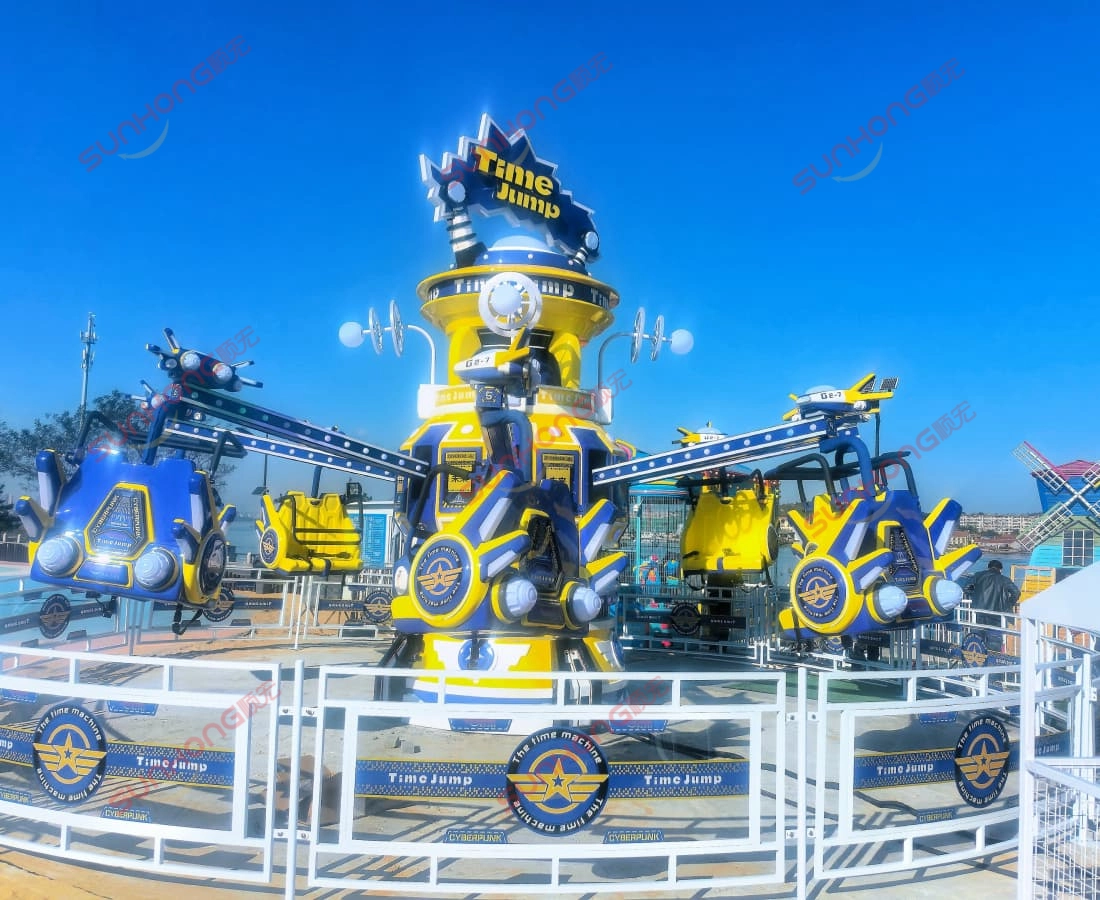
16-Seat Time Jump – Rotating Plane Ride for Amusement Parks
Time Jump is a thrilling and cost-effective amusement ride, 100% originally developed and manufactured by SUNHONG with patented certification. Designed for families and children, it combines motor drive and air-compressor cylinders to achieve dynamic movements—left-right rotation, variable-speed spinning, bouncing seats, and full 360-degree spins.
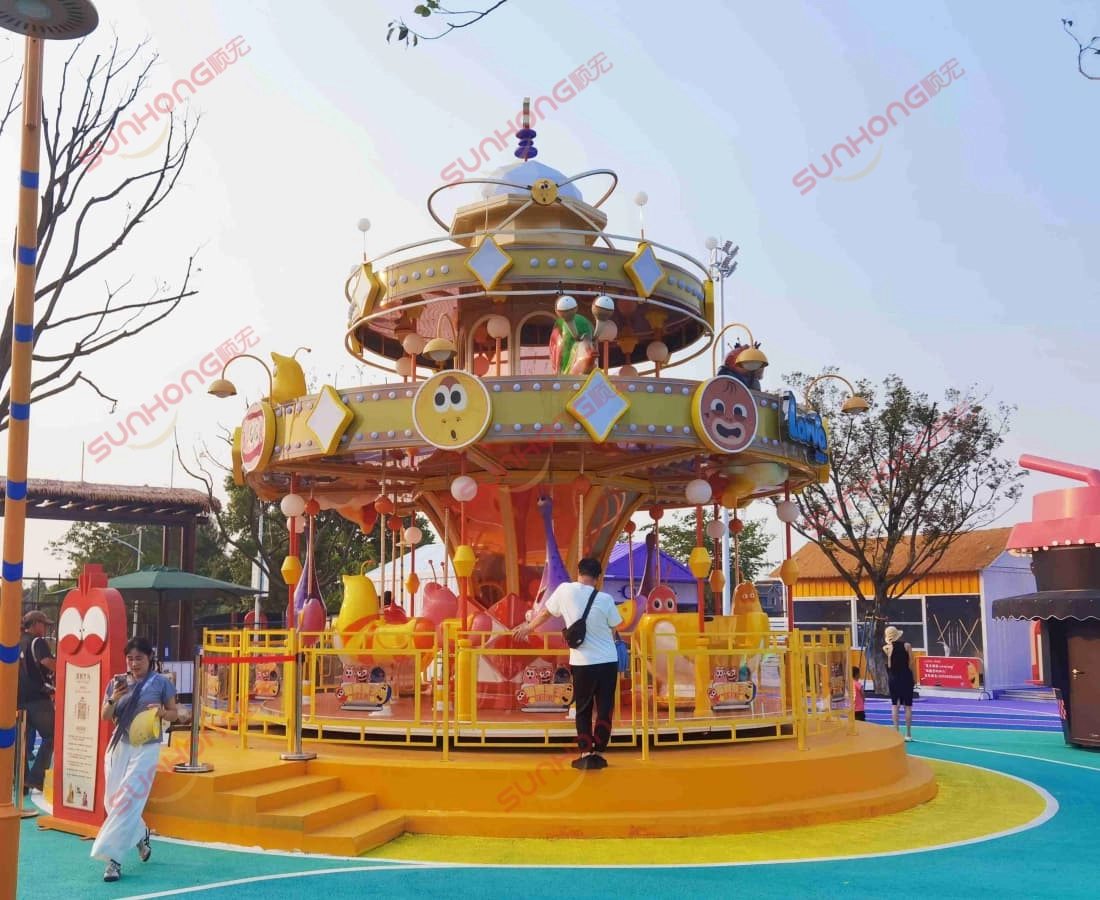
16P Larva Carousel for Sale
The Larva Carousel is a classic two-level ride themed around the beloved Larva animation. It features a variety of well-known characters, including Yellow, Red, Brown, Rainbow, Mantis, Ant, and more. This fun and engaging cartoon has brought endless laughter to children worldwide. With the strong appeal of a popular IP, the Larva Double Decker Carousel offers significant commercial value, making it an ideal carousel for sale for investors.
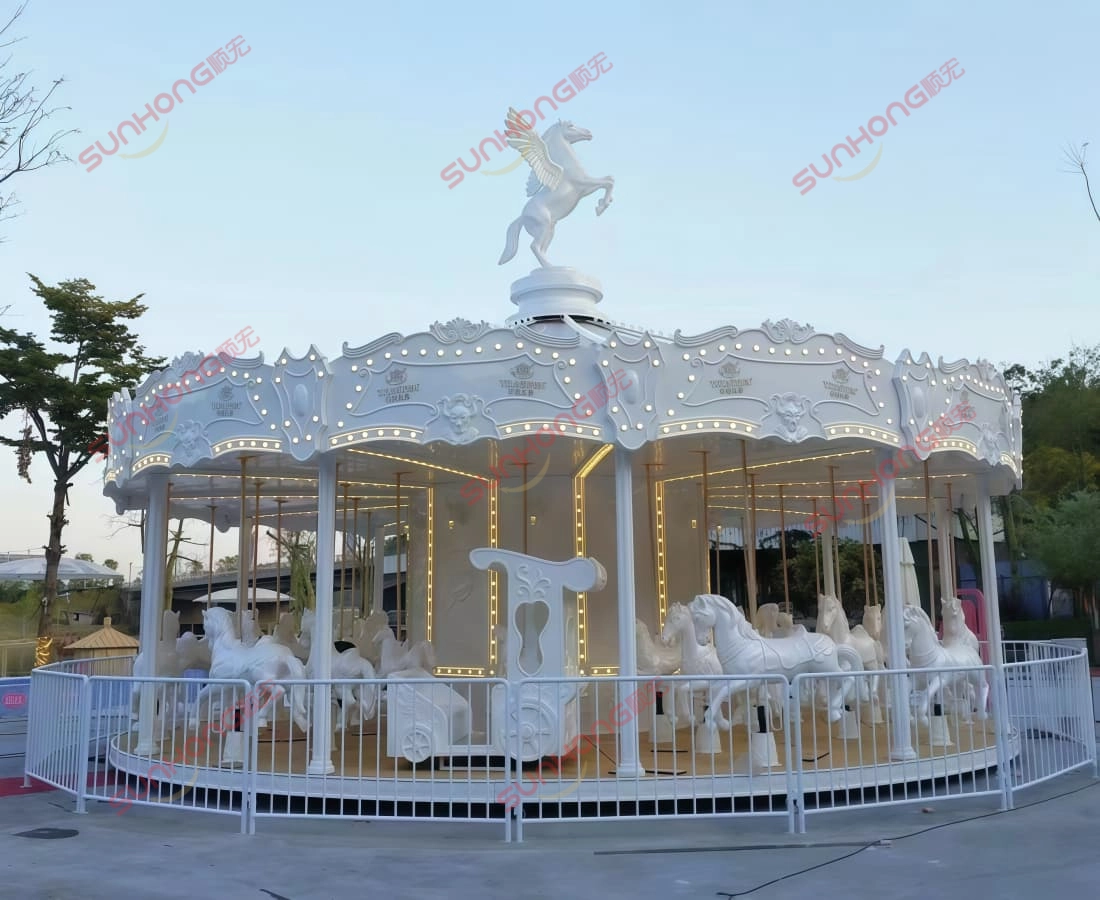
36P Knight Sparta Carousel Ride for Sale
36P Knight Sparta is a carousel ride for sale that supports OEM/ODM customization. Powered by an electric motor, the rotating frame drives seats that move up and down via a crank linkage system, simulating the motion of riding a warhorse. Inspired by the spirit of Spartan warriors—bravery, honor, and responsibility—this ride brings both excitement and meaning to every spin.
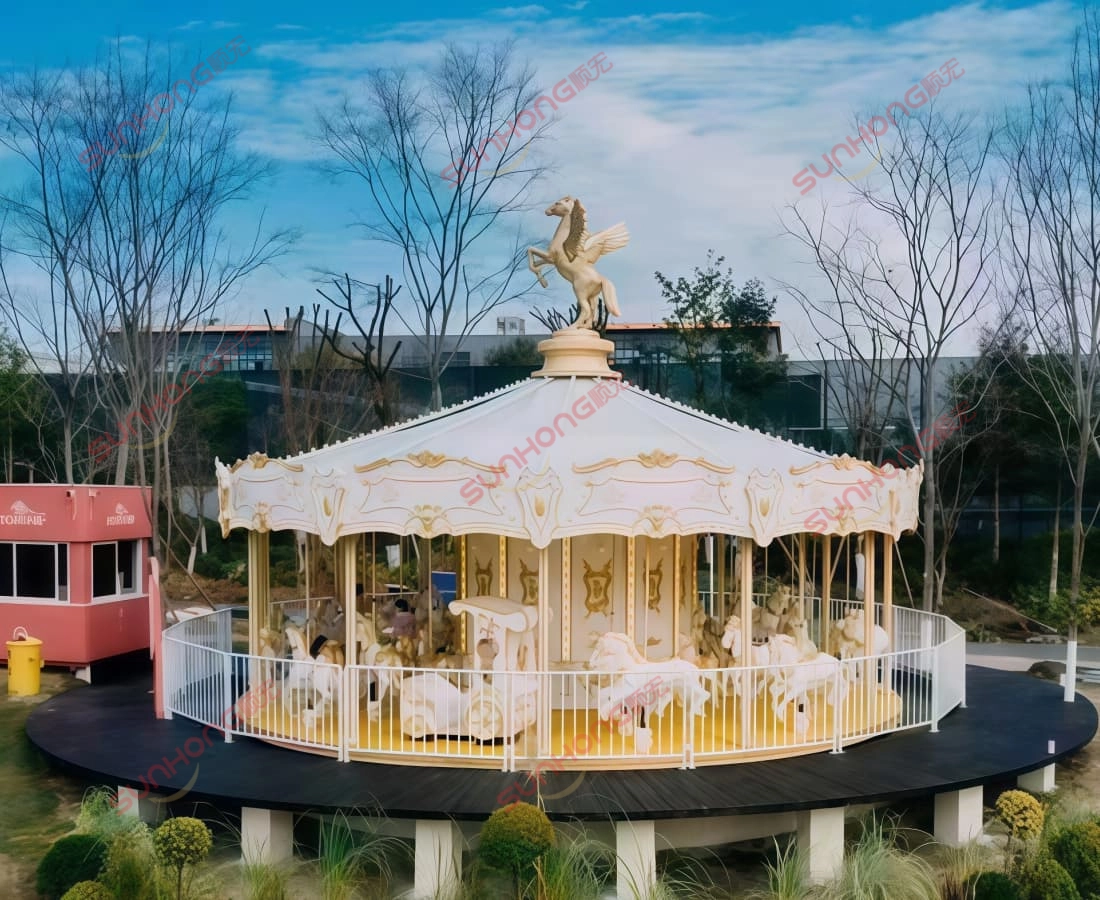
24P Knight Sparta Carousel Horse Ride for Sale
Classic horse-themed carousel horse ride for sale, equipped with double carriage seats, letting passengers feel like they’re galloping through open fields. The advanced motor system keeps the ride smooth, while the seats move up, down, forward, and back for full-on fun. It also comes with a movable base, making it easy to adjust at any site. A joyful experience loved by visitors of all ages!
Copyright © 2025 SUNHONG All Reserved.
Guangzhou Shunhong Entertainment Equipment Co.,Ltd.
sunhongrides
SUNHONGAMUSEMENTRIDES
sunhongamusementrides
Scan QR Code