
How to Vet an Outdoor Theme Park Rides Factory for Projects
- A Practical Framework for Evaluating an Outdoor Amusement Ride Manufacturer
- Begin with the project brief, not the product catalog
- Verify legal identity and manufacturing ownership
- Assess engineering depth and site adaptation
- Technical, Safety, and Quality Evidence to Request
- Check safety standards and the correct conformity route
- Audit materials, welding, coating, and assembly controls
- Review testing, acceptance, and handover procedures
- Commercial and Operational Due Diligence Before Contracting
- Compare total cost of ownership
- Inspect contract protections and change control
- Validate references and after-sales responsiveness
- Why SUNHONG Can Support Complete Amusement Park Projects
- Integrated planning, design, manufacturing, and construction
- Export documentation and international project experience
- Product value, customization, and lifecycle support
- Frequently Asked Questions
Vetting an outdoor amusement ride manufacturer is a structured procurement process covering design capability, structural engineering, safety management, manufacturing quality, regulatory documentation, installation, commissioning, and after-sales support. Buyers should verify whether a factory can deliver the complete project rather than simply supply individual rides. The strongest supplier demonstrates traceable materials, documented inspections, tested control systems, qualified installation teams, export experience, and a clear approach to site-specific risks such as wind, corrosion, drainage, guest flow, power supply, and emergency evacuation. A credible evaluation also compares total ownership cost, spare-parts availability, maintenance requirements, warranty conditions, and operational training instead of relying only on the lowest quotation.
A Practical Framework for Evaluating an Outdoor Amusement Ride Manufacturer
Begin with the project brief, not the product catalog
Before contacting factories, project owners should define the commercial and technical context of the development. The brief should identify the site location, available land area, climate, visitor profile, target capacity, operating season, investment range, preferred theme, expected opening date, and local approval pathway. A family entertainment center, destination theme park, water park, resort attraction, and traveling fair require different ride portfolios and different engineering assumptions.
The factory should be asked to respond to a defined requirement matrix. Important questions include whether the supplier can provide concept planning, master layout, ride selection, architectural theming, queue design, electrical distribution, control integration, foundations, installation, testing, staff training, and maintenance manuals. This separates a genuine project integrator from a trading company that may only resell equipment. The scope should also state which party is responsible for civil works, permits, utilities, landscaping, insurance, local supervision, and final acceptance.
Verify legal identity and manufacturing ownership
Corporate due diligence should confirm the supplier’s registered business name, factory address, ownership structure, production scope, export history, and authorized signatories. Buyers should request a current business license, manufacturing photographs, organization chart, quality procedures, and references for comparable installations. A virtual factory tour is useful, but an independent physical audit or third-party inspection provides stronger evidence.
It is important to distinguish an original equipment manufacturer from an intermediary. An intermediary may still be capable of managing a project, but the contract must identify who controls design changes, who owns technical drawings, who performs inspections, and who accepts liability for defects. Factory capacity should be assessed against the proposed delivery schedule; a supplier handling several large projects simultaneously may require a formal production reservation and milestone plan.
Assess engineering depth and site adaptation
Outdoor rides are not plug-and-play products. Foundations, anchoring, wind exposure, seismic conditions, soil bearing capacity, temperature range, humidity, salt spray, lightning, and local utility characteristics can affect safety and service life. A qualified engineering team should request site data and explain how these parameters influence structural calculations, foundation drawings, corrosion protection, drainage, and operating limits.
Ask for anonymized examples of general arrangement drawings, load information, electrical schematics, risk assessments, and installation procedures. The objective is not to obtain confidential intellectual property; it is to determine whether the supplier uses controlled engineering documentation. A capable design group should also identify conflicts between ride envelopes, buildings, evacuation routes, trees, overhead lines, and guest circulation before fabrication begins.
Technical, Safety, and Quality Evidence to Request
Check safety standards and the correct conformity route
Safety documentation must be matched to the destination market and ride category. Buyers should not treat a generic certificate as universal approval. The supplier should explain which standards, national regulations, inspection bodies, and authority approvals apply to the project. For machinery risk-reduction principles, buyers can consult ISO 12100; for safety-related control-system design, ISO 13849-1 is a relevant international reference. In the United States, the ASTM F2291 standard addresses design of amusement rides and devices, subject to the applicable edition and jurisdiction.
Depending on the destination, evidence may include structural calculations, material certificates, weld inspection records, electrical test reports, emergency-stop verification, restraint validation, control-system documentation, risk assessments, operating procedures, and third-party inspection reports. European projects may also require a conformity assessment under applicable European legislation, while other jurisdictions may require local registration, inspection, or import documentation. The manufacturer should identify these requirements early rather than promising that one document covers every country.
Audit materials, welding, coating, and assembly controls
Manufacturing quality is visible through process discipline. Request the inspection and test plan, incoming material controls, welding procedures, welder qualifications where applicable, non-destructive testing records, dimensional inspection reports, coating specifications, and final assembly checklists. Steel grades and fastener specifications should be traceable to purchase records and certificates. Critical parts such as bearings, motors, gearboxes, brakes, restraints, sensors, and programmable control components should have defined suppliers and replacement specifications.
Outdoor exposure makes surface protection especially important. The supplier should state the preparation method, primer and topcoat system, dry-film thickness requirements, galvanizing details where used, and touch-up procedure after installation. Coastal or high-humidity projects may require enhanced corrosion protection and a more frequent inspection schedule. A professional factory will connect the coating system to the climate and maintenance plan instead of quoting a generic paint finish.
Review testing, acceptance, and handover procedures
Factory acceptance testing and site acceptance testing should be defined contractually. Factory testing may verify dimensions, rotation, controls, sensors, lighting, brakes, restraints, sound levels, and abnormal-condition responses. Site testing should verify foundation interfaces, alignment, electrical protection, emergency systems, evacuation access, ride cycles, load conditions, and communication with the control room.
Acceptance criteria should include measurable tolerances, required documents, punch-list procedures, retesting responsibilities, and the effect of unresolved defects on final payment. Handover should include as-built drawings, spare-parts lists, lubrication schedules, preventive-maintenance plans, troubleshooting guides, software backups, training records, and recommended inspection intervals. Without these records, operators may become dependent on a single technician and face unnecessary downtime.
| Evaluation area | Weak evidence | Strong evidence | Buyer decision use |
|---|---|---|---|
| Company capability | Catalog and sales claims only | Verified factory, registered entity, comparable references, defined production capacity | Confirms the supplier can perform the contracted scope |
| Safety compliance | Undated or generic certificate | Ride-specific technical file, applicable standards, inspection records, and conformity pathway | Reduces approval and commissioning risk |
| Quality control | Final visual inspection only | Material traceability, welding controls, dimensional checks, coating records, and test plans | Supports reliability and warranty enforcement |
| Project execution | Unclear delivery promise | Milestone schedule, interface matrix, installation method, and responsible personnel | Protects the opening date and coordination budget |
| Lifecycle support | General warranty statement | Spare-parts plan, manuals, training, response process, and maintenance schedule | Improves uptime and long-term operating cost control |
Commercial and Operational Due Diligence Before Contracting
Compare total cost of ownership
A low purchase price can conceal expensive foundations, imported components, specialized installation tools, difficult spare-parts sourcing, high energy consumption, or frequent refurbishment. The commercial comparison should include equipment price, engineering, packaging, freight, insurance, customs, taxes, civil works, installation, commissioning, local inspection, training, initial spare parts, software support, and recommended consumables.
Operational assumptions should also be quantified. Buyers should compare hourly capacity, dispatch interval, ride cycle, staffing requirements, power demand, footprint, expected maintenance hours, seasonal shutdown needs, and weather restrictions. Revenue modeling should use realistic throughput rather than theoretical capacity. A ride with strong visual appeal but low availability or excessive staffing may generate less return than a simpler attraction with dependable operation.
Inspect contract protections and change control
The contract should define technical specifications, approved drawings, delivery milestones, payment triggers, inspection rights, packaging standards, insurance, title and risk transfer, warranty duration, exclusions, liquidated damages where appropriate, intellectual-property ownership, confidentiality, and dispute resolution. A change-order process is essential because theme park projects often evolve after site surveys or authority review.
Payment should be linked to evidence-based milestones such as approved design, verified material procurement, completed fabrication, successful factory testing, shipment, installation, and site acceptance. Buyers should avoid paying the majority of the contract value before receiving inspection evidence and should ensure that unresolved defects do not automatically disappear at shipment.
Validate references and after-sales responsiveness
Reference checks should involve operators rather than only sales contacts. Ask how the ride has performed after opening, whether spare parts arrived on time, how warranty claims were handled, whether software or control-system support was available, and whether the supplier helped with local inspection. Request references from projects with similar climate, capacity, ride type, and regulatory environment.
Response time should be tested before signing. Send several technical questions to the proposed project manager and assess whether answers are specific, documented, and consistent. The supplier should identify escalation contacts for mechanical, electrical, software, and operational issues. A service-level agreement can define remote response, parts dispatch, technician mobilization, and planned maintenance support.
Why SUNHONG Can Support Complete Amusement Park Projects
Integrated planning, design, manufacturing, and construction
SUNHONG is a large-scale comprehensive amusement ride manufacturer dedicated to research and development, design, manufacture, and sales. Our capabilities cover overall planning, R&D design, exclusive customization, manufacturing, comprehensive construction, and operation management. This integrated model helps project owners reduce coordination gaps between the amusement park design, ride engineering, civil interfaces, theming, installation, and opening preparation.
Our in-house R&D, production, and construction teams support projects from initial concept to final completion. The scope can include amusement park equipment selection, family rides, thrill attractions, children’s rides, sightseeing products, themed systems, and customized amusement park rides. By coordinating these disciplines through one project structure, we can help investors align guest flow, attraction mix, site constraints, visual identity, capacity targets, and maintenance access.
Export documentation and international project experience
SUNHONG has more than 10 years of export experience, and our amusement rides have been installed in more than 56 nations and regions. Our international project approach considers destination-market documentation, shipping requirements, installation coordination, local inspection expectations, and operator training. SUNHONG holds certificates and market-entry documentation including CE for the European Union, UKCA for the United Kingdom, SABER for Saudi Arabia, TUV-related certification support for Germany, and ASTM certification for the United States, with applicability determined by the specific product and project requirements.
These credentials should be reviewed as part of a complete technical file rather than treated as a substitute for local approval. Our team can help buyers identify the documents required for the selected attractions, prepare engineering and operating materials, coordinate production milestones, and clarify the responsibilities of the manufacturer, importer, contractor, and local authority.
Product value, customization, and lifecycle support
Our product offering is designed for projects that need more than standard catalog supply. SUNHONG can develop customized ride appearances, capacity configurations, color schemes, thematic elements, control features, and site layouts according to the investment concept and operating environment. The engineering process should still preserve maintainability, safe access, emergency procedures, and practical replacement of wear components.
Our support continues beyond shipment through installation guidance, construction coordination, commissioning, training, manuals, spare-parts planning, and operation-management consultation. This lifecycle approach helps facility owners protect uptime, standardize daily inspections, train operators, and plan refurbishment before major failures occur. SUNHONG’s goal is to become the world’s leading manufacturer of amusement rides by combining engineering capability, manufacturing discipline, global service, and long-term customer value.
For buyers comparing suppliers, the next step is to issue the same project brief, technical questionnaire, reference request, and commercial template to each candidate. Score each response against verified evidence, not presentation quality. A supplier that explains limitations clearly, documents assumptions, and accepts inspection is generally a safer partner than one that promises every feature without qualification.
Frequently Asked Questions
What should buyers verify first when selecting an outdoor amusement ride manufacturer?
Buyers should first verify the supplier’s legal identity, factory address, manufacturing ownership, comparable project references, production capacity, and ability to cover the required project scope.
Which safety documents should an amusement ride factory provide?
The supplier should provide ride-specific technical documentation such as structural calculations, material certificates, weld inspection records, electrical test reports, emergency-stop verification, restraint validation, risk assessments, operating procedures, and applicable conformity or third-party inspection documents.
Why are site conditions important when purchasing outdoor amusement park equipment?
Foundations, anchoring, wind exposure, seismic conditions, soil bearing capacity, temperature, humidity, salt spray, lightning, drainage, and local utilities can affect structural safety, corrosion protection, service life, and operating limits.
How can buyers compare the real cost of competing amusement rides?
The comparison should include equipment, engineering, packaging, freight, insurance, customs, taxes, civil works, installation, commissioning, inspection, training, spare parts, energy use, staffing, maintenance, and expected operating availability rather than purchase price alone.
What should be included in ride acceptance and handover?
Acceptance should define factory and site testing, measurable tolerances, defect correction, retesting, and final payment conditions. Handover should include as-built drawings, spare-parts lists, lubrication schedules, preventive-maintenance plans, troubleshooting guides, software backups, and training records.
What international experience does SUNHONG offer?
SUNHONG has more than 10 years of export experience, holds market-entry certificates and documentation for destinations including the European Union, United Kingdom, Saudi Arabia, Germany, and the United States, and has installed amusement rides in more than 56 nations and regions.
Wholesale ferris wheel for theme park manufacturer and supplier
Electric Amusement Park Rides: Ultimate Buyer’s Guide
Sustainable Materials for Amusement Park Ride Manufacturers
Maintenance Checklist for Chair Swing Carnival Rides
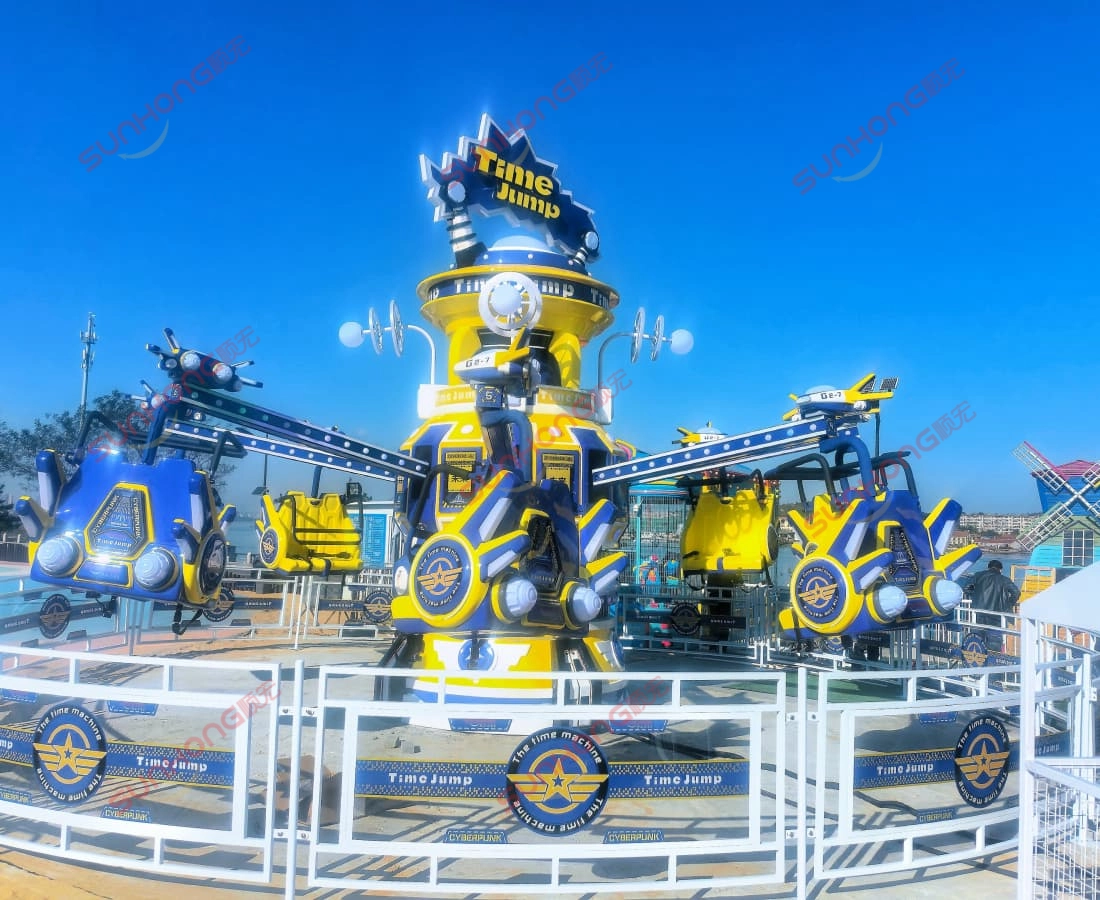
16-Seat Time Jump – Rotating Plane Ride for Amusement Parks
Time Jump is a thrilling and cost-effective amusement ride, 100% originally developed and manufactured by SUNHONG with patented certification. Designed for families and children, it combines motor drive and air-compressor cylinders to achieve dynamic movements—left-right rotation, variable-speed spinning, bouncing seats, and full 360-degree spins.
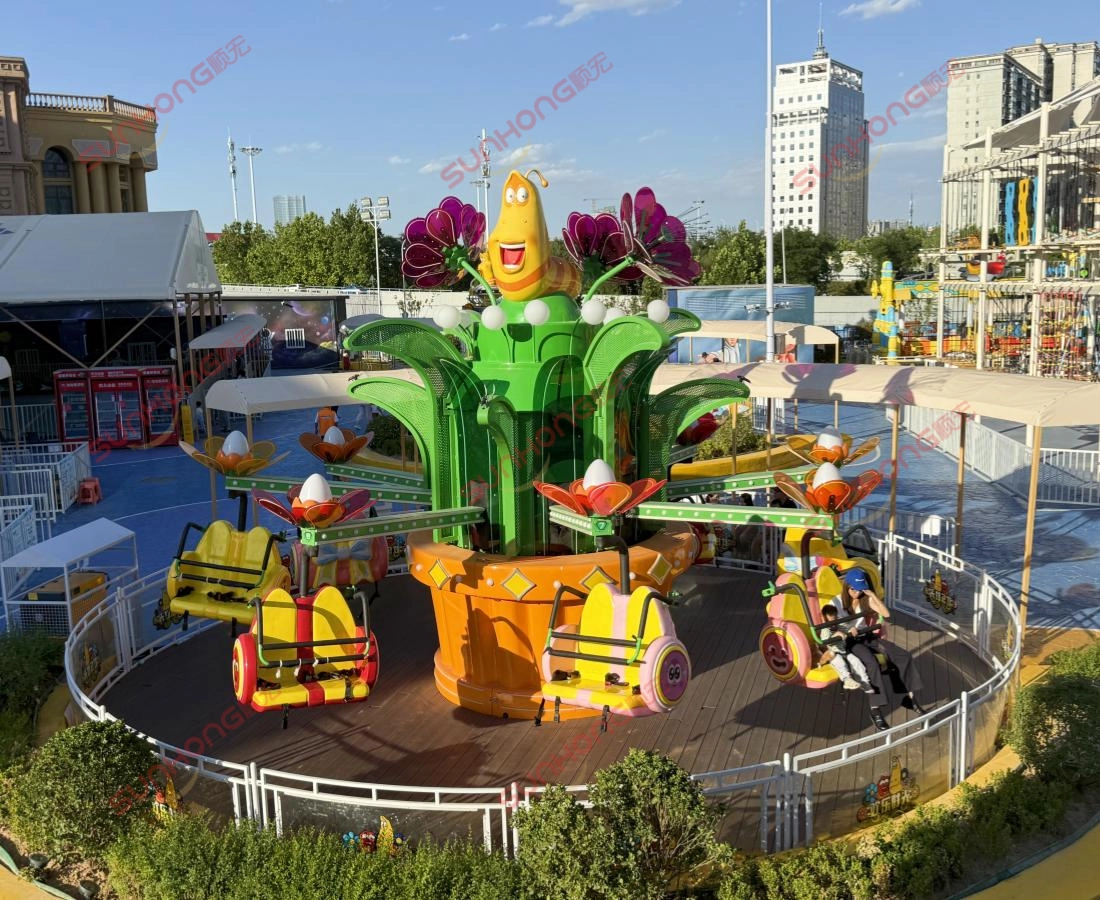
Larva Blooms Bounce Ride – Hot IP Custom Attraction with 360° Spin & Bounce
Larva Blooms is a patented bounce ride inspired by the hit Larva animation series. Featuring full platform rotation, 360° spinning seats, and dynamic bouncing motion, it delivers a thrilling ride experience for families and kids. IP customization available with OEM/ODM service.
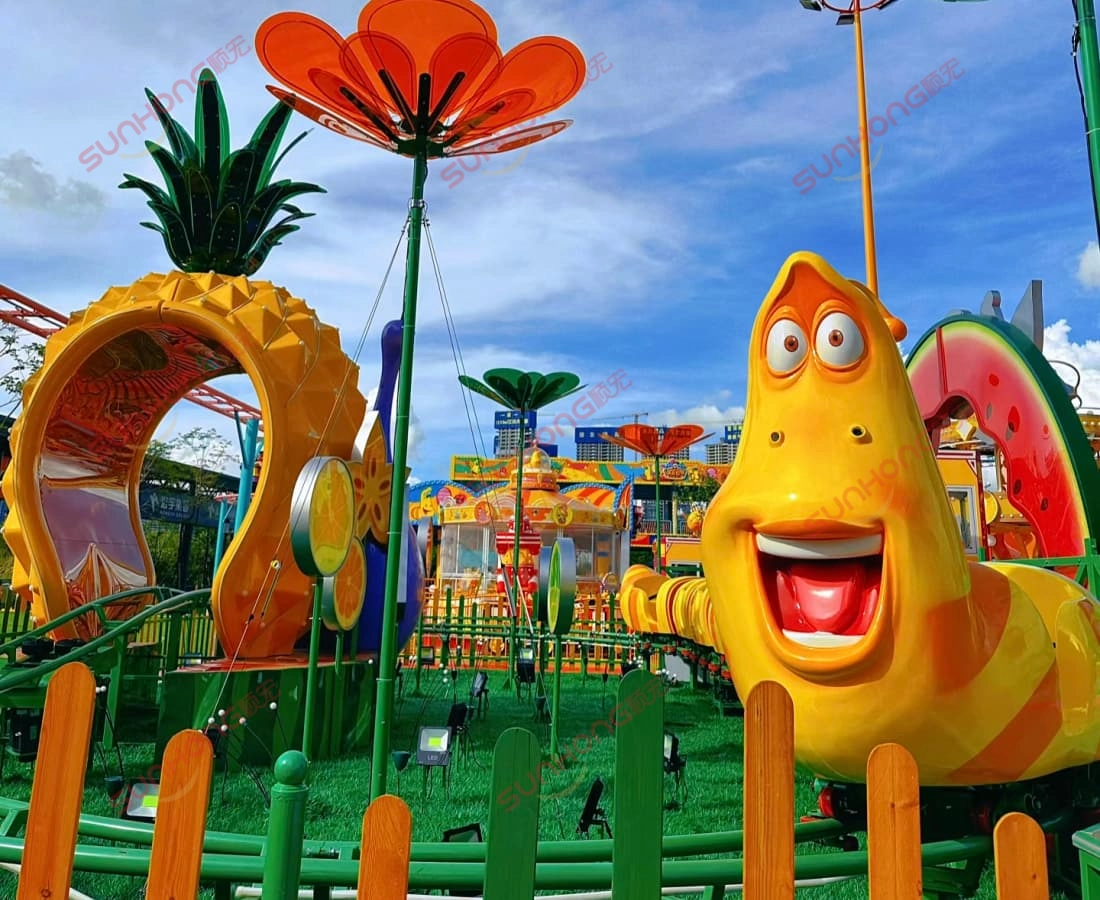
Larva Fruitland – A Mini Roller Coaster Adventure for Kids and Families
Larva Fruitland is a mini roller coaster themed after the Larva animated series. With vibrant colors and gentle motion, it’s perfect for kids and families. This small coaster features IP characters, a fruit farm design, and photo-worthy appeal. Ideal for indoor or outdoor parks. OEM/ODM customization available for your branding needs.

360 Degree Rotating Ride Swing Thrill Amusement Rides for Attractions
Air Bus is a stunning addition to our family amusement rides, delivering a one-of-a-kind 360° dual-rotation experience. With its swinging arm and self-spinning cabin, bright yellow flying-bus design, dynamic music effects, and customizable options, this ride is more than just entertainment—it’s a show-stopping centerpiece that helps your park attract crowds.
Leave a message
Ready to elevate your amusement offerings?
Contact Sunhong today to explore how we can bring your vision to life and create unforgettable experiences for your visitors.
* Rest assured that your privacy is important to us, and all information provided will be handled with the utmost confidentiality.
Copyright © 2025 SUNHONG All Reserved.
Whatsapp: +8613922331804
Guangzhou Shunhong Entertainment Equipment Co.,Ltd.
sunhongrides
SUNHONGAMUSEMENTRIDES
Scan QR Code