
How to Choose Playground Equipment for Indoor Family Entertainment Centers
- Building the Right Indoor Play Concept for a Family Entertainment Venue
- Start with the audience, business model, and available space
- Use age segmentation to control risk and improve guest experience
- Balance active play, sensory engagement, and parental comfort
- Technical and Safety Criteria for Indoor Play Structures
- Verify standards, documentation, and site-specific obligations
- Assess materials, fall protection, and sanitation
- Design for inspection, maintenance, and operational control
- Comparing Equipment Options by Commercial and Operational Value
- Evaluate capacity, throughput, and revenue per square meter
- Consider accessibility and inclusive participation
- Why a Complete Manufacturer Partnership Matters
- SUNHONG combines design, production, and project delivery
- Customization should serve operations, not just appearance
- International credentials and after-sales support
- Frequently Asked Questions
Selecting indoor play equipment for a family entertainment center requires a structured assessment of guest demographics, available floor area, safety risks, regulatory obligations, maintenance resources, and commercial objectives. The strongest project decisions connect climbing structures, soft play modules, trampolines, slides, toddler zones, interactive attractions, party rooms, and supporting amusement park rides into one coherent customer journey. Buyers should compare not only the equipment quotation but also design quality, capacity, inspection access, replacement-part availability, installation capability, certification documentation, cleaning requirements, and expected return on occupied floor space. A professional supplier can convert a raw venue into a safe, age-appropriate, memorable, and operationally efficient indoor attraction.
Building the Right Indoor Play Concept for a Family Entertainment Venue
Start with the audience, business model, and available space
The correct configuration depends on who will visit and how the venue will earn revenue. A neighborhood play café may prioritize toddlers, parental visibility, short visits, and repeat local traffic. A destination family entertainment center may need a broader mix that includes multi-level climbing, competitive activities, birthday-party capacity, redemption games, themed environments, and high-throughput attractions. Shopping-center venues often require a compact footprint and strong visual appeal from outside the tenancy, while resort or tourism projects may support larger immersive zones.
Before requesting a quotation, prepare a site brief covering gross and net floor area, column locations, structural restrictions, ceiling height, entrances, emergency exits, HVAC equipment, electrical supply, fire systems, toilets, café seating, storage, and queueing space. Net play area should not be confused with total leased area. Reception, circulation, staff work zones, shoe storage, cleaning stations, and parent seating all affect the number of guests the attraction can serve. A two-dimensional plan and accurate ceiling survey help prevent late redesigns and costly conflicts during installation.
Use age segmentation to control risk and improve guest experience
Separate areas for infants, preschool children, school-age users, and mixed-family activities. Toddler environments generally require lower platforms, smaller openings, gentler slides, soft boundaries, and close caregiver visibility. Older children can use more challenging climbing routes, rope elements, tunnels, balance features, and timed interactive games, provided the design and operating controls match the intended age and height range.
Age zoning is not merely a safety measure. It improves perceived value because caregivers can select an environment that fits a child’s developmental stage. It also reduces conflicts between fast-moving older users and smaller children. Clear color coding, entrance signage, height guidance, staff supervision points, and physical transitions between zones help operators manage the facility without creating an institutional appearance.
Balance active play, sensory engagement, and parental comfort
A profitable indoor venue normally combines high-energy movement with quieter activities. Multi-level play frames, slides, obstacle routes, trampolines, and climbing walls can drive excitement, while role-play houses, sensory panels, building areas, and creative stations extend dwell time for younger visitors. Interactive projection, touch walls, scoring systems, and motion-responsive attractions can create repeat-play value, but they should complement rather than replace durable physical play.
Caregiver experience directly influences reviews, party bookings, and repeat visits. Sightlines should allow adults to observe key areas without entering every structure. Seating should be positioned near toddler zones and away from congested circulation. Acoustic treatment, natural or well-designed artificial lighting, visible cleaning procedures, accessible toilets, and convenient food service can increase the time families remain on site and improve overall satisfaction.
Technical and Safety Criteria for Indoor Play Structures
Verify standards, documentation, and site-specific obligations
Safety claims should be tied to applicable standards and documented engineering controls. Buyers can review the principles of U.S. Consumer Product Safety Commission playground safety guidance when assessing surfacing, entrapment, fall zones, supervision, and maintenance. For indoor soft contained play, ASTM F1918 is a relevant reference in the United States, while European projects commonly consider EN 1176 requirements alongside local construction and fire rules. Amusement ride elements may also require a different compliance pathway from static play structures; the project team should identify the classification of every attraction before procurement.
Ask the supplier for material specifications, load assumptions, test reports, installation drawings, inspection instructions, user-age limits, anchoring details, and a risk assessment. For projects involving powered attractions or ride systems, ISO 17842 for safety of amusement rides and amusement devices provides an important international reference. Local authorities may additionally require structural calculations, electrical approvals, fire-retardant documentation, accessibility provisions, and formal completion inspections.
Assess materials, fall protection, and sanitation
Materials should be selected for impact performance, abrasion resistance, flame behavior, hygiene, and ease of replacement. Common components include steel frames, molded plastics, coated panels, PVC or comparable upholstery, foam padding, netting, rubber surfacing, laminated boards, and stainless-steel or powder-coated metal parts. The precise specification should reflect the expected traffic level and local environmental conditions, including humidity, temperature, cleaning chemicals, and exposure to food or drinks.
Fall protection must be designed as a system rather than added as an afterthought. Platform heights, barriers, openings, landing areas, slide exits, transitions, and circulation paths should be reviewed together. Avoid decorative features that create snagging points or difficult-to-clean cavities. Hygiene planning should include removable cushions where practical, smooth surfaces, drainage or drying procedures, disinfectant compatibility, handwashing access, and a documented response to spills, bodily fluids, and damaged padding.
Design for inspection, maintenance, and operational control
Even well-manufactured attractions become unsafe if operators cannot inspect them efficiently. The layout should provide access to hidden frame connections, net fixings, fasteners, padding, flooring, electrical cabinets, sensors, and emergency stop devices. A supplier should provide daily opening checklists, periodic inspection schedules, cleaning instructions, spare-part lists, and recommended service intervals.
Operational controls are equally important. Define maximum occupancy by zone, admission rules, supervision ratios, footwear requirements, prohibited objects, emergency evacuation procedures, and incident-reporting practices. Staff training should cover first aid coordination, lost-child procedures, conflict management, equipment shutdown, reporting of defects, and communication with caregivers. These procedures convert a product purchase into a manageable operating system.
Comparing Equipment Options by Commercial and Operational Value
Evaluate capacity, throughput, and revenue per square meter
The cheapest quotation is rarely the most economical choice. Buyers should estimate usable capacity, average session length, peak-hour throughput, birthday-party demand, staffing requirements, cleaning downtime, energy consumption, and expected replacement cycles. A visually impressive structure with narrow access points may create queues and underperform, while a carefully zoned system can distribute visitors across several activities.
Revenue analysis should include admission income, memberships, party packages, food and beverage sales, retail merchandise, arcade or redemption income, and High Quality attractions. Interactive features can support repeat visits when content is refreshable, but technology introduces software, sensor, connectivity, and replacement risks. Durable physical elements usually provide the foundation, with digital attractions layered selectively where they have a clear commercial purpose.
| Evaluation factor | Basic procurement approach | Professional project approach | Business impact |
|---|---|---|---|
| Space planning | Choose products from a catalog and fit them into the room | Begin with a measured site plan, zoning study, circulation analysis, and capacity model | Reduces redesign and improves usable floor-space efficiency |
| Safety review | Rely mainly on a general certificate | Review applicable standards, risk controls, materials, fall zones, anchoring, and operating rules | Supports authority approval and lowers operational exposure |
| Maintenance | Replace parts only after failure | Use preventive inspection schedules, spare-part planning, and accessible service points | Reduces downtime and protects asset life |
| Customer experience | Prioritize appearance and product count | Balance age groups, sightlines, circulation, comfort, accessibility, and dwell time | Supports repeat visits and positive reviews |
| Commercial evaluation | Compare initial price only | Model capacity, staffing, cleaning, energy, upgrades, and lifecycle cost | Improves return on investment and budgeting accuracy |
Consider accessibility and inclusive participation
Inclusive design can expand the addressable market and make the venue more welcoming to families with different abilities. Depending on local requirements, consider step-free access, transfer points, accessible circulation, contrasting colors, tactile or sensory features, quiet retreat areas, seating for caregivers, and activities that allow participation without climbing to elevated platforms. Accessibility should be integrated during concept design rather than treated as a late compliance adjustment.
Consult local building and accessibility authorities because requirements vary by jurisdiction. In the United States, the 2010 ADA Standards for Accessible Design provide a key reference for covered facilities. International projects should also account for local laws, cultural expectations, and the practical needs of families using the venue.
Why a Complete Manufacturer Partnership Matters
SUNHONG combines design, production, and project delivery
SUNHONG is a large-scale comprehensive amusement ride manufacturer dedicated to the research and development, design, manufacture, and sales of amusement rides. Our team supports overall planning, R&D design, exclusive customization, manufacturing, comprehensive construction, and operation management. This integrated model is valuable for family entertainment center owners because the play environment, themed decoration, interactive attractions, and amusement park equipment can be coordinated through one project framework instead of being purchased as disconnected components.
Our engineering and design process can address the complete venue, including floor-plan optimization, age zoning, traffic flow, visual theming, parent areas, party rooms, safety circulation, service access, and future expansion. Buyers can request a concept package that connects indoor play structures with an amusement park design strategy and selected amusement park ride products. The objective is to create a consistent guest experience while keeping manufacturing interfaces and installation responsibilities clear.
Customization should serve operations, not just appearance
Exclusive customization is most effective when it solves a measurable project requirement. SUNHONG can help adapt dimensions to ceiling height, integrate a brand theme, adjust color systems, create educational or regional storytelling, coordinate attraction capacity, and reserve space for later expansion. Customization may also support better sightlines, more accessible routes, improved cleaning access, and a stronger relationship between entrance presentation and revenue-generating attractions.
Our in-house experts in R&D, production, and construction provide continuity from the initial concept to final project completion. That continuity helps reduce communication gaps between the designer, fabricator, installer, and operator. It also gives project owners a clearer route for technical questions, production updates, installation coordination, commissioning, and staff handover.
International credentials and after-sales support
SUNHONG has more than 10 years of export experience, and Shunhong (Sunhong) amusement rides have been installed in more than 56 nations and regions. Our certification portfolio includes CE for the European Union, UKCA for the United Kingdom, SABER for Saudi Arabia, TUV from Germany, and ASTM certification for the United States, subject to the applicable product and project requirements. Buyers should still confirm which approvals are required by the destination authority and whether documentation covers the exact equipment configuration.
Our reach global services are designed to support international investors, distributors, brand owners, and operators through planning, manufacturing, comprehensive construction, delivery coordination, installation, and operational guidance. The same manufacturing discipline used for amusement park rides can be applied to indoor attractions, themed play environments, family entertainment center concepts, and broader amusement park equipment programs. This creates a practical platform for projects that may later add outdoor attractions, family rides, or a larger destination entertainment offer.
Sourcing decisions should ultimately be based on documented performance, transparent scope, engineering responsiveness, and lifecycle support. SUNHONG’s goal is to become the world’s leading manufacturer of amusement rides by combining technical development, production capability, project execution, and international service. Project owners can review the company’s solutions at SUNHONG’s official website and discuss project requirements with the team at sunhong@isunhong.com.
Frequently Asked Questions
What should be considered first when choosing indoor play equipment?
Begin with the venue’s measured floor area, ceiling height, columns, exits, HVAC, electrical supply, fire systems, target age groups, business model, and expected visitor volume before comparing products or prices.
How should an indoor family entertainment center separate different age groups?
Create distinct areas for infants, preschool children, school-age users, and mixed-family activities, using appropriate platform heights, openings, barriers, activity difficulty, signage, and supervision points for each group.
Which safety documents should buyers request from a supplier?
Buyers should request material specifications, load assumptions, test reports, installation drawings, anchoring details, user-age limits, inspection instructions, risk assessments, and documentation showing compliance with applicable local and international standards.
How can operators reduce maintenance and cleaning problems?
Choose durable, cleanable materials; provide access to hidden connections, padding, nets, sensors, and electrical components; and establish daily checks, periodic inspections, cleaning procedures, spare-part planning, and preventive maintenance schedules.
Why is lifecycle cost more important than the initial quotation?
Lifecycle cost includes installation, staffing, cleaning downtime, energy use, replacement parts, software or sensor support, repairs, upgrades, and expected service life, so it gives a more accurate view of profitability than purchase price alone.
Can SUNHONG customize an indoor family entertainment center project?
Yes. SUNHONG supports overall planning, R&D design, exclusive customization, manufacturing, comprehensive construction, operation management, and related amusement park equipment and ride solutions from initial concept through project completion.
Custom Electric Ride Design: Trends and Case Studies
Transport, Crating, and Shipping Tips for Chair Swing Rides
The B2B Buyer’s Guide to thrill amusement rides
The B2B Buyer’s Guide to bumper cars | SUNHONG Ultimate Insights
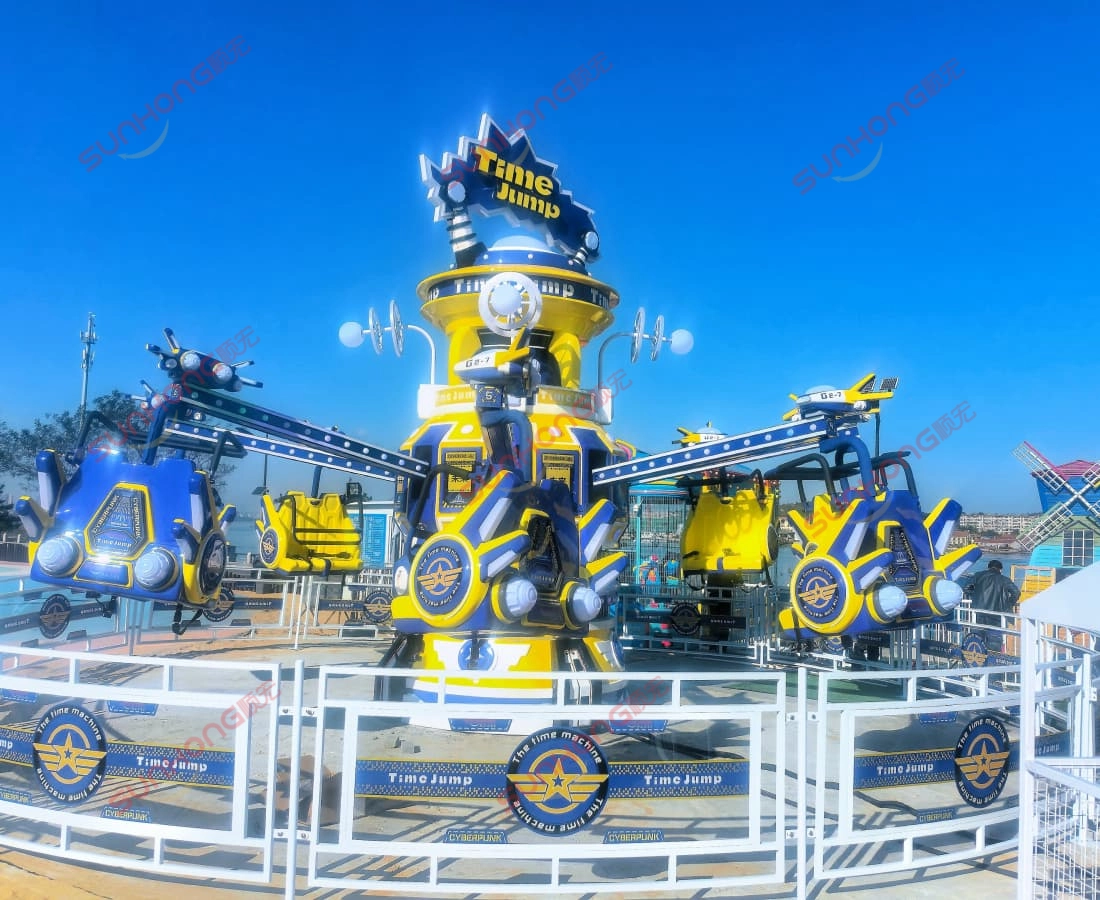
16-Seat Time Jump – Rotating Plane Ride for Amusement Parks
Time Jump is a thrilling and cost-effective amusement ride, 100% originally developed and manufactured by SUNHONG with patented certification. Designed for families and children, it combines motor drive and air-compressor cylinders to achieve dynamic movements—left-right rotation, variable-speed spinning, bouncing seats, and full 360-degree spins.
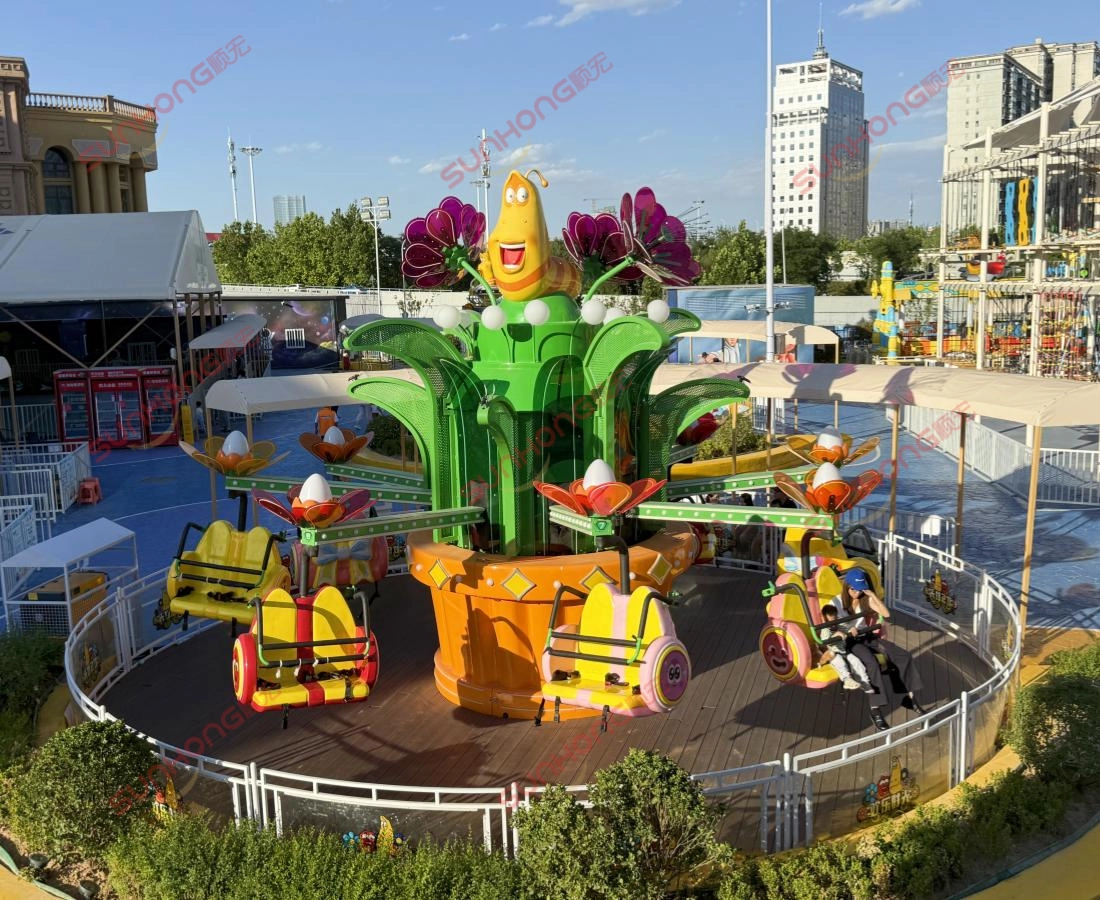
Larva Blooms Bounce Ride – Hot IP Custom Attraction with 360° Spin & Bounce
Larva Blooms is a patented bounce ride inspired by the hit Larva animation series. Featuring full platform rotation, 360° spinning seats, and dynamic bouncing motion, it delivers a thrilling ride experience for families and kids. IP customization available with OEM/ODM service.
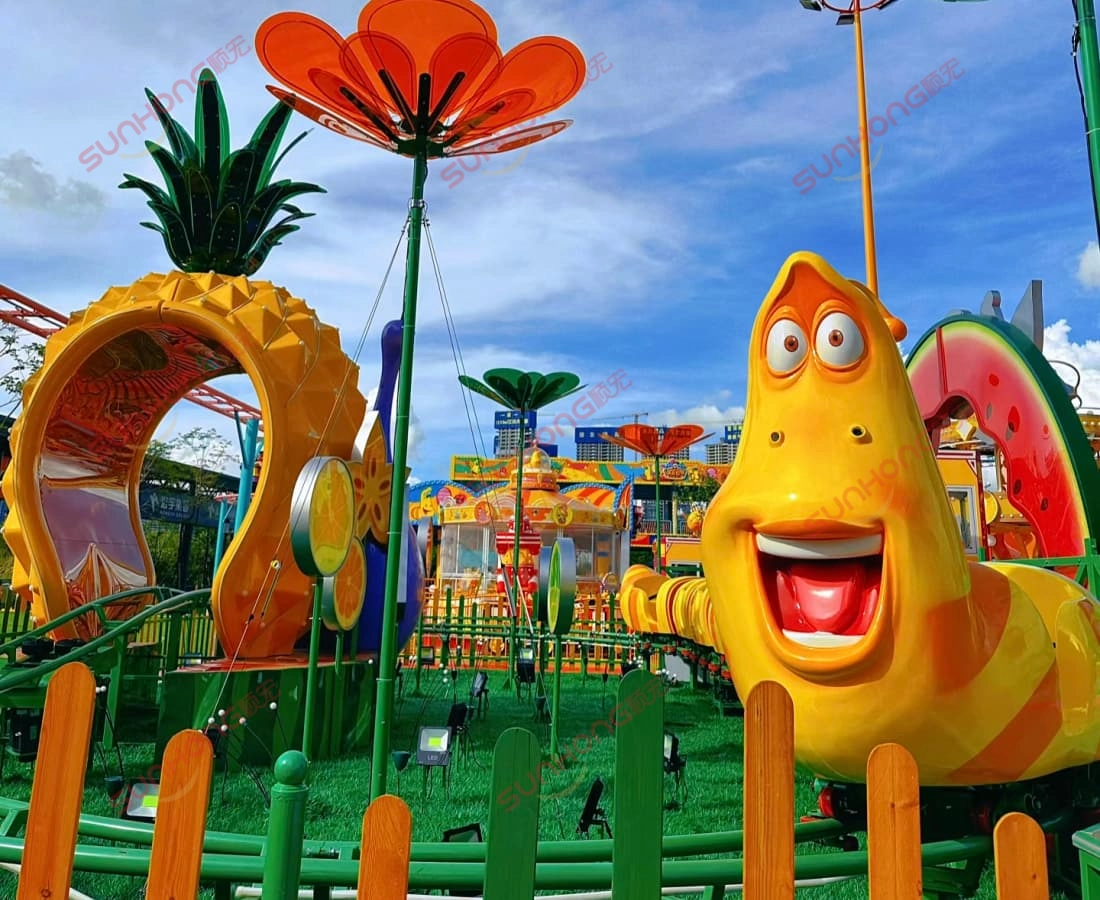
Larva Fruitland – A Mini Roller Coaster Adventure for Kids and Families
Larva Fruitland is a mini roller coaster themed after the Larva animated series. With vibrant colors and gentle motion, it’s perfect for kids and families. This small coaster features IP characters, a fruit farm design, and photo-worthy appeal. Ideal for indoor or outdoor parks. OEM/ODM customization available for your branding needs.

360 Degree Rotating Ride Swing Thrill Amusement Rides for Attractions
Air Bus is a stunning addition to our family amusement rides, delivering a one-of-a-kind 360° dual-rotation experience. With its swinging arm and self-spinning cabin, bright yellow flying-bus design, dynamic music effects, and customizable options, this ride is more than just entertainment—it’s a show-stopping centerpiece that helps your park attract crowds.
Leave a message
Ready to elevate your amusement offerings?
Contact Sunhong today to explore how we can bring your vision to life and create unforgettable experiences for your visitors.
* Rest assured that your privacy is important to us, and all information provided will be handled with the utmost confidentiality.
Copyright © 2025 SUNHONG All Reserved.
Whatsapp: +8613922331804
Guangzhou Shunhong Entertainment Equipment Co.,Ltd.
sunhongrides
SUNHONGAMUSEMENTRIDES
Scan QR Code