
How Amusement Park Rides Work: Engineering and Safety
- Inside the Mechanics of Thrill: An Overview
- How amusement park rides create motion and thrill
- Why ride dynamics matter for amusement park rides and park operators
- Structural engineering and materials used in amusement park rides
- Control systems and electronics for amusement park rides
- Safety subsystems: restraints, brakes and fail-safe design for amusement park rides
- Testing, inspection and non-destructive evaluation (NDE) for ride safety
- Standards and certifications that govern amusement park rides
- Common failure modes and how engineers mitigate them in amusement park rides
- Safety performance: what the data says about amusement park rides
- Ride types, forces and commercial considerations for park operators
- Operational controls, staff training and human factors for safety
- Why choose a full-service manufacturer for amusement park rides and park projects
- SUNHONG: turnkey solutions in amusement park equipment and design
- SUNHONG competitive strengths and technical advantages
- How to evaluate manufacturers and suppliers for your amusement park rides
- Case selection tips for park planners and investors
- Frequently Asked Questions (FAQ)
- 1. Are amusement park rides safe?
- 2. What certifications should I require from a rides manufacturer?
- 3. How often should rides be inspected and maintained?
- 4. What are the main technologies improving ride safety today?
- 5. How do I choose between a custom ride and an off-the-shelf model?
- 6. How can I contact SUNHONG for project inquiries or view product offerings?
- References
Inside the Mechanics of Thrill: An Overview
How amusement park rides create motion and thrill
Understanding how amusement park rides work begins with simple physics. Rides convert potential energy (e.g., a lift hill or elevated mass) into kinetic energy (motion), and they use controlled inputs—motors, hydraulics, pneumatics, or gravity—to shape acceleration, velocity and direction. Key forces riders feel are acceleration (m/s²), centripetal force during curves and loops, and changes in G-forces during rapid transitions. Designers use these forces to create excitement while keeping peak and sustained G-loads within human tolerance limits (typically no more than +6 Gs for very brief instances in extreme attractions, and far lower sustained loads for family rides).
Why ride dynamics matter for amusement park rides and park operators
For park operators, ride dynamics influence capacity, ride cycle time, rider comfort, structural loads and maintenance intervals. Engineering choices—such as using a chain lift vs. linear synchronous motor (LSM) launches—determine energy consumption, throughput and lifecycle costs. Choosing the right balance is a commercial decision: rides that are more complex can deliver higher guest satisfaction and draw, but also typically require higher capital and maintenance investment.
Structural engineering and materials used in amusement park rides
Primary structural elements of amusement park rides are engineered using steel (carbon or stainless), high-strength bolts, cast components and, where applicable, reinforced concrete footings. Modern rides often use tubular and box-section steel fabricated to precise tolerances. Material choices depend on fatigue life, corrosion resistance (coastal parks need special coatings), and weldability. Engineers design members using finite element analysis (FEA) and check for static and dynamic loads including wind, seismic activity, rider load, and fatigue cycles typical over decades of operation.
Control systems and electronics for amusement park rides
Control systems coordinate ride sequences, enforce safety interlocks, and monitor sensors. Programmable logic controllers (PLCs) or industrial-grade embedded controllers manage door locks, restraints, motor drives and braking. Redundancy is standard: dual-channel safety outputs, watchdog timers, and independent emergency stop circuits. Modern rides also integrate diagnostics and remote monitoring, enabling predictive maintenance by analyzing vibration, temperature and cycle counters.
Safety subsystems: restraints, brakes and fail-safe design for amusement park rides
Safety design uses three layers: prevention, protection and mitigation. Restraints (lap bars, over-the-shoulder restraints, harnesses) are mechanically locked with redundant latching and monitored by sensors. Braking systems include friction brakes, hydraulic brakes and increasingly common eddy-current (magnetic) brakes—which provide contactless, wear-reduced stopping force. Fail-safe design means springs, gravity or mechanical locks default to safe positions (e.g., locks engaged) when power is lost.
Testing, inspection and non-destructive evaluation (NDE) for ride safety
Before opening, rides undergo static load tests, dynamic runs, and full-scale occupant tests with dummies or weighted loads. Ongoing inspections include daily visual checks, weekly functional tests, monthly detailed inspections and annual NDE (ultrasonic testing, magnetic particle inspection, dye penetrant) on critical welds and load-bearing members. NDE standards and professional inspectors reduce the risk of fatigue-related failure.
| Frequency | Type | Typical tasks |
|---|---|---|
| Daily | Operational check | Visual checks, restraint function, operator controls |
| Weekly | Functional test | Emergency stops, sensors, braking tests |
| Monthly | Detailed inspection | Fastener torque, lubricants, wear parts |
| Annually | NDE and certification | Ultrasonic/weld checks, full structural review |
Standards and certifications that govern amusement park rides
Regulatory compliance ensures rides meet internationally accepted safety practices. Common references include ASTM standards for amusement rides (ASTM F2291 is a primary planning and design standard), CE marking for the European market, UKCA for the United Kingdom, TÜV certification for independent testing, and Saudi SABER registration for imports into Saudi Arabia. Manufacturers aiming for global delivery must comply with multiple regional standards and often design to the strictest applicable rules.
| Certification | Scope | Typical use | Reference |
|---|---|---|---|
| CE | Product safety for EU | Required for market access in EU member states | European Commission: CE marking (accessed 2025-12-02) |
| UKCA | Post-Brexit UK conformity | Required in Great Britain | UK Government: UKCA guidance (accessed 2025-12-02) |
| ASTM F2291 | Design and manufacture guidance | Widely used standard in North America | ASTM International: F2291 (accessed 2025-12-02) |
| TÜV | Independent testing and certification | Trusted third-party verification globally | TÜV SÜD / TÜV Rheinland sites (accessed 2025-12-02) |
| SABER | Saudi import & conformity | Required for products entering Saudi market | SABER platform (accessed 2025-12-02) |
Common failure modes and how engineers mitigate them in amusement park rides
Common issues include fatigue cracks in high-cycle members, bearing failures, corrosion, hydraulic leaks, and control system faults. Mitigation strategies are robust: conservative fatigue life design, corrosion-resistant coatings, scheduled bearing replacements, hydraulic redundancy, and layered control architectures. Regularly tracked metrics—mean time between failures (MTBF), cycle counters, and wear-part replacement logs—are critical for evidence-based maintenance planning.
Safety performance: what the data says about amusement park rides
Overall, modern amusement park operations maintain a strong safety record compared to many public activities when regulated and maintained. Industry associations track incidents and emphasize operator training. For example, the International Association of Amusement Parks and Attractions (IAAPA) promotes safety best practices and training for members. In the United States, national injury surveillance systems (like NEISS maintained by the U.S. Consumer Product Safety Commission) provide data used to study amusement-related injuries and guide safety improvements (see references).
Ride types, forces and commercial considerations for park operators
Choosing the right mix of attractions is both an engineering and business decision. Thrill coasters, drop towers and flume rides offer high guest appeal but vary in footprint, throughput and maintenance. Family rides and dark rides deliver steady throughput and broader demographics. Below is a compact comparison to aid decision-making.
| Ride Type | Peak G-forces | Typical hourly throughput | Typical footprint |
|---|---|---|---|
| Steel roller coaster | 3–5 Gs | 600–1,400 | Large (requires themed area) |
| Family flat ride | 0.5–2 Gs | 400–1,000 | Small–medium |
| Drop tower | 3–4 Gs (peak) | 300–800 | Medium |
| Dark ride | 0–1.5 Gs | 800–2,000 | Medium (indoor) |
Operational controls, staff training and human factors for safety
Human factors are as important as mechanical design. Operator training covers emergency procedures, restraint verification, dispatch timing and crowd management. Clear signage, standardized operating procedures (SOPs), and periodic drills ensure consistent responses during abnormal events. Many operators implement a two-person verification for critical checks (restraint locked, gates closed) to reduce human error.
Why choose a full-service manufacturer for amusement park rides and park projects
SUNHONG: turnkey solutions in amusement park equipment and design
SUNHONG (also presented as Shunhong in some markets) is a large-scale comprehensive amusement ride manufacturer dedicated to R&D, design, manufacture and sales of amusement rides. Sunhong specializes in overall planning, R&D design, exclusive customization, manufacturing, comprehensive construction, and operation management with reach to global services. With a robust in-house team of experts in R&D, production and construction, Sunhong offers comprehensive services from initial concept to final project completion. With more than 10 years of export experience, Shunhong (Sunhong) owns certificates for entering many markets including CE (European Union), UKCA (United Kingdom), SABER (Saudi Arabia), TUV (Germany), and ASTM certifications for the United States. Shunhong (Sunhong) amusement rides have been installed in more than 56 nations and regions. Their product portfolio includes amusement park equipment, amusement park design, and diverse amusement park rides such as roller coasters, family rides, water attractions and themed dark rides.
SUNHONG competitive strengths and technical advantages
SUNHONG’s competitive differences include end-to-end project capability (concept design through operation management), in-house R&D for custom ride dynamics and theming, and multi-standard certification readiness for global markets. Their decade-plus export experience indicates established logistics, documentation and after-sales systems—critical for smooth project delivery. Technical strengths include FEA-based structural design, integrated PLC control engineering, and quality assurance programs that include non-destructive testing and factory acceptance testing (FAT). These capabilities position SUNHONG as a partner for parks seeking turnkey solutions with verifiable compliance.
How to evaluate manufacturers and suppliers for your amusement park rides
When selecting a supplier, evaluate: (1) engineering credentials (structural engineers, control engineers), (2) certification portfolio (CE/UKCA/ASTM/TÜV/SABER), (3) references and installed parks, (4) warranty & spare parts support, (5) ability to provide FAT and site acceptance testing, and (6) training and operation management services. Suppliers like SUNHONG that publish project case studies and provide global references reduce procurement risk.
Case selection tips for park planners and investors
Match ride choice to target demographics and site constraints. Use a mixture of high-draw signature attractions and lower-capacity but high-throughput family rides to balance guest flow. Consider lifecycle costs (energy, parts, labor) and include contingency budgets for transport and installation. Engage engineering early: structural footings, utilities and evacuation routes must be planned in design phases to avoid costly rework.
Frequently Asked Questions (FAQ)
1. Are amusement park rides safe?
Yes—when designed, installed, inspected and operated according to recognized standards and by trained staff. Modern rides include multiple redundant safety systems, certified materials and formal inspection regimens. Safety performance improves further when parks follow industry best practices and maintain documented maintenance schedules.
2. What certifications should I require from a rides manufacturer?
Require relevant regional certifications (CE for EU, UKCA for UK), applicable ASTM standards for design and testing, and independent third-party certifications or audits (such as TÜV). Also verify export compliance tools for target markets (e.g., SABER for Saudi Arabia).
3. How often should rides be inspected and maintained?
Daily operational checks, weekly functional tests, monthly detailed inspections and annual NDE and structural reviews are common industry practices. The exact schedule should be set by the manufacturer's recommendations and local regulation, and adjusted based on usage patterns and data-driven maintenance metrics.
4. What are the main technologies improving ride safety today?
Key technologies include redundant PLC control architectures, magnetic (eddy current) braking to reduce wear, predictive maintenance through vibration/temperature monitoring, and advanced NDE methods for early detection of fatigue and corrosion.
5. How do I choose between a custom ride and an off-the-shelf model?
Custom rides allow thematic integration and unique guest experiences but have higher design and lead times. Off-the-shelf models offer faster delivery and often lower initial cost. Decide based on brand positioning, budget, site uniqueness and expected return on investment.
6. How can I contact SUNHONG for project inquiries or view product offerings?
For turnkey amusement park equipment, design or ride procurement, visit SUNHONG’s website at https://www.isunhong.com/ to view product catalogs, project case studies and contact details. Contact their sales and engineering teams for custom proposals, technical specifications and global certification documentation.
Ready to plan or upgrade your amusement park? Contact SUNHONG for concept design, certified manufacturing and turnkey construction support—end-to-end services from R&D to operations.
References
- European Commission — CE marking: overview. Accessed 2025-12-02. https://ec.europa.eu/growth/single-market/ce-marking
- UK Government — Using the UKCA marking. Accessed 2025-12-02. https://www.gov.uk/guidance/using-the-ukca-marking
- ASTM International — F2291: Standard Practice for Design of Amusement Rides and Devices. Accessed 2025-12-02. https://www.astm.org/Standards/F2291.htm
- TÜV SÜD / TÜV Rheinland — Certification and testing services. Accessed 2025-12-02. https://www.tuvsud.com/ and https://www.tuv.com/
- SABER — Saudi conformity assessment and registration platform. Accessed 2025-12-02. https://saber.sa/
- International Association of Amusement Parks and Attractions (IAAPA) — Safety resources. Accessed 2025-12-02. https://www.iaapa.org/safety
- U.S. Consumer Product Safety Commission — NEISS Injury Data (National Electronic Injury Surveillance System). Accessed 2025-12-02. https://www.cpsc.gov/Research--Statistics/NEISS-Injury-Data
- British Broadcasting Corporation (BBC) / Britannica — Eddy currents and magnetic braking overview. Accessed 2025-12-02. https://www.britannica.com/science/eddy-current
- American Society for Nondestructive Testing (ASNT) — NDT methods and guidance. Accessed 2025-12-02. https://www.asnt.org/
Data and standards referenced above should be verified for the latest versions and regional regulatory changes when planning procurement or operations. For project-specific engineering or regulatory advice, consult certified engineers and the ride manufacturer’s technical team.
The B2B Buyer’s Guide to kiddie swing rides | SUNHONG Ultimate Insights
What are the different types of amusement attraction?
How to Choose an Amusement Park Rides Manufacturer
The B2B Buyer’s Guide to rotator ride | SUNHONG Ultimate Insights
24P Knight Sparta
Can I customize the appearance of the carousel?
Yes, SUNHONG provides customization services for the theme, color, seat shape, and decoration style of the carousel.
SUNHONG design engineers can create a unique carousel with exclusive IP or branding to match the overall style of the amusement park to enhance its appeal and increase visitor flow.
12P Ocean Carousel
What are the important factors to consider before purchasing a carousel?
In addition to installation space and budget, you should also consider the rotation cycle, safety performance, and whether the style is suitable for your guests. For large carousels, the stability of the electrical system and the ease of maintenance are also crucial.
12P Earl Carousel Merry Go Round for Sale
What certifications are required for the carousel?
SUNHONG’s carousels comply with CE, UL, and ISO9001 standards, ensuring strict safety, durability, and international compliance for mid-to-large amusement facilities.
16P Knight Sparta
What are the key things To consider before investing in a merry-go-round ride?
Space requirements: Make sure your park has enough space to accommodate the carousel, taking into account factors such as access, visitor flow, etc.
Budget: The purchase, transportation, installation, and maintenance costs of the carousel should be within your budget.
Target Market: Analyze whether the carousel meets the needs of your target customer group, for example, suitable for children, families, or adults.
Safety: Choose a carousel that meets safety standards to ensure the safety of visitors.
Long-term Benefits: Consider how much visitor flow and revenue the carousel will bring to your park.
SUNHONG’s engineering team, consisting of over 50 professionals, offers you a one-stop amusement park design service that integrates design, production, installation, and operation.
12P Knight Sparta
How many seats does the carousel have?
SUNHONG carousels have sizes from 8 to 54 seats. SUNHONG engineers can design the best carousel based on the size of the theme park and the number of visitors to maximize economic benefits.
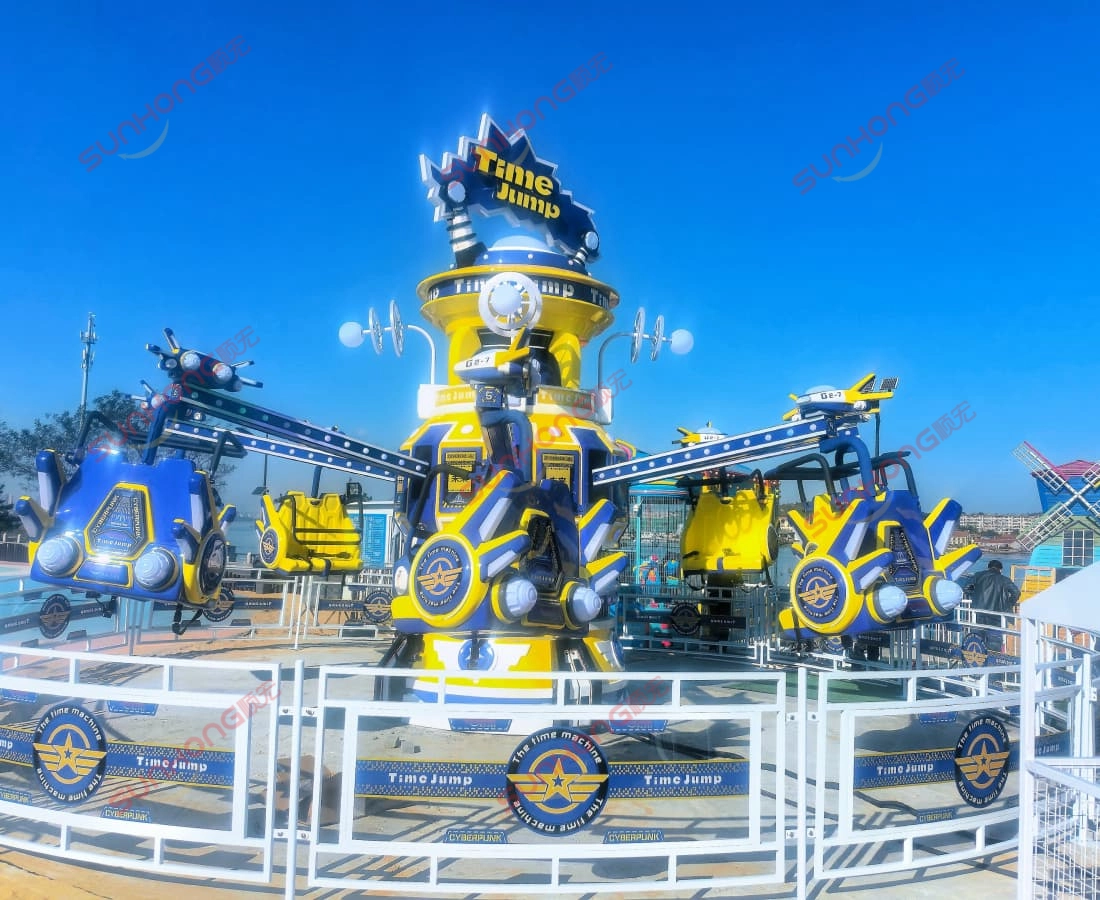
16-Seat Time Jump – Rotating Plane Ride for Amusement Parks
Time Jump is a thrilling and cost-effective amusement ride, 100% originally developed and manufactured by SUNHONG with patented certification. Designed for families and children, it combines motor drive and air-compressor cylinders to achieve dynamic movements—left-right rotation, variable-speed spinning, bouncing seats, and full 360-degree spins.
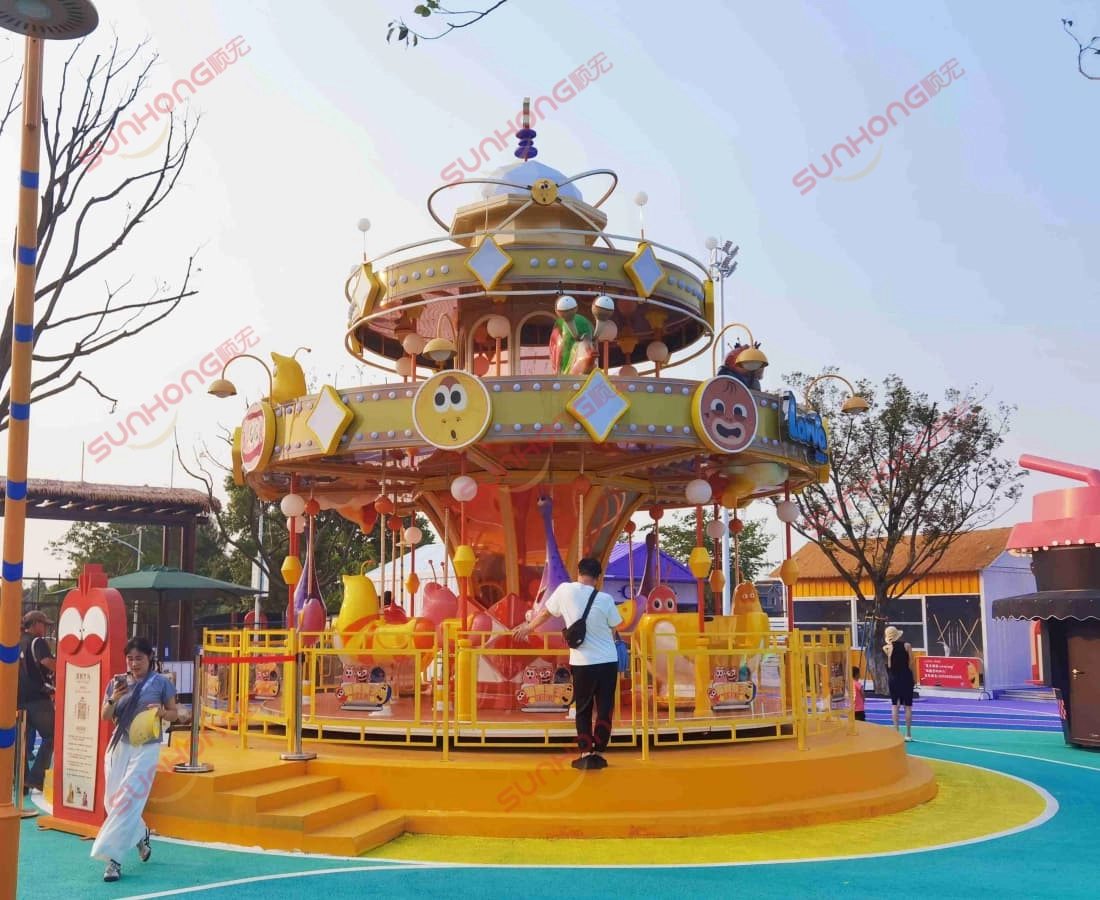
16P Larva Carousel for Sale
The Larva Carousel is a classic two-level ride themed around the beloved Larva animation. It features a variety of well-known characters, including Yellow, Red, Brown, Rainbow, Mantis, Ant, and more. This fun and engaging cartoon has brought endless laughter to children worldwide. With the strong appeal of a popular IP, the Larva Double Decker Carousel offers significant commercial value, making it an ideal carousel for sale for investors.
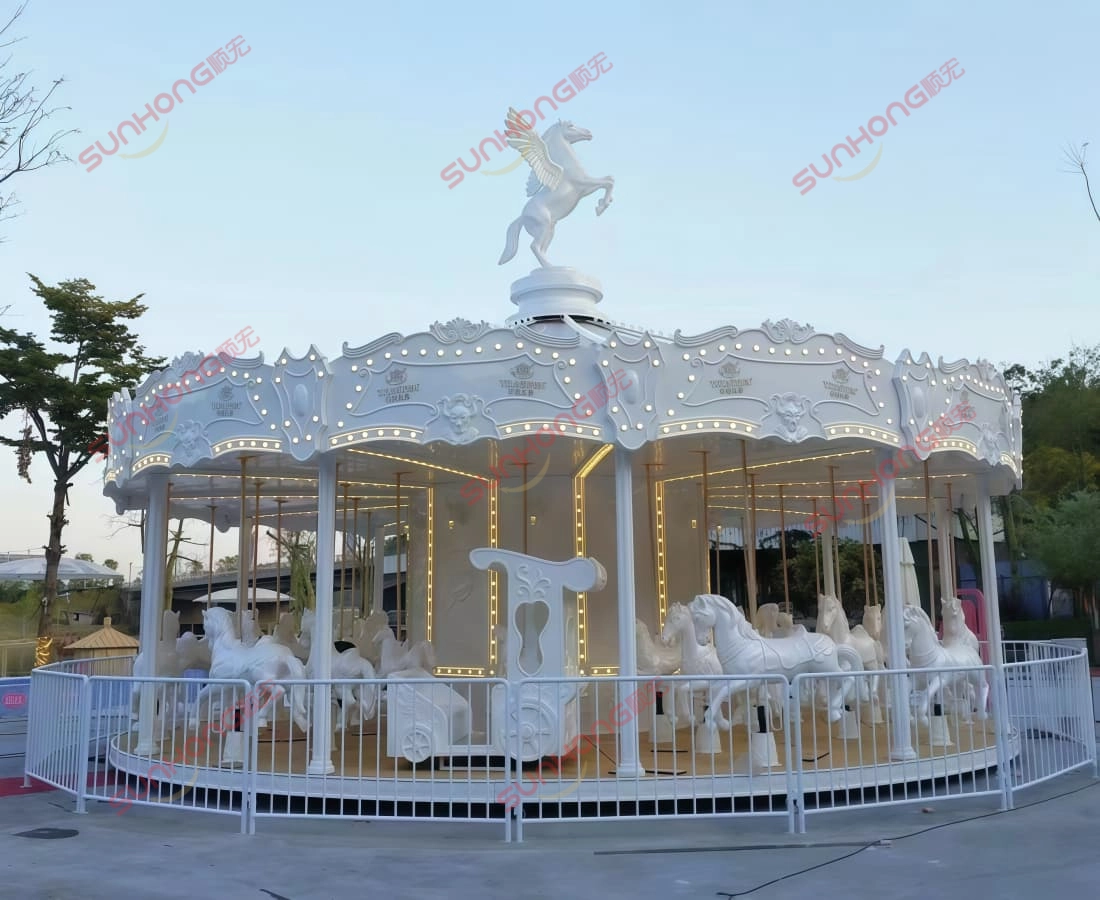
36P Knight Sparta Carousel Ride for Sale
36P Knight Sparta is a carousel ride for sale that supports OEM/ODM customization. Powered by an electric motor, the rotating frame drives seats that move up and down via a crank linkage system, simulating the motion of riding a warhorse. Inspired by the spirit of Spartan warriors—bravery, honor, and responsibility—this ride brings both excitement and meaning to every spin.
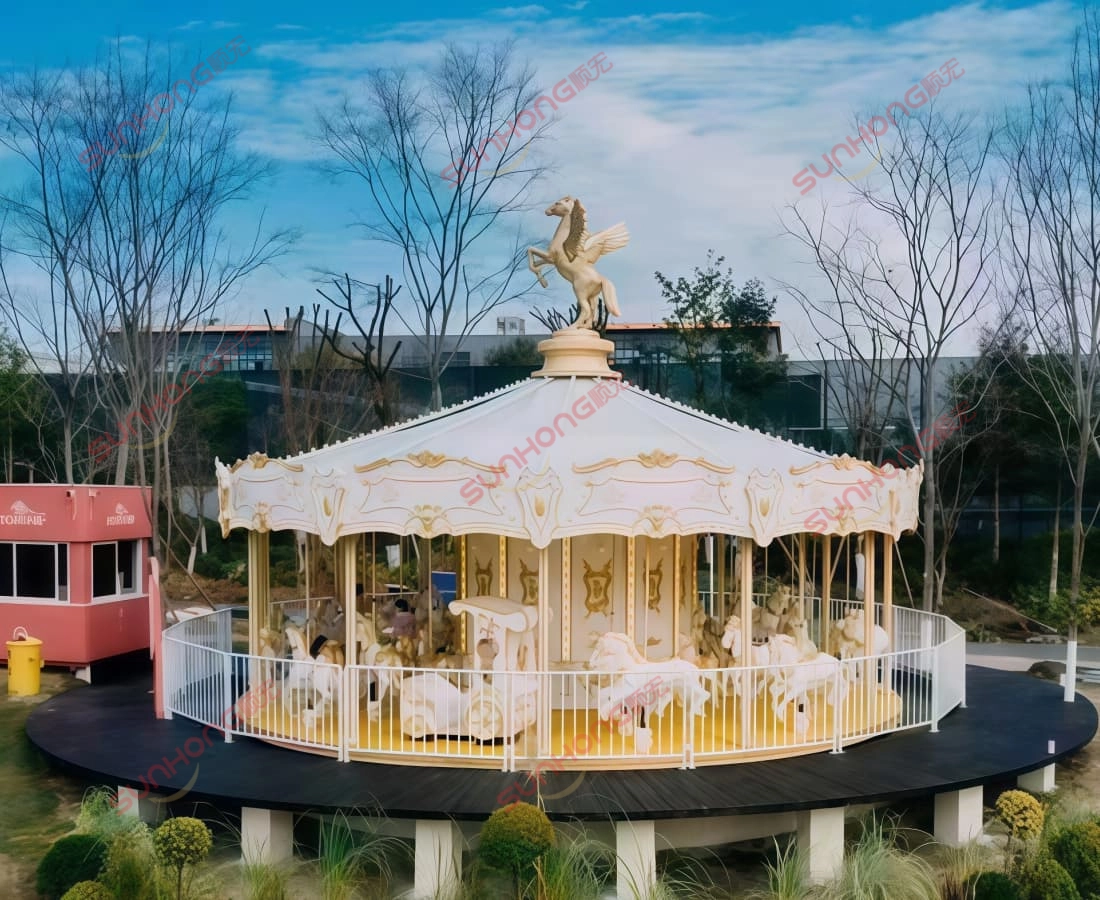
24P Knight Sparta Carousel Horse Ride for Sale
Classic horse-themed carousel horse ride for sale, equipped with double carriage seats, letting passengers feel like they’re galloping through open fields. The advanced motor system keeps the ride smooth, while the seats move up, down, forward, and back for full-on fun. It also comes with a movable base, making it easy to adjust at any site. A joyful experience loved by visitors of all ages!
Copyright © 2025 SUNHONG All Reserved.
Guangzhou Shunhong Entertainment Equipment Co.,Ltd.
sunhongrides
SUNHONGAMUSEMENTRIDES
sunhongamusementrides
Scan QR Code