
Family Entertainment Center Equipment for Shopping Malls and Retail Complexes
- Planning Indoor Family Attractions for Retail Environments
- Match the attraction mix to the mall’s commercial strategy
- Use every square meter with disciplined zoning
- Choosing Safe, Durable, and Revenue-Ready Attractions
- Evaluate safety as a complete operating system
- Compare lifecycle value rather than purchase price
- From Concept Design to Installation: A Better Procurement Process
- Require a complete technical and commercial proposal
- Coordinate amusement design with the retail complex
- Why SUNHONG Supports Integrated Mall Entertainment Projects
- One partner for planning, manufacturing, and construction
- Export capability, certification support, and project execution
- Customization focused on brand value and operational performance
- Frequently Asked Questions
Family entertainment center equipment for shopping malls and retail complexes includes soft-play systems, indoor amusement rides, arcade attractions, trampoline zones, climbing structures, interactive games, kiddie rides, redemption areas, and themed activity environments designed to increase dwell time and create repeat visits. Successful projects combine commercial planning, safety engineering, age-appropriate programming, efficient use of floor area, and reliable after-sales support. For mall owners, developers, distributors, and operators, the right solution is not simply a collection of rides; it is an integrated visitor experience that supports tenant traffic, birthday-party revenue, food-and-beverage sales, membership growth, and long-term asset utilization.
Planning Indoor Family Attractions for Retail Environments
Match the attraction mix to the mall’s commercial strategy
A retail-based entertainment venue should be planned around the shopping complex’s customer profile rather than around isolated product choices. A neighborhood mall may require affordable toddler play areas, compact coin-operated rides, and parent-friendly seating. A destination retail complex may benefit from a larger themed adventure park, electric amusement rides, interactive projection games, climbing elements, and party rooms. The attraction portfolio should serve children across several age groups while giving parents clear sightlines, comfortable waiting areas, charging points, accessible routes, and nearby refreshments.
Project owners should define the commercial objective before requesting quotations. Important questions include whether the venue will use admission tickets, timed sessions, stored-value cards, membership plans, party packages, pay-per-play pricing, or a hybrid model. The answer affects the equipment mix, staffing requirement, payment infrastructure, capacity calculations, and expected return on investment. High-throughput attractions can support busy weekends, while High Quality immersive zones may generate stronger party and membership revenue.
Use every square meter with disciplined zoning
Indoor amusement planning must account for net usable area, structural columns, ceiling height, fire exits, loading access, electrical capacity, ventilation, sprinkler clearance, acoustic control, and the location of restrooms. A strong layout separates active movement zones from quiet toddler areas and keeps service counters visible from the entrance. It also prevents crossing traffic between children entering an attraction and visitors leaving it.
Designers commonly divide a venue into reception and ticketing, footwear or locker storage, early-childhood play, active adventure, arcade and redemption, food or party functions, staff support, and maintenance areas. Emergency routes should remain unobstructed, and equipment should be positioned so that operators can inspect high-use components without dismantling adjacent attractions. In multi-level malls, the design must also evaluate lift dimensions, floor loading, noise transmission, and the route for transporting large fabricated components.
| Planning factor | Why it matters | Buyer verification method |
|---|---|---|
| Target age range | Determines ride speed, height, challenge level, supervision, and surface protection | Request age, height, and operating restrictions for every attraction |
| Available floor area | Controls capacity, circulation, queue length, and revenue potential | Provide an accurate CAD plan with columns, exits, utilities, and clear heights |
| Peak attendance | Influences entry control, staffing, queuing, sanitation, and emergency procedures | Model weekday, weekend, holiday, and party-session demand |
| Maintenance access | Reduces downtime and protects operational continuity | Confirm inspection panels, spare-parts access, service clearances, and manuals |
| Compliance requirements | Supports lawful operation and reduces safety and liability exposure | Check applicable local rules and standards, including ISO 17842 for safety of amusement rides and amusement devices |
Choosing Safe, Durable, and Revenue-Ready Attractions
Evaluate safety as a complete operating system
Safety is determined by more than the presence of guards or soft padding. Buyers should review structural calculations, anchoring methods, restraint systems, emergency-stop circuits, impact-absorbing materials, access control, fall zones, electrical protection, and the operator’s daily inspection process. Each attraction should have clear operating limits for height, weight, age, and health conditions. Signage needs to be understandable to the venue’s audience and displayed at the point of decision, not hidden inside technical documentation.
Operators should establish documented opening checks, periodic inspections, cleaning schedules, incident reporting, and preventive maintenance. The ASTM F2291 standard for amusement ride design is an important reference for design and engineering considerations in applicable markets, while local authorities may impose additional rules. Buyers should also verify whether the installation requires third-party inspection, fire approval, building permits, accessibility review, or electrical certification.
Compare lifecycle value rather than purchase price
The lowest initial quotation may not represent the lowest total cost. A meaningful comparison includes manufacturing quality, installation complexity, spare-parts availability, staff training, warranty coverage, cleaning demands, energy consumption, replacement cycles, software support, and the supplier’s response time. Heavy-use mall attractions experience repeated impacts, frequent cleaning, and long operating hours, so wear-resistant upholstery, corrosion-protected steel, durable plastics, replaceable graphics, and standardized electrical components can materially improve lifecycle economics.
Revenue potential should be assessed using capacity and utilization rather than attractive product photographs. A project model can estimate hourly throughput, average transaction value, operating hours, seasonal utilization, labor cost, maintenance reserves, rent, marketing expense, and downtime. Attractions that encourage group participation often support higher perceived value, while smaller self-service rides can increase conversion in corridors and family waiting areas. A balanced portfolio helps the operator avoid dependence on one age group or one pricing method.
From Concept Design to Installation: A Better Procurement Process
Require a complete technical and commercial proposal
A professional amusement supplier should provide more than a product list. The proposal should identify the design concept, equipment schedule, dimensions, materials, capacity, power requirements, foundation or fixing details, delivery scope, installation method, commissioning plan, training package, warranty terms, and recommended spare parts. Renderings and a 2D or 3D layout help buyers test circulation, branding, sightlines, queue management, and future expansion before production begins.
Procurement teams should clarify Incoterms, packaging, shipping responsibilities, unloading equipment, customs documentation, local labor requirements, and the division of responsibilities between the supplier, landlord, general contractor, and mall operator. A factory acceptance inspection can verify colors, dimensions, functions, finish quality, safety devices, and documentation before shipment. Site acceptance testing should then confirm installation accuracy, electrical performance, emergency systems, and operator training.
Coordinate amusement design with the retail complex
An indoor entertainment venue affects the wider property. Sound levels, queue formation, lighting spill, food odors, cleaning traffic, waste handling, and child safeguarding can influence adjacent tenants and common areas. A well-integrated amusement park design uses themed façades and clear wayfinding to attract visitors without blocking retail visibility. It can also create a natural connection between entertainment, restaurants, cinemas, supermarkets, and event spaces.
Digital systems can improve operations when they are selected for a clear business purpose. RFID or barcode wristbands can simplify admission and stored-value payment. Occupancy dashboards can support timed entry and staffing decisions. Remote monitoring may identify faults before a guest experiences a failure. However, digital features should not replace physical inspections, trained operators, or documented emergency procedures. The U.S. Consumer Product Safety Commission’s amusement ride safety guidance reinforces the importance of operator responsibility and applicable jurisdictional requirements.
Why SUNHONG Supports Integrated Mall Entertainment Projects
One partner for planning, manufacturing, and construction
SUNHONG is a large-scale comprehensive amusement ride manufacturer dedicated to the research and development, design, manufacture, and sales of amusement rides. Our services cover overall planning, R&D design, exclusive customization, manufacturing, comprehensive construction, and operation management. This integrated model helps project owners reduce coordination gaps between the amusement park design, equipment production, site installation, and opening preparation stages.
Our engineering and production teams can develop solutions for indoor playgrounds, kiddie rides, family attractions, arcade environments, themed zones, and broader amusement park equipment programs. Instead of forcing a retail complex into a standard catalog layout, our team evaluates available space, target visitors, brand identity, operating model, and local project conditions. The result can combine compact amusement park rides with larger signature attractions, creating a differentiated destination while preserving practical circulation and maintenance access.
Export capability, certification support, and project execution
With more than 10 years of export experience, SUNHONG serves international buyers, distributors, investors, and commercial property developers. Our amusement rides have been installed in more than 56 nations and regions. The company owns certificates and market-entry qualifications including CE for the European Union, UKCA for the United Kingdom, SABER for Saudi Arabia, TUV certification in Germany, and ASTM certification for the United States, subject to the specific product and project requirements.
Certification documentation should always be reviewed against the destination country, product category, installation environment, and authority requirements. SUNHONG supports this process through coordinated technical files, production control, inspection preparation, packing, international delivery, installation, commissioning, and training. Our in-house experts in R&D, production, and construction provide continuity from the initial concept to final project completion, which is particularly valuable when a shopping mall has strict opening dates or multiple contractors working on the same site.
Customization focused on brand value and operational performance
Customization can include ride dimensions, color systems, theming, scenic elements, signage, control logic, access systems, safety barriers, and integration with the venue’s commercial identity. For a retail complex, visual consistency matters because the entertainment zone becomes part of the property’s destination brand. SUNHONG can help buyers develop a cohesive environment in which the entrance, attractions, party rooms, and supporting facilities share a recognizable design language.
Our goal is to become the world’s leading manufacturer of amusement rides by combining engineering capability, manufacturing discipline, project delivery, and responsive global service. Buyers evaluating an amusement park ride supplier should compare not only equipment specifications but also design ownership, communication quality, documentation, installation resources, warranty response, and the ability to support future expansion. These factors determine whether the entertainment asset remains attractive, safe, and commercially productive after opening day.
Contact SUNHONG at sunhong@isunhong.com or visit our official website to discuss a customized retail entertainment project, review amusement park equipment, or request an integrated amusement park design proposal.
Frequently Asked Questions
What attractions work best in a shopping mall entertainment center?
Suitable options include soft-play systems, toddler zones, kiddie rides, arcade games, redemption attractions, climbing structures, trampoline areas, interactive games, party rooms, and selected themed amusement rides. The final mix should reflect the mall’s customer profile, available space, ceiling height, pricing model, and expected attendance.
How should buyers calculate the required space for an indoor entertainment venue?
Buyers should provide an accurate plan showing floor area, columns, ceiling height, exits, utilities, loading access, and structural restrictions. The design should reserve space for attractions, queues, circulation, reception, seating, storage, staff areas, maintenance access, and emergency routes rather than allocating the entire floor to rides.
What safety documents should an amusement ride supplier provide?
A supplier should provide equipment specifications, operating limits, installation and anchoring information, inspection and maintenance manuals, electrical details, emergency procedures, warranty terms, and applicable certification documentation. Buyers should also confirm local building, fire, accessibility, and amusement ride requirements with the relevant authorities.
How can a mall entertainment project improve return on investment?
ROI can be improved through a balanced attraction mix, high-throughput activities, birthday and group packages, memberships, stored-value payment, repeat-visit programs, efficient staffing, preventive maintenance, and integration with nearby food, cinema, and retail offers. Financial modeling should include utilization, ticket value, labor, rent, marketing, maintenance, energy, and downtime.
Can amusement rides be customized for a shopping mall brand?
Yes. Customization may cover dimensions, colors, theming, scenic elements, signage, control systems, safety barriers, access methods, and the overall visual identity. A customized design should preserve required safety clearances, maintainability, capacity, and compliance with destination-market regulations.
Does SUNHONG provide installation and project management?
SUNHONG provides integrated services covering overall planning, R&D design, customized manufacturing, comprehensive construction, installation support, commissioning, operation management, and project completion. Its in-house R&D, production, and construction teams support international projects from concept through delivery.
Outdoor Theme Park Ride Pricing: MOQ, Lead Time, and Shipping
Wholesale thrill rides manufacturer and supplier
Wholesale mechanical amusement rides manufacturer and supplier
Top 5 amusement thrill rides Company List and Products Compared in US
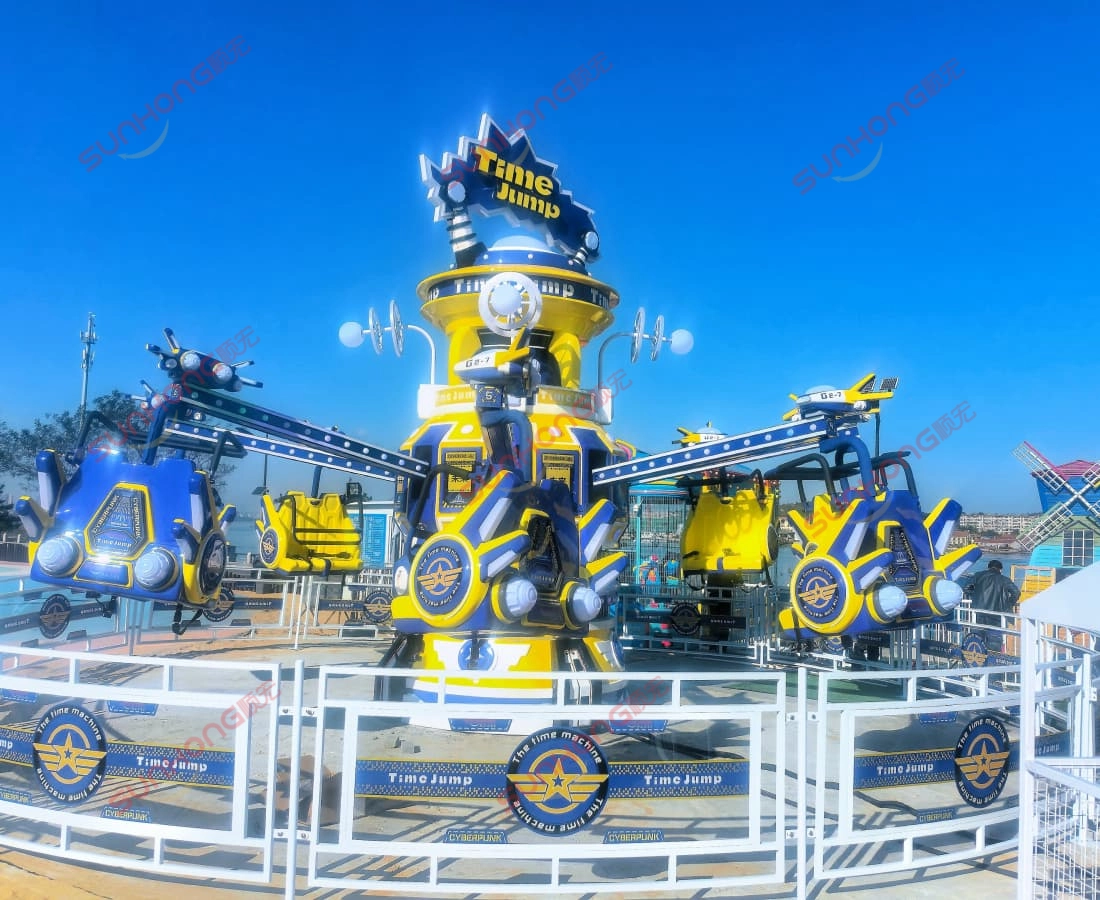
16-Seat Time Jump – Rotating Plane Ride for Amusement Parks
Time Jump is a thrilling and cost-effective amusement ride, 100% originally developed and manufactured by SUNHONG with patented certification. Designed for families and children, it combines motor drive and air-compressor cylinders to achieve dynamic movements—left-right rotation, variable-speed spinning, bouncing seats, and full 360-degree spins.
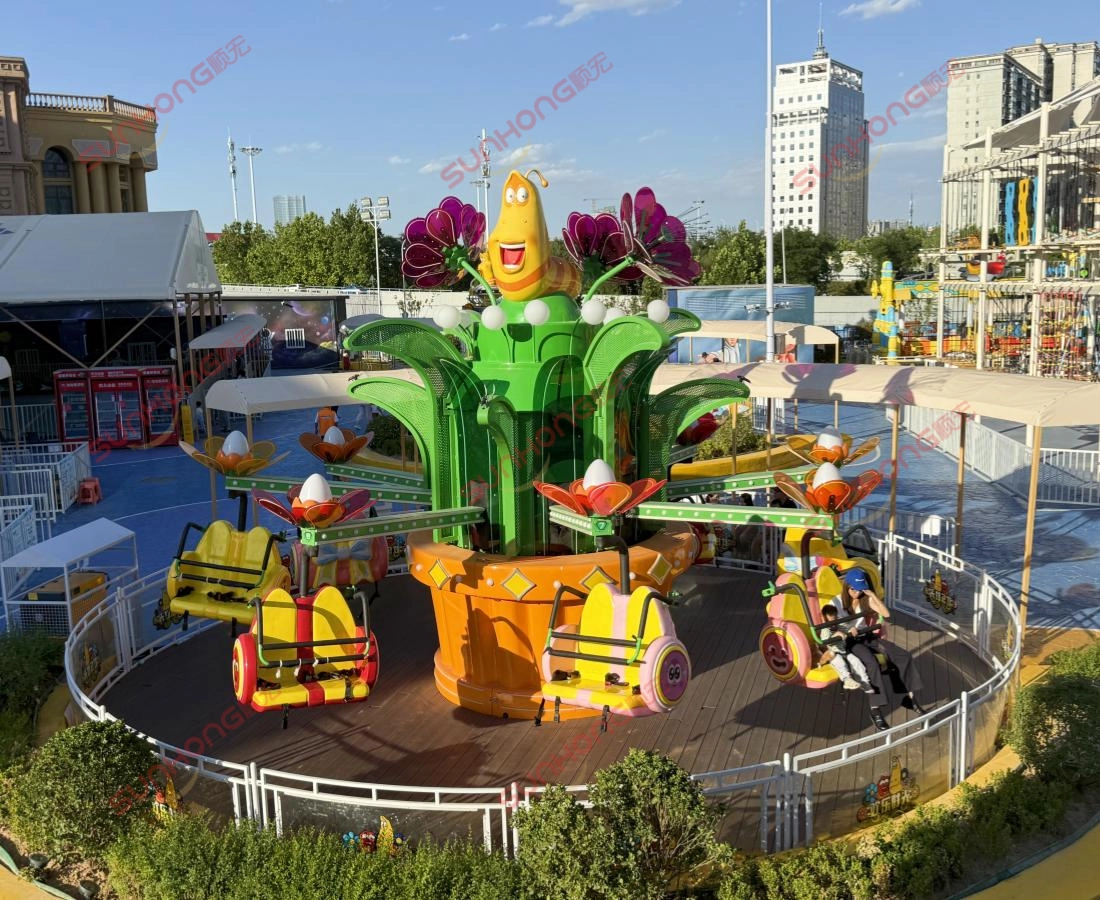
Larva Blooms Bounce Ride – Hot IP Custom Attraction with 360° Spin & Bounce
Larva Blooms is a patented bounce ride inspired by the hit Larva animation series. Featuring full platform rotation, 360° spinning seats, and dynamic bouncing motion, it delivers a thrilling ride experience for families and kids. IP customization available with OEM/ODM service.
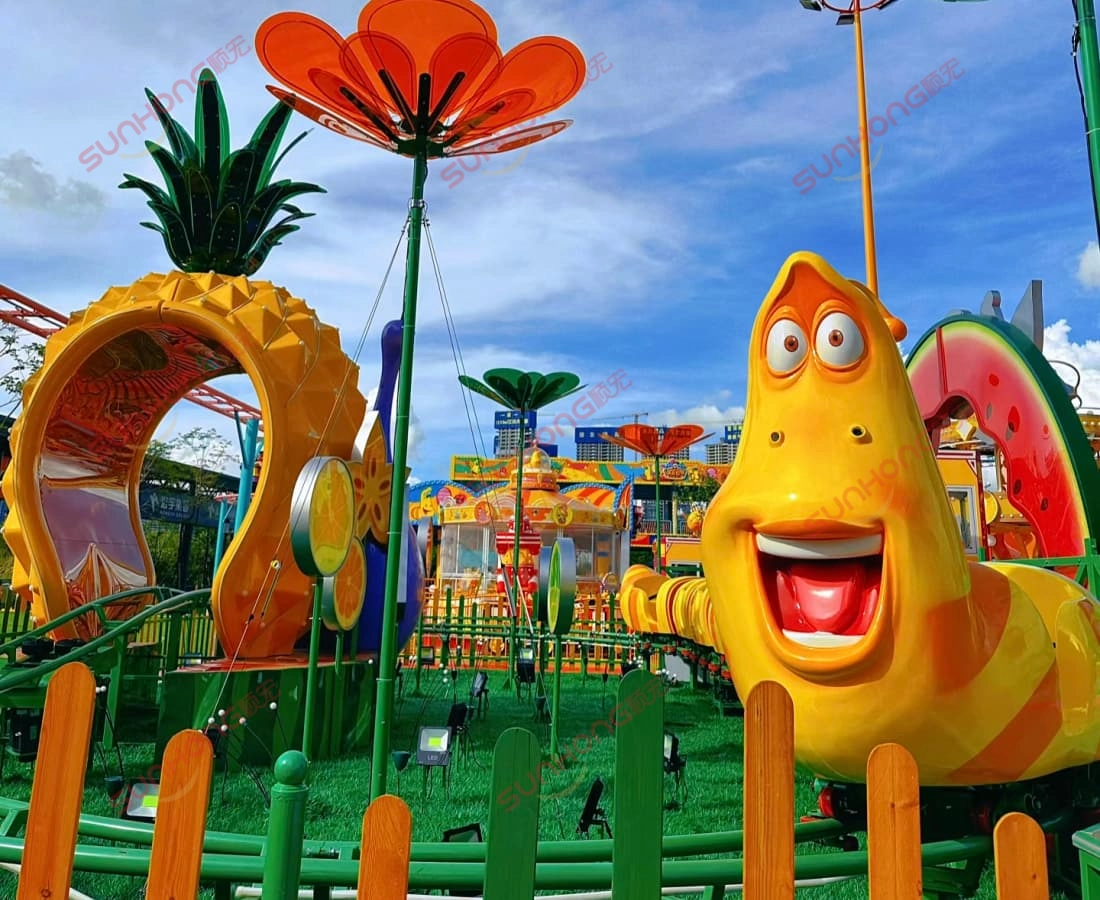
Larva Fruitland – A Mini Roller Coaster Adventure for Kids and Families
Larva Fruitland is a mini roller coaster themed after the Larva animated series. With vibrant colors and gentle motion, it’s perfect for kids and families. This small coaster features IP characters, a fruit farm design, and photo-worthy appeal. Ideal for indoor or outdoor parks. OEM/ODM customization available for your branding needs.

360 Degree Rotating Ride Swing Thrill Amusement Rides for Attractions
Air Bus is a stunning addition to our family amusement rides, delivering a one-of-a-kind 360° dual-rotation experience. With its swinging arm and self-spinning cabin, bright yellow flying-bus design, dynamic music effects, and customizable options, this ride is more than just entertainment—it’s a show-stopping centerpiece that helps your park attract crowds.
Leave a message
Ready to elevate your amusement offerings?
Contact Sunhong today to explore how we can bring your vision to life and create unforgettable experiences for your visitors.
* Rest assured that your privacy is important to us, and all information provided will be handled with the utmost confidentiality.
Copyright © 2025 SUNHONG All Reserved.
Whatsapp: +8613922331804
Guangzhou Shunhong Entertainment Equipment Co.,Ltd.
sunhongrides
SUNHONGAMUSEMENTRIDES
Scan QR Code