
Family Entertainment Center Equipment Selection Guide for Small, Medium, and Large Venues
- How to Match Indoor Attractions to Venue Scale
- Small venues: prioritize utilization, flexibility, and fast payback
- Medium venues: build an attraction portfolio with balanced throughput
- Large venues: develop an integrated destination rather than a product collection
- Commercial and Technical Criteria for Attraction Procurement
- Evaluate capacity, revenue, and lifecycle economics
- Confirm safety, standards, and regulatory responsibilities
- Design for accessibility, cleaning, and daily operations
- Layout, Guest Flow, and Investment Planning
- Use zoning to improve safety and dwell time
- Phase capital expenditure without weakening the opening offer
- Why SUNHONG Can Support a Complete Entertainment Project
- From concept development to manufacturing and installation
- Customized amusement park equipment and design capabilities
- International documentation and project delivery experience
- Frequently Asked Questions
Selecting family entertainment center equipment requires more than comparing product prices or choosing the most visually attractive attractions. Venue owners must match capacity, guest demographics, ceiling height, floor loading, operating model, safety requirements, staffing levels, and revenue objectives. Small sites often benefit from compact modular attractions and birthday-party products, medium venues need a balanced attraction portfolio with strong throughput, and large destinations require integrated amusement park design, zoning, queue management, theming, maintenance planning, and scalable control systems. A reliable procurement process evaluates the complete lifecycle of each attraction, including installation, inspection, cleaning, spare parts, energy use, operator training, and replacement planning. Buyers should also verify applicable standards such as ISO 17842 for amusement rides and devices, consult local regulators, and request documented compliance with relevant national requirements.
How to Match Indoor Attractions to Venue Scale
Small venues: prioritize utilization, flexibility, and fast payback
A small family entertainment center typically operates in a constrained footprint, making every square meter commercially important. The preferred mix usually combines soft play structures, toddler zones, redemption arcade cabinets, compact electric amusement park rides, party rooms, and a limited number of high-demand interactive games. These products can serve multiple age groups without requiring the large safety envelopes associated with major thrill attractions. Modular soft-play towers are particularly valuable because slides, climbing elements, ball pools, obstacles, and themed panels can be rearranged or expanded as demand develops.
For a compact venue, attraction selection should begin with a measured space plan rather than a catalog. The plan should identify columns, emergency exits, fire equipment, HVAC units, electrical panels, low-clearance areas, and customer-service sightlines. Operators should retain sufficient circulation space for children, parents, wheelchairs, strollers, and staff. A visually impressive installation that blocks supervision routes can increase labor costs and reduce safety performance. Small operators should also favor equipment with simple daily inspection procedures, durable upholstery, accessible replacement parts, and low training requirements.
Medium venues: build an attraction portfolio with balanced throughput
Medium-sized facilities can support a more diversified revenue model. A practical configuration may include a multilevel play system, trampoline or ninja activity zone, laser tag or interactive projection area, bumper cars, family rides, arcade and prize counters, dedicated party suites, and a café or quick-service food zone. The objective is not to fill the building with unrelated products. Instead, each attraction should serve a defined customer segment and contribute to a coherent visit duration.
Capacity modeling is essential at this stage. Buyers should estimate hourly demand by age group, calculate the number of simultaneous users, and compare expected throughput with queue tolerance. A ride with a high ticket price but low hourly capacity may perform well as a High Quality feature, while a lower-cost interactive attraction can generate repeat use and support group bookings. Medium venues should also separate high-energy activities from quiet toddler areas and dining spaces. This reduces cross-traffic, improves acoustics, and allows families with different preferences to remain in the facility longer.
Large venues: develop an integrated destination rather than a product collection
Large entertainment destinations require master planning before individual products are approved. The equipment portfolio may include themed indoor rides, large soft-play landscapes, go-karts, trampoline parks, climbing walls, dark rides, family roller coasters, water-play features, immersive media, arcade halls, and outdoor amusement park rides. These attractions must be connected through a deliberate guest journey, with clear arrival points, ticketing logic, queue locations, rest areas, food service, retail, toilets, first-aid access, and evacuation routes.
At this scale, the owner should establish a project brief that defines target attendance, peak-day volume, average dwell time, age distribution, revenue per guest, seasonal variation, and planned expansion. Infrastructure requirements may include reinforced foundations, specialized power distribution, fire detection, smoke control, ventilation, acoustic treatment, data networks, drainage, and backup systems. Equipment that appears inexpensive during initial purchasing can become costly if the building requires late structural changes or if spare parts must be imported without a service plan.
Commercial and Technical Criteria for Attraction Procurement
Evaluate capacity, revenue, and lifecycle economics
The purchase price is only one component of total cost of ownership. A buyer should examine shipping, customs, civil works, installation, commissioning, staff training, inspection, insurance, cleaning, consumables, utilities, software subscriptions, parts inventory, and eventual refurbishment. Revenue assumptions should be based on realistic operating hours and utilization rather than maximum theoretical capacity. For example, a product rated for a certain number of users per cycle may experience lower practical throughput because of loading time, age restrictions, cleaning intervals, birthday-party schedules, or operator breaks.
| Venue scale | Typical attraction strategy | Primary commercial objective | Key procurement risk | Recommended planning focus |
|---|---|---|---|---|
| Small | Modular play, arcade, toddler activities, compact rides, party rooms | High utilization in a limited footprint | Overcrowding and poor supervision | Flexible layout, visibility, simple maintenance |
| Medium | Multi-zone play, interactive games, trampolines, family rides, food service | Longer dwell time and repeat visits | Imbalanced capacity between attractions | Throughput modeling, age zoning, queue design |
| Large | Themed ride portfolio, immersive zones, major attractions, integrated F&B | Destination appeal and diversified revenue | Infrastructure changes and operational complexity | Master planning, phasing, systems integration |
Buyers should create a weighted evaluation matrix before requesting final quotations. Suggested criteria include safety documentation, conformity assessment, material durability, cycle capacity, accessibility, cleaning access, spare-parts availability, warranty terms, installation scope, delivery schedule, energy consumption, customization capability, and supplier references. Weighting should reflect the venue’s business model. A birthday-party center may assign more importance to group capacity and party-room adjacency, while a destination facility may prioritize visual impact, ride reliability, and themed storytelling.
Confirm safety, standards, and regulatory responsibilities
Safety responsibility is shared among the manufacturer, installer, operator, inspector, and local authority. Buyers should determine which rules apply in the project jurisdiction before signing a purchase order. Relevant references may include ASTM F2291 for amusement ride design, local building and fire codes, electrical regulations, accessibility provisions, and occupational safety requirements. The U.S. Consumer Product Safety Commission amusement ride guidance is also useful for understanding the distinction between manufacturer information, inspection, reporting, and operational responsibility in the United States.
Documentation should include engineering drawings, load data, anchoring details, electrical diagrams, operating manuals, maintenance schedules, risk assessments, inspection procedures, material specifications, certificates, and recommended user restrictions. A certificate alone does not replace a site-specific approval process. The venue owner must ensure that the final installation matches approved drawings and that operators receive documented training. Height, age, health, and supervision rules should be visible to guests and consistently enforced.
Design for accessibility, cleaning, and daily operations
Inclusive planning improves both compliance and guest satisfaction. Routes should accommodate mobility devices where the attraction concept permits, and families should have clear information about transfer requirements, sensory intensity, height restrictions, and companion access. Accessible seating, rest points, handrails, non-slip surfaces, and readable signage should be considered during design rather than added after installation.
Cleaning and inspection access directly affect availability. Upholstered surfaces, foam elements, netting, handrails, touchscreens, harnesses, and food-adjacent areas require different sanitation procedures. Equipment should allow staff to reach concealed areas without excessive dismantling. Daily checklists should cover structural components, fasteners, padding, barriers, electrical systems, emergency stops, restraint systems, sensors, and signage. An attraction that is difficult to inspect may suffer longer downtime and inconsistent service quality.
Layout, Guest Flow, and Investment Planning
Use zoning to improve safety and dwell time
A strong indoor amusement layout separates activities according to energy level, age, noise, and supervision needs. Toddler play should not share an uncontrolled entrance with high-speed attractions. Food and beverage seating should provide visibility toward children’s areas without creating conflict with active circulation. Queues should avoid blocking fire exits, retail counters, party-room doors, or emergency access. In larger projects, directional signage, color-coded zones, digital wayfinding, and timed-entry systems can reduce confusion during peak periods.
Guest flow should be tested with normal and peak scenarios. The design team should simulate birthday groups, school visits, stroller traffic, rainy-day surges, staff movement, cleaning closures, and emergency evacuation. A compelling entrance view can encourage conversion, but the first attraction should not absorb all demand and create a bottleneck. Distributing high-interest products across the facility encourages exploration and supports secondary spending on food, merchandise, photos, and High Quality experiences.
Phase capital expenditure without weakening the opening offer
Phased development can protect cash flow, particularly for independent operators and investors entering a new market. The first phase should establish the venue’s identity and include attractions capable of generating repeat visits. Infrastructure should be designed for future expansion, including spare electrical capacity, connection points, structural allowances, and service routes. Adding products later is easier when the original amusement park design anticipates expansion rather than treating it as an afterthought.
Budget control should distinguish between essential opening costs and optional visual upgrades. Safety systems, foundations, access control, ventilation, emergency equipment, and staff facilities are not suitable areas for aggressive cost cutting. Themed facades, digital effects, High Quality finishes, and additional media can be phased when they do not compromise the core operating system. Procurement contracts should define payment milestones tied to design approval, factory acceptance, shipment, installation, testing, and handover.
Why SUNHONG Can Support a Complete Entertainment Project
From concept development to manufacturing and installation
SUNHONG is a large-scale comprehensive amusement ride manufacturer dedicated to the research and development, design, manufacture, and sales of amusement rides. Our scope extends beyond supplying individual products. We support overall planning, R&D design, exclusive customization, manufacturing, comprehensive construction, and operation management, allowing project owners to coordinate major decisions through a more unified technical workflow.
Our in-house R&D, production, and construction teams provide continuity from the initial concept to final project completion. This is valuable for buyers developing a small indoor play center, a medium commercial family attraction, or a large destination with multiple themed zones. Our specialists can review site dimensions, attraction mix, guest circulation, structural interfaces, electrical needs, installation sequencing, and future expansion requirements before manufacturing begins.
Customized amusement park equipment and design capabilities
Every market has different space constraints, climate conditions, customer expectations, regulations, and investment thresholds. SUNHONG develops customized amusement park equipment and attraction concepts around those project variables. Product discussions may include family rides, kiddie rides, track-based attractions, interactive experiences, themed play structures, and other amusement park rides selected for the venue’s age profile and commercial strategy.
Our amusement park design approach connects product engineering with visitor experience. The result can include coordinated theming, coherent color systems, queue environments, entry features, operational sightlines, and service access. Customization should not be limited to surface decoration; it should also address capacity, footprint, loading method, accessibility, maintenance access, and integration with the building.
International documentation and project delivery experience
With more than 10 years of export experience, SUNHONG has developed procedures for international manufacturing, logistics, installation, and after-sales coordination. Our amusement rides have been installed in more than 56 nations and regions. The company holds certificates and market-entry documentation for multiple destinations, including CE for the European Union, UKCA for the United Kingdom, SABER for Saudi Arabia, TUV certification in Germany, and ASTM certification for the United States, subject to the specific product and project requirements.
International buyers should still confirm local approval conditions with competent authorities, consultants, and inspectors. SUNHONG’s documentation and engineering coordination can help reduce procurement uncertainty, while the project owner remains responsible for local permits, site conditions, operating procedures, and statutory inspections. This division of responsibility should be recorded clearly in the contract and commissioning plan.
For owners comparing suppliers, the most useful next step is a structured brief containing venue size, ceiling height, target age groups, estimated attendance, preferred attractions, budget range, destination country, delivery deadline, and desired service scope. Our team can use that information to recommend an attraction portfolio, develop amusement park design concepts, prepare technical proposals, and align manufacturing with the approved commercial plan. SUNHONG’s goal is to become the world’s leading manufacturer of amusement rides by combining engineering capability, production control, project execution, and long-term customer support.
Contact SUNHONG at sunhong@isunhong.com or visit our official website to discuss a customized attraction plan for your venue.
Frequently Asked Questions
What equipment is best for a small family entertainment center?
Small venues generally benefit from modular soft play, toddler zones, redemption arcade games, compact electric rides, interactive games, and party rooms because these products use space efficiently, support multiple age groups, and are comparatively simple to supervise and maintain.
How should a medium-sized entertainment center balance its attraction mix?
A medium venue should combine attractions with different capacities and energy levels, such as multilevel play, trampolines, interactive games, family rides, arcade products, party suites, and food service. Capacity modeling should compare expected demand, hourly throughput, queue tolerance, and age-group requirements.
What should be included in an amusement ride supplier quotation?
A complete quotation should clarify product specifications, capacity, drawings, safety documentation, materials, customization, packaging, shipping, installation, commissioning, operator training, warranty, spare parts, maintenance support, payment milestones, and exclusions such as civil works or local permits.
Which safety standards should buyers review before purchasing indoor attractions?
Buyers should identify local building, fire, electrical, accessibility, and amusement ride requirements before ordering. Depending on the market and product, relevant references may include ISO 17842, ASTM F2291, national conformity requirements, and guidance from local authorities or regulators.
Can SUNHONG customize amusement park equipment for a specific building?
Yes. SUNHONG provides exclusive customization and can coordinate attraction concepts around site dimensions, ceiling height, guest demographics, capacity targets, theming, accessibility, maintenance access, and future expansion requirements.
Does SUNHONG provide installation and project management services?
SUNHONG offers comprehensive construction and project support, with in-house expertise across R&D, production, and construction. Services can extend from initial concept and manufacturing through installation, commissioning, and project completion, subject to the agreed project scope.
Integrating show systems: animatronics, lighting, and sound
Best professional trampoline manufacturers and supplier brands
Dark rides and interactive attractions: manufacturer offerings
Top amusement park car rides Manufacturers and Suppliers
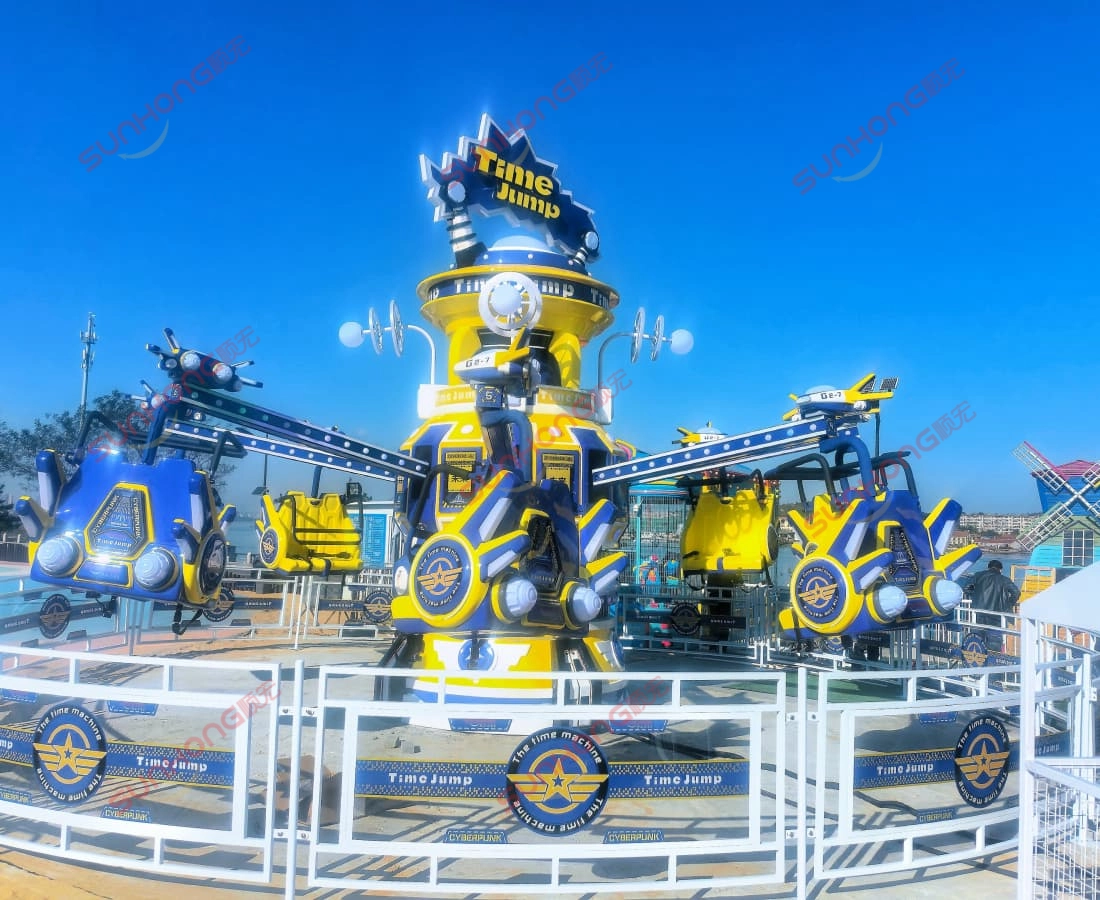
16-Seat Time Jump – Rotating Plane Ride for Amusement Parks
Time Jump is a thrilling and cost-effective amusement ride, 100% originally developed and manufactured by SUNHONG with patented certification. Designed for families and children, it combines motor drive and air-compressor cylinders to achieve dynamic movements—left-right rotation, variable-speed spinning, bouncing seats, and full 360-degree spins.
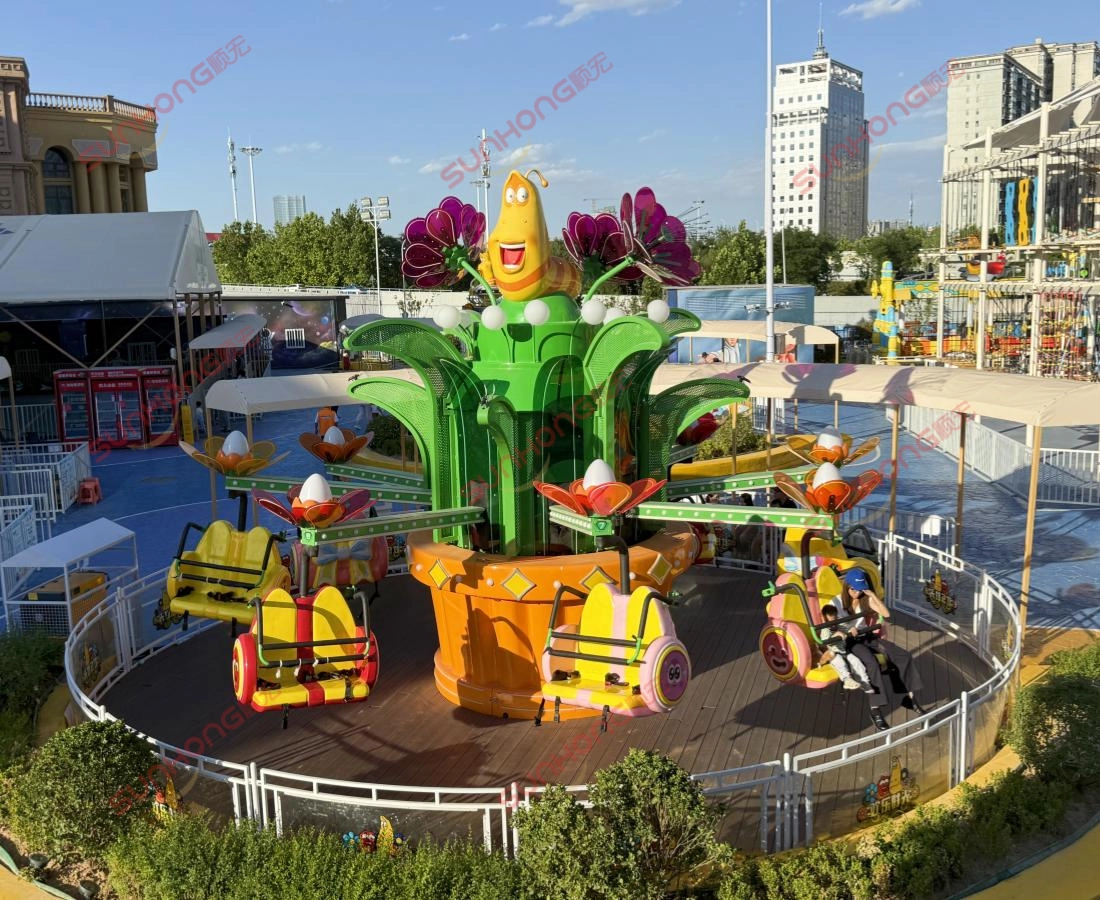
Larva Blooms Bounce Ride – Hot IP Custom Attraction with 360° Spin & Bounce
Larva Blooms is a patented bounce ride inspired by the hit Larva animation series. Featuring full platform rotation, 360° spinning seats, and dynamic bouncing motion, it delivers a thrilling ride experience for families and kids. IP customization available with OEM/ODM service.
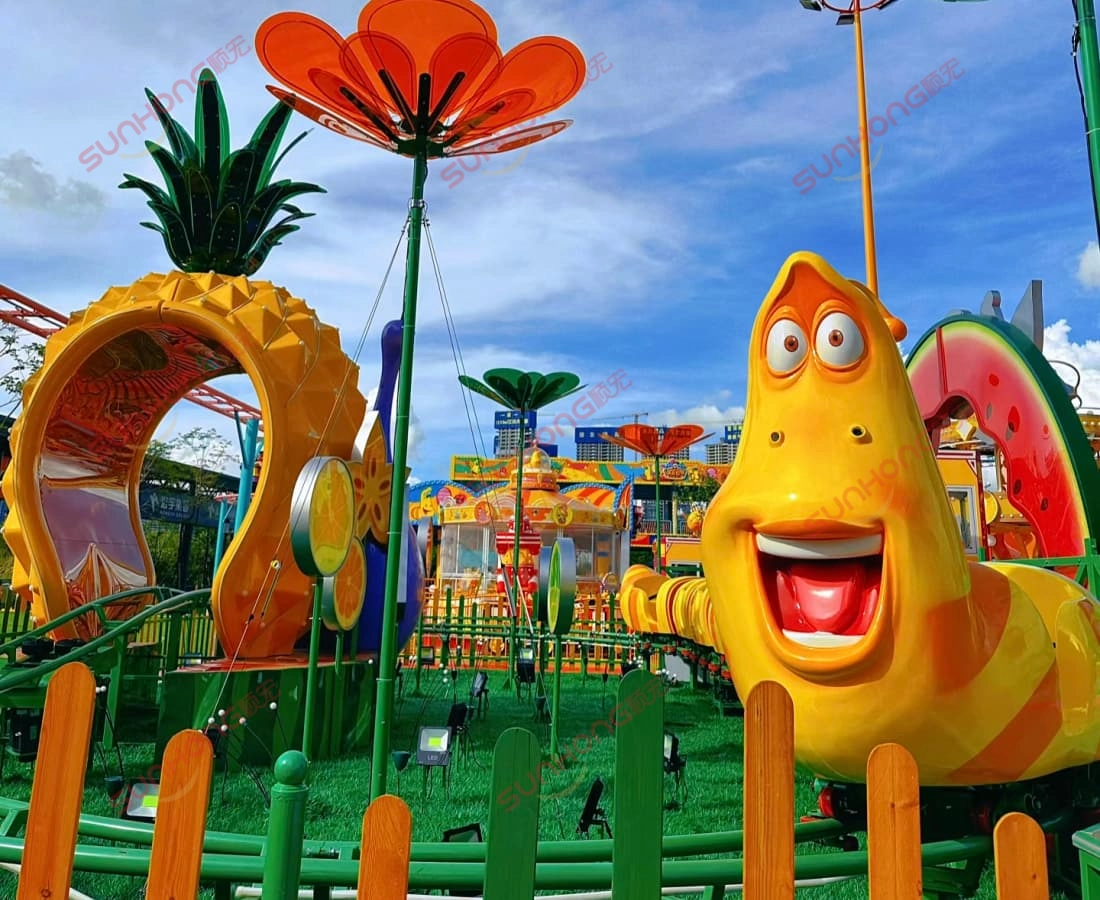
Larva Fruitland – A Mini Roller Coaster Adventure for Kids and Families
Larva Fruitland is a mini roller coaster themed after the Larva animated series. With vibrant colors and gentle motion, it’s perfect for kids and families. This small coaster features IP characters, a fruit farm design, and photo-worthy appeal. Ideal for indoor or outdoor parks. OEM/ODM customization available for your branding needs.

360 Degree Rotating Ride Swing Thrill Amusement Rides for Attractions
Air Bus is a stunning addition to our family amusement rides, delivering a one-of-a-kind 360° dual-rotation experience. With its swinging arm and self-spinning cabin, bright yellow flying-bus design, dynamic music effects, and customizable options, this ride is more than just entertainment—it’s a show-stopping centerpiece that helps your park attract crowds.
Leave a message
Ready to elevate your amusement offerings?
Contact Sunhong today to explore how we can bring your vision to life and create unforgettable experiences for your visitors.
* Rest assured that your privacy is important to us, and all information provided will be handled with the utmost confidentiality.
Copyright © 2025 SUNHONG All Reserved.
Whatsapp: +8613922331804
Guangzhou Shunhong Entertainment Equipment Co.,Ltd.
sunhongrides
SUNHONGAMUSEMENTRIDES
Scan QR Code