
Custom Outdoor Theme Park Rides for Resorts, Parks, and Developers
- Strategic Planning for Bespoke Outdoor Amusement Attractions
- Start with the commercial role of the attraction
- Match the ride system to the site and audience
- Build a narrative instead of placing unrelated equipment
- Engineering, Safety, and Procurement Criteria
- Use recognized safety principles and jurisdictional review
- Evaluate lifecycle quality, not only purchase price
- Compare attraction categories by project function
- Project Delivery for Resorts, Parks, and Property Developers
- Coordinate design, construction, and site readiness
- Control commissioning and operational readiness
- SUNHONG Custom Manufacturing and Global Project Support
- Integrated capabilities from concept to completion
- Manufacturing discipline and compliance experience
- Why project owners engage SUNHONG
- Frequently Asked Questions
Custom outdoor theme park rides are purpose-engineered attractions developed around a project’s land area, brand narrative, visitor profile, climate, capacity target, and return-on-investment model. For resorts, regional parks, and property developers, the right attraction mix can transform underused land into a destination asset, extend guest dwell time, support High Quality ticketing, and create repeat visitation. A qualified outdoor amusement attraction manufacturer should therefore contribute more than a catalogue of standard products: the supplier should connect concept development, amusement park design, structural engineering, fabrication, installation, commissioning, and after-sales service into one accountable delivery process.
Strategic Planning for Bespoke Outdoor Amusement Attractions
Start with the commercial role of the attraction
Every project should define what the ride is expected to accomplish before a product is selected. A resort may need a family attraction that increases room-package value and evening activity. A regional park may require a high-capacity anchor ride that strengthens seasonal attendance. A mixed-use developer may seek a visually prominent installation that activates retail, hospitality, and public space. These objectives influence ride type, throughput, footprint, queue architecture, operating hours, staffing, and maintenance access.
Commercial planning should include expected hourly capacity, annual operating days, average ticket contribution, secondary spending, weather-related downtime, staffing requirements, energy consumption, and planned refurbishment intervals. A visually impressive attraction with low throughput can create long queues and visitor dissatisfaction, while a highly efficient ride without a compelling story may fail to generate strong marketing value. The optimum solution balances emotional impact with measurable operating performance.
Match the ride system to the site and audience
Land availability, topography, soil conditions, prevailing winds, rainfall, salinity, ultraviolet exposure, and access for heavy transport all affect the technical specification. Coastal resorts may require enhanced corrosion protection and drainage design. Tropical locations need careful consideration of humidity, mold-resistant finishes, lightning protection, and storm preparation. Cold-weather parks may need material selection and control-system strategies that support low-temperature operation.
Audience segmentation is equally important. Young families often value gentle motion, interactive scenery, accessible boarding, and shared experiences. Teenagers and thrill-seeking adults may respond to speed, height, inversions, or dynamic launches. Developers serving broad demographics may benefit from a layered attraction portfolio: children’s rides, family rides, moderate-thrill products, and one signature landmark. This structure improves cross-generational appeal and helps distribute demand throughout the site.
Build a narrative instead of placing unrelated equipment
The strongest custom amusement park rides are integrated into a recognizable environment. Themed façades, ride vehicles, lighting, music, queue scenery, interactive media, landscaping, and retail touchpoints should reinforce the same story. A coherent narrative allows the attraction to function as both an operating machine and a marketing platform. It also creates opportunities for branded merchandise, food and beverage concepts, seasonal overlays, and social-media visibility.
For project owners, early creative coordination prevents expensive redesign. The ride envelope, evacuation routes, sightlines, foundations, show elements, service buildings, and guest circulation should be reviewed together. This is particularly important when a resort or developer is integrating an attraction with an existing hotel, waterpark, shopping district, or landscape master plan.
Engineering, Safety, and Procurement Criteria
Use recognized safety principles and jurisdictional review
Ride safety depends on the complete system: structural components, restraint design, drive machinery, sensors, programmable controls, emergency stops, braking, evacuation procedures, operator interfaces, and maintenance routines. Buyers should request a clear compliance matrix showing which standards, local codes, inspection requirements, and authority approvals apply to the destination country. ISO 17842 provides international safety guidance for amusement rides and devices, while ASTM F2291 addresses design criteria for amusement rides and devices in relevant markets.
Certification should not be treated as a final paperwork exercise. It should be incorporated into design reviews, material traceability, welding procedures, electrical architecture, load calculations, functional testing, and documentation control. Buyers should also confirm whether local authorities require third-party inspection, professional engineer approval, operational permits, or periodic examination after installation. The U.S. Consumer Product Safety Commission explains the division between federal oversight and state-level regulation for many amusement ride safety matters, demonstrating why destination-specific due diligence is essential.
Evaluate lifecycle quality, not only purchase price
A low initial quotation may become expensive if it excludes foundation information, shipping protection, installation supervision, commissioning, operator training, spare parts, software backups, or inspection support. A procurement comparison should identify the total cost of ownership over the planned operating period. Important questions include the expected maintenance frequency, wear-part availability, warranty scope, response time for technical support, remote diagnostic capability, and the supplier’s process for design changes.
Quality assurance should cover incoming steel and electrical components, dimensional inspection, weld testing, coating thickness, control-panel testing, factory acceptance testing, and final site commissioning. A buyer should request drawings, manuals, parts lists, risk assessments, inspection records, and recommended preventive-maintenance schedules in a controlled document package. These records support safer operations and reduce dependence on individual employees.
Compare attraction categories by project function
| Attraction category | Primary project function | Key procurement measures | Typical planning concern |
|---|---|---|---|
| Family rides | Broad demographic appeal and repeat participation | Capacity, accessibility, comfort, restraint suitability | Balancing gentle excitement with strong thematic appeal |
| Children’s rides | Family-zone activation and younger guest engagement | Scale, supervision, boarding efficiency, visual safety | Designing for caregivers and children within one experience |
| Thrill rides | Destination identity and high-impact marketing | Cycle time, structural loads, evacuation, queue throughput | Managing height, weather limits, and operational complexity |
| Interactive attractions | All-weather engagement and storytelling | Software reliability, content updates, uptime, sanitation | Maintaining technology and content after launch |
| Observation or landmark rides | High visibility, photography, and park orientation | Wind loads, accessibility, capacity, lighting, views | Integrating foundations and skyline impact into the master plan |
The table is a planning framework rather than a substitute for engineering calculations. Final specifications depend on the selected ride model, site conditions, applicable regulations, and the manufacturer’s validated design. For European projects, buyers should also review the official CE marking guidance and confirm which directives and harmonized standards apply to the complete installation.
Project Delivery for Resorts, Parks, and Property Developers
Coordinate design, construction, and site readiness
Large outdoor attractions involve multiple interfaces: civil works, foundations, utilities, drainage, access roads, fire protection, fencing, landscaping, lighting, ticketing, information systems, and guest circulation. A reliable supplier should issue interface drawings early and identify owner-supplied works, permitted tolerances, lifting requirements, temporary storage, and installation sequencing. This reduces the risk of a completed ride waiting for unfinished foundations or incompatible electrical infrastructure.
Design coordination should also address accessibility, emergency access, queue shade, rain management, toilets, first aid, stroller storage, staff areas, and service routes. These details directly affect guest satisfaction and operational efficiency. A ride that performs well mechanically can still underperform commercially if guests stand in an exposed queue or operators cannot access critical equipment safely.
Control commissioning and operational readiness
Commissioning should progress from mechanical completion to dry testing, sensor verification, unloaded cycles, loaded tests, emergency procedure drills, and final acceptance. Operators need practical training covering start-up and shutdown, dispatch checks, restraint verification, communication protocols, weather restrictions, evacuation, incident reporting, and daily inspection. Maintenance teams require access to lubrication points, wear-part specifications, electrical schematics, fault codes, and approved replacement procedures.
Performance acceptance should be measurable. The contract can define target capacity, cycle time, noise limits where relevant, lighting functionality, show-element performance, documentation delivery, and punch-list closure. Clear acceptance criteria protect both the purchaser and the manufacturer by turning subjective expectations into verifiable deliverables.
SUNHONG Custom Manufacturing and Global Project Support
Integrated capabilities from concept to completion
SUNHONG is a large-scale comprehensive amusement ride manufacturer dedicated to the research and development, design, manufacture, and sales of amusement rides. Our team supports overall planning, R&D design, exclusive customization, manufacturing, comprehensive construction, operation management, and related project services. This integrated structure helps resorts, park operators, developers, and distributors reduce coordination gaps between creative concepts, engineering decisions, production, and site installation.
Our product and service scope includes amusement park equipment, themed family attractions, children’s rides, thrill-oriented amusement park rides, interactive products, and complete amusement park design support. The objective is not simply to supply a machine; it is to help project owners create an attraction environment that fits the site, target market, operating model, and brand identity.
Manufacturing discipline and compliance experience
Our in-house experts in R&D, production, and construction provide support from the initial concept through final project completion. The manufacturing process can be coordinated with technical documentation, quality checks, packing, logistics, installation, commissioning, and operator handover. For international procurement, this single-source model can simplify communication and clarify responsibility across project milestones.
With more than 10 years of export experience, Shunhong, also known as SUNHONG, has certificates and market-entry experience covering requirements such as CE in the European Union, UKCA in the United Kingdom, SABER in Saudi Arabia, TUV in Germany, and ASTM certification in the United States. Certification requirements remain destination- and product-specific, so each project should be reviewed against the applicable authority and standard. SUNHONG amusement rides have been installed in more than 56 nations and regions, demonstrating international delivery capability and familiarity with varied site conditions, documentation expectations, and installation environments.
Why project owners engage SUNHONG
For an investor, the practical advantage of working with SUNHONG is the ability to discuss commercial objectives, creative direction, technical requirements, and construction planning within one coordinated organization. Our goal is to become the world’s leading manufacturer of amusement rides, supported by continuous product development and a focus on dependable project execution.
Buyers evaluating a custom attraction should provide the available site plan, country of installation, target audience, desired capacity, theme references, budget range, schedule, and preferred service scope. SUNHONG can then help define a suitable concept, identify technical interfaces, prepare a preliminary solution, and clarify the information required for a responsible quotation. This structured process supports better decisions before fabrication begins and helps align the finished attraction with long-term operational goals.
Contact SUNHONG at sunhong@isunhong.com or visit https://www.isunhong.com/ to review custom amusement park equipment and develop a site-specific attraction solution.
Frequently Asked Questions
What should buyers define before ordering a custom outdoor amusement ride?
Buyers should define the site plan, country of installation, target audience, desired capacity, theme references, budget range, schedule, and preferred service scope before requesting a quotation.
Which standards are relevant to amusement ride procurement?
ISO 17842 and ASTM F2291 provide recognized safety and design guidance in relevant markets, but the final compliance requirements depend on the destination country, product, local codes, authority approvals, and inspection rules.
How can resorts protect a ride investment in challenging climates?
Projects should address corrosion protection, drainage, ultraviolet exposure, humidity, lightning, wind, storm preparation, and low-temperature operation according to the site’s environmental conditions.
What documents should an amusement ride manufacturer provide?
A project document package should typically include drawings, manuals, parts lists, risk assessments, inspection records, quality documentation, testing results, and recommended preventive-maintenance schedules.
Does SUNHONG support installation and commissioning?
SUNHONG provides comprehensive services that can include overall planning, R&D design, exclusive customization, manufacturing, construction, operation management, installation, commissioning, and project completion support.
How much international project experience does SUNHONG have?
SUNHONG has more than 10 years of export experience, and its amusement rides have been installed in more than 56 nations and regions, with certificates and market-entry experience including CE, UKCA, SABER, TUV, and ASTM-related requirements.
Detailed installation timeline for a medium-sized coaster
Wholesale indoor amusement park rides manufacturer and supplier

Compare Carousel Manufacturers: Quality, Price, Lead Time
Outdoor Theme Park Ride Pricing: MOQ, Lead Time, and Shipping
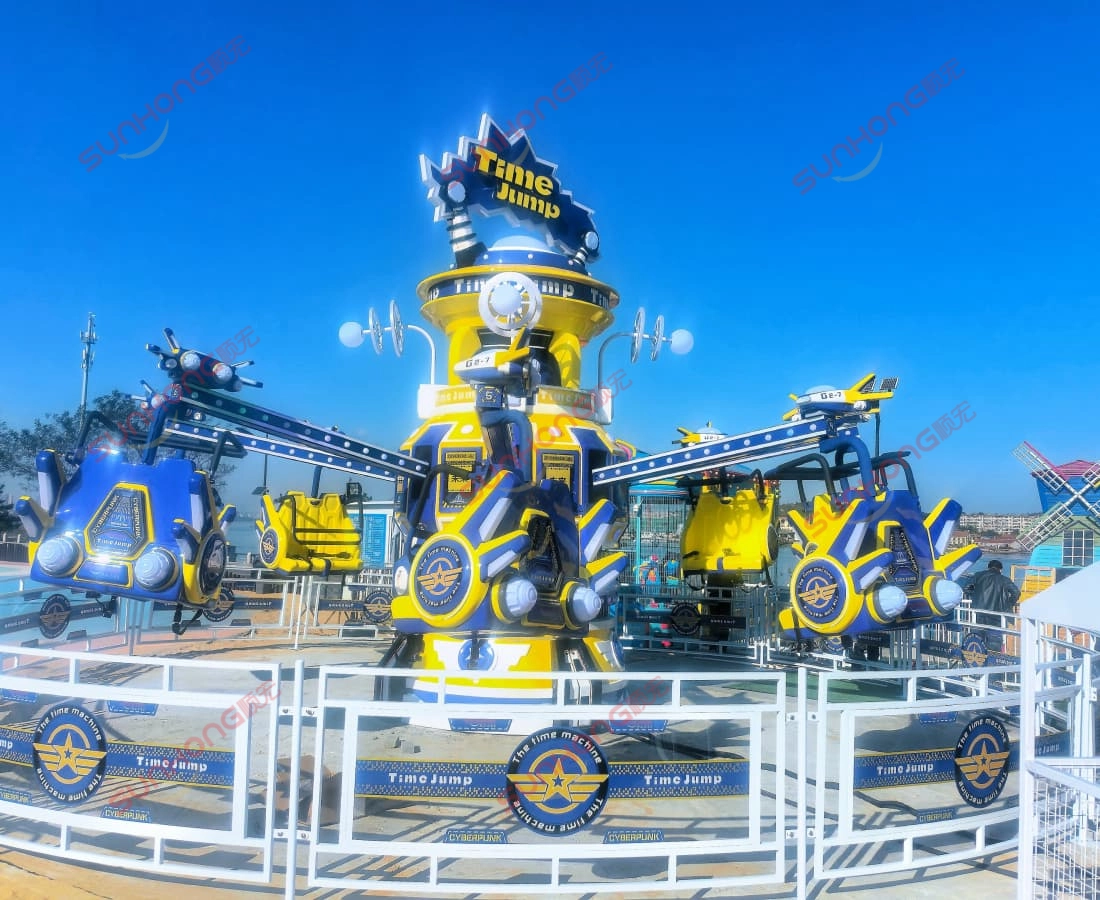
16-Seat Time Jump – Rotating Plane Ride for Amusement Parks
Time Jump is a thrilling and cost-effective amusement ride, 100% originally developed and manufactured by SUNHONG with patented certification. Designed for families and children, it combines motor drive and air-compressor cylinders to achieve dynamic movements—left-right rotation, variable-speed spinning, bouncing seats, and full 360-degree spins.
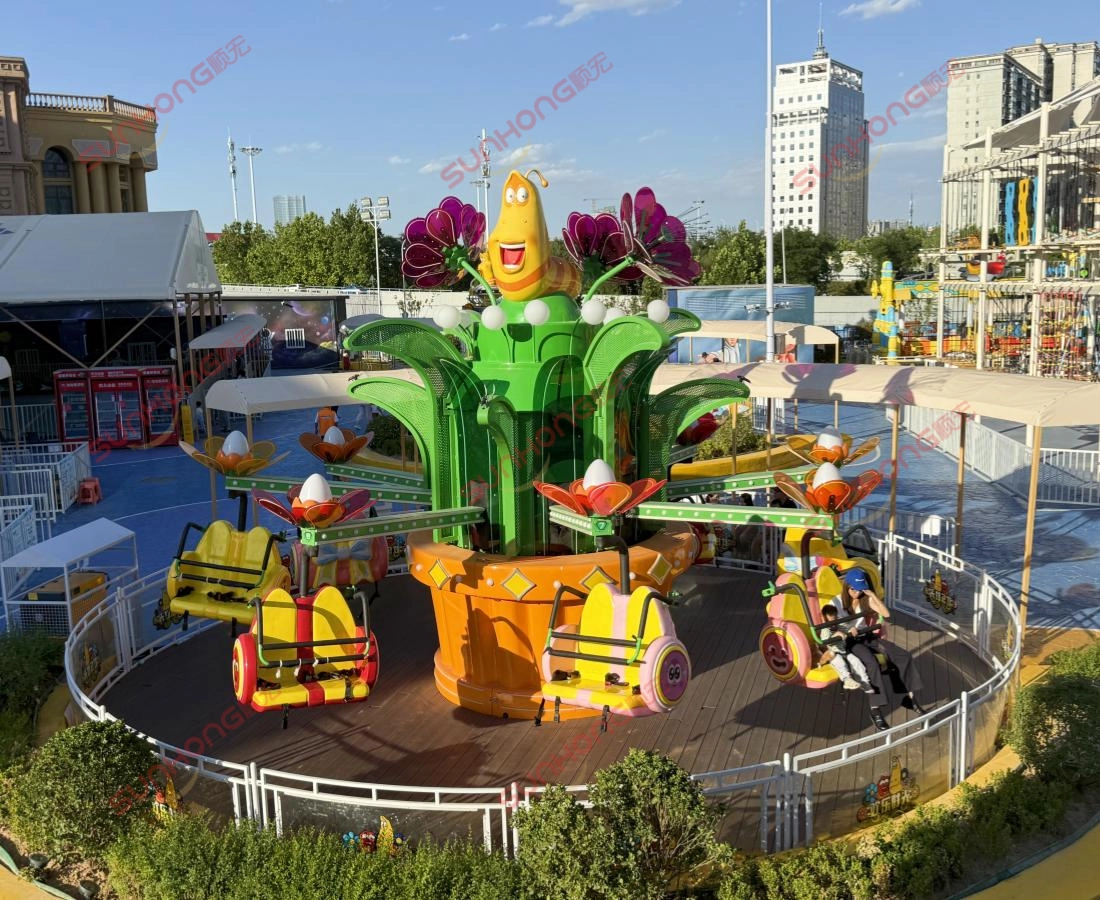
Larva Blooms Bounce Ride – Hot IP Custom Attraction with 360° Spin & Bounce
Larva Blooms is a patented bounce ride inspired by the hit Larva animation series. Featuring full platform rotation, 360° spinning seats, and dynamic bouncing motion, it delivers a thrilling ride experience for families and kids. IP customization available with OEM/ODM service.
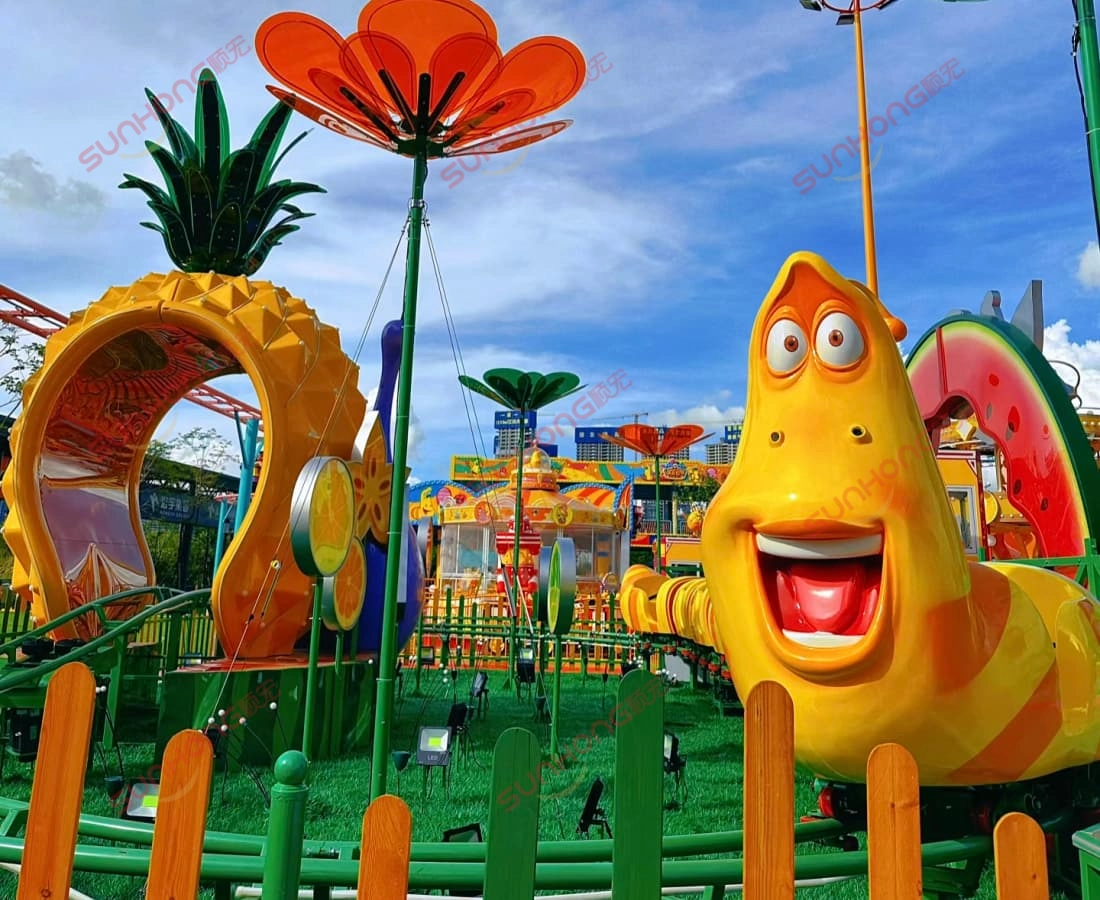
Larva Fruitland – A Mini Roller Coaster Adventure for Kids and Families
Larva Fruitland is a mini roller coaster themed after the Larva animated series. With vibrant colors and gentle motion, it’s perfect for kids and families. This small coaster features IP characters, a fruit farm design, and photo-worthy appeal. Ideal for indoor or outdoor parks. OEM/ODM customization available for your branding needs.

360 Degree Rotating Ride Swing Thrill Amusement Rides for Attractions
Air Bus is a stunning addition to our family amusement rides, delivering a one-of-a-kind 360° dual-rotation experience. With its swinging arm and self-spinning cabin, bright yellow flying-bus design, dynamic music effects, and customizable options, this ride is more than just entertainment—it’s a show-stopping centerpiece that helps your park attract crowds.
Leave a message
Ready to elevate your amusement offerings?
Contact Sunhong today to explore how we can bring your vision to life and create unforgettable experiences for your visitors.
* Rest assured that your privacy is important to us, and all information provided will be handled with the utmost confidentiality.
Copyright © 2025 SUNHONG All Reserved.
Whatsapp: +8613922331804
Guangzhou Shunhong Entertainment Equipment Co.,Ltd.
sunhongrides
SUNHONGAMUSEMENTRIDES
Scan QR Code