
Comparing Steel, Fiberglass, and Modular Thrill Ride Designs
- Material Strategies for High-Intensity Amusement Attractions
- Steel: the structural choice for demanding ride cycles
- Fiberglass: efficient theming and lightweight guest-facing components
- Modular construction: a delivery and expansion strategy
- Performance, Cost, and Installation Comparison
- How the three approaches behave across the project lifecycle
- Installation risk and commissioning readiness
- How Buyers Should Specify a Ride Package
- Start with the commercial and operational brief
- Evaluate supplier evidence instead of brochure language
- Use lifecycle value as the final decision metric
- SUNHONG Capabilities for Integrated Amusement Ride Projects
- From concept development to complete delivery
- Material-aware customization and manufacturing control
- International experience and destination support
- Frequently Asked Questions
- Which material is best for a high-capacity attraction?
- Is fiberglass suitable for the main structure of a ride?
- What are the advantages of modular amusement equipment?
- How should a buyer compare supplier quotations?
- What certifications should be requested for an international project?
- Can SUNHONG provide both the ride and park planning support?
Steel, fiberglass, and modular construction each solve different challenges in high-intensity amusement attractions. Steel is typically selected for primary structural strength, long service life, and large dynamic loads; fiberglass is valued for lightweight sculptural theming, smooth surfaces, and corrosion resistance; modular systems help reduce site disruption, accelerate installation, and support phased expansion. The correct choice depends on ride intensity, climate, foundation conditions, transport route, guest capacity, theming objectives, inspection requirements, maintenance resources, and total lifecycle cost. Buyers should evaluate the complete engineering package rather than comparing material prices alone, using recognized guidance such as ISO 17842 for safety of amusement rides and amusement devices and ASTM F2291 for design of amusement rides and devices.
Material Strategies for High-Intensity Amusement Attractions
Steel: the structural choice for demanding ride cycles
Steel remains the dominant material for load-bearing frames, support columns, launch structures, coaster tracks, rotating arms, towers, and heavy-duty ride platforms. Its high strength and predictable engineering behavior make it appropriate for repeated acceleration, braking, torsion, vibration, and fatigue loading. A well-designed steel structure can also accommodate large passenger capacities and complex ride envelopes without excessive member sizes.
For project owners, the main procurement question is not simply whether steel is strong. It is whether the supplier has correctly analyzed load paths, weld details, bolted connections, fatigue exposure, wind action, seismic conditions, corrosion allowance, emergency stopping forces, and foundation reactions. Structural calculations should correspond with the final manufactured configuration, not only with an early concept drawing. Buyers should also request material traceability, welding quality records, coating specifications, non-destructive testing procedures, and inspection access for critical components.
Steel may require a more substantial foundation and more intensive corrosion-control program than lightweight alternatives. Hot-dip galvanizing, multi-layer paint systems, drainage design, sealed joints, and scheduled touch-up work can significantly influence long-term operating cost. In coastal, tropical, desert, or high-humidity locations, the coating system and maintenance plan should be defined during design instead of treated as an afterthought.
Fiberglass: efficient theming and lightweight guest-facing components
Fiberglass-reinforced plastic, often called FRP or GRP, is widely used for vehicle shells, animal figures, decorative facades, canopies, station elements, water-slide features, queue-line scenery, and interactive theming. Its principal advantage is design flexibility. Complex curves, organic forms, branded characters, rockwork, and architectural details can be produced with fewer visible seams than many traditional fabricated materials.
Lower component weight can simplify handling and reduce some secondary support requirements. Fiberglass also offers useful resistance to moisture and many environmental conditions when the resin, gel coat, pigments, fasteners, and underlying support system are correctly specified. Nevertheless, it should not automatically be treated as a replacement for the main steel chassis or dynamic load-bearing frame. FRP parts need suitable reinforcement, attachment points, impact protection, UV-resistant finishes, and access for repair.
Buyers should ask how the manufacturer controls laminate thickness, resin ratio, curing, bonding, surface finish, color consistency, and replacement-part compatibility. Poorly controlled fabrication can lead to print-through, cracking around fasteners, fading, delamination, or difficult field repairs. A professional specification should identify expected loads, allowable deflection, fire-performance requirements where applicable, cleaning chemicals, local climate, and the method used to secure decorative panels during vibration.
Modular construction: a delivery and expansion strategy
Modular ride design divides a system into engineered sections that can be fabricated, tested, transported, assembled, and replaced through a controlled sequence. Modules may include track segments, support frames, platforms, cabins, control cabinets, queue structures, themed shells, or complete ride units. This approach is especially valuable when the site has limited access, when construction must be completed during a short seasonal window, or when the owner expects future relocation or capacity expansion.
Modularity does not remove engineering requirements; it moves attention toward interfaces. Connection tolerances, bolt grades, alignment references, cable routing, drainage, electrical separation, guarding, inspection access, and commissioning procedures must be standardized. A modular system with poorly documented interfaces can create more installation risk than a conventional build. Buyers should request assembly drawings, lifting plans, module weights, container dimensions, spare-interface details, and a clear responsibility matrix between the supplier, civil contractor, electrician, and local authority.
Performance, Cost, and Installation Comparison
How the three approaches behave across the project lifecycle
Material selection affects more than the initial quotation. It influences transportation, crane requirements, foundation volume, assembly labor, inspection frequency, repainting, replacement-part storage, attraction availability, and future refurbishment. A steel-intensive attraction may carry higher civil and coating requirements but provide a robust platform for heavy-duty operation. Fiberglass can reduce visual weight and enable distinctive theming, while modularization can lower site labor and support staged investment.
| Evaluation factor | Steel-based design | Fiberglass-based components | Modular design approach |
|---|---|---|---|
| Primary role | Structural frame, track, towers, arms, platforms | Vehicle shells, scenery, facades, themed surfaces | Segmented structure, ride units, systems, or site assemblies |
| Structural capacity | High when engineered for applicable dynamic and environmental loads | Usually supplementary unless specially reinforced and engineered | Depends on module material and connection design |
| Customization | Strong for geometry and mechanical layouts | Excellent for organic shapes and branded appearance | Strong when interface standards are defined early |
| Transportation | May require oversized-load planning for large members | Relatively light but vulnerable to impact if poorly packed | Optimized for repeated shipment and staged delivery |
| Typical maintenance focus | Corrosion protection, welds, bolts, fatigue-sensitive areas | UV finish, cracks, delamination, impact damage, fasteners | Connections, alignment, utilities, seals, and replaceable interfaces |
| Best procurement advantage | Durability and load-bearing capability | Visual differentiation and lightweight theming | Installation efficiency, relocation, and phased development |
The table is a design-screening tool rather than a substitute for project-specific calculations. No material should be approved solely on generic service-life claims. Ride duty cycle, daily operating hours, passenger mass assumptions, local weather, soil conditions, cleaning chemicals, and operator behavior can materially change the result. The U.S. Consumer Product Safety Commission amusement ride safety information also illustrates why operational controls and inspection practices must be considered alongside physical construction.
Installation risk and commissioning readiness
Installation planning should begin when the attraction is still being configured. Steel components may require heavy lifting equipment, temporary bracing, and precise foundation interfaces. Fiberglass scenery needs protected storage, careful unpacking, and final finishing that does not interfere with evacuation routes or inspection access. Modular equipment can shorten the construction phase, but only if shipping documentation, installation tooling, electrical schematics, software configuration, and acceptance tests are complete.
A reliable supplier should provide a project schedule divided into design approval, procurement, fabrication, factory inspection, packing, shipment, civil readiness, assembly, electrical integration, testing, staff training, and handover. Factory acceptance testing can identify sensor, control, braking, restraint, or alignment problems before equipment reaches the destination. Site acceptance testing should then verify the installed configuration under agreed operating conditions.
How Buyers Should Specify a Ride Package
Start with the commercial and operational brief
Before requesting quotations for amusement park equipment, project owners should define the intended audience, land area, throughput target, ride duration, minimum height and age requirements, climate, operating season, daily cycles, staffing model, accessibility expectations, and planned ticket strategy. A family-oriented spinning attraction has a different engineering and theming brief from a high-capacity launch coaster or a tower-based drop experience.
The specification should also state whether the attraction is new construction, replacement equipment, a resort expansion, a traveling installation, or a relocation project. Buyers should identify available power supply, water requirements, drainage, fire-protection interfaces, network connectivity, service roads, crane access, and local authority processes. These details prevent late changes that increase cost or delay opening.
Evaluate supplier evidence instead of brochure language
Supplier due diligence should include drawings, design responsibility boundaries, quality plans, testing records, certificates relevant to the destination, references for comparable installations, spare-parts policy, warranty terms, training scope, and after-sales response procedures. The ISO 9001 quality management framework can help buyers understand how a manufacturer organizes documented processes, corrective action, and continual improvement, although certification alone does not replace technical review.
It is also important to distinguish regulatory compliance from commercial certification. Requirements can vary by country, municipality, ride category, electrical system, building code, and inspection authority. A qualified manufacturer should identify the applicable rules early, explain what documents will be supplied, and coordinate with local professionals where independent approval is required.
Use lifecycle value as the final decision metric
The lowest purchase price may not produce the lowest cost per operating hour. Buyers should compare expected uptime, preventive maintenance labor, coating renewal, spare inventory, energy consumption, replacement lead times, insurance requirements, training, and planned refurbishment. A modular attraction may create value through relocation or phased expansion. A steel-intensive system may deliver value through capacity and durability. Fiberglass theming may improve marketability by creating a distinctive visual identity that supports High Quality positioning and social-media visibility.
A useful financial model includes conservative attendance assumptions, seasonal closure, maintenance downtime, staffing, financing, shipping, import duties, civil works, and compliance costs. Sensitivity analysis can show whether a small increase in capacity, faster installation, or improved attraction appearance has a meaningful effect on payback. This approach aligns amusement park design with actual investment objectives instead of treating the ride as an isolated purchase.
SUNHONG Capabilities for Integrated Amusement Ride Projects
From concept development to complete delivery
SUNHONG is a large-scale comprehensive amusement ride manufacturer dedicated to the research and development, design, manufacture, and sales of amusement rides. Our team supports overall planning, R&D design, exclusive customization, manufacturing, comprehensive construction, and operation management. This integrated structure helps buyers coordinate the attraction concept, structural material strategy, themed appearance, control system, site interface, and commissioning plan through one accountable project pathway.
Our in-house experts in R&D, production, and construction provide services from the initial concept to final project completion. For investors developing a new destination, our amusement park design capability can connect land planning, guest circulation, queue experience, attraction mix, theming, safety access, and operational logic. For distributors and established operators, our amusement park equipment portfolio can be configured around available land, local market preferences, capacity goals, and regional compliance requirements.
Material-aware customization and manufacturing control
Our engineering process can combine steel primary structures with fiberglass vehicles, facades, and themed components where that combination best serves performance and appearance. Modular delivery can also be incorporated when road access, construction timing, relocation, or phased investment makes segmented installation commercially attractive. The design objective is to use each material where it provides the greatest functional value, rather than forcing every project into one construction method.
Manufacturing control covers fabrication, finishing, assembly checks, packing, documentation, and coordination with site teams. Buyers can discuss passenger capacity, footprint, climate exposure, visual identity, throughput, maintenance access, and future expansion before the final configuration is approved. This early coordination reduces the risk of discovering that a visually attractive ride cannot be transported, serviced, or integrated with the planned park infrastructure.
International experience and destination support
SUNHONG has more than 10 years of export experience and holds certificates for entering multiple markets, including CE for the European Union, UKCA for the United Kingdom, SABER for Saudi Arabia, TÜV-related documentation for Germany, and ASTM-related certification for the United States, subject to the requirements of the specific project and authority. SUNHONG amusement rides have been installed in more than 56 nations and regions, demonstrating experience with international logistics, local coordination, documentation, and varied operating environments.
Our goal is to become the world’s leading manufacturer of amusement rides by combining product development, manufacturing discipline, construction capability, and long-term customer support. For buyers comparing an amusement park ride supplier, the relevant question is whether the partner can manage the complete chain from technical concept to safe opening and reliable operation. SUNHONG’s global service model is structured to support that requirement while offering customized amusement park equipment and integrated project solutions.
Frequently Asked Questions
Which material is best for a high-capacity attraction?
Steel is generally the preferred material for primary load-bearing structures because it can be engineered for high passenger loads, repeated dynamic forces, and complex support conditions. Fiberglass is normally used for lighter guest-facing or themed components, while modular construction describes how the system is delivered and assembled rather than a single material.
Is fiberglass suitable for the main structure of a ride?
Fiberglass can be engineered for selected structural applications, but it is more commonly used for vehicle shells, decorative surfaces, facades, and scenery. Suitability depends on reinforcement, loads, attachment details, environmental exposure, inspection access, and the applicable design requirements.
What are the advantages of modular amusement equipment?
Modular equipment can simplify transport, reduce site disruption, shorten installation, support phased investment, and make relocation or replacement easier. These benefits depend on accurate interfaces, complete assembly documents, appropriate lifting plans, and disciplined commissioning.
How should a buyer compare supplier quotations?
Quotes should be compared using total lifecycle value, including capacity, uptime, civil works, shipping, installation, maintenance, spare parts, training, compliance documentation, warranty, and after-sales support. The cheapest initial offer may not provide the lowest cost per operating hour.
What certifications should be requested for an international project?
Buyers should request documentation relevant to the destination, ride category, electrical system, local building rules, and inspection authority. CE, UKCA, SABER, ASTM-related documents, TÜV documentation, and ISO-based quality processes may be relevant, but the final requirement must be confirmed against the laws and approval procedures of the project location.
Can SUNHONG provide both the ride and park planning support?
Yes. SUNHONG provides overall planning, amusement park design, R&D, exclusive customization, manufacturing, construction, operation management, and related project support, allowing buyers to coordinate an attraction package from early concept through completion.
Contact SUNHONG at sunhong@isunhong.com or visit https://www.isunhong.com/ to discuss a customized amusement park equipment, design, or ride project.
Outdoor Theme Park Ride Supplier Red Flags That Cause Delays
Amusement Attraction Manufacturer FAQs - SUNHONG
The B2B Buyer’s Guide to ride installation services
Best Family Rides manufacturers and supplier brands
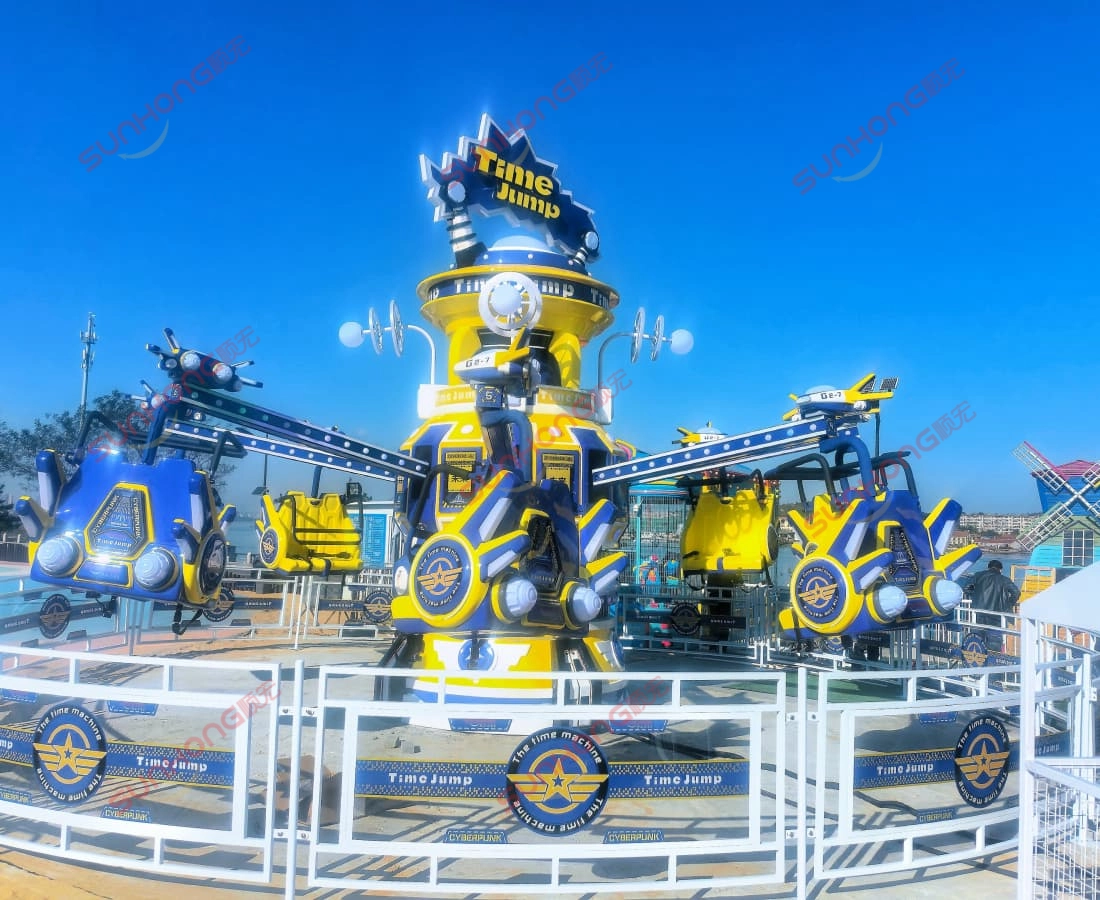
16-Seat Time Jump – Rotating Plane Ride for Amusement Parks
Time Jump is a thrilling and cost-effective amusement ride, 100% originally developed and manufactured by SUNHONG with patented certification. Designed for families and children, it combines motor drive and air-compressor cylinders to achieve dynamic movements—left-right rotation, variable-speed spinning, bouncing seats, and full 360-degree spins.
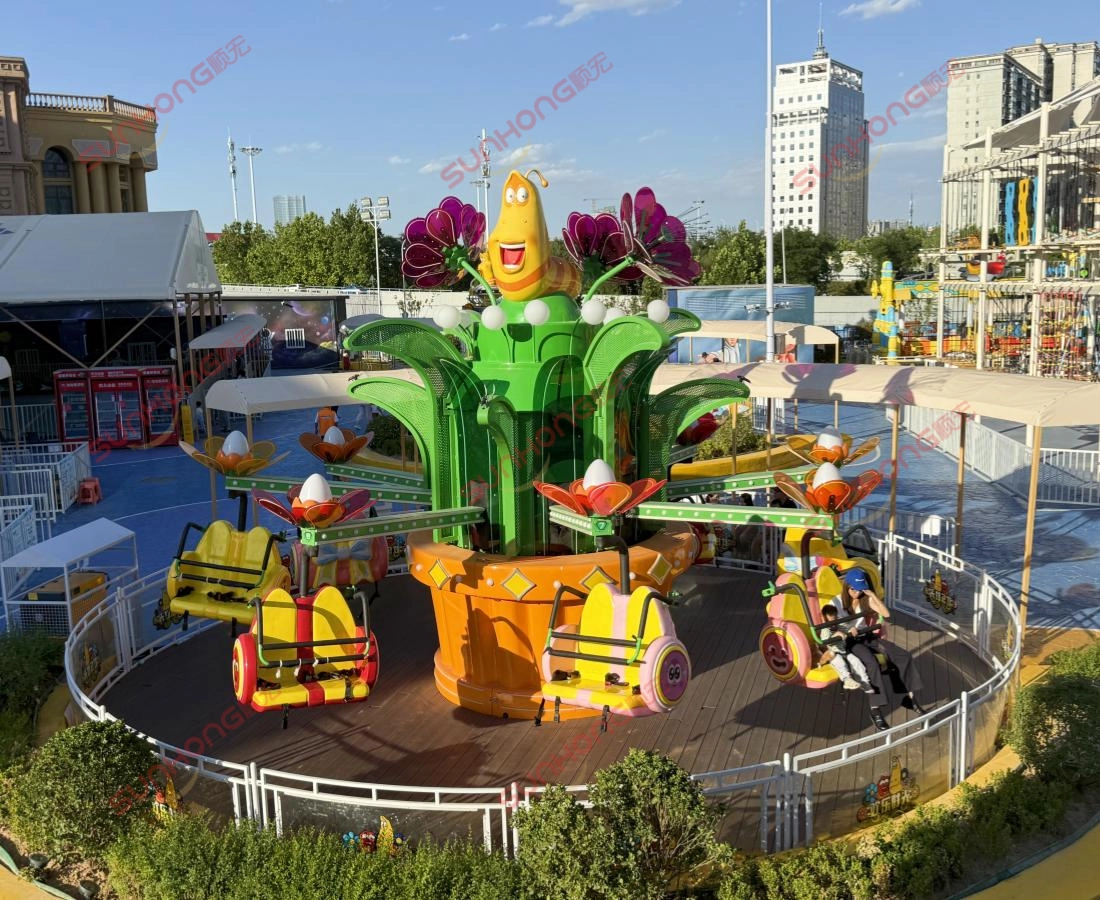
Larva Blooms Bounce Ride – Hot IP Custom Attraction with 360° Spin & Bounce
Larva Blooms is a patented bounce ride inspired by the hit Larva animation series. Featuring full platform rotation, 360° spinning seats, and dynamic bouncing motion, it delivers a thrilling ride experience for families and kids. IP customization available with OEM/ODM service.
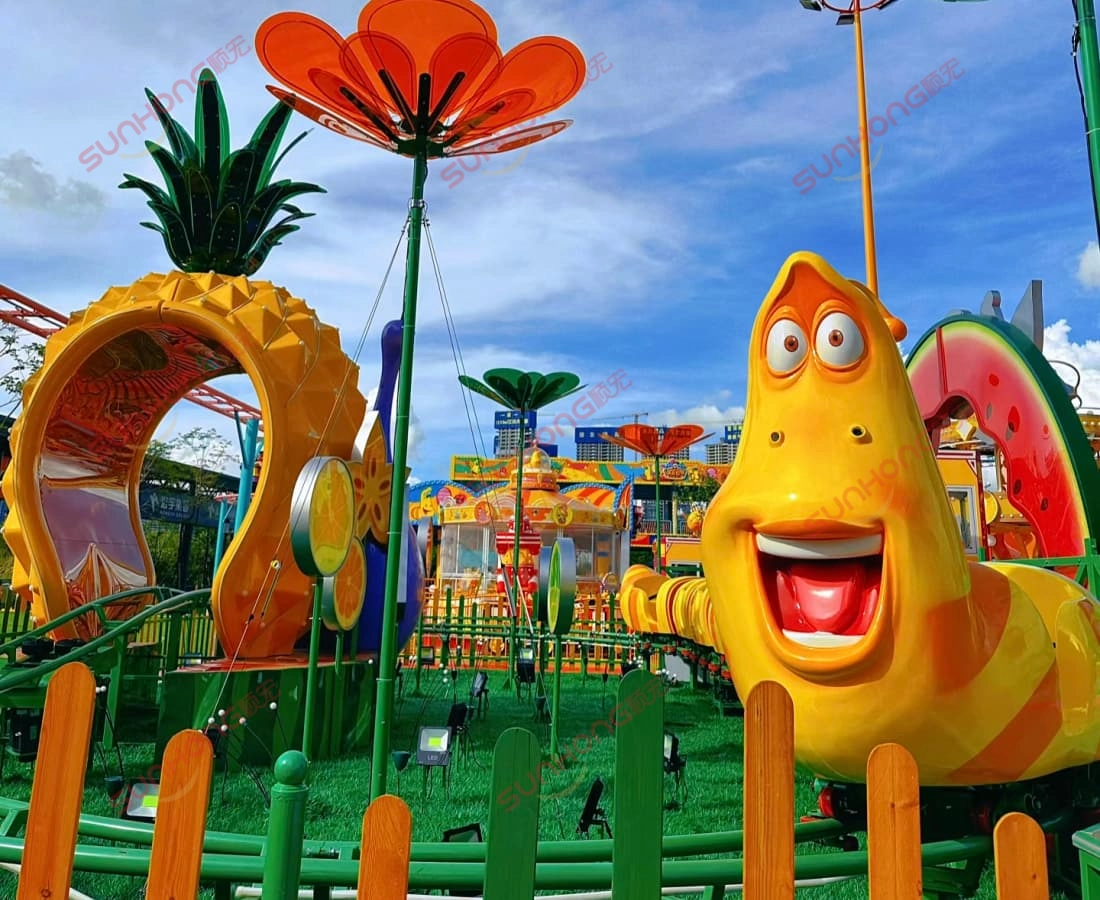
Larva Fruitland – A Mini Roller Coaster Adventure for Kids and Families
Larva Fruitland is a mini roller coaster themed after the Larva animated series. With vibrant colors and gentle motion, it’s perfect for kids and families. This small coaster features IP characters, a fruit farm design, and photo-worthy appeal. Ideal for indoor or outdoor parks. OEM/ODM customization available for your branding needs.

360 Degree Rotating Ride Swing Thrill Amusement Rides for Attractions
Air Bus is a stunning addition to our family amusement rides, delivering a one-of-a-kind 360° dual-rotation experience. With its swinging arm and self-spinning cabin, bright yellow flying-bus design, dynamic music effects, and customizable options, this ride is more than just entertainment—it’s a show-stopping centerpiece that helps your park attract crowds.
Leave a message
Ready to elevate your amusement offerings?
Contact Sunhong today to explore how we can bring your vision to life and create unforgettable experiences for your visitors.
* Rest assured that your privacy is important to us, and all information provided will be handled with the utmost confidentiality.
Copyright © 2025 SUNHONG All Reserved.
Whatsapp: +8613922331804
Guangzhou Shunhong Entertainment Equipment Co.,Ltd.
sunhongrides
SUNHONGAMUSEMENTRIDES
Scan QR Code