
Carnival Rides Pricing: MOQ, Lead Time, Shipping, and Bulk Costs
- Understanding the True Cost Structure of Carnival Rides
- Why Unit Price Is Only 40–60% of Your Total Investment
- Breaking Down the Price Components for Common Ride Categories
- Hidden Costs That Experienced Buyers Always Budget For
- MOQ and Lead Time: What Manufacturers Actually Require
- Minimum Order Quantities Explained for Amusement Equipment
- Realistic Lead Times From Order Confirmation to Delivery
- How to Use Lead Time as a Negotiation Tool
- Shipping Logistics and Freight Costs for Carnival Rides
- Container Types, Dimensions, and Load Planning
- Customs, Duties, and Import Compliance
- Bulk Shipping Strategies That Reduce Per-Unit Freight Costs
- Bulk Pricing Tiers and How to Maximize Your Purchasing Power
- Standard Bulk Discount Structures in the Industry
- Partnering With a Full-Service Amusement Park Equipment Supplier
- Evaluating Supplier Credibility Before You Commit
- Why Amusement Park Ride Quality Directly Impacts Your ROI
- Frequently Asked Questions
If you have spent any serious time sourcing carnival rides for a theme park, traveling fair, or family entertainment center, you already know that the sticker price on a manufacturer's catalog is only the beginning of the conversation. In my 15 years of working inside the amusement park equipment industry, I have watched buyers make costly mistakes by focusing exclusively on unit price while ignoring the four variables that ultimately determine total landed cost: minimum order quantity (MOQ), production lead time, international shipping logistics, and bulk pricing tiers. Understanding how these four levers interact is the difference between a profitable opening season and a cash-flow crisis before your first ticket is ever sold. In this guide I will walk you through exactly what to expect at each stage of the procurement process, share real benchmarks I have gathered from factory audits and freight negotiations across Asia, Europe, and North America, and explain how to structure your purchasing strategy to extract maximum value from every dollar you invest in amusement park rides and attractions.
Understanding the True Cost Structure of Carnival Rides
Why Unit Price Is Only 40–60% of Your Total Investment
The first lesson I teach every new operator entering the carnival and amusement space is deceptively simple: the ex-works price you see quoted by a manufacturer typically represents between 40% and 60% of what you will actually spend to get that ride operational on your site. The remaining costs are distributed across ocean or air freight, customs duties and import taxes, inland transportation, installation labor, commissioning inspections, and ongoing spare-parts inventory. According to data published by the International Association of Amusement Parks and Attractions (IAAPA), the global amusement ride market exceeded $5.8 billion in 2023, yet operator profitability surveys consistently show that procurement cost overruns are the number-one financial risk cited by new park developers. When I audit a buyer's first purchase order, I almost always find that freight and duties alone add 18–28% on top of the factory price for rides shipped from Southeast Asia or China to North American or European destinations.
Breaking Down the Price Components for Common Ride Categories
Not all carnival rides carry the same cost architecture. A compact kiddie ride like a mini carousel or a small train ride has a very different landed-cost profile compared to a large thrill ride such as a Ferris wheel, a spinning coaster, or a drop tower. From my direct sourcing experience, I categorize rides into three tiers for pricing purposes. Entry-level kiddie and family rides typically range from $8,000 to $45,000 ex-works per unit. Mid-range family thrill rides — think spinning rides, pirate ships, and bumper cars — commonly fall between $50,000 and $180,000. Large-scale signature attractions such as roller coasters, giant observation wheels, and high-capacity swing rides can range from $250,000 to well over $2 million. The ASTM International F24 Committee on Amusement Rides and Devices sets the safety and engineering standards that influence manufacturing complexity and therefore price, which is why certified rides command a High Quality over uncertified alternatives — a High Quality that is absolutely worth paying.
Hidden Costs That Experienced Buyers Always Budget For
Beyond the obvious line items, I always advise clients to reserve a contingency budget of 10–15% for what I call invisible costs. These include third-party inspection fees (typically $1,500–$4,000 per ride for a factory audit and pre-shipment inspection), local permit and certification fees that vary dramatically by jurisdiction, site preparation and foundation work, electrical infrastructure upgrades, and the cost of sending your own technician or hiring a local engineer to supervise installation. Insurance riders for high-value cargo during ocean transit are another line item that first-time buyers routinely forget. A single 40-foot high-cube container carrying a mid-range carnival ride valued at $120,000 can incur marine cargo insurance High Qualitys of $800–$1,500 depending on the route and coverage terms.
MOQ and Lead Time: What Manufacturers Actually Require
Minimum Order Quantities Explained for Amusement Equipment
Minimum order quantity policies in the carnival rides industry work very differently from consumer goods manufacturing. Most reputable manufacturers of amusement park equipment do not enforce a strict unit-count MOQ the way a factory producing T-shirts or electronics components would. Instead, MOQ in this industry is typically expressed as a minimum order value or a minimum production run value. From my negotiations with factories in China, Italy, Germany, and Spain, the practical MOQ threshold for a custom or semi-custom ride order is generally $50,000–$80,000 in total order value. Below that threshold, most manufacturers will either decline the order, require full payment upfront with no customization options, or add a small-order surcharge of 8–15%. For buyers purchasing standard catalog models without customization, single-unit orders are commonly accepted, but you lose all leverage on price. The real savings — and I have personally negotiated discounts of 12–22% — come when you commit to a multi-unit order or establish a framework agreement for repeat purchases over a 12–24 month period.
Realistic Lead Times From Order Confirmation to Delivery
Lead time is the variable that surprises new buyers most consistently. In my experience, the production lead time for carnival rides — measured from the date of deposit receipt to the date the ride is ready for shipment at the factory — ranges from 45 days for simple, in-stock kiddie rides to 180–240 days for complex custom thrill rides. The global supply chain disruptions of 2020–2022 permanently reset buyer expectations, and even in a normalized market, I recommend planning for the following benchmarks: small kiddie rides and standard family rides, 45–90 days; mid-size thrill rides with moderate customization, 90–150 days; large-scale signature attractions and roller coasters, 150–270 days. These figures align with production timelines documented by members of the Euro Attractions Show (EAS) and the European Association of Amusement Parks and Attractions (EAAPA). Always add 15–30 days to the manufacturer's quoted lead time as a buffer for quality control holds, documentation preparation, and port congestion.
How to Use Lead Time as a Negotiation Tool
Most buyers treat lead time as a fixed constraint. I treat it as a negotiation variable. When a factory has idle production capacity — which typically occurs in Q3 and early Q4 as manufacturers complete orders for the spring season — you can often negotiate a 5–10% price reduction in exchange for a flexible delivery window that allows the factory to slot your order into their production schedule at a convenient time. Conversely, if you need expedited production, expect to pay a rush High Quality of 10–20%. The key is to communicate your timeline requirements clearly at the RFQ stage, not after you have already signed a contract.
Shipping Logistics and Freight Costs for Carnival Rides
Container Types, Dimensions, and Load Planning
Shipping carnival rides internationally is a specialized logistics exercise. The majority of rides are shipped via ocean freight in standard 20-foot or 40-foot containers, with high-cube 40-foot containers (9.5 feet tall internally) being the most commonly used unit for mid-size rides. Larger rides are shipped as break-bulk cargo or on flat-rack containers when assembled components exceed standard container dimensions. From my freight planning experience, a typical bumper car set of 10 units fits comfortably in one 40-foot high-cube container. A medium-size Ferris wheel with a 20-meter diameter will typically require 3–5 flat-rack containers plus 1–2 standard containers for the gondolas and electrical components. Ocean freight rates from major Chinese manufacturing hubs (Guangzhou, Zhengzhou, Qingdao) to the US West Coast have ranged from $1,800 to $6,500 per 40-foot container in recent years, depending on market conditions. Always request a door-to-port or door-to-door quote that includes origin charges, because origin handling fees in Chinese ports can add $300–$800 per container to your freight invoice.
Customs, Duties, and Import Compliance
Import duties on amusement rides vary significantly by destination country and HS code classification. In the United States, most carnival rides fall under HS 9508, which covers roundabouts, swings, shooting galleries, and other fairground amusements. The general duty rate under this is currently 0% for most countries under normal trade relations, but Section 301 tariffs on Chinese-origin goods have added an additional 7.5–25% surcharge depending on the specific product category. This is a critical consideration that I always flag for buyers sourcing from China. In the European Union, import duties on amusement rides from non-preferential-trade-agreement countries typically range from 2.7% to 4.5%. Always work with a licensed customs broker who has specific experience with amusement equipment, because misclassification of HS codes is one of the most common and costly compliance errors I have seen in this industry.
Bulk Shipping Strategies That Reduce Per-Unit Freight Costs
The single most effective strategy for reducing per-unit shipping costs is consolidating multiple ride orders into a single shipment. When I help clients plan a full park buildout, I always push to align production timelines so that 80–90% of the equipment ships in the same vessel booking. This approach can reduce per-unit freight costs by 15–30% compared to shipping rides individually as they complete production. It also simplifies customs clearance, reduces the number of inspection appointments required, and gives you stronger negotiating leverage with freight forwarders who value high-volume consignments.
Bulk Pricing Tiers and How to Maximize Your Purchasing Power
Standard Bulk Discount Structures in the Industry
Based on my direct negotiation experience with manufacturers across three continents, here is how bulk pricing typically structures in the carnival rides and amusement park equipment market. A single-unit order at standard catalog pricing represents the baseline. A 3–5 unit order from the same manufacturer typically yields a 5–8% discount. A 6–10 unit order can unlock 10–15% savings. Orders of 11 or more units, or total order values exceeding $500,000, can achieve 15–25% reductions from catalog pricing. These discounts are most readily available when you are flexible on delivery timing, willing to accept standard color schemes rather than full custom paint, and able to provide a significant deposit (typically 30–40%) at order confirmation. The table below summarizes typical pricing benchmarks across ride categories and order volumes.
| Ride Category | Single Unit (Ex-Works) | 3–5 Units (Est. Discount) | 6–10 Units (Est. Discount) | 11+ Units (Est. Discount) | Typical Lead Time |
|---|---|---|---|---|---|
| Kiddie Rides (carousel, train, etc.) | $8,000–$25,000 | 5–8% | 10–14% | 15–20% | 45–75 days |
| Family Rides (bumper cars, pirate ship) | $30,000–$90,000 | 6–9% | 11–15% | 16–22% | 60–120 days |
| Mid-Size Thrill Rides (spinning rides, drop towers) | $90,000–$200,000 | 5–8% | 10–14% | 15–20% | 90–150 days |
| Large Attractions (Ferris wheels, coasters) | $250,000–$2,000,000+ | 3–6% | 8–12% | 12–18% | 150–270 days |
| Full Park Package (mixed equipment) | N/A | 8–12% | 13–18% | 18–25% | 120–240 days |
Partnering With a Full-Service Amusement Park Equipment Supplier
After years of watching buyers navigate fragmented supply chains — dealing separately with a ride manufacturer, a theming contractor, a freight forwarder, and a local installation crew — I have become a strong advocate for working with integrated suppliers who can handle the full scope of amusement park design, equipment supply, and project delivery under one roof. The efficiency gains are substantial. When your supplier manages both the amusement park equipment procurement and the amusement park design process, you eliminate the coordination gaps that cause delays and cost overruns. A single point of accountability means that when a production delay occurs, you are not stuck in the middle of a blame game between your manufacturer and your logistics provider. The best suppliers in this space offer turnkey solutions that include concept design, ride selection and customization, manufacturing oversight, international shipping coordination, on-site installation, staff training, and post-opening technical support.
Evaluating Supplier Credibility Before You Commit
In my consulting work, I use a five-point supplier evaluation framework before recommending any manufacturer to a client. First, I verify certifications: does the supplier hold CE marking for European markets, TÜV certification, or ASTM compliance documentation for North American markets? Second, I review their project portfolio for evidence of completed installations at comparable scale to my client's project. Third, I conduct or commission a factory audit to assess production capacity, quality control processes, and financial stability. Fourth, I check references from at least three previous buyers in markets similar to my client's target geography. Fifth, I evaluate their after-sales support infrastructure — specifically, whether they maintain a spare parts inventory and can provide remote or on-site technical support within a reasonable response window. According to guidelines published by the ISO 17842 series on safety of amusement rides and amusement structures, manufacturers supplying rides for public use must demonstrate conformity with design, manufacturing, and testing standards — and any supplier who cannot produce this documentation should be disqualified immediately regardless of price.
Why Amusement Park Ride Quality Directly Impacts Your ROI
I want to close this section with a point that I consider non-negotiable: the quality of your amusement park ride investment is the single largest determinant of your long-term return on investment. A ride that breaks down frequently, requires expensive imported spare parts, or fails a safety inspection will cost you far more in lost revenue, reputational damage, and liability exposure than the savings you achieved by choosing the lowest-cost supplier. The U.S. Consumer Product Safety Commission (CPSC) amusement ride safety data consistently shows that mechanical failure and inadequate maintenance are the leading causes of ride-related incidents at traveling carnivals and fixed parks alike. Investing in certified, well-engineered equipment from a reputable supplier is not a luxury — it is a fundamental business requirement.
Frequently Asked Questions
What is the typical MOQ for ordering carnival rides from a manufacturer?
Most reputable carnival ride manufacturers do not enforce a strict unit-count MOQ. Instead, the practical minimum is typically expressed as a minimum order value of $50,000–$80,000. Below this threshold, manufacturers may decline the order, require full upfront payment, or add a small-order surcharge of 8–15%. Single-unit orders are accepted for standard catalog models, but you lose pricing leverage.
How long does it take to receive carnival rides after placing an order?
Production lead times vary by ride type. Simple kiddie and family rides typically take 45–90 days from deposit to factory-ready shipment. Mid-size thrill rides with customization require 90–150 days. Large-scale attractions like roller coasters or giant Ferris wheels can take 150–270 days. Always add 15–30 days as a buffer for QC holds, documentation, and port congestion.
What are the shipping costs for importing carnival rides internationally?
Ocean freight rates from major Chinese manufacturing hubs to the US West Coast have ranged from $1,800 to $6,500 per 40-foot container depending on market conditions. Additional costs include origin handling fees ($300–$800 per container), marine cargo insurance ($800–$1,500 per high-value shipment), and customs duties. In the US, most carnival rides fall under HS heading 9508, with potential Section 301 tariff surcharges of 7.5–25% for Chinese-origin goods.
How much can I save by ordering carnival rides in bulk?
Bulk discounts in the carnival rides industry typically follow this structure: 3–5 units yields 5–9% savings; 6–10 units unlocks 10–15% discounts; orders of 11 or more units or total values exceeding $500,000 can achieve 15–25% reductions from catalog pricing. Full park package orders can yield up to 25% savings. Discounts are maximized when you are flexible on delivery timing and can provide a 30–40% deposit at order confirmation.
What certifications should I look for when buying amusement park rides?
For European markets, look for CE marking and TÜV certification. For North American markets, ASTM compliance documentation (specifically ASTM F24 committee standards) is essential. The ISO 17842 series on safety of amusement rides also sets internationally recognized design, manufacturing, and testing standards. Any supplier who cannot produce these certifications should be disqualified regardless of price.
What hidden costs should I budget for when purchasing carnival rides?
Beyond the ex-works unit price, budget for: third-party inspection fees ($1,500–$4,000 per ride), local permit and certification fees, site preparation and foundation work, electrical infrastructure upgrades, installation labor and commissioning, marine cargo insurance, inland transportation, and a 10–15% contingency for unexpected costs. Total landed cost is typically 40–60% higher than the factory ex-works price.
Is it better to buy from a single integrated supplier or multiple specialized vendors?
Based on extensive industry experience, working with an integrated supplier who handles amusement park design, equipment supply, manufacturing oversight, international shipping, installation, and after-sales support under one roof is strongly recommended. This eliminates coordination gaps, reduces the risk of delays caused by blame between separate vendors, and provides a single point of accountability throughout the project lifecycle.
Outdoor Theme Park Rides Quality Control: Tests and Certifications
What are the different types of amusement attraction?
Key growth drivers for amusement park manufacturers
Wholesale mini roller coaster manufacturer and supplier
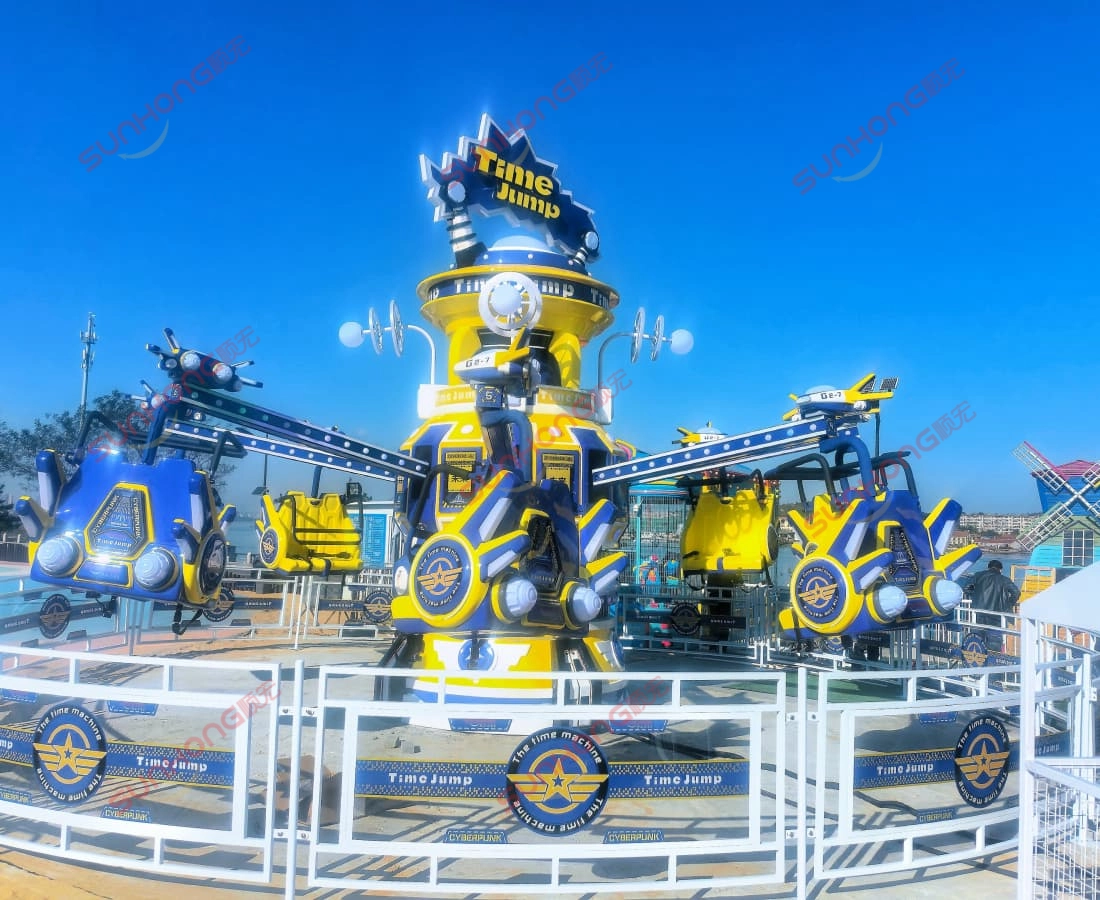
16-Seat Time Jump – Rotating Plane Ride for Amusement Parks
Time Jump is a thrilling and cost-effective amusement ride, 100% originally developed and manufactured by SUNHONG with patented certification. Designed for families and children, it combines motor drive and air-compressor cylinders to achieve dynamic movements—left-right rotation, variable-speed spinning, bouncing seats, and full 360-degree spins.
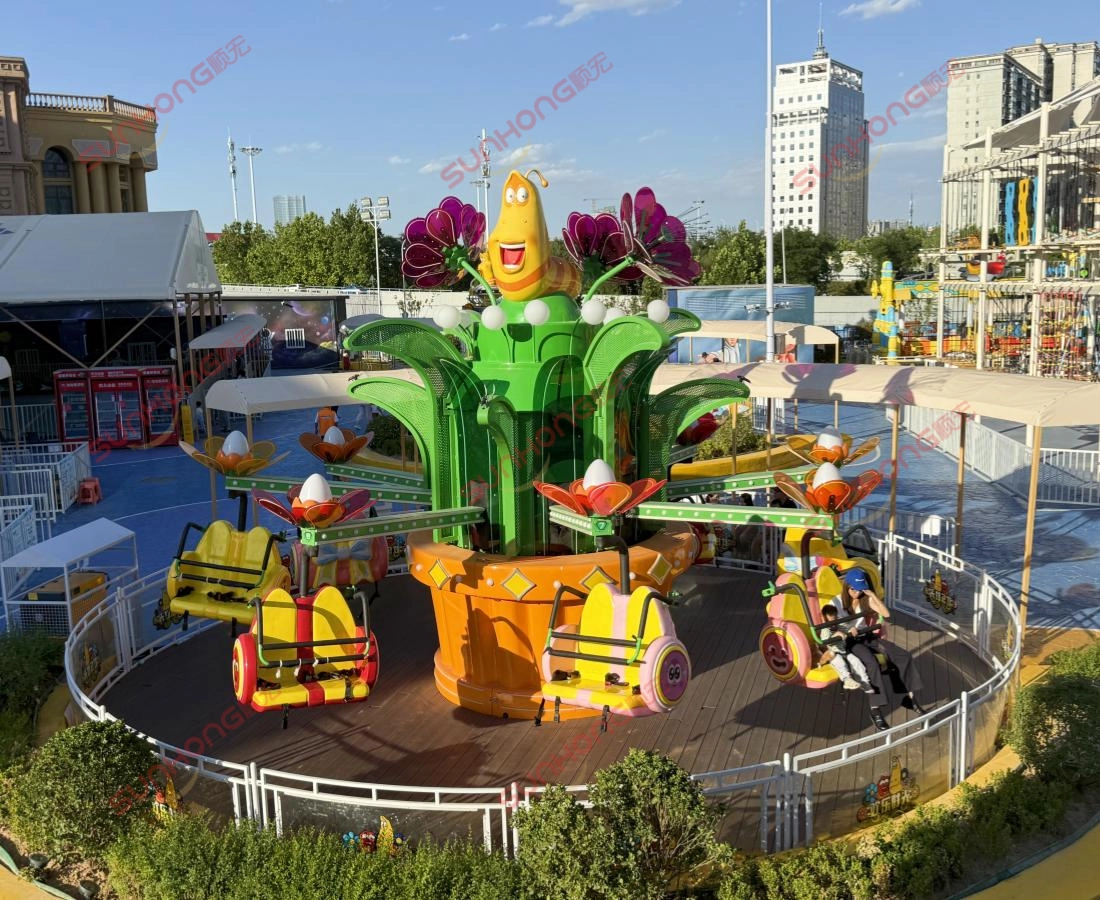
Larva Blooms Bounce Ride – Hot IP Custom Attraction with 360° Spin & Bounce
Larva Blooms is a patented bounce ride inspired by the hit Larva animation series. Featuring full platform rotation, 360° spinning seats, and dynamic bouncing motion, it delivers a thrilling ride experience for families and kids. IP customization available with OEM/ODM service.
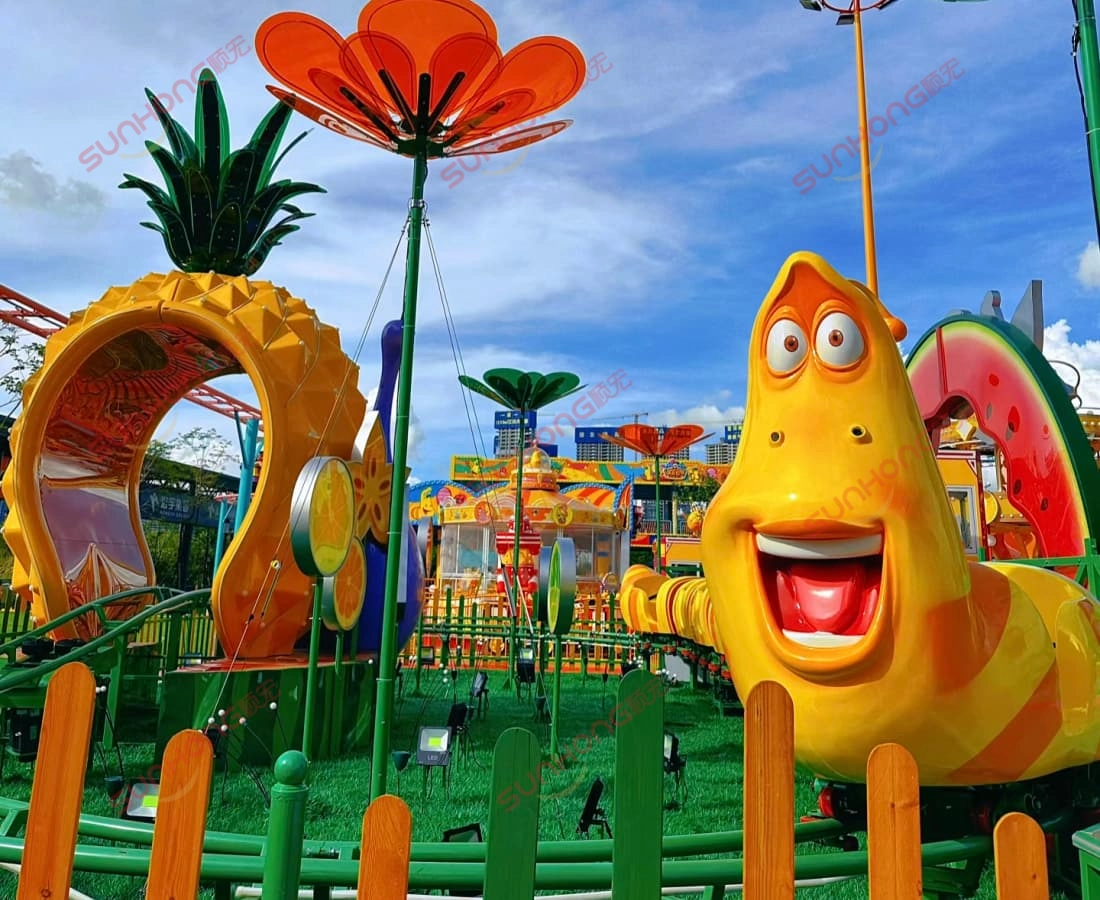
Larva Fruitland – A Mini Roller Coaster Adventure for Kids and Families
Larva Fruitland is a mini roller coaster themed after the Larva animated series. With vibrant colors and gentle motion, it’s perfect for kids and families. This small coaster features IP characters, a fruit farm design, and photo-worthy appeal. Ideal for indoor or outdoor parks. OEM/ODM customization available for your branding needs.

360 Degree Rotating Ride Swing Thrill Amusement Rides for Attractions
Air Bus is a stunning addition to our family amusement rides, delivering a one-of-a-kind 360° dual-rotation experience. With its swinging arm and self-spinning cabin, bright yellow flying-bus design, dynamic music effects, and customizable options, this ride is more than just entertainment—it’s a show-stopping centerpiece that helps your park attract crowds.
Leave a message
Ready to elevate your amusement offerings?
Contact Sunhong today to explore how we can bring your vision to life and create unforgettable experiences for your visitors.
* Rest assured that your privacy is important to us, and all information provided will be handled with the utmost confidentiality.
Copyright © 2025 SUNHONG All Reserved.
Whatsapp: +8613922331804
Guangzhou Shunhong Entertainment Equipment Co.,Ltd.
sunhongrides
SUNHONGAMUSEMENTRIDES
Scan QR Code