
Best FEC Equipment Solutions for Hotels, Resorts, and Holiday Parks
- How Hospitality Properties Should Plan a Complete Entertainment Zone
- Match attractions with guest profiles and property positioning
- Combine indoor, outdoor, and all-weather experiences
- Design for circulation, dwell time, and secondary spending
- Priority Attraction Categories for Resorts and Holiday Parks
- Family rides and compact amusement attractions
- Indoor play, skill games, and interactive technology
- Water play, adventure, and destination-specific attractions
- Procurement, Safety, and Lifecycle Evaluation
- Specify compliance and documentation before purchase
- Compare total cost of ownership, not only purchase price
- Use measurable criteria for supplier selection
- Why SUNHONG Is a Practical Partner for Hospitality Entertainment Projects
- Integrated amusement park design and manufacturing
- In-house engineering, production, and construction capabilities
- Global delivery experience and market-oriented certification
- How to prepare a SUNHONG project brief
- Frequently Asked Questions
- What attractions are most suitable for a hotel or resort with limited space?
- How can a holiday park create an all-weather entertainment offer?
- What documents should buyers request from an amusement ride manufacturer?
- How should the return on investment of resort attractions be measured?
- Can amusement rides be customized for a hotel or holiday park brand?
- Why is manufacturer installation support important?
For hotels, resorts, and holiday parks, the best family entertainment center equipment strategy is not simply a list of attractive machines. It is a coordinated guest-experience system that combines indoor attractions, outdoor amusement park rides, interactive play, operational efficiency, safety management, and commercial performance. Project owners should select attractions according to guest age, seasonal demand, available footprint, climate, staffing capacity, noise tolerance, utility access, and expected dwell time. A successful solution can create an all-weather activity layer, encourage longer stays, generate additional revenue, and give a hospitality brand a stronger reason for families to choose one property over another.
How Hospitality Properties Should Plan a Complete Entertainment Zone
Match attractions with guest profiles and property positioning
A resort serving young families may require a different attraction mix from a High Quality beach hotel, a mountain lodge, or a large holiday park. Toddlers and preschool children typically need low-height soft play, toddler carousels, mini train systems, sensory activities, and supervised creative zones. Older children often respond better to climbing challenges, skill games, bumper cars, interactive projection, compact roller coasters, and themed adventure courses. Teenagers and adults may prefer competitive digital games, virtual reality, high-energy rides, go-karts, or mixed-reality attractions.
Guest segmentation should be connected to the property’s commercial positioning. A luxury resort may favor elegant theming, quiet electric rides, High Quality redemption games, and highly integrated landscape design. A holiday park with high weekend occupancy may prioritize throughput, repeat-play mechanics, weather resistance, and quick staff training. The objective is to build a balanced attraction portfolio rather than overinvest in one spectacular ride that serves only a narrow age group.
Combine indoor, outdoor, and all-weather experiences
Indoor entertainment protects revenue during rain, extreme heat, cold weather, and low-season periods. Suitable options include modular soft-play structures, trampolines, climbing walls, arcade games, interactive sports, family racing simulators, mini bowling, laser tag, and themed role-play environments. These systems can be installed in unused conference rooms, retail shells, basement areas, hotel annexes, or purpose-built entertainment halls, subject to structural and fire-safety review.
Outdoor attractions create visibility and destination appeal. Compact ferris wheels, family carousels, track rides, bumper cars, flying chairs, pirate ships, water-based play, and scenic trains can connect entertainment areas with accommodation, dining, and retail. For properties with strong seasonal variation, a mix of permanent and relocatable attractions may reduce exposure to weather and support phased investment. Covered queue lines, shaded waiting areas, drainage, corrosion protection, and safe nighttime lighting should be included at the design stage.
Design for circulation, dwell time, and secondary spending
Guest movement has a direct effect on capacity and revenue. The master plan should separate entry and exit flows, provide clear sightlines for parents, prevent queue conflict, and place restrooms, lockers, seating, refreshments, and merchandise where they support—not obstruct—circulation. Children’s attractions should be visible from parent seating, while higher-energy rides require controlled access, defined loading zones, and appropriate separation from quiet hospitality areas.
Operators should also map the complete guest journey: discovery, ticket purchase, briefing, queueing, participation, recovery, photography, food and beverage, and departure. Digital ticketing, timed sessions, wristbands, cashless payment, and redemption systems can improve throughput when they are matched to the property’s technology infrastructure. A well-planned entertainment venue measures more than ride capacity; it evaluates conversion rate, average spend per visitor, repeat visits, birthday bookings, group packages, and the effect on hotel occupancy and guest satisfaction.
Priority Attraction Categories for Resorts and Holiday Parks
Family rides and compact amusement attractions
Family rides are often the most versatile investment because they can serve multiple age groups when configured correctly. Carousels, mini trains, family coasters, bumper cars, rotating rides, and observation attractions provide recognizable amusement value while remaining suitable for parents and children to enjoy together. Buyers should compare the minimum height requirement, hourly capacity, cycle duration, footprint, power consumption, loading procedure, accessibility, and maintenance schedule before making a selection.
Compact amusement park rides can be particularly effective for hotels with limited land. Their value depends on more than physical size: visual impact, theming, sound level, queue efficiency, and compatibility with surrounding architecture also influence performance. A ride that photographs well and aligns with the property’s identity may generate social media exposure, while a visually disconnected installation can weaken the overall guest experience.
Indoor play, skill games, and interactive technology
Soft-play systems remain practical for younger guests because they support extended sessions, repeat use, and flexible capacity. A robust structure should include age separation, impact-absorbing surfaces, inspectable components, emergency access, cleaning access, and a clear supervision plan. For older children, interactive walls, projection games, sports challenges, virtual reality, driving simulators, and redemption games can add competitive replay value and support birthday or group packages.
Technology should be selected according to operational maturity. Digital attractions may require network reliability, content licensing, device calibration, data protection controls, and more frequent component replacement than mechanical play equipment. Buyers should request a lifecycle budget that covers software updates, spare parts, warranty exclusions, and technician response times. A lower purchase price may not represent lower total cost of ownership if specialized maintenance is difficult to obtain.
Water play, adventure, and destination-specific attractions
Water play areas can increase the appeal of tropical resorts and holiday parks, but they require careful planning for filtration, drainage, slip resistance, water treatment, hygiene, weather exposure, and supervision. Adventure attractions such as rope courses, climbing walls, zip lines, and net structures can create strong destination value, yet they demand rigorous structural engineering, fall protection, inspection routines, and participant briefing.
Theme and storytelling make otherwise familiar attractions more distinctive. Local landscapes, wildlife, maritime history, cultural motifs, and the resort’s own brand can inform ride vehicles, façades, signage, music, queue environments, and staff uniforms. Thematic integration should be durable and serviceable; fragile decorative features located in high-contact areas can increase maintenance costs without improving the core experience.
| Solution category | Best-fit property need | Primary planning metric | Key procurement consideration |
|---|---|---|---|
| Indoor soft play | All-weather activity for young families | Usable capacity per square metre | Cleanability, age zoning, padding, inspection access |
| Family rides | Shared parent-child participation | Hourly throughput and repeat usage | Height rules, loading time, spare parts, operator training |
| Interactive games | Teen engagement and replay value | Session utilization and average play time | Software support, network requirements, content updates |
| Water play | Warm-climate resort differentiation | Daily operating availability | Water treatment, drainage, slip resistance, supervision |
| Adventure attractions | Destination appeal and group bookings | Sessions per hour and staffing ratio | Structural design, fall protection, inspection records |
The table provides a planning framework rather than a universal ranking. Actual performance depends on local pricing, guest volume, operating hours, climate, labor costs, attraction mix, and the commercial model. Buyers should validate assumptions through a feasibility study and, where possible, test demand with seasonal programming or a pilot installation.
Procurement, Safety, and Lifecycle Evaluation
Specify compliance and documentation before purchase
Safety requirements should be treated as a procurement specification, not as a final inspection exercise. Buyers should ask for engineering drawings, risk assessments, operating manuals, maintenance schedules, load information, electrical documentation, inspection procedures, and conformity records applicable to the destination market. The ISO 17842 series for safety of amusement rides and devices provides an important international reference for design, manufacture, operation, inspection, and maintenance.
Local authorities may impose additional requirements for building occupancy, fire protection, electrical systems, accessibility, water quality, public liability, and worker safety. In the United States, operators can consult the U.S. Consumer Product Safety Commission guidance on amusement rides, while international buyers should confirm the rules enforced by the relevant municipal, national, or regional authority. Standards are not a substitute for local approval, and responsibility for permitting should be clearly allocated in the contract.
Compare total cost of ownership, not only purchase price
A credible business case includes civil works, foundations, shipping, customs, installation, commissioning, staff training, insurance, utilities, cleaning, consumables, spare parts, inspections, software, replacement cycles, and planned refurbishment. Buyers should request a five- to ten-year lifecycle projection for major attractions and identify which components are locally serviceable. Critical spare parts such as sensors, control boards, restraints, motors, belts, bearings, and game-system components should have defined lead times.
Operational resilience is especially important in hospitality. An attraction that remains closed during peak season can create refunds, complaints, reputational damage, and lost food and beverage revenue. Supplier evaluation should therefore include technical support hours, remote diagnostics, emergency response, warranty terms, preventive maintenance training, and the availability of replacement parts. A documented asset register and inspection log can help facility managers identify recurring faults before they affect guests.
Use measurable criteria for supplier selection
Supplier comparisons should be based on weighted criteria. A practical evaluation model may assign 25 percent to safety and compliance documentation, 20 percent to engineering and customization, 15 percent to lifecycle cost, 15 percent to manufacturing quality, 10 percent to installation and commissioning, 10 percent to after-sales support, and 5 percent to references and delivery performance. The weighting should be adjusted to the project’s risk profile and operating model.
Factory audits, sample inspections, material traceability, weld-quality controls, paint and coating specifications, electrical testing, packaging standards, and pre-shipment acceptance testing can reduce avoidable project risk. The contract should define the approved drawings, acceptance criteria, defect correction process, delivery milestones, liquidated damages where appropriate, and the documents required for handover.
Why SUNHONG Is a Practical Partner for Hospitality Entertainment Projects
Integrated amusement park design and manufacturing
SUNHONG is a large-scale comprehensive amusement ride manufacturer dedicated to the research and development, design, manufacture, and sales of amusement rides. Our team supports project owners with overall planning, amusement park design, R&D engineering, exclusive customization, manufacturing, comprehensive construction, and operation management. This integrated structure helps reduce coordination gaps between the concept, technical drawings, production schedule, site preparation, installation, and final commissioning.
For hotels, resorts, and holiday parks, our approach can be adapted to a compact indoor play center, a themed outdoor attraction zone, a mixed-use family entertainment venue, or a destination-scale amusement park. Our product portfolio includes amusement park equipment, family rides, carousels, track attractions, bumper cars, mini trains, interactive attractions, and other customized amusement park rides. Each proposal can be developed around available land, guest demographics, architectural style, target throughput, budget, and planned expansion.
In-house engineering, production, and construction capabilities
Our robust in-house team covers research and development, production, and construction, enabling SUNHONG to provide services from initial concept to final project completion. This continuity is valuable when a hospitality project involves complex interfaces between attractions, foundations, electrical supply, drainage, landscaping, themed structures, ticketing, and guest circulation.
Our engineering process can incorporate ride capacity, loading logic, accessibility, maintenance access, emergency evacuation, corrosion protection, climate conditions, and operator visibility. Customization may include ride dimensions, colors, vehicles, control systems, theming, signage, and spatial configuration. The goal is to create an attraction package that supports the property’s brand while remaining practical to operate and maintain.
Global delivery experience and market-oriented certification
SUNHONG has more than 10 years of export experience, and our amusement rides have been installed in more than 56 nations and regions. Our company holds certifications and market-entry documentation including CE for the European Union, UKCA for the United Kingdom, SABER for Saudi Arabia, TÜV documentation associated with Germany, and ASTM certification for the United States, according to the applicable product and project requirements. Buyers should still confirm the exact certification scope and local approval obligations for every installation.
International delivery requires more than manufacturing capacity. It also requires export packaging, shipping coordination, installation planning, technical documentation, remote communication, commissioning support, and an understanding of local project conditions. SUNHONG’s reach-global-services model is designed to support investors, distributors, developers, and hospitality operators through these stages. Our long-term goal is to become a leading global manufacturer of amusement rides by combining engineering capability, dependable production, customized design, and responsible project service.
How to prepare a SUNHONG project brief
A strong inquiry should include the site location, available indoor and outdoor areas, ceiling height, climate, target guest age groups, expected daily attendance, operating season, preferred theme, budget range, desired opening date, utility conditions, and local certification requirements. Site photographs, CAD files, master plans, and information about existing foundations can accelerate the preliminary assessment.
With this information, our team can help identify suitable attraction categories, prepare a concept layout, estimate capacity, recommend phased investment, and define the technical information needed for quotation. Early collaboration is particularly valuable when amusement park equipment must fit within an existing hotel or resort footprint, because structural limitations and guest-flow conflicts are easier to solve before construction begins.
Frequently Asked Questions
What attractions are most suitable for a hotel or resort with limited space?
Compact carousels, mini trains, soft-play structures, interactive games, bumper cars, small track rides, and themed role-play areas are often suitable because they can deliver repeat use without requiring a large site. The final selection should consider ceiling height, noise, queue space, access routes, guest demographics, and local safety requirements.
How can a holiday park create an all-weather entertainment offer?
A holiday park can combine an indoor play and interactive zone with covered outdoor attractions, weather-resistant family rides, shaded queues, and flexible seasonal programming. Indoor facilities protect activity revenue during poor weather, while outdoor attractions provide visibility and destination appeal during peak periods.
What documents should buyers request from an amusement ride manufacturer?
Buyers should request approved drawings, risk assessments, operating and maintenance manuals, electrical documentation, inspection procedures, conformity or certification records, spare-parts lists, installation requirements, training information, and warranty terms. The documents should match the destination market and the exact equipment supplied.
How should the return on investment of resort attractions be measured?
ROI should include ticket or session revenue, food and beverage uplift, merchandise sales, birthday and group bookings, guest retention, occupancy influence, operating costs, maintenance, staffing, utilities, insurance, and downtime. Capacity, utilization, average spend, repeat visits, and payback period should be modeled across peak and low seasons.
Can amusement rides be customized for a hotel or holiday park brand?
Yes. Customization can include dimensions, colors, vehicles, themes, façades, signage, music, control configurations, and site layout. Custom design should preserve required safety clearances, maintenance access, operating visibility, structural integrity, and compliance with local regulations.
Why is manufacturer installation support important?
Professional installation support helps align foundations, mechanical assembly, electrical connections, testing, operator training, documentation, and handover. It can reduce commissioning delays and clarify responsibility when attractions interface with buildings, landscaping, utilities, ticketing, and guest-access systems.
Contact SUNHONG at sunhong@isunhong.com or visit our amusement ride solutions to discuss a customized entertainment project for a hotel, resort, or holiday park.
Total cost of ownership calculator inputs and examples
Maintenance Checklist for Electric Amusement Rides
Site Selection and Layout When You Build an Amusement Park
Amusement Rides Pirate Ship for Sale | SUNHONG
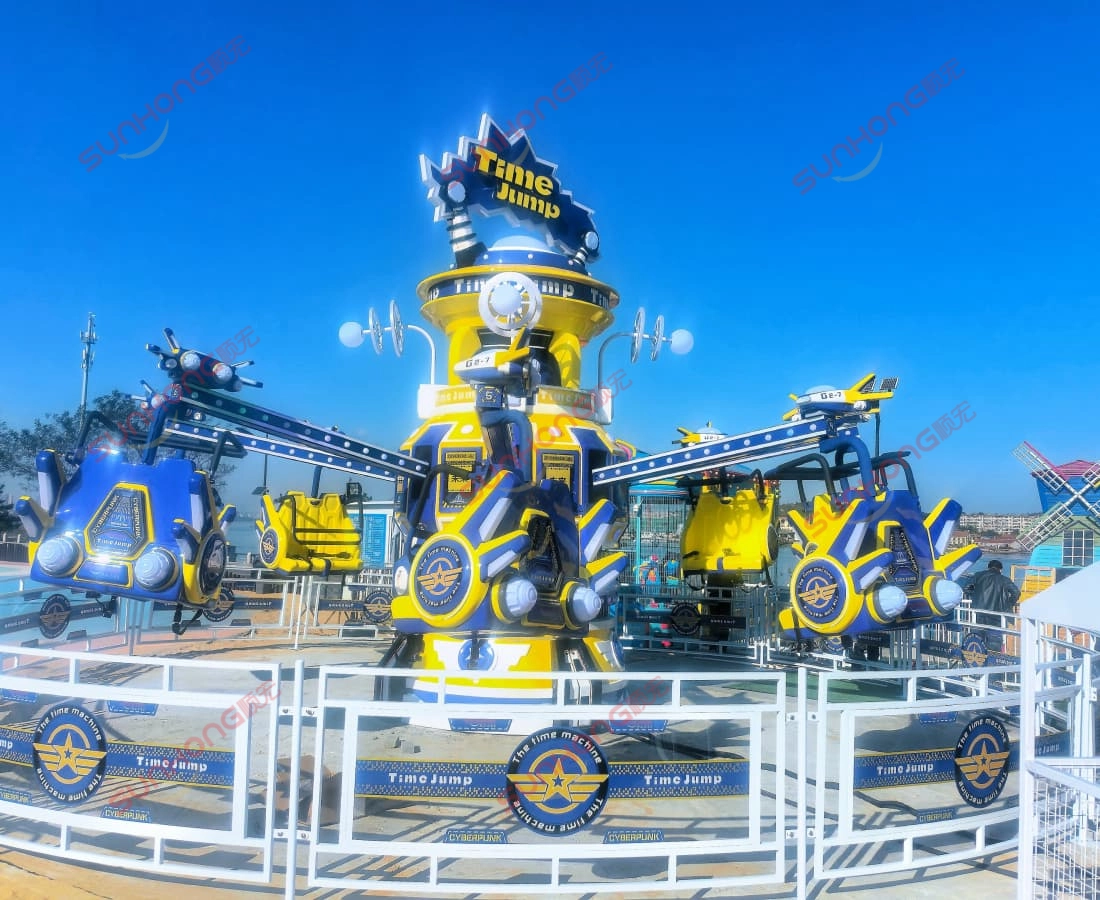
16-Seat Time Jump – Rotating Plane Ride for Amusement Parks
Time Jump is a thrilling and cost-effective amusement ride, 100% originally developed and manufactured by SUNHONG with patented certification. Designed for families and children, it combines motor drive and air-compressor cylinders to achieve dynamic movements—left-right rotation, variable-speed spinning, bouncing seats, and full 360-degree spins.
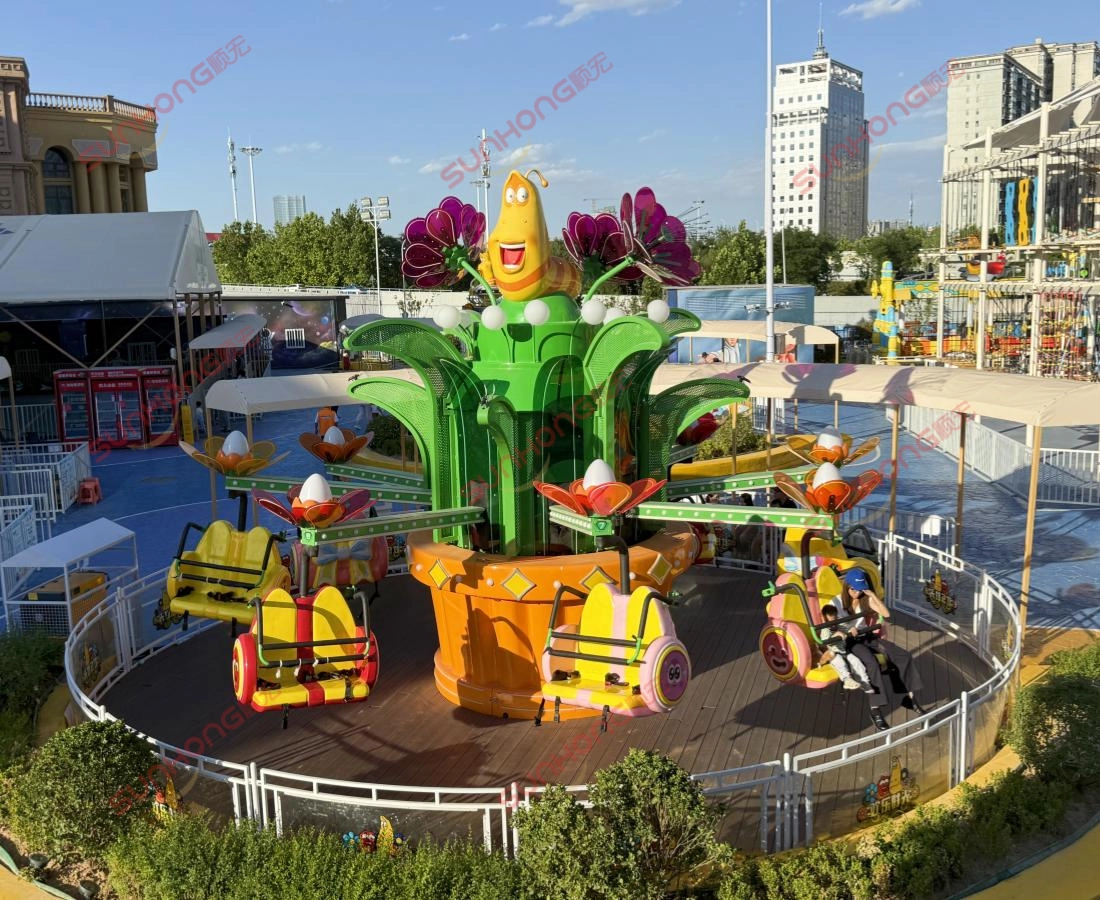
Larva Blooms Bounce Ride – Hot IP Custom Attraction with 360° Spin & Bounce
Larva Blooms is a patented bounce ride inspired by the hit Larva animation series. Featuring full platform rotation, 360° spinning seats, and dynamic bouncing motion, it delivers a thrilling ride experience for families and kids. IP customization available with OEM/ODM service.
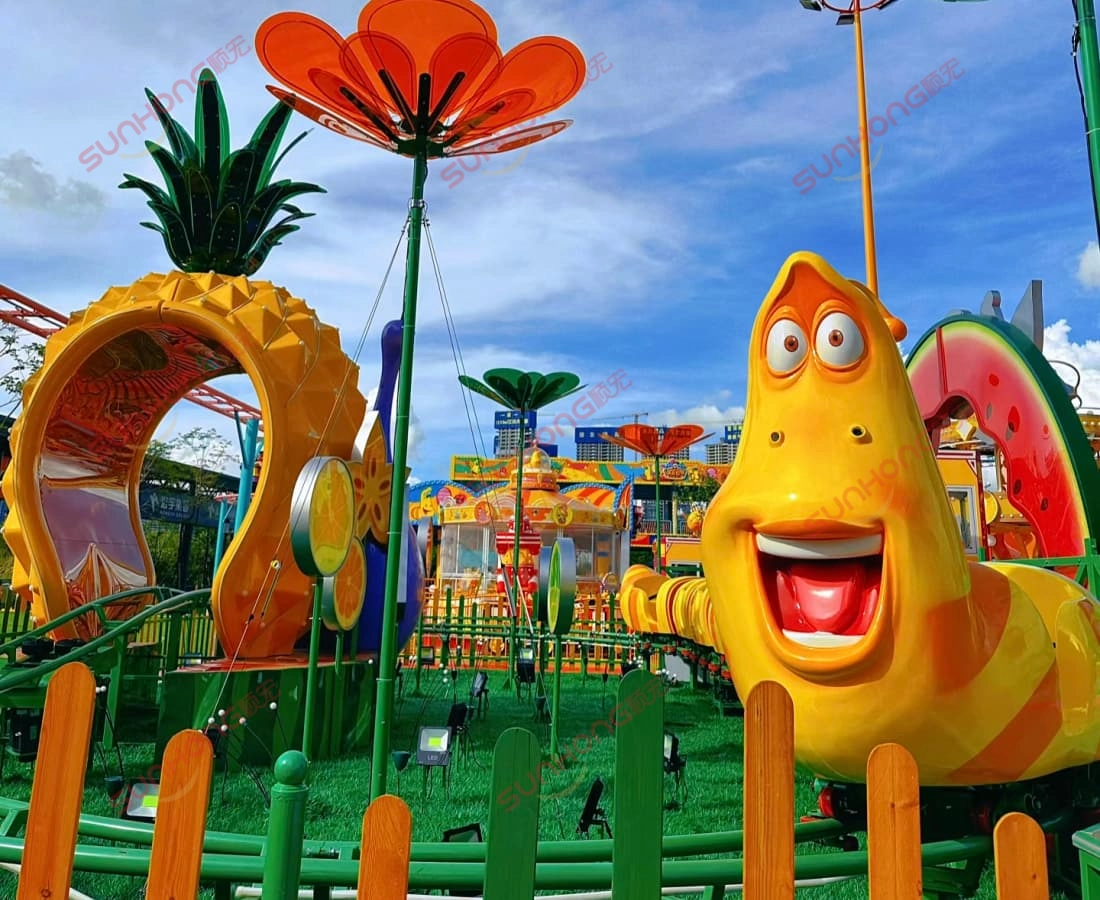
Larva Fruitland – A Mini Roller Coaster Adventure for Kids and Families
Larva Fruitland is a mini roller coaster themed after the Larva animated series. With vibrant colors and gentle motion, it’s perfect for kids and families. This small coaster features IP characters, a fruit farm design, and photo-worthy appeal. Ideal for indoor or outdoor parks. OEM/ODM customization available for your branding needs.

360 Degree Rotating Ride Swing Thrill Amusement Rides for Attractions
Air Bus is a stunning addition to our family amusement rides, delivering a one-of-a-kind 360° dual-rotation experience. With its swinging arm and self-spinning cabin, bright yellow flying-bus design, dynamic music effects, and customizable options, this ride is more than just entertainment—it’s a show-stopping centerpiece that helps your park attract crowds.
Leave a message
Ready to elevate your amusement offerings?
Contact Sunhong today to explore how we can bring your vision to life and create unforgettable experiences for your visitors.
* Rest assured that your privacy is important to us, and all information provided will be handled with the utmost confidentiality.
Copyright © 2025 SUNHONG All Reserved.
Whatsapp: +8613922331804
Guangzhou Shunhong Entertainment Equipment Co.,Ltd.
sunhongrides
SUNHONGAMUSEMENTRIDES
Scan QR Code