
Amusement Attraction Cost Breakdown: Equipment, Site & Labor
- What Actually Drives Amusement Attraction Costs: A Realistic Industry Perspective
- The Equipment Procurement Layer
- Safety Certification and Compliance Costs
- Technology Integration and Ride Control Systems
- Site Development and Infrastructure: The Hidden Cost Multiplier
- Land Preparation and Civil Works
- Permitting, Zoning, and Environmental Review
- Utilities and Operational Infrastructure
- Labor Costs: Operational Staffing and the Long-Term Budget Reality
- Pre-Opening Labor: Installation and Training
- Ongoing Operational Staffing Models
- Maintenance Labor and Asset Lifecycle Management
- How the Right Equipment Partner Changes Your Total Cost Equation
- Why Equipment Quality Directly Impacts Every Other Cost Category
- Integrated Amusement Park Design as a Cost Control Strategy
- Selecting Rides That Optimize Revenue Per Square Foot
- Frequently Asked Questions
The total amusement attraction cost for a mid-scale outdoor park typically ranges from $500,000 to over $5 million, depending on ride complexity, land preparation, staffing models, and regional permitting requirements. Equipment alone can represent 40–60% of the total capital outlay, while site development and ongoing labor together account for the remaining share. Understanding how these three cost pillars interact is the single most important step any operator, investor, or municipality can take before committing to a project. In my 15 years working inside this industry — evaluating feasibility studies, sourcing manufacturers, and walking job sites from Southeast Asia to North America — I have seen well-funded projects fail because of poor cost modeling and lean projects succeed because of disciplined planning. This article gives you the honest, granular breakdown you need.
What Actually Drives Amusement Attraction Costs: A Realistic Industry Perspective
The Equipment Procurement Layer
When clients ask me where their budget goes first, the answer is almost always the same: rides and play structures. Amusement park equipment is the most visible line item and, frankly, the one that attracts the most emotional decision-making. A single family-grade spinning ride from a certified manufacturer can cost between $80,000 and $350,000. A medium-capacity roller coaster starts at roughly $1.5 million and can exceed $10 million for custom steel track installations. Inflatable attractions sit at the affordable end — often $3,000 to $30,000 per unit — but they carry higher replacement and maintenance cycles that inflate the true cost of ownership over a five-year window.
What I always stress to first-time operators is the difference between the sticker price and the landed cost. Import duties, ocean freight, inland logistics, and customs clearance can add 15–30% on top of the factory price when sourcing internationally. I have personally overseen procurement projects where a $200,000 ride became a $260,000 asset before a single bolt was tightened on-site. Always request a CIF (Cost, Insurance, and Freight) quote and factor in local port fees. The International Association of Amusement Parks and Attractions (IAAPA) publishes annual benchmarking data that I use as a baseline when validating supplier quotes.
Safety Certification and Compliance Costs
Certification is not optional — it is a legal and insurance prerequisite in virtually every jurisdiction. In the United States, rides must comply with ASTM International standards, specifically ASTM F2291 for amusement ride design, and many states require third-party inspection before opening day. In the European Union, the Machinery Directive 2006/42/EC governs ride safety. These compliance processes cost money: third-party engineering reviews run $5,000–$25,000 per ride, annual state inspection fees add another $1,000–$5,000, and liability insurance High Qualitys for a small park can range from $30,000 to $150,000 annually depending on ride inventory and visitor capacity.
I have seen operators underestimate this layer by as much as 20% of their total equipment budget. Do not make that mistake. Build certification, inspection, and insurance into your financial model from day one, not as an afterthought once the rides are already ordered.
Technology Integration and Ride Control Systems
Modern amusement park rides increasingly incorporate PLC-based control systems, RFID ticketing integration, and real-time diagnostic monitoring. These technology layers add $10,000–$80,000 per attraction depending on complexity, but they also reduce long-term labor costs and improve uptime. I have evaluated parks that spent an extra $150,000 on smart control infrastructure in year one and recovered that investment within 18 months through reduced maintenance downtime and lower staffing ratios. When you are comparing equipment quotes, always ask what the control system architecture looks like and whether it is proprietary or open-standard — proprietary systems lock you into expensive service contracts.
Site Development and Infrastructure: The Hidden Cost Multiplier
Land Preparation and Civil Works
Site costs are where budgets most frequently blow out, in my experience. Raw land preparation — grading, drainage, compaction testing, and utility trenching — typically runs $15–$50 per square foot depending on soil conditions and local labor rates. A 2-acre family entertainment center footprint could therefore require $650,000 to $2.1 million in civil works alone before a single piece of amusement park equipment arrives on-site. I worked on a project in the American Southeast where unexpected clay soil conditions required deep foundation piers for every major ride anchor point, adding $380,000 to the original civil budget. Geotechnical surveys are not optional — they are the cheapest insurance you can buy.
Parking, pedestrian pathways, fencing, landscaping, and shade structures are secondary site costs that operators consistently underestimate. The National Recreation and Park Association (NRPA) recommends allocating at least 20% of total project cost to site amenities and guest-flow infrastructure. I think that figure is actually conservative for High Quality attractions targeting family demographics.
Permitting, Zoning, and Environmental Review
Permitting timelines are a cost driver that most financial models ignore entirely. In my experience, a standard building permit for a new amusement attraction takes 3–9 months in most U.S. municipalities. During that window, you are paying land carrying costs, financing interest, and potentially holding deposits on equipment. Environmental impact assessments, noise studies, and traffic impact analyses can add $20,000–$100,000 in consulting fees and extend your timeline by another 6–12 months. I always advise clients to engage a local land-use attorney and a permitting consultant simultaneously — the combined fee of $15,000–$40,000 is almost always recovered through a faster approval process.
Utilities and Operational Infrastructure
Electrical service upgrades are frequently the single largest surprise in a site development budget. A park with 10–15 powered rides may require a 400–800 amp three-phase service upgrade, which can cost $40,000–$200,000 depending on proximity to the nearest utility transformer. Water and sewer connections for splash pads, food service, and restroom facilities add another $20,000–$80,000. I always build a 15% contingency into the utilities line item because utility companies are notoriously unpredictable on both cost and timeline.
Labor Costs: Operational Staffing and the Long-Term Budget Reality
Pre-Opening Labor: Installation and Training
Installation labor for amusement park rides is specialized work. Most reputable manufacturers send factory technicians for commissioning, which typically costs $500–$2,000 per day plus travel and accommodation. A complex ride installation with commissioning can run 5–15 days, meaning $5,000–$30,000 per attraction just for manufacturer support. Local rigging and crane services add another $3,000–$15,000 per ride. For a park with 10 major attractions, pre-opening installation labor alone can reach $200,000–$400,000. Staff training — ride operators, safety inspectors, first aid personnel — adds another $20,000–$60,000 in pre-revenue labor costs.
Ongoing Operational Staffing Models
Staffing is the largest recurring cost in any amusement operation. A small park with 8–12 attractions typically requires 15–30 full-time equivalent staff during peak season. At a blended wage of $15–$22 per hour in the U.S., that translates to $450,000–$900,000 in annual labor costs before benefits, workers' compensation, and payroll taxes. I have helped operators reduce this burden by 20–30% through strategic automation — self-service ticketing kiosks, automated access control, and ride designs that require fewer operators per cycle. The upfront technology investment pays back within two to three seasons in most markets.
According to research published by the U.S. Bureau of Labor Statistics on amusement and recreation workers, median hourly wages in this sector have increased 18% over the past five years, making labor cost management a strategic priority for every operator I advise today.
Maintenance Labor and Asset Lifecycle Management
Preventive maintenance is not a cost — it is a revenue protection strategy. Industry benchmarks suggest allocating 5–8% of equipment replacement value annually to maintenance labor and parts. For a park with $2 million in ride assets, that means $100,000–$160,000 per year in maintenance budget. Parks that defer maintenance to save money in year two or three invariably face catastrophic repair bills and insurance High Quality increases in years four and five. I have audited parks where deferred maintenance on a single major ride resulted in a $250,000 emergency repair and a three-week closure that cost more in lost revenue than five years of proper maintenance would have.
| Cost Category | Small Park (Under 5 Rides) | Mid-Scale Park (10–15 Rides) | Large Park (20+ Rides) |
|---|---|---|---|
| Equipment Procurement | $150,000 – $500,000 | $800,000 – $2,500,000 | $3,000,000 – $12,000,000+ |
| Site Development & Civil Works | $80,000 – $300,000 | $400,000 – $1,200,000 | $1,500,000 – $5,000,000 |
| Permitting & Compliance | $15,000 – $50,000 | $50,000 – $150,000 | $150,000 – $500,000 |
| Pre-Opening Labor | $30,000 – $80,000 | $100,000 – $300,000 | $300,000 – $800,000 |
| Annual Operational Labor | $120,000 – $300,000 | $450,000 – $900,000 | $1,200,000 – $3,500,000 |
| Annual Maintenance Budget | $15,000 – $40,000 | $60,000 – $160,000 | $200,000 – $700,000 |
How the Right Equipment Partner Changes Your Total Cost Equation
Why Equipment Quality Directly Impacts Every Other Cost Category
After working with dozens of manufacturers across three continents, I have come to a firm conclusion: the equipment decision is the most consequential cost decision you will make, and it affects every other line item on your budget. Low-quality rides with poor engineering tolerances require more frequent maintenance, generate higher insurance High Qualitys, fail inspections more often, and create guest experience problems that suppress repeat visitation and revenue. The cheapest ride is almost never the most cost-effective ride over a five-year ownership horizon.
When I evaluate amusement park equipment suppliers for clients, I look at five criteria: manufacturing certifications (CE, ISO 9001, TUV), spare parts availability and lead times, commissioning support quality, reference park performance data, and warranty terms. Suppliers who excel across all five criteria consistently deliver lower total cost of ownership even when their upfront prices are 10–20% higher than competitors. This is the insight that separates experienced operators from first-time investors who get burned chasing the lowest quote.
Integrated Amusement Park Design as a Cost Control Strategy
One of the most underutilized cost control strategies I recommend is engaging a partner who can deliver integrated amusement park design alongside equipment supply. When design and equipment come from separate vendors, you almost always encounter coordination gaps — ride footprints that do not match civil drawings, electrical load calculations that conflict with utility plans, or queue layouts that create operational bottlenecks. These gaps cost money to resolve, and they delay opening timelines.
Integrated design-supply partnerships eliminate these gaps by ensuring that the amusement park design is engineered around the specific ride inventory from day one. I have seen this approach reduce site development change orders by 30–40% on projects where it was applied. It also compresses the permitting timeline because the submission package is internally consistent and complete, which reduces the back-and-forth with municipal reviewers that kills schedules on fragmented projects.
The most successful projects I have been involved with share a common thread: a single accountable partner who understands both the amusement park ride specifications and the site development requirements, and who can coordinate across both domains simultaneously. This is not just a convenience — it is a measurable cost advantage that shows up in your final project budget and your opening date.
According to the ISO 9001 quality management standard, integrated supply chain management consistently reduces project variance and total cost when applied to complex capital projects — a principle that applies directly to amusement park development at every scale.
Selecting Rides That Optimize Revenue Per Square Foot
The final cost optimization lever I always discuss with clients is ride selection strategy. Not all amusement park rides deliver the same revenue per square foot, and in land-constrained or budget-constrained projects, this metric matters enormously. Compact family rides with high throughput — carousel designs, spinning rides, junior coasters — typically generate $80–$150 in revenue per square foot annually in well-operated parks. Large-footprint thrill rides generate prestige and marketing value but often deliver lower revenue density. My recommendation is always to anchor the park with two or three high-throughput family attractions, add one signature thrill ride for marketing differentiation, and fill remaining capacity with lower-cost interactive experiences that have minimal staffing requirements.
Frequently Asked Questions
What is the average total cost to build a small amusement attraction?
A small amusement attraction with 3–5 rides typically costs between $400,000 and $1.2 million in total, including equipment procurement, site development, permitting, and pre-opening labor. The exact figure depends heavily on land conditions, local labor rates, and the type of rides selected. In my experience, operators who conduct a thorough feasibility study and geotechnical survey before committing to a site consistently come in closer to the lower end of that range.
How much does amusement park equipment cost per ride?
Amusement park equipment costs vary enormously by ride category. Inflatable attractions start as low as $3,000–$30,000. Family-grade mechanical rides such as carousels and spinning rides range from $80,000 to $350,000. Mid-scale roller coasters start at approximately $1.5 million. Always factor in landed cost — including freight, import duties, and customs — which can add 15–30% on top of the factory price when sourcing internationally.
What site development costs should I budget for an amusement park?
Site development costs for an amusement park typically include land grading and civil works ($15–$50 per square foot), utility upgrades ($40,000–$200,000 for electrical service), permitting and environmental review ($20,000–$100,000 in consulting fees), and parking and guest amenity infrastructure. For a 2-acre site, total site development costs commonly range from $400,000 to $1.5 million before any equipment is installed. A 15% contingency on the utilities line item is strongly advisable.
How much does labor cost to operate an amusement park annually?
Annual operational labor for a mid-scale park with 10–15 attractions typically runs $450,000–$900,000 in the U.S. at blended wages of $15–$22 per hour, before benefits and payroll taxes. Pre-opening installation and training labor adds another $100,000–$300,000 as a one-time cost. Operators can reduce ongoing labor costs by 20–30% through strategic automation including self-service ticketing, automated access control, and ride designs that require fewer operators per cycle.
What safety certification costs should I include in my amusement attraction budget?
Safety certification costs include third-party engineering reviews ($5,000–$25,000 per ride), annual state inspection fees ($1,000–$5,000 per ride), and liability insurance premiums ($30,000–$150,000 annually for a small park). In the U.S., rides must comply with ASTM F2291 standards, and many states require third-party inspection before opening. These costs are frequently underestimated by as much as 20% of the total equipment budget, so they must be modeled from day one.
Is it more cost-effective to use an integrated design-and-supply partner for an amusement park?
Yes, in my experience integrated amusement park design and equipment supply partnerships consistently reduce total project costs compared to using separate vendors. Coordination gaps between design and equipment teams generate expensive change orders and permitting delays. Integrated partners reduce site development change orders by 30–40% and compress permitting timelines because the submission package is internally consistent. The cost savings on a mid-scale project typically range from $80,000 to $300,000 compared to a fragmented multi-vendor approach.
How much should I budget for annual maintenance of amusement park rides?
Industry benchmarks recommend allocating 5–8% of equipment replacement value annually to maintenance labor and parts. For a park with $2 million in ride assets, that means $100,000–$160,000 per year. Deferring maintenance to reduce short-term costs is a high-risk strategy — emergency repairs on a single major ride can cost $250,000 or more, and the associated closure period generates revenue losses that far exceed years of proper preventive maintenance investment.
What are the different types of amusement park train?
Detailed installation timeline for a medium-sized coaster
Regional demand analysis: APAC, EMEA, Americas
Wholesale spinning amusement rides manufacturer and supplier
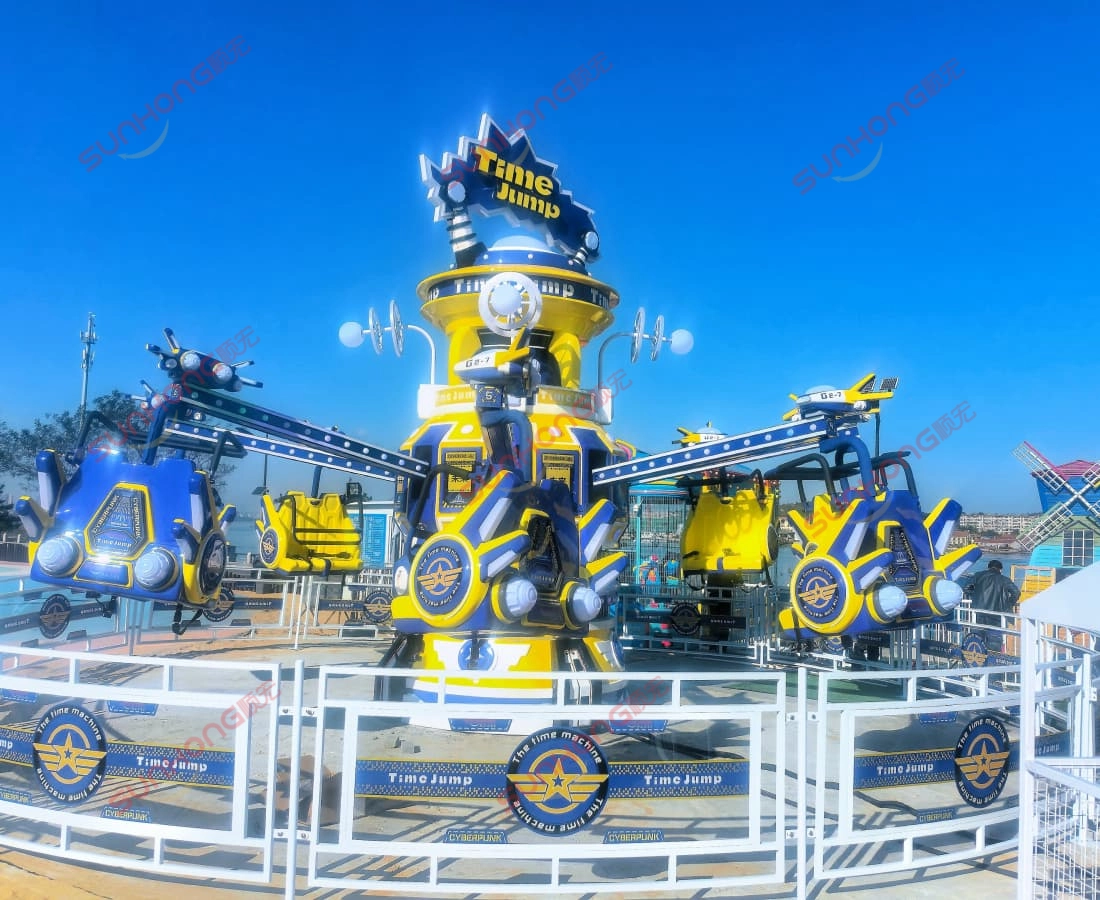
16-Seat Time Jump – Rotating Plane Ride for Amusement Parks
Time Jump is a thrilling and cost-effective amusement ride, 100% originally developed and manufactured by SUNHONG with patented certification. Designed for families and children, it combines motor drive and air-compressor cylinders to achieve dynamic movements—left-right rotation, variable-speed spinning, bouncing seats, and full 360-degree spins.
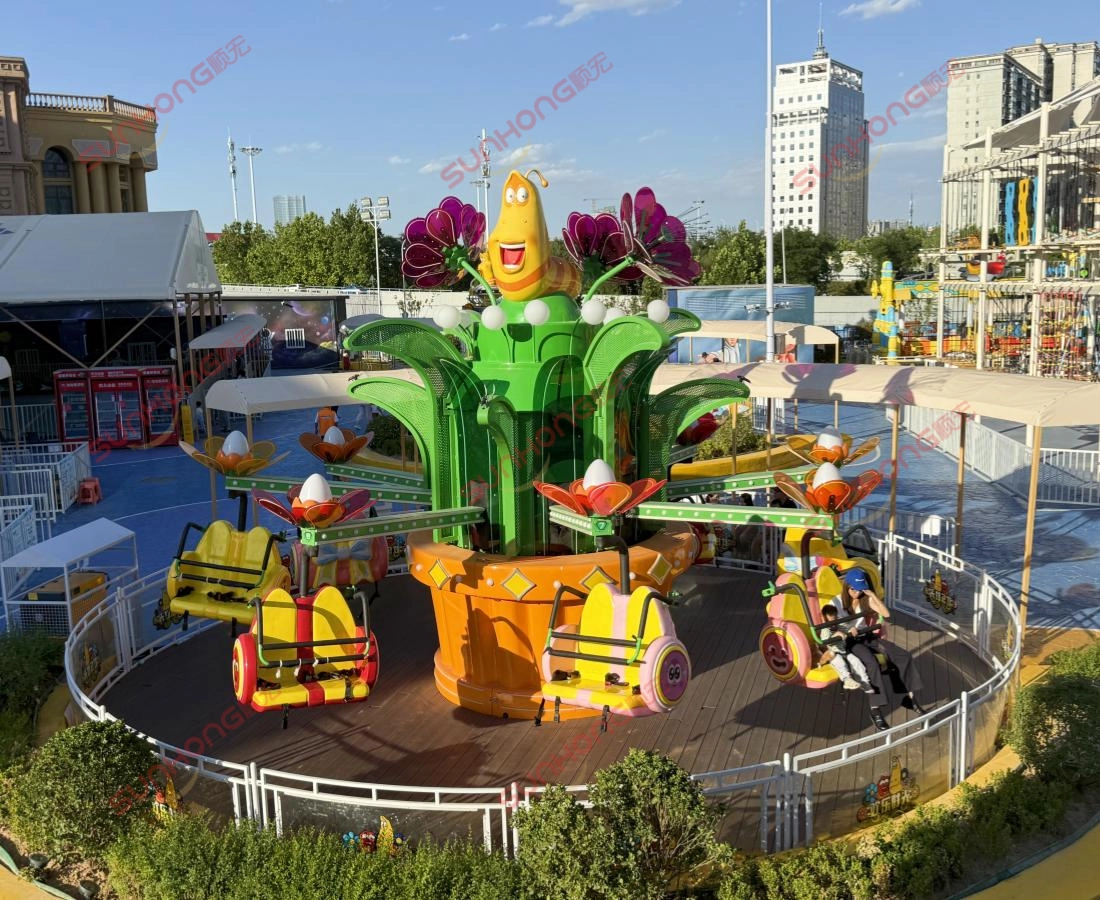
Larva Blooms Bounce Ride – Hot IP Custom Attraction with 360° Spin & Bounce
Larva Blooms is a patented bounce ride inspired by the hit Larva animation series. Featuring full platform rotation, 360° spinning seats, and dynamic bouncing motion, it delivers a thrilling ride experience for families and kids. IP customization available with OEM/ODM service.
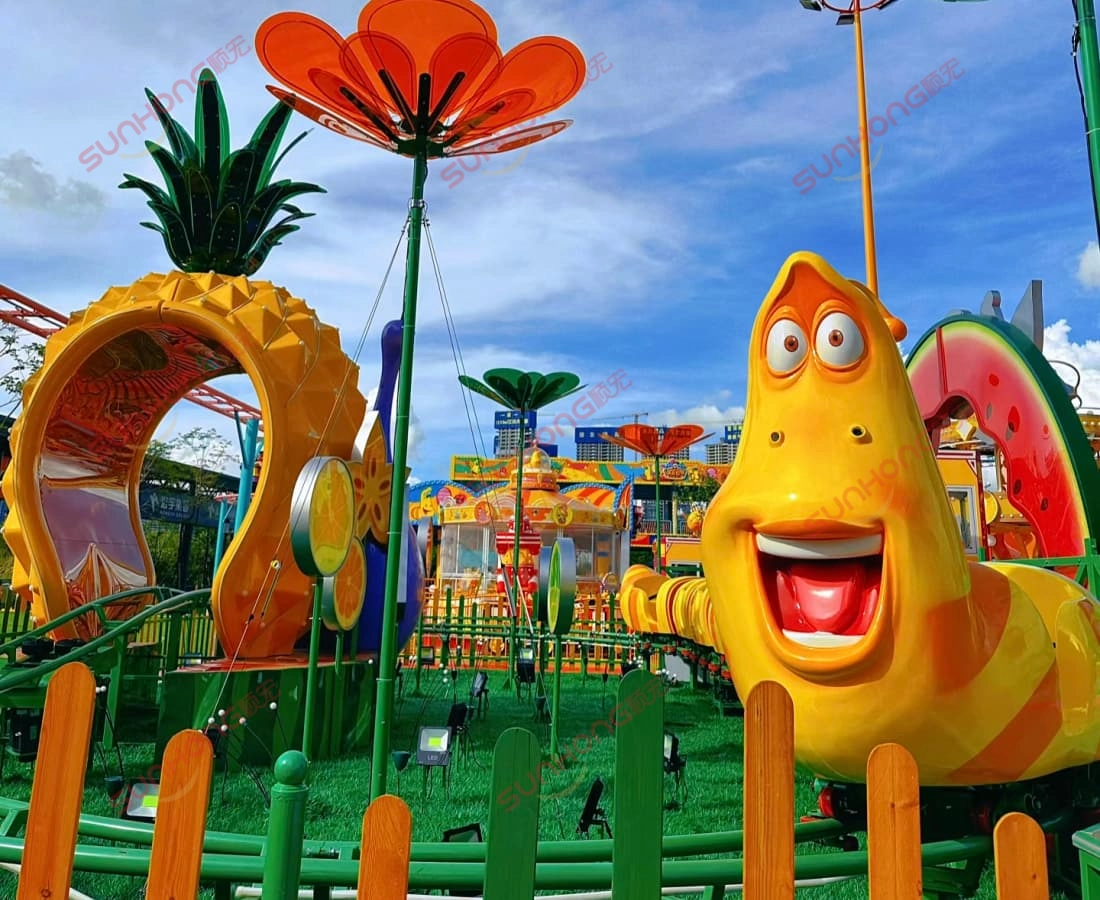
Larva Fruitland – A Mini Roller Coaster Adventure for Kids and Families
Larva Fruitland is a mini roller coaster themed after the Larva animated series. With vibrant colors and gentle motion, it’s perfect for kids and families. This small coaster features IP characters, a fruit farm design, and photo-worthy appeal. Ideal for indoor or outdoor parks. OEM/ODM customization available for your branding needs.

360 Degree Rotating Ride Swing Thrill Amusement Rides for Attractions
Air Bus is a stunning addition to our family amusement rides, delivering a one-of-a-kind 360° dual-rotation experience. With its swinging arm and self-spinning cabin, bright yellow flying-bus design, dynamic music effects, and customizable options, this ride is more than just entertainment—it’s a show-stopping centerpiece that helps your park attract crowds.
Leave a message
Ready to elevate your amusement offerings?
Contact Sunhong today to explore how we can bring your vision to life and create unforgettable experiences for your visitors.
* Rest assured that your privacy is important to us, and all information provided will be handled with the utmost confidentiality.
Copyright © 2025 SUNHONG All Reserved.
Whatsapp: +8613922331804
Guangzhou Shunhong Entertainment Equipment Co.,Ltd.
sunhongrides
SUNHONGAMUSEMENTRIDES
Scan QR Code