
The 10 Key Factors in Amusement Train Rides That Affect Cost
- Market Evolution and Technology Trends Affecting Commercial Ride Budgets
- 1. Commercial Amusement Train Ride Capacity and Pricing
- 2. Custom Amusement Train Design, Theming, and Budget
- 3. Wholesale Train Materials and Structural Engineering Costs
- Engineering and Safety Factors That Shape Amusement Train Ride Investment
- 4. Amusement Train Propulsion, Track, and Energy Budget
- 5. Safety Controls and Commercial Compliance Costs
- 6. Commercial Track Layout, Stations, and Civil Works Pricing
- Project Delivery and Lifecycle Costs for Buying Amusement Train Rides
- 7. Commercial Installation, Testing, and Commissioning Budget
- 8. Amusement Train Certification, Inspection, and Documentation Pricing
- 9. Bulk Shipping, Packaging, and Import Cost for Train Rides
- 10. After-Sales Service, Spare Parts, and Lifecycle ROI
- How to Compare Amusement Train Ride Quotes and Protect Your Budget
- Conclusion: Make the Amusement Train Ride Budget Decision on Total Value
- Frequently Asked Questions About Amusement Train Rides Cost
Amusement Train Rides can range from a relatively straightforward family attraction to a fully themed, multi-station transport system, so the purchase price varies significantly by project scope. The most important cost drivers are train capacity, track length, customization, structural materials, propulsion technology, safety equipment, site preparation, installation, compliance, freight, and long-term service. For B2B buyers, the right comparison is not simply the quoted equipment price; it is the total cost of ownership, expected throughput, maintenance profile, regulatory readiness, and revenue potential. SUNHONG supports buyers from concept and engineering through manufacturing, construction, and operation planning, helping turn an initial budget into a technically complete amusement ride project.
Market Evolution and Technology Trends Affecting Commercial Ride Budgets
The market for amusement park rides is moving toward more immersive theming, energy-efficient operation, accessible design, and integrated digital controls. An amusement train may serve as a gentle family ride, a scenic park transportation system, or a themed attraction with stations, scenery, lighting, audio, and interactive elements. Each additional function changes engineering, fabrication, testing, and installation requirements.
Modern buyers should also consider the relationship between capital cost and operating performance. A lower-cost train can become more expensive if it has lower hourly capacity, difficult access to spare parts, higher energy consumption, or limited documentation for local approval. Conversely, a carefully engineered custom train may command a higher initial investment while creating stronger guest appeal, longer dwell time, better branding, and improved repeat visitation.
1. Commercial Amusement Train Ride Capacity and Pricing
Passenger capacity is one of the clearest pricing factors. A small train with a locomotive and one or two passenger cars requires less steel, fewer seats, smaller braking loads, and less manufacturing time than a larger configuration designed for high daily throughput. Buyers should define the target passengers per hour, average ride duration, station dwell time, and expected peak demand before requesting a quotation.
Capacity also affects the supporting infrastructure. Larger trains may require longer platforms, wider turning radii, stronger track foundations, more robust station control, and additional boarding supervision. Comparing two trains by vehicle price alone can therefore be misleading. A capacity-based ROI model should consider ticket revenue, queue reduction, staffing, and the number of operating cycles per day.
2. Custom Amusement Train Design, Theming, and Budget
Standard amusement train rides are generally more economical because their chassis, body panels, passenger cars, and control architecture can be produced from established designs. Customization increases cost when the buyer requests a unique locomotive shape, branded colors, character styling, unusual car profiles, themed roofs, sound effects, lighting, or a special passenger arrangement.
Customization is not limited to appearance. A project may require engineering changes for children, families, wheelchair users, weather protection, or a particular park narrative. The most reliable way to control the custom ride budget is to approve a design brief early, identify mandatory features, and separate essential guest-experience elements from optional upgrades. SUNHONG’s in-house R&D and design capabilities allow customization to be evaluated together with manufacturing feasibility and site requirements.
3. Wholesale Train Materials and Structural Engineering Costs
Material selection affects both the purchase price and the service life of the attraction. Structural frames commonly require engineered steel or other suitable materials, while exterior panels may use painted metal, fiberglass, composite materials, or molded decorative components. The choice depends on load requirements, corrosion exposure, weather, finish quality, repairability, and local manufacturing standards.
Material cost should not be assessed solely by weight. Welding quality, corrosion protection, surface preparation, paint systems, fasteners, axle components, wheel assemblies, and seat construction all contribute to durability. A quote that appears inexpensive may exclude High Quality coatings, replacement-friendly panels, or inspection access. Buyers should request a clear material and finish specification as part of the commercial offer.
Engineering and Safety Factors That Shape Amusement Train Ride Investment
4. Amusement Train Propulsion, Track, and Energy Budget
Propulsion and track design can materially change the project cost. Trains may operate through battery-electric, electric rail, or other site-specific systems, depending on route length, terrain, operating philosophy, and local conditions. The cost may include motors, batteries or power collection, charging equipment, control cabinets, rails, switches, crossings, drainage, and track supports.
A level, uncomplicated route typically requires less civil and mechanical work than a long route with gradients, tight curves, multiple stations, or scenic sections. Battery systems may reduce certain track-side electrical requirements but introduce battery capacity, charging strategy, replacement planning, and thermal-management considerations. Buyers should compare energy consumption, charging downtime, expected battery life, and maintenance access rather than selecting propulsion only by initial price.
5. Safety Controls and Commercial Compliance Costs
Safety systems are essential cost components, not optional accessories. Depending on the design and jurisdiction, the project may include emergency stops, controlled acceleration, braking systems, speed monitoring, interlocks, dispatch controls, operator interfaces, passenger restraint features, anti-collision logic, access gates, and communication systems. The exact requirements must be confirmed with the authority having jurisdiction and the applicable standards.
International buyers may need documentation aligned with regional requirements such as CE marking in the European market, UKCA requirements in the United Kingdom, ASTM-related expectations in the United States, or local approval systems such as Saudi Arabia’s SABER platform. Buyers can consult the ISO 17842 amusement ride safety standard information and the ASTM F2291 design and manufacture standard when defining a compliance plan. Certification, testing, engineering review, and translated technical files may add cost, but they reduce approval delays and operational risk.
6. Commercial Track Layout, Stations, and Civil Works Pricing
The train itself is only one part of a complete attraction. The route may need foundations, rail beds, drainage, retaining structures, fencing, crossings, platforms, queue barriers, station canopies, control rooms, power distribution, lighting, and landscaping. A compact loop on prepared ground is financially different from a long scenic route crossing uneven terrain or integrating with existing park infrastructure.
Station design also affects the budget. Multiple loading points, separate boarding and unloading zones, accessible ramps, platform edge protection, weather shelters, and themed facades increase both construction and coordination requirements. A professional feasibility review should confirm topography, soil conditions, utilities, water drainage, guest circulation, emergency access, and construction sequencing before the final contract value is established.
Project Delivery and Lifecycle Costs for Buying Amusement Train Rides
7. Commercial Installation, Testing, and Commissioning Budget
Installation costs depend on the project location, route complexity, local labor, equipment access, and the scope of supplier supervision. A complete installation may involve track assembly, vehicle commissioning, electrical connections, control calibration, safety testing, operator training, trial runs, and handover documentation. International projects can also require travel, accommodation, local subcontractors, translation, and coordination with inspectors.
Buyers should confirm whether a quotation includes supervision only or full construction and commissioning responsibility. The difference can be substantial. SUNHONG provides comprehensive construction and project support, allowing the manufacturer’s engineering team to coordinate equipment installation with site conditions and operating requirements. This integrated approach can reduce interface problems between the train supplier, civil contractor, electrical contractor, and park operator.
8. Amusement Train Certification, Inspection, and Documentation Pricing
Approval costs may include design calculations, risk assessments, factory inspections, weld records, material certificates, electrical documentation, operating manuals, maintenance schedules, conformity declarations, and on-site acceptance tests. The requirements vary by destination and by whether the ride is classified as a mobile attraction, fixed installation, transport system, or amusement device.
Documentation has commercial value because it supports import clearance, insurance, authority review, staff training, and future maintenance. SUNHONG has more than 10 years of export experience and reports certifications and market documentation including CE, UKCA, SABER, TÜV-related documentation, and ASTM-related compliance support. Buyers should verify the exact certificate scope, issuing body, equipment model, and destination applicability before relying on any certification statement.
9. Bulk Shipping, Packaging, and Import Cost for Train Rides
Freight is influenced by the number and dimensions of passenger cars, locomotive size, track sections, packing method, shipping route, port handling, insurance, customs duties, and inland transportation. Oversized components may require special containers or flat-rack arrangements, while modular designs can reduce shipping complexity and site assembly time.
A reliable landed-cost calculation should include the equipment price, export packing, ocean or air freight, cargo insurance, port charges, customs brokerage, taxes, local delivery, unloading, and storage. Buyers should also ask how spare wheels, control components, batteries, decorative parts, and maintenance tools will be packed. A low factory price does not necessarily produce the lowest delivered cost if packaging and logistics assumptions are unclear.
10. After-Sales Service, Spare Parts, and Lifecycle ROI
Service support affects the long-term economics of amusement train rides. Common lifecycle considerations include wheel and bearing replacement, brake inspection, battery or electrical-system maintenance, paint repair, seat and restraint replacement, control-system updates, lubrication, and periodic structural inspection. A supplier that provides manuals, spare-part lists, training, troubleshooting support, and responsive engineering assistance can help reduce downtime.
Buyers should request a recommended spare-parts package, warranty terms, response times, remote support availability, and preventive-maintenance schedule. ROI should be assessed using realistic operating days, ticket or bundled admission revenue, staffing, energy, maintenance, downtime, and seasonal demand. SUNHONG’s integrated capabilities in R&D, manufacturing, construction, operation management, and global service can help buyers evaluate both initial investment and lifecycle performance across more than 56 countries and regions.
How to Compare Amusement Train Ride Quotes and Protect Your Budget
When comparing supplier proposals, create a standardized scope sheet. It should identify the number of vehicles, passenger capacity, route length, track type, operating speed, stations, power system, safety controls, theming, certification documents, installation scope, training, warranty, spare parts, delivery terms, and exclusions. This prevents an incomplete quote from appearing cheaper than a technically complete offer.
| Comparison Item | Lower Initial-Cost Approach | Higher-Value Procurement Approach |
|---|---|---|
| Design | Standard configuration with limited theming | Optimized customization linked to brand and throughput |
| Infrastructure | Short route on prepared ground | Complete route, stations, drainage, fencing, and access planning |
| Compliance | Basic supplier documents | Traceable technical file, testing, manuals, and local approval support |
| Lifecycle | Lowest purchase price | Parts, training, warranty, maintenance, and downtime planning |
| Commercial evaluation | Equipment price only | Total landed cost, capacity, revenue, and ownership cost |
For a professional procurement decision, ask each supplier to state assumptions in writing and identify excluded civil, electrical, tax, freight, and certification items. SUNHONG’s project model covers overall planning, R&D design, exclusive customization, manufacturing, comprehensive construction, and operation management, giving buyers a single point of coordination from initial concept to project completion.
| Factor | Cost Impact Level | Core Consideration |
|---|---|---|
| Capacity and vehicle configuration | High | Passenger throughput, number of cars, station dwell time, and structural load |
| Customization and theming | Medium to High | Unique styling, branding, lighting, audio, accessibility, and themed components |
| Materials and structural engineering | Medium to High | Steel, coatings, exterior panels, durability, corrosion resistance, and inspection access |
| Propulsion and track | High | Battery or electric system, route length, gradients, curves, charging, and controls |
| Safety and compliance | High | Braking, interlocks, emergency systems, testing, certification, and technical files |
| Stations and civil works | High | Foundations, drainage, platforms, utilities, queueing, fencing, and terrain |
| Installation and commissioning | Medium to High | Labor, supervision, calibration, operator training, and acceptance testing |
| Documentation and inspection | Medium | Risk assessments, manuals, conformity records, translation, and local review |
| Shipping and import | Medium to High | Packing, freight, insurance, customs, inland delivery, and unloading |
| After-sales service | Medium over lifecycle | Spare parts, warranty, maintenance, technical support, and downtime reduction |
Conclusion: Make the Amusement Train Ride Budget Decision on Total Value
The cost of Amusement Train Rides is shaped by the complete operating environment, not just the locomotive and passenger cars. Capacity, customization, engineering, safety, civil works, installation, compliance, logistics, and service should be evaluated as one commercial package. A transparent supplier will explain assumptions, define exclusions, provide technical documentation, and connect the investment to throughput and lifecycle ROI. SUNHONG combines more than a decade of export experience with in-house expertise in design, production, construction, and project delivery, supporting amusement park ride buyers from the first concept through final completion.
Frequently Asked Questions About Amusement Train Rides Cost
What is the biggest cost factor in Amusement Train Rides?
The biggest cost factor depends on project scope, but capacity, track and civil works, customization, and safety and compliance requirements commonly have the greatest impact. Buyers should compare total project cost rather than the vehicle price alone.
Are custom amusement train rides more expensive than standard models?
Yes. Custom styling, branded locomotive bodies, themed passenger cars, lighting, audio, accessibility features, and special operating requirements add design and manufacturing work. A clear design brief helps control the custom ride budget.
Does the quoted train price include track and installation?
Not always. Buyers should confirm whether the quotation includes track, foundations, stations, electrical work, freight, installation supervision, commissioning, operator training, and certification support because these items may be priced separately.
What should buyers include when calculating the landed cost?
The landed cost should include equipment, export packing, freight, insurance, port charges, customs duties, taxes, inland transportation, unloading, storage, installation, and any local inspection or certification expenses.
How can an amusement train project achieve better ROI?
Better ROI comes from matching capacity to demand, planning efficient boarding, controlling downtime, selecting durable materials, budgeting for maintenance and spare parts, and evaluating ticket or bundled-admission revenue against staffing, energy, and lifecycle costs.
What compliance documents may be required for an international amusement train project?
Requirements vary by destination and ride classification. They may include design calculations, risk assessments, material and weld records, electrical documents, operating manuals, conformity declarations, inspection reports, and certificates or documentation aligned with applicable regional standards.
The 10 Key Factors in themed park trains That Affect Cost

Compare Carousel Manufacturers: Quality, Price, Lead Time
Custom themed attractions vs. catalog attractions: pros and cons
Turnkey project case study: design to operations handover
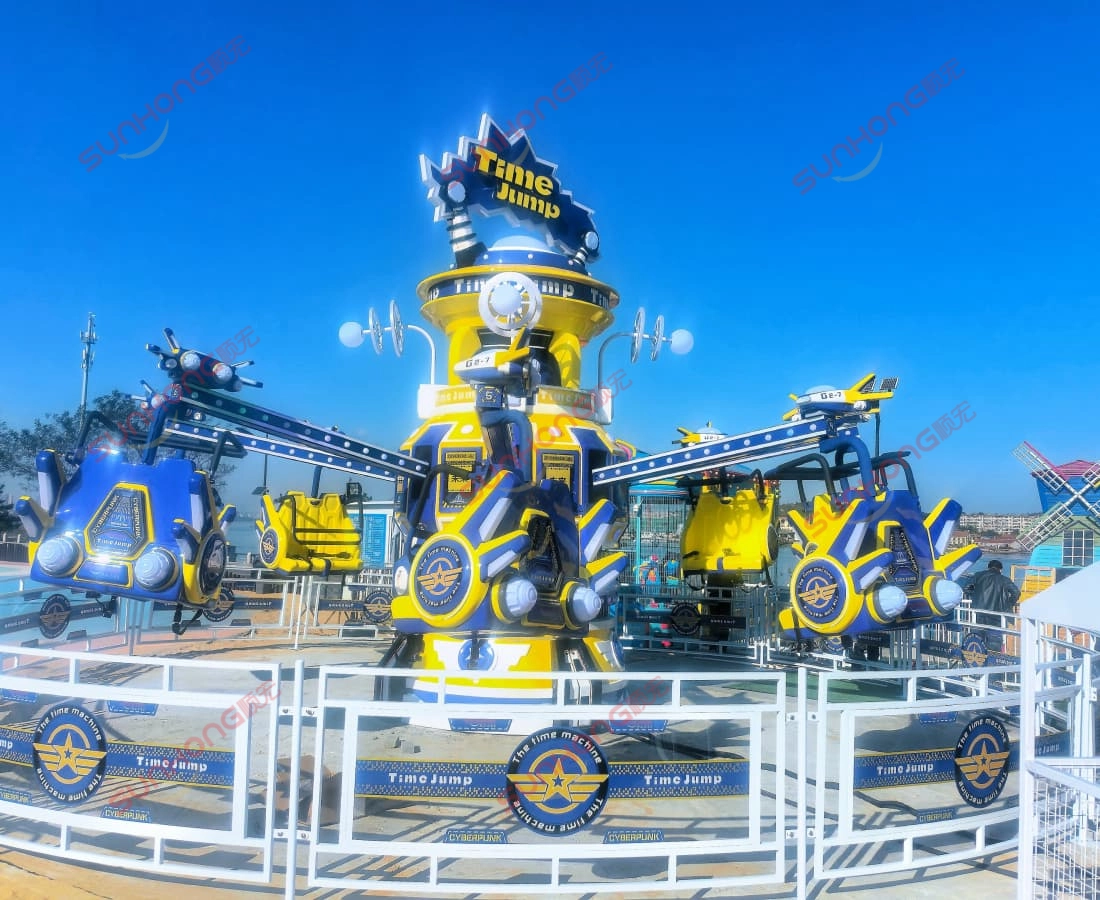
16-Seat Time Jump – Rotating Plane Ride for Amusement Parks
Time Jump is a thrilling and cost-effective amusement ride, 100% originally developed and manufactured by SUNHONG with patented certification. Designed for families and children, it combines motor drive and air-compressor cylinders to achieve dynamic movements—left-right rotation, variable-speed spinning, bouncing seats, and full 360-degree spins.
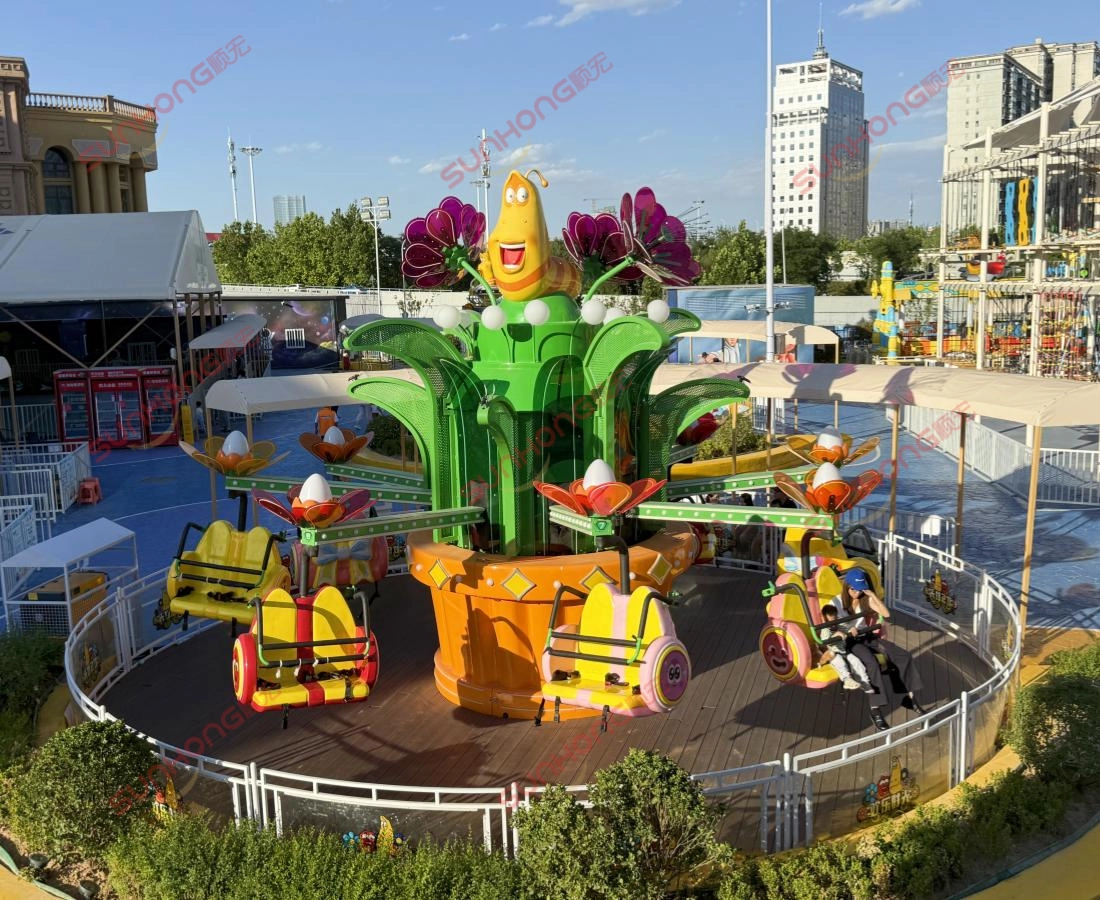
Larva Blooms Bounce Ride – Hot IP Custom Attraction with 360° Spin & Bounce
Larva Blooms is a patented bounce ride inspired by the hit Larva animation series. Featuring full platform rotation, 360° spinning seats, and dynamic bouncing motion, it delivers a thrilling ride experience for families and kids. IP customization available with OEM/ODM service.
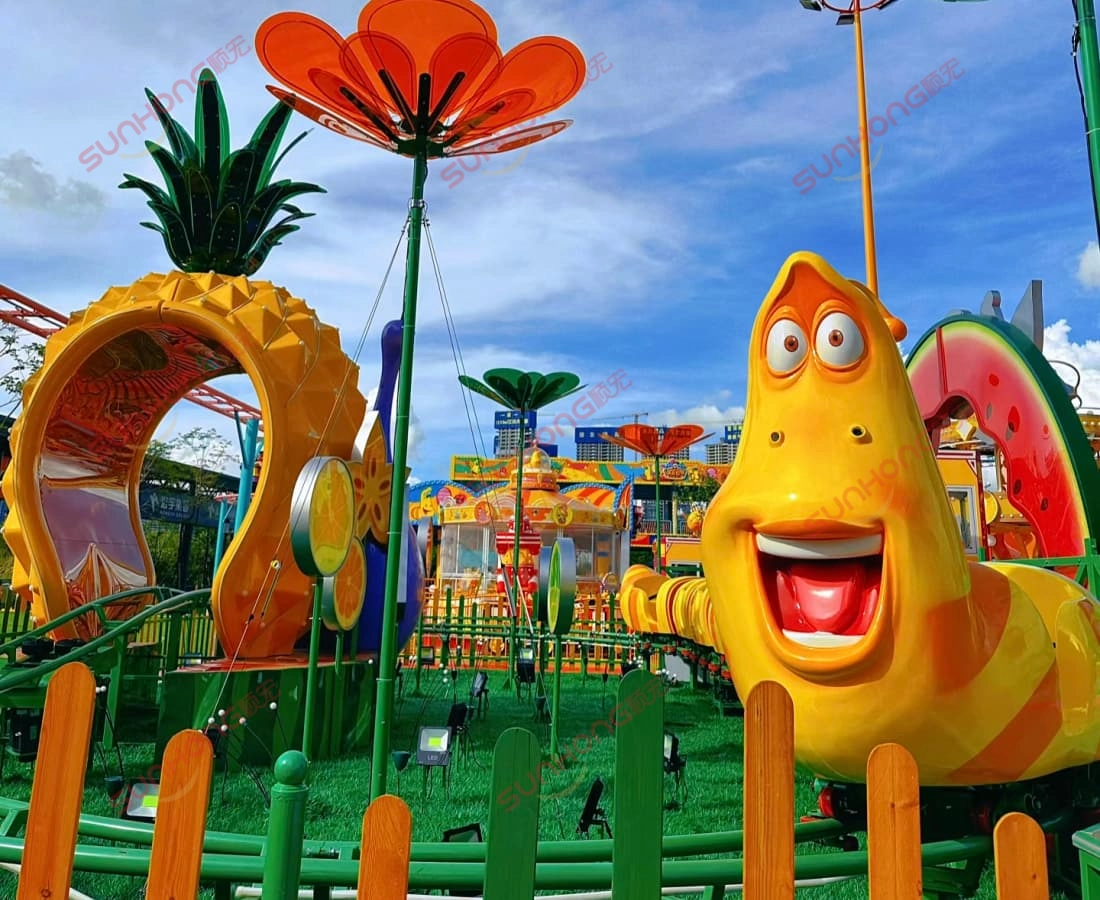
Larva Fruitland – A Mini Roller Coaster Adventure for Kids and Families
Larva Fruitland is a mini roller coaster themed after the Larva animated series. With vibrant colors and gentle motion, it’s perfect for kids and families. This small coaster features IP characters, a fruit farm design, and photo-worthy appeal. Ideal for indoor or outdoor parks. OEM/ODM customization available for your branding needs.

360 Degree Rotating Ride Swing Thrill Amusement Rides for Attractions
Air Bus is a stunning addition to our family amusement rides, delivering a one-of-a-kind 360° dual-rotation experience. With its swinging arm and self-spinning cabin, bright yellow flying-bus design, dynamic music effects, and customizable options, this ride is more than just entertainment—it’s a show-stopping centerpiece that helps your park attract crowds.
Leave a message
Ready to elevate your amusement offerings?
Contact Sunhong today to explore how we can bring your vision to life and create unforgettable experiences for your visitors.
* Rest assured that your privacy is important to us, and all information provided will be handled with the utmost confidentiality.
Copyright © 2025 SUNHONG All Reserved.
Whatsapp: +8613922331804
Guangzhou Shunhong Entertainment Equipment Co.,Ltd.
sunhongrides
SUNHONGAMUSEMENTRIDES
Scan QR Code