
The 10 Key Factors in amusement attraction That Affect Cost
- Industry Evolution, Materials, and Technology Shaping Ride Investment
- Primary Commercial Cost Drivers for an Amusement Attraction
- 1. Ride Type and Capacity Pricing for Your Amusement Attraction
- 2. Custom Design and Theme Integration Budget
- 3. Steel, Components, and Material Quality in Ride Pricing
- 4. Safety Certification and Compliance Costs Before You Buy
- Project Delivery Factors That Change the Total Installed Cost
- 5. Automation, Controls, and Digital Technology ROI
- 6. Site Preparation and Foundation Budget
- 7. Installation, Commissioning, and Workforce Pricing
- 8. Shipping, Import Duties, and Logistics for Global Wholesale Orders
- 9. Spare Parts, Warranty, and Maintenance Cost of Ownership
- 10. Revenue Model, Attendance, and Long-Term ROI
- How to Compare Amusement Park Rides Quotes Professionally
- Conclusion: Building a Defensible Amusement Attraction Budget
- Frequently Asked Questions About Amusement Attraction Cost
An amusement attraction is priced according to a complete commercial and engineering system rather than a single equipment figure. The main cost drivers include ride category and capacity, structural materials, customization, safety and certification requirements, control technology, site preparation, installation, shipping, maintenance support, and expected return on investment. For buyers comparing amusement park rides suppliers, understanding these factors helps distinguish a genuinely competitive quotation from a low initial price that excludes essential project costs. SUNHONG supports clients from concept planning and R&D design through manufacturing, construction, operation management, and after-sales service, providing a transparent path from budget approval to final project completion.
The 10 Key Factors in Amusement Attraction That Affect Cost
Industry Evolution, Materials, and Technology Shaping Ride Investment
The international amusement industry is moving toward more immersive, customized, and data-enabled attractions. Developers increasingly combine mechanical rides with themed environments, interactive media, queue entertainment, lighting, sound, and digital control systems. This evolution increases the commercial potential of an amusement attraction, but it also expands the engineering scope and affects procurement budgets.
Material and safety expectations are also becoming more structured. Steel selection, welding quality, corrosion protection, electrical design, emergency systems, inspection access, and documentation all influence the final cost. Buyers should review applicable requirements early, including the internationally recognized ISO 17842 amusement ride safety standard, relevant national regulations, and guidance from organizations such as IAAPA’s amusement ride safety resources. A reliable supplier will identify compliance obligations during design instead of adding them after the contract is signed.
Primary Commercial Cost Drivers for an Amusement Attraction
1. Ride Type and Capacity Pricing for Your Amusement Attraction
The ride category is usually the first and most influential pricing factor. A family carousel, bumper car system, observation ride, roller coaster, water ride, or high-speed thrill attraction requires different structural systems, drive equipment, controls, foundations, and safety procedures. Within the same category, capacity also changes the cost. A ride designed for more passengers per cycle may require a larger loading platform, stronger structural members, higher motor capacity, more vehicles, and expanded evacuation routes.
Buyers should compare quotations based on delivered capacity rather than the equipment name alone. Ask for passenger capacity per hour, cycle duration, vehicle count, operating speed, footprint, and recommended staffing. A higher-capacity amusement attraction may cost more initially but produce stronger revenue potential and shorter guest waiting times, improving long-term ROI.
2. Custom Design and Theme Integration Budget
Standard amusement park rides generally have lower design and manufacturing costs because engineering drawings, production processes, and components can be reused. Custom rides require additional concept development, 3D modeling, structural calculations, prototype work, themed façades, special vehicles, unique colors, lighting, sound, or integration with an existing master plan.
Customization should be divided into essential and optional scopes. A buyer may prioritize a distinctive appearance, branded passenger vehicles, local cultural storytelling, or a custom control interface while retaining a proven ride mechanism. This approach protects the investment without eliminating differentiation. When requesting a custom amusement attraction, provide the site plan, target audience, theme references, capacity objectives, climate conditions, and expected opening date so the manufacturer can price the project accurately.
3. Steel, Components, and Material Quality in Ride Pricing
Steel represents a major portion of many amusement attraction projects, but the lowest material price is not necessarily the lowest lifecycle cost. Structural grade, plate thickness, corrosion protection, fastener quality, bearings, motors, gearboxes, hydraulic components, electrical cabinets, and sensor brands all affect reliability and maintenance requirements.
Outdoor installations in coastal, humid, desert, or cold regions may require enhanced coatings, stainless-steel components, weatherproof electrical enclosures, drainage improvements, or specialized lubricants. Buyers should request a material specification, coating system, component brand list, and warranty exclusions. A transparent wholesale or project quotation should show what is included rather than using a vague phrase such as “standard materials.”
4. Safety Certification and Compliance Costs Before You Buy
Safety compliance affects engineering, documentation, testing, inspection, and sometimes redesign. Depending on the destination market, the project may require conformity assessment, electrical testing, structural calculations, risk assessment, factory acceptance testing, site acceptance testing, operator manuals, and local authority approval. Requirements can differ substantially between jurisdictions.
For example, buyers may need to consider European CE requirements, UKCA requirements, U.S. ASTM practices, or local regulations such as Saudi Arabia’s SABER system. The ASTM F24 committee on amusement rides and devices is an important reference for U.S.-related safety standards. Certification fees are only one part of compliance pricing; engineering hours, testing fixtures, inspection travel, translated manuals, and corrective actions can also affect the budget. Compliance should therefore be specified in the purchase contract.
Project Delivery Factors That Change the Total Installed Cost
5. Automation, Controls, and Digital Technology ROI
Modern amusement attractions commonly include programmable logic controllers, variable-frequency drives, proximity sensors, safety interlocks, condition monitoring, LED lighting, audio systems, access control, and centralized operating consoles. These systems can improve dispatch efficiency, reduce manual errors, and support preventive maintenance, but they increase upfront engineering and commissioning costs.
The right technology level depends on the operating model. A small seasonal venue may not need advanced remote monitoring, while a large destination park can justify data collection, fault diagnostics, energy monitoring, and integrated ticketing. Buyers should evaluate technology according to measurable ROI: reduced downtime, improved capacity, lower labor requirements, faster troubleshooting, and better guest experience. Avoid paying for features that cannot be supported by local technicians or spare parts.
6. Site Preparation and Foundation Budget
An amusement attraction cannot be priced accurately without considering the site. Foundation requirements depend on ride loads, soil bearing capacity, wind exposure, seismic conditions, groundwater, drainage, elevation, and local construction codes. Additional expenses may include demolition, piling, reinforced concrete, underground utilities, stormwater management, electrical distribution, fencing, queue lines, operator cabins, and guest pathways.
Before requesting a final buy-ready quotation, provide a topographic survey, geotechnical report, utility map, local wind and seismic data, and available construction drawings. A supplier that offers comprehensive construction services can coordinate ride engineering with civil works, reducing interface risk. If foundation work is excluded from a quotation, the buyer should obtain a separate allowance rather than assuming it is included.
7. Installation, Commissioning, and Workforce Pricing
Installation cost includes more than assembling the ride. It may cover unloading, cranes, specialized tools, mechanical erection, electrical wiring, control calibration, testing, operator training, safety inspections, trial operation, and handover documentation. Large or complex amusement park rides may require experienced supervisors and a longer commissioning period.
Travel, accommodation, visas, local labor, lifting equipment, and weather delays can materially change the installation budget. Contracts should define the division of responsibility between manufacturer, general contractor, and park operator. SUNHONG’s in-house R&D, production, and construction capabilities allow the project team to manage these interfaces from initial design through completion, helping buyers reduce change orders and schedule uncertainty.
8. Shipping, Import Duties, and Logistics for Global Wholesale Orders
International logistics can represent a significant portion of the delivered price, particularly for oversized structures, vehicles, tracks, or large themed components. The final cost depends on packing method, container type, break-bulk requirements, port selection, inland transport, insurance, customs clearance, import duties, and destination handling.
Request a clear Incoterms basis, packing list, shipment dimensions, gross weight, estimated loading plan, and responsibility matrix. Buyers should also confirm whether customs documents, certificates of origin, conformity files, and spare-parts shipments are included. For bulk purchases or multi-ride developments, combining shipments may reduce logistics costs, but it can also create schedule risk if one delayed component holds up the entire installation.
9. Spare Parts, Warranty, and Maintenance Cost of Ownership
The purchase price of an amusement attraction should be evaluated alongside its expected maintenance profile. Wear components may include wheels, bearings, belts, brake pads, hydraulic seals, sensors, contactors, lighting modules, and control-system components. A low-cost ride can become expensive if replacement parts are proprietary, difficult to source, or unsupported after the warranty period.
Ask the manufacturer for a recommended spare-parts package, preventive maintenance schedule, warranty duration, response process, remote support options, and expected service intervals. The U.S. Consumer Product Safety Commission amusement ride safety information also illustrates why inspection and maintenance are central to safe operation. A strong supplier relationship should cover technical training and documentation, not only delivery.
10. Revenue Model, Attendance, and Long-Term ROI
The final cost decision should be connected to the attraction’s revenue model. Key assumptions include ticket price, daily attendance, operating days, utilization, throughput, weather sensitivity, staffing, energy consumption, maintenance downtime, and ancillary revenue from food, retail, photography, or High Quality access. A ride with a higher purchase price may be commercially superior if it generates greater capacity, repeat visitation, or longer dwell time.
Use conservative scenarios rather than relying on maximum theoretical capacity. Calculate revenue at low, expected, and peak utilization, then subtract labor, energy, maintenance, insurance, marketing, financing, and periodic refurbishment. This approach helps buyers decide whether to purchase a standard unit, commission a custom amusement attraction, or phase the development across multiple seasons.
How to Compare Amusement Park Rides Quotes Professionally
Quote comparison should use a total-cost-of-ownership matrix rather than a single factory-price column. Confirm the ride specifications, capacity, safety scope, foundation assumptions, installation boundary, shipping terms, warranty, spare parts, training, testing, documentation, and payment milestones. The following framework illustrates how commercial risk should be reviewed:
| Quotation Area | Question for the Buyer | Commercial Risk if Omitted |
|---|---|---|
| Equipment scope | Are vehicles, controls, lighting, fencing, and operator stations included? | Unexpected additions after contract award |
| Compliance | Which standards, tests, certificates, and manuals are included? | Approval delays or redesign costs |
| Construction | Who provides foundations, cranes, utilities, and installation labor? | Unplanned site and labor expenses |
| Operations | What capacity, staffing, energy use, and maintenance assumptions apply? | Incorrect ROI forecast |
| After-sales | What warranty, spare parts, training, and technical response are offered? | Longer downtime and higher lifecycle costs |
Supplier capability is another decisive factor. SUNHONG has more than ten years of export experience and has delivered amusement rides to more than 56 nations and regions. Its international certification experience includes CE for the European Union, UKCA for the United Kingdom, SABER for Saudi Arabia, TUV-related German requirements, and ASTM-related U.S. market requirements. Buyers should still confirm the exact certification package for their own jurisdiction and project, but a documented global delivery record can reduce procurement uncertainty.
| Factor | Cost Impact Level | Core Consideration |
|---|---|---|
| Ride type and capacity | Very high | Mechanism, size, throughput, vehicles, and structural loads determine the base investment. |
| Custom design and theme integration | High | Unique engineering, theming, branding, and special effects add design and production hours. |
| Steel, components, and materials | High | Quality, corrosion resistance, component brands, and service life affect price and reliability. |
| Safety certification and compliance | High | Testing, calculations, documentation, inspections, and local approvals must be budgeted. |
| Automation and digital technology | Medium to high | Controls, monitoring, lighting, and integration influence both cost and operating efficiency. |
| Site preparation and foundations | Very high | Soil, utilities, civil works, drainage, seismic conditions, and electrical infrastructure vary by site. |
| Installation and commissioning | High | Labor, cranes, supervision, testing, training, and handover affect the installed budget. |
| Shipping and import logistics | Medium to high | Dimensions, containers, duties, insurance, inland transport, and customs determine landed cost. |
| Warranty, spare parts, and maintenance | Medium | Service intervals, parts availability, training, and downtime shape lifecycle expenditure. |
| Revenue model and ROI | Strategic | Capacity, attendance, pricing, utilization, operating costs, and repeat visitation determine payback. |
Conclusion: Building a Defensible Amusement Attraction Budget
A reliable amusement attraction budget combines the factory quotation with compliance, civil works, logistics, installation, operations, and lifecycle support. Buyers should request itemized scope, verify assumptions, compare suppliers on technical capability, and model conservative ROI before committing capital. SUNHONG’s integrated services cover planning, R&D, exclusive customization, manufacturing, construction, operation management, and global project support, giving developers a transparent partner for both individual rides and complete amusement projects.
Contact SUNHONG at sunhong@isunhong.com or visit https://www.isunhong.com/ to discuss your project scope, site conditions, certification needs, and commercial budget with an experienced amusement ride manufacturer.
Frequently Asked Questions About Amusement Attraction Cost
What is the biggest cost factor when buying an amusement attraction?
Ride category and capacity are usually the largest initial cost drivers because they determine the mechanism, structural size, vehicles, motors, controls, passenger throughput, and foundation loads.
How does customization affect amusement attraction pricing?
Customization adds concept development, engineering, 3D modeling, special vehicles, themed façades, lighting, sound, and production work. Buyers can control the budget by customizing high-visibility elements while retaining a proven ride mechanism.
What should be included in an amusement park rides quotation?
A complete quotation should identify equipment, capacity, controls, safety documentation, testing, foundations, installation, cranes, shipping terms, import responsibilities, warranty, spare parts, training, and commissioning.
Why are safety certifications important to the project budget?
Certification can require structural calculations, risk assessments, electrical testing, inspections, manuals, translations, factory acceptance testing, and local authority approval. These requirements should be defined before contract signing to avoid redesign and approval delays.
How can buyers calculate amusement attraction ROI?
Estimate conservative attendance, ticket price, operating days, utilization, throughput, staffing, energy, maintenance, insurance, financing, and downtime. Compare low, expected, and peak scenarios instead of using only theoretical maximum capacity.
Does the lowest amusement ride purchase price provide the best value?
Not necessarily. A low purchase price may exclude foundations, compliance, installation, logistics, spare parts, or technical support. Total cost of ownership and expected revenue should be compared before selecting a supplier.
Thrill Ride Manufacturer vs Supplier: Choosing a Project Partner
Top amusement carousels Manufacturers and Suppliers
The B2B Buyer’s Guide to pendulum rides
Procurement timeline: key decision milestones
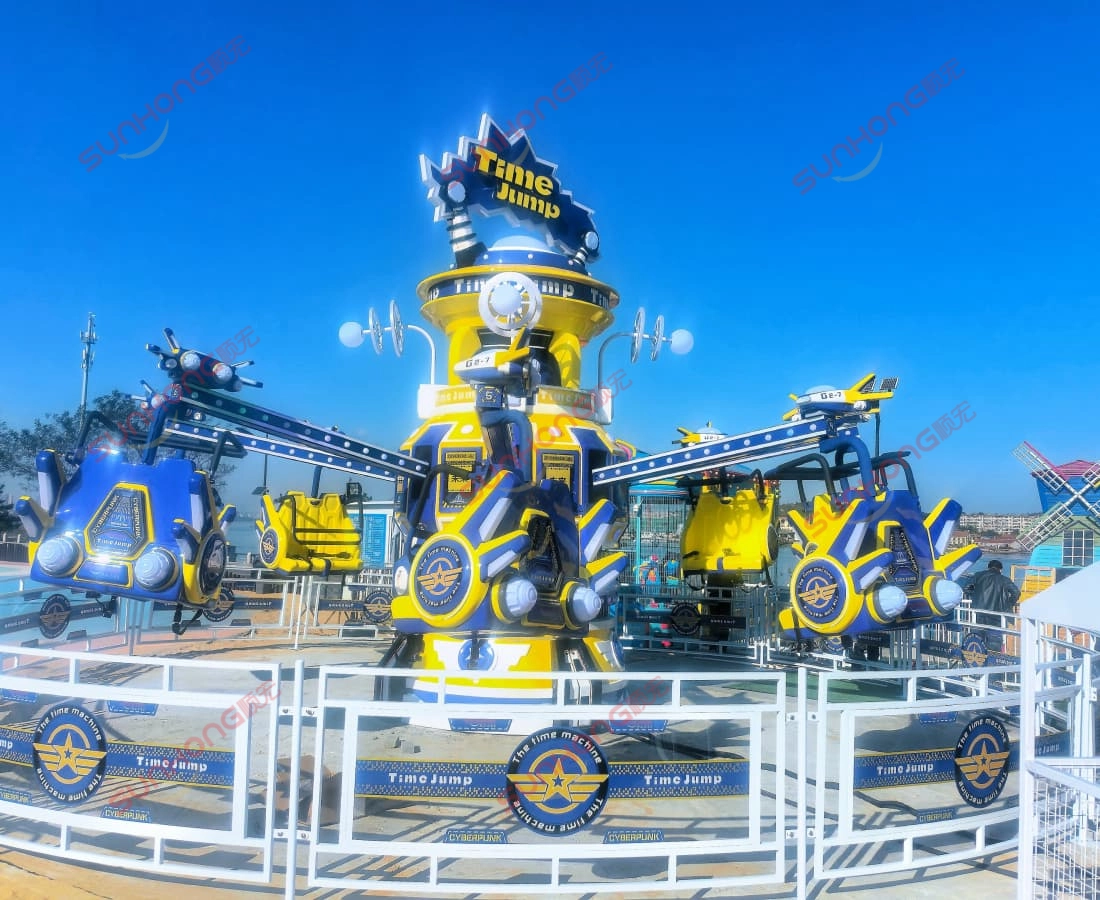
16-Seat Time Jump – Rotating Plane Ride for Amusement Parks
Time Jump is a thrilling and cost-effective amusement ride, 100% originally developed and manufactured by SUNHONG with patented certification. Designed for families and children, it combines motor drive and air-compressor cylinders to achieve dynamic movements—left-right rotation, variable-speed spinning, bouncing seats, and full 360-degree spins.
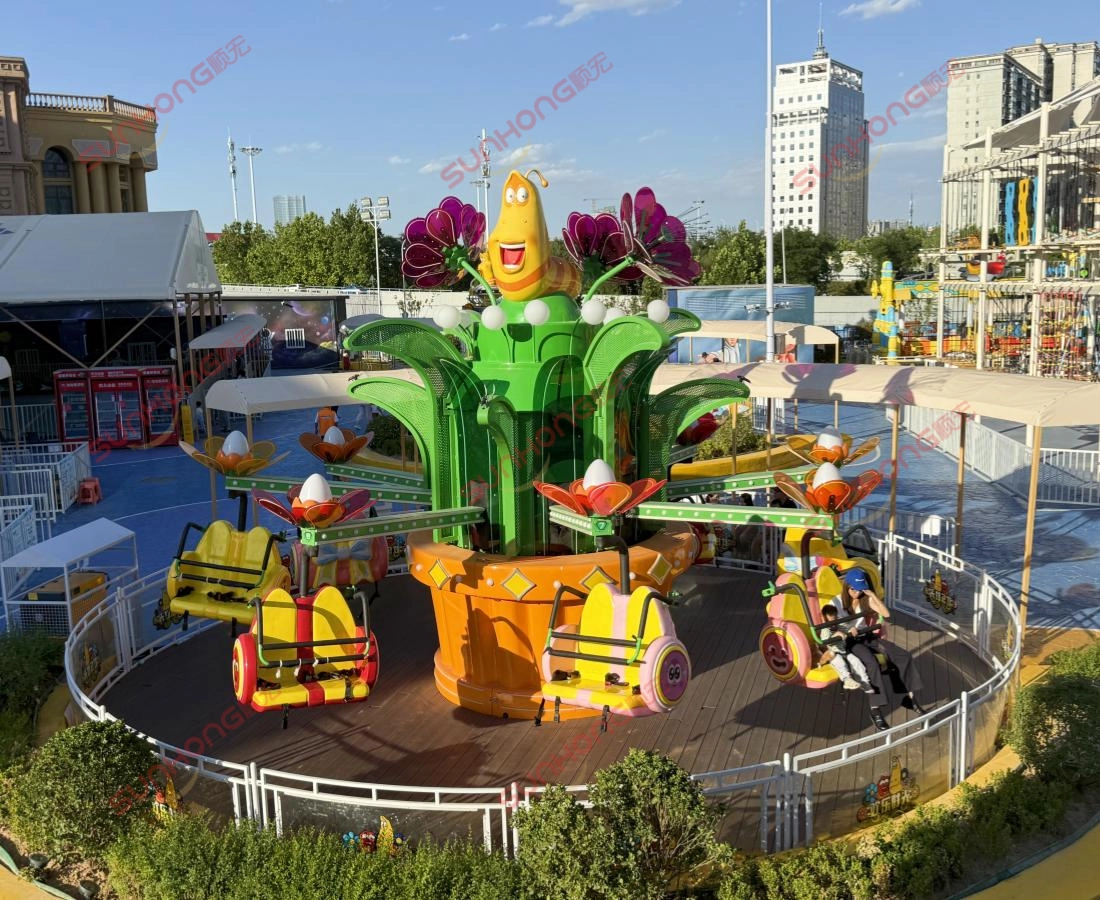
Larva Blooms Bounce Ride – Hot IP Custom Attraction with 360° Spin & Bounce
Larva Blooms is a patented bounce ride inspired by the hit Larva animation series. Featuring full platform rotation, 360° spinning seats, and dynamic bouncing motion, it delivers a thrilling ride experience for families and kids. IP customization available with OEM/ODM service.
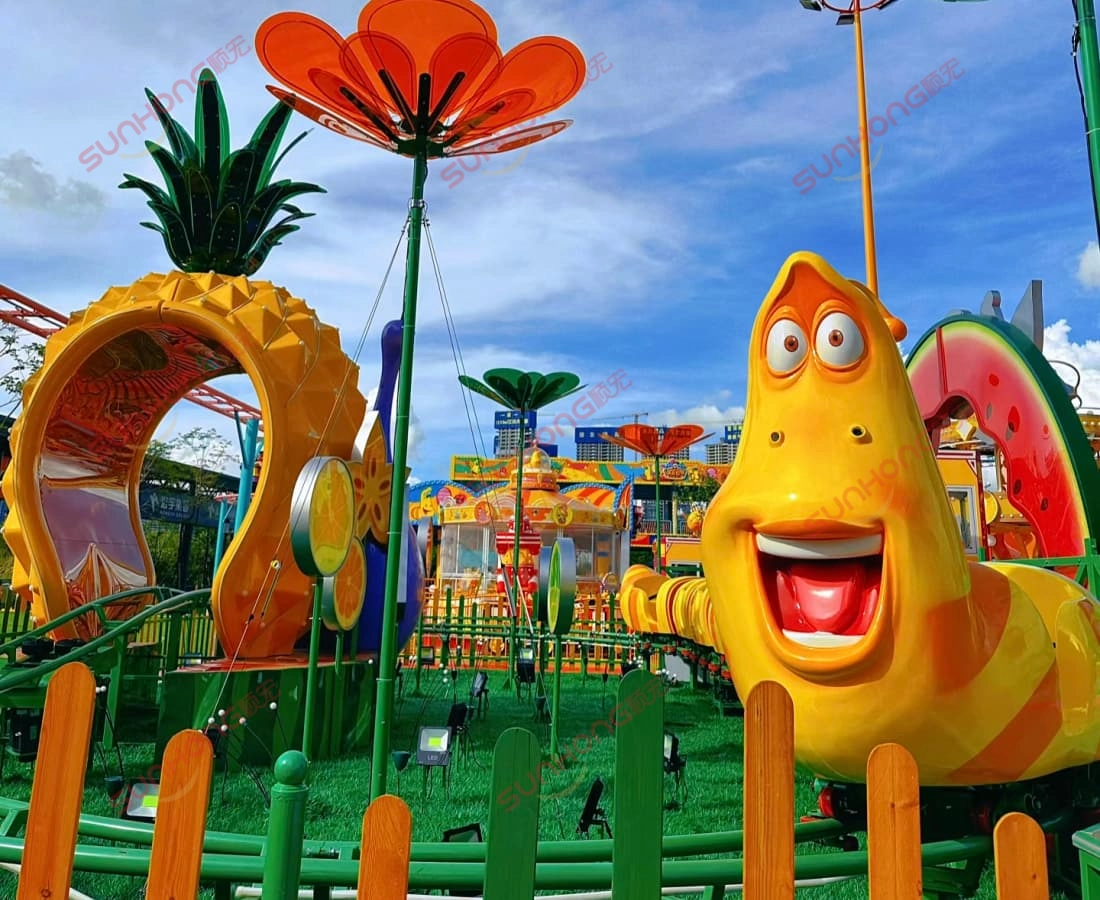
Larva Fruitland – A Mini Roller Coaster Adventure for Kids and Families
Larva Fruitland is a mini roller coaster themed after the Larva animated series. With vibrant colors and gentle motion, it’s perfect for kids and families. This small coaster features IP characters, a fruit farm design, and photo-worthy appeal. Ideal for indoor or outdoor parks. OEM/ODM customization available for your branding needs.

360 Degree Rotating Ride Swing Thrill Amusement Rides for Attractions
Air Bus is a stunning addition to our family amusement rides, delivering a one-of-a-kind 360° dual-rotation experience. With its swinging arm and self-spinning cabin, bright yellow flying-bus design, dynamic music effects, and customizable options, this ride is more than just entertainment—it’s a show-stopping centerpiece that helps your park attract crowds.
Leave a message
Ready to elevate your amusement offerings?
Contact Sunhong today to explore how we can bring your vision to life and create unforgettable experiences for your visitors.
* Rest assured that your privacy is important to us, and all information provided will be handled with the utmost confidentiality.
Copyright © 2025 SUNHONG All Reserved.
Whatsapp: +8613922331804
Guangzhou Shunhong Entertainment Equipment Co.,Ltd.
sunhongrides
SUNHONGAMUSEMENTRIDES
Scan QR Code